 Birch Bay Exterior
 Roof Repair in Blaine: Built for What This Coastline Does to a Roof
Blaine sits at the very top of Whatcom County, right on the water and right at the Canadian border, which means homes here take on a specific combination of weather that inland roofs never have to deal with. Salt-laden air off the water, wind-driven rain that comes in sideways more often than straight down, and a moss season that can run most of the year all work on a roof at the same time. A repair done without accounting for all three usually fails again within a year or two. A repair done right accounts for all three from the start.
This page is about roof repair specifically for Blaine and the surrounding Birch Bay area — not a general "we fix roofs" pitch, but what actually needs to happen on a coastal Whatcom County roof to fix a problem instead of just patching over it.
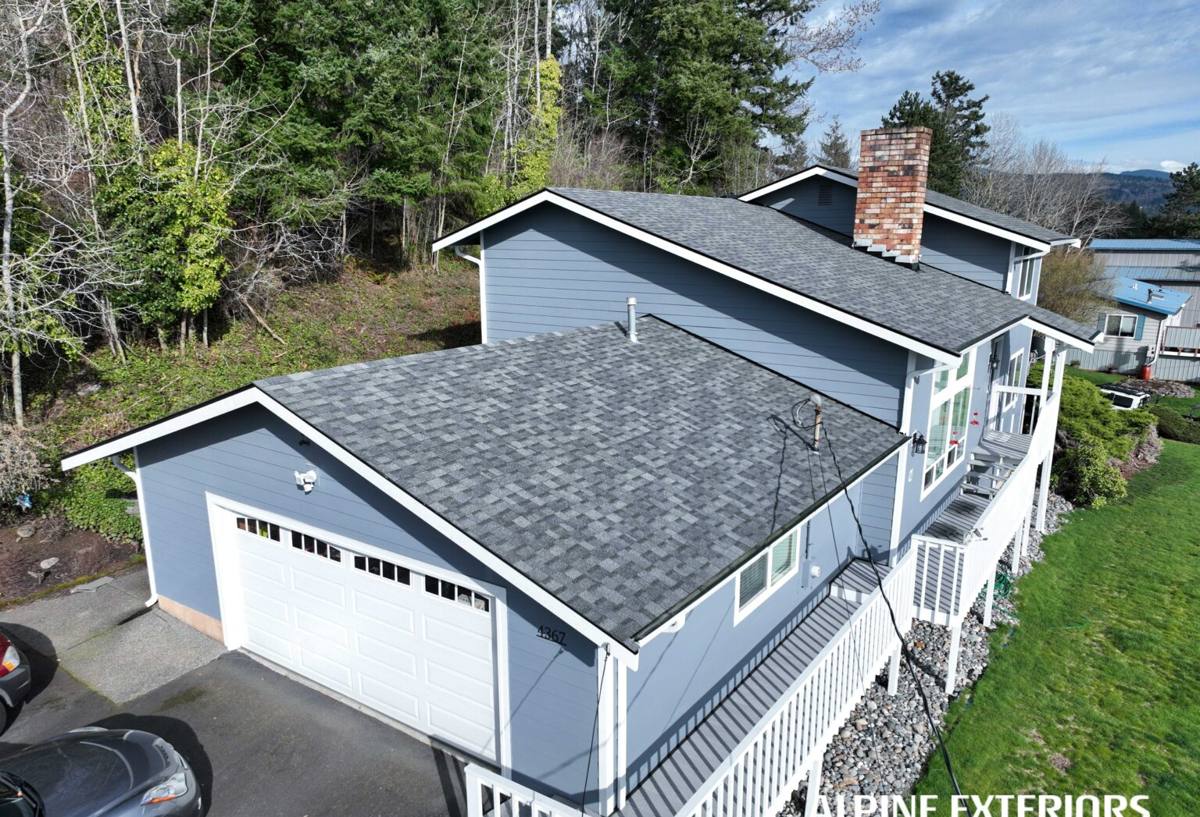
What Salt Air, Driving Rain, and Moss Actually Do to a Roof
Salt Air and Corrosion
Homes close to the water deal with airborne salt settling on every exposed metal surface — flashing, fasteners, gutter hardware, vent caps. Over time this accelerates corrosion in ways that inland homes don't experience. A nail or flashing seam that would last two decades a few miles inland can start failing much sooner here. When we repair a roof in Blaine, we're specifically checking metal condition, not just shingle condition.
Driving Rain and Wind-Driven Water
Whatcom County's coastal storms don't just drop rain straight down — wind pushes it sideways and up under laps, edges, and flashing that would stay dry in a calmer rain event. This is why so many "mystery leaks" in this area show up nowhere near where the water actually enters. Water travels under the roofing material and along the deck before it finds a gap to drip through inside the house. A repair that only addresses the visible drip point without tracing the water's actual path will look fixed and then leak again in the next storm.
Moss and Sustained Organic Growth
Shade, moisture, and mild temperatures give moss a long growing window in this part of Washington. Moss holds moisture against the roofing material, works its way under shingle tabs and shakes as it grows, and lifts edges just enough to let wind-driven rain in. Left alone, a moss mat isn't cosmetic — it's actively creating the conditions for a leak.
Signs a Blaine Roof Needs Repair Now
Most roof problems give warning signs well before there's an active leak inside the house. Worth checking for, or having a crew check for you:
- Granules collecting in gutters or at the base of downspouts
- Shingles that look cupped, curled, or lifted at the edges
- Moss or dark streaking concentrated on north-facing or shaded slopes
- Rusty streaking below metal flashing or vent stacks
- Soft or spongy feeling decking near valleys or eaves (a sign water has already gotten in)
- Daylight visible through the roof deck from inside the attic
- Ceiling stains that appear or grow after a windy rainstorm specifically, not every rain
- Loose, missing, or visibly corroded fasteners at flashing edges
None of these guarantee a full replacement is needed — most are exactly the kind of thing a targeted repair addresses, if it's caught before the decking underneath is compromised.
What a Correct Repair Actually Involves
Diagnosis Before Patching
The most common mistake in roof repair — anywhere, not just here — is patching the spot where water is showing up inside the house instead of finding where it's actually getting in. Because of how wind-driven rain travels under roofing material in this area, those two points are frequently not the same spot. A correct repair starts with tracing the water's path from the interior stain or attic evidence back to the actual entry point, which is often at a flashing seam, valley, or penetration well upslope from where the damage shows.
Matching Materials, Not Just Covering the Hole
A patch that doesn't match the surrounding material's type, age, and profile creates a new weak point — different expansion rates, different water-shedding behavior, and a visible seam that's often the first thing to fail again. Correct repair work matches shingle type, exposure, and fastening pattern to what's already on the roof, not just whatever's on the truck.
Flashing Gets the Real Attention
Given how much of this area's damage traces back to flashing and metal components — corrosion from salt air, movement from temperature swings, fastener failure — flashing repair or replacement is usually the actual fix, even when the visible symptom is a shingle problem. We treat flashing as the repair, not an afterthought to it.
Moss and Debris Removal Done Correctly
Moss removal matters, but how it's done matters more. Aggressive scraping or pressure washing can strip granules and shorten the life of otherwise sound roofing. Correct moss removal is gentle, followed by treatment to slow regrowth, and paired with a look at what's keeping that section of roof shaded and damp in the first place — often trim work, not the roof itself, is the longer-term fix.
Common Roof Repair Types We See in Blaine and Birch Bay
| Repair Type | Typical Cause Here | What the Fix Involves |
|---|---|---|
| Flashing repair (valleys, walls, chimneys) | Salt-air corrosion, fastener failure, wind-driven rain intrusion | Remove and replace affected flashing, re-seal transitions, check adjacent decking for moisture damage |
| Shingle/shake replacement (localized) | Wind lift, moss lifting edges, granule loss from age | Remove damaged pieces, replace with matched material, re-secure surrounding courses |
| Moss remediation | Shaded, north-facing, or low-slope sections holding moisture | Gentle removal, treatment application, evaluation of shading/airflow causes |
| Vent and penetration reseal | Sealant breakdown, corroded boots or caps | Replace boot/cap hardware, reseal penetration, confirm no deck moisture underneath |
| Deck repair (localized) | Long-term undetected leak, moss-related moisture retention | Remove affected roofing, replace damaged decking, rebuild flashing and roofing layer over it |
Repair or Replace? What Actually Drives That Decision
Not every roof problem in Blaine needs a full replacement, and not every one should be patched. The honest answer depends on a few concrete factors, not the age of the roof alone.
| Factor | Favors Repair | Favors Replacement |
|---|---|---|
| Extent of damage | Localized to one area or component | Spread across multiple slopes or recurring in different spots |
| Decking condition | Solid, dry decking under the damaged section | Soft, rotted, or repeatedly wet decking |
| Material availability | Matching material still available or close enough | Material discontinued, mismatch would be visually obvious |
| Remaining roof life | Roof has years of service life left overall | Roof is near the end of its expected life regardless of this repair |
| Underlying cause | Isolated failure (one bad flashing run, one storm-damaged section) | Systemic issue — ventilation, widespread moss damage, original installation defects |
We'll tell you honestly which category your roof falls into. A repair that's really a stopgap on a roof that needs replacement isn't a favor to you — it's a cost you pay twice.
Our Process, Start to Finish
1. Inspection
We look at the roof from the ground and, where it's safe and useful, up close — checking flashing, penetrations, moss coverage, and the areas most exposed to wind-driven rain given the roof's orientation and the property's exposure to weather off the water.
2. Honest Assessment and Estimate
You get a plain explanation of what's actually wrong, what's causing it, and what fixing it correctly involves — along with a written estimate before any work starts. No pressure to upgrade to a full replacement if a repair is the right call, and no downplaying it if a repair genuinely isn't enough.
3. The Repair Itself
Work is done with matched materials, proper flashing detail, and attention to the water path we identified during diagnosis — not just the visible symptom.
4. Cleanup and Walkthrough
Debris and old material removed, work area cleaned, and a walkthrough so you can see what was done and why.
Why a Crew That Already Works Blaine and Birch Bay Matters
Roof repair is regional work. A crew that mostly works drier, inland areas will diagnose a leak the way they're used to — starting from the visible interior stain — and can miss how far wind-driven rain travels under roofing material before it shows up inside, which is a pattern specific to exposed coastal properties like the ones along Birch Bay and around Blaine. A crew that already works this stretch of Whatcom County has seen the failure patterns that are common here: which flashing details corrode first in salt air, which roof orientations hold moss longest, which "small leaks" are actually flashing failures in disguise. That local pattern recognition is what keeps a repair from becoming a repeat visit.
Maintenance That Extends the Life of a Repair
A correct repair lasts longer with a small amount of upkeep between visits:
- Clear gutters and downspouts at least twice a year so water isn't backing up under the roof edge
- Keep an eye on shaded, north-facing slopes where moss returns fastest
- Trim back overhanging branches that keep sections of roof damp and shaded
- After major windstorms, a quick visual check from the ground for lifted or missing material
- Address small issues — a lifted shingle, a streak of rust, a patch of moss — before the next big rain, not after
If you're seeing signs of a problem, or just want an honest read on whether a repair or a bigger fix is what your roof actually needs, we're happy to take a look. Fill out the form below for a free, no-pressure estimate.