 Birch Bay Exterior
 Why Asphalt Shingle Roofs Take a Beating in Bellingham
Bellingham sits right on the water, in the shadow of tree cover that never fully thins out, and inside a weather pattern that stays wet for most of the year. That combination is harder on a roof than it looks from the ground. Salt-laden air moving off Bellingham Bay and the Strait of Georgia works on exposed metal — nail heads, flashing edges, vent stacks — faster than it would inland. Add driving rain that comes in sideways during fall and winter storms, and any weak point in the underlayment, flashing, or shingle overlap gets found out sooner rather than later.
Then there's moss. Whatcom County's mix of shade, moisture, and mild temperatures gives moss and algae almost ideal growing conditions for most of the year, not just a few soggy months. A shingle roof that would go a decade before needing attention in a drier climate can start showing moss mats and granule loss in half that time here if it wasn't built or maintained with that reality in mind.
None of this means asphalt shingles are a bad choice for Bellingham — they're still the most practical, cost-effective option for the vast majority of homes here. It means the installation details matter more than they would somewhere drier, and cutting corners shows up faster.
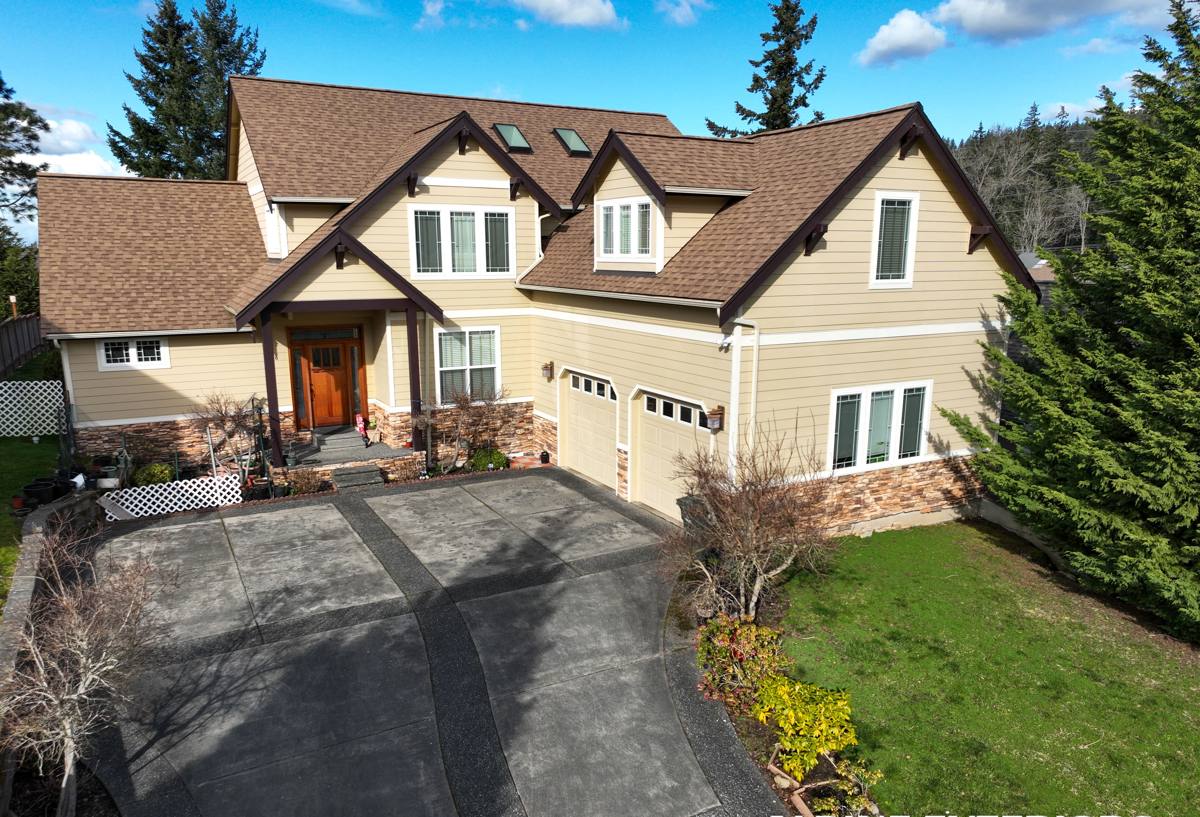
What a Roof Actually Needs to Hold Up Here
Underlayment and Water Barriers
A synthetic underlayment rated for the assembly is the baseline, but the detail that matters most in this climate is where ice-and-water shield membrane gets used — valleys, eaves, and around every penetration. These are the spots where wind-driven rain and ponding meltwater find gaps. Skipping self-adhered membrane in those areas to save a little money is one of the more common shortcuts we see on older Whatcom County roofs, and it's usually where the first leak shows up.
Ventilation
Balanced intake and exhaust ventilation keeps moisture from building up in the attic, which matters twice over here: it protects the roof deck from rot, and it keeps the underside of the sheathing from staying damp enough to feed mold. A roof can look fine from the street and still be failing from the inside if the attic isn't breathing properly.
Flashing and Fasteners
Corrosion-resistant flashing and fasteners aren't optional this close to salt water. Standard galvanized components can start showing rust streaks and weakening well before the shingles themselves are due for replacement. We treat flashing quality as part of the roofing system, not an afterthought bent on-site from whatever's on the truck.
Signs a Bellingham Roof Is Falling Behind
Most roof failures here don't show up as a dramatic leak first — they show up as small signals that get ignored for a season or two. Worth checking for:
- Moss mats forming in the shaded, north-facing sections of the roof, especially near tree cover
- Granules collecting in gutters or at downspout outlets after a heavy rain
- Shingle edges curling, cupping, or lifting slightly at the corners
- Dark streaking that isn't just dirt — often algae, which spreads if left alone
- Soft or spongy spots when walking the roof, a sign the deck underneath is absorbing moisture
- Water stains on interior ceilings, even faint ones that seem to dry up between storms
Any one of these on its own isn't an emergency. Several together, or moss that's been allowed to mat up for more than a season, usually means it's time for an honest inspection rather than another round of surface cleaning.
Choosing the Right Shingle for a Wet, Shaded Climate
Not every asphalt shingle product is built the same way, and in a climate like this, the difference matters more than the price tag alone suggests.
| Shingle Type | Best For | Trade-Offs in This Climate |
|---|---|---|
| Standard 3-tab | Budget re-roofs, simple rooflines | Lower wind rating and less algae resistance; shows moss and streaking sooner |
| Architectural (dimensional) | Most Bellingham homes | Heavier, better wind rating, longer warranty; the practical default for coastal exposure |
| Algae-resistant (AR) granules | Shaded lots, north-facing slopes, homes near mature trees | Copper- or zinc-infused granules slow algae growth; worth the small upcharge here specifically |
| Impact-resistant (Class 4) | Homes wanting longer-term durability | Higher upfront cost; can sometimes reduce insurance premiums — worth asking your carrier |
For most homes in and around Bellingham, we steer people toward an architectural shingle with algae-resistant granules as the sensible baseline, not an upsell. On heavily shaded lots or homes closer to the water, that upgrade tends to pay for itself in fewer moss treatments and a longer stretch before the roof looks tired.
How We Handle a Bellingham Re-Roof
The process itself isn't exotic, but the sequence and attention to detail are where a roof either holds up to this climate or doesn't.
- Tear-off and deck inspection. We remove the old roofing down to the deck and check for soft, rotted, or delaminated sheathing before anything new goes down — covering up a compromised deck is how roofs fail early.
- Ice-and-water membrane at vulnerable points. Valleys, eaves, and penetrations get self-adhered membrane, not just felt or synthetic underlayment alone.
- Underlayment across the field. A full synthetic underlayment layer for secondary protection.
- Flashing. New corrosion-resistant flashing at chimneys, walls, vents, and valleys — reused flashing is a common source of future leaks and we avoid it unless it's genuinely still sound.
- Ventilation check and correction. We verify intake and exhaust are balanced for the attic volume, adding or adjusting vents where needed.
- Shingle installation to manufacturer spec. Correct nailing pattern, exposure, and fastener count for the wind exposure this site actually sees — not just the minimum.
- Cleanup with a magnetic sweep. Nails and debris cleared from the yard and driveway before we consider the job done.
Moss and Algae: Maintenance That Actually Works
A well-installed roof still needs upkeep in this climate — that's just the trade-off of living somewhere this green. The difference between a roof that ages gracefully and one that needs premature replacement usually comes down to a few habits:
- Install zinc or copper strips near the ridge on moss-prone roofs — rain carries trace metal down the slope and slows regrowth without scrubbing
- Avoid pressure washing shingles; it strips granules and shortens the roof's life faster than the moss it removes
- Clear gutters and valleys of needles and debris at least twice a year — clogged gutters hold moisture against the roof edge
- Trim back overhanging branches where practical to cut down shade and debris load
- Have moss physically brushed off (not scraped) by someone who knows how to do it without lifting granules or shingle tabs
- Get a roof looked at after any major windstorm, even if nothing looks obviously wrong from the ground
Cost Factors for a Bellingham Re-Roof
We don't quote a number without seeing the roof, but the variables that actually move the price are consistent from job to job:
| Factor | Why It Matters |
|---|---|
| Roof pitch and access | Steep or hard-to-access roofs take longer and require more safety setup |
| Number of existing layers | Tearing off multiple old layers adds labor and disposal cost |
| Deck condition | Rotted or soft sheathing found during tear-off needs replacement before shingles go down |
| Shingle grade selected | Standard 3-tab, architectural, and algae-resistant/impact-resistant options price differently |
| Ventilation or flashing upgrades | Bringing an older roof's ventilation or flashing up to current standards adds scope |
| Roof complexity | Valleys, dormers, chimneys, and skylights all add labor versus a simple rectangular roof |
We walk through each of these during an estimate so the number makes sense, rather than handing over a flat figure with no explanation behind it.
Why It Matters to Hire a Crew That Already Works Bellingham
Roofing crews that mostly work drier inland areas sometimes treat coastal Whatcom County jobs the same way they'd treat a roof fifty miles east — same underlayment package, same ventilation assumptions, same shingle recommendation regardless of tree cover or water exposure. That approach misses the details that actually determine how long a roof lasts here.
Working Bellingham and the surrounding Birch Bay area regularly means we've seen which north-facing slopes moss up first, which older neighborhoods tend to have flashing that's due for replacement, and which parts of town catch the worst of the wind off the water. It also means we're close enough to respond quickly if a storm causes damage, rather than scheduling a visit weeks out. That local familiarity doesn't replace good workmanship, but it does mean fewer surprises and a roof that's actually specified for the conditions it has to survive.
If you're weighing a repair against a full re-roof, or just want an honest read on how much life is left in your current shingles, we're happy to take a look. Reach out for a free, no-pressure estimate using the form below — we'll walk the roof, tell you what we actually see, and lay out your options without any pressure to decide on the spot.