 Birch Bay Exterior
 Windows on Lummi Island Work Harder Than Most
Lummi Island sits out in the salt air off the Whatcom County mainland, and that changes what "normal wear" looks like on a house. Windows here take a steady diet of moisture-laden wind, wind-driven rain that hits siding and glass at an angle instead of straight down, and a moss season that can run from fall through spring. A window that would coast along for twenty-five years in a sheltered inland neighborhood often shows failure signs on the island in half that time — fogged glass, soft trim, hardware that won't latch right anymore. Replacing windows out here isn't just a cosmetic upgrade; it's maintenance on the building envelope itself.
We work on Lummi Island regularly out of Birch Bay, and the patterns repeat house to house: older wood-frame windows with failed glazing, aluminum-frame slider windows from a past remodel that condensate heavily in winter, and vinyl units installed without proper flashing that are now leaking into the wall cavity. None of that is unusual for a marine-exposed island property — it's just what salt air and driving rain do to a window over time if the install or the product wasn't matched to the exposure.
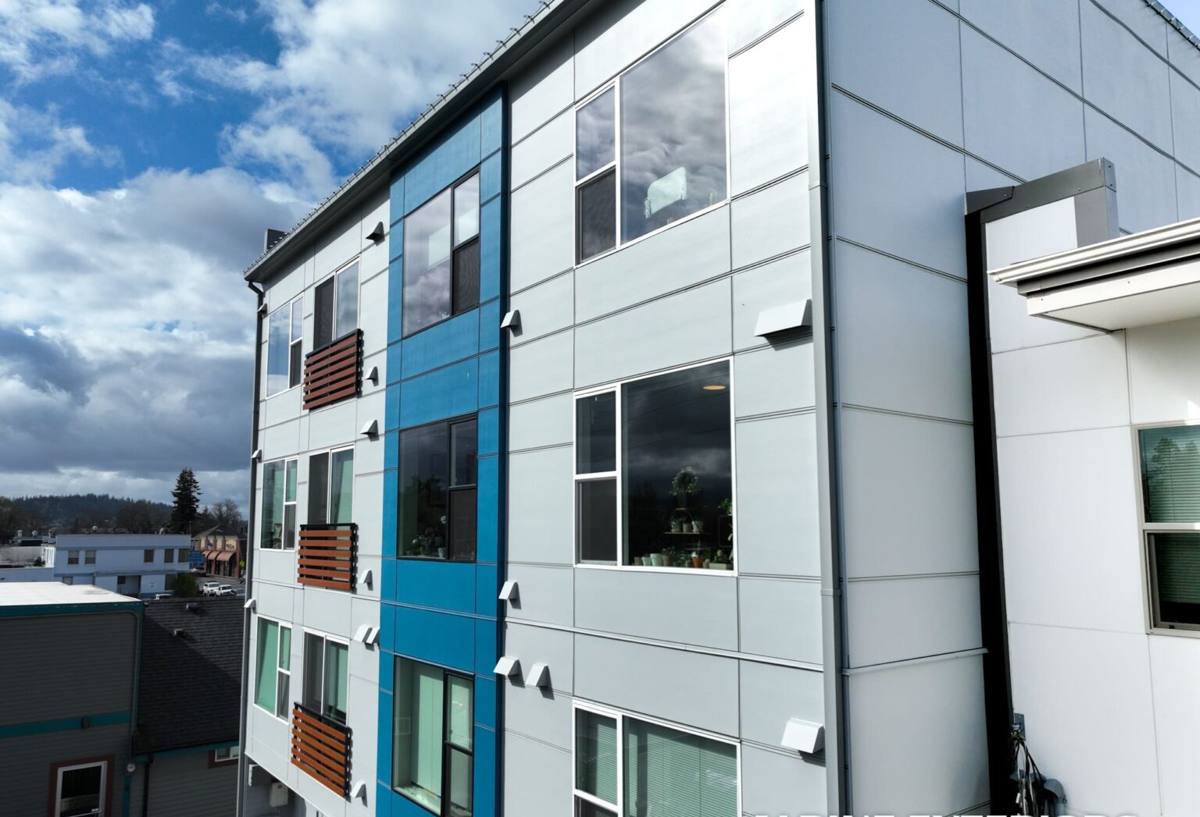
What Salt Air, Driving Rain, and Moss Do to a Window Assembly
Salt Air
Airborne salt is corrosive to metal window hardware — hinges, cranks, locks, and balance mechanisms — and it accelerates the breakdown of some sealants and finishes faster than a few miles inland. Aluminum-frame windows without a marine-grade finish are especially prone to pitting and chalking near the water.
Driving Rain
Wind off the water doesn't just fall on a window, it pushes into it. That means head flashing, sill pans, and the seal between the window frame and the rough opening matter more here than they would on a calmer inland lot. A window that's watertight in a still rain can still leak in a sideways storm if the flashing detail was cut short.
Moss and Sustained Moisture
Long damp seasons keep moss and algae established on north-facing walls and window sills longer than in drier parts of the county. Trapped moisture at a poorly sealed sill is exactly where rot starts — often invisible from inside until the trim is soft or the interior sill is stained.
Signs a Lummi Island Home Needs Window Replacement
- Fogging or a visible haze between the panes of a double- or triple-glazed unit (seal failure — cannot be fixed, only replaced)
- Soft, spongy, or discolored wood trim or sill, especially on the weather side of the house
- Windows that are hard to open, close, or lock, or that whistle in wind
- Visible daylight or a draft felt around the frame with your hand
- Peeling paint or bubbled finish concentrated around the window opening, not the wall generally
- Persistent moss or dark staining at the sill that keeps returning after cleaning
- Noticeably colder rooms near certain windows in winter, or condensation forming on the interior glass
What a Correct Job Actually Involves
Swapping glass units into an existing opening is not the same job as replacing a window correctly on a marine-exposed property. On Lummi Island, we treat the flashing and sealing details as the part of the job that actually determines whether the window lasts, not the part that gets rushed to hit a schedule.
- Opening inspection — before anything goes in, we check the sheathing and framing around the old window for hidden rot or moisture damage. This is where a lot of surprises turn up on older island homes, and it needs to be dealt with before a new window goes in, not after.
- Sill pan flashing — a sloped, sealed sill pan directs any water that gets past the window out, not into the wall. This is a step that's easy to skip and impossible to verify once the trim is back on, which is part of why the installer matters as much as the product.
- Window selection and fit — sized and specified for the actual exposure of that wall, not a one-size approach across the whole house.
- Air and water sealing — proper sealant at the frame, correctly lapped house wrap or weather-resistive barrier, and head flashing that sheds water down and out over the window, not just caulk smeared over gaps.
- Interior and exterior trim — finished so the trim itself isn't creating a new place for water to sit.
- Final function check — every sash operates, locks, and seals the way it should before we call it done.
Frame Material: What Holds Up Best Near the Water
| Material | Salt air / moisture performance | Maintenance | Notes for island exposure |
|---|---|---|---|
| Vinyl | Good — won't corrode or rot, resists moisture well | Low | Solid value option; quality varies a lot by manufacturer, so we're selective about which lines we install |
| Fiberglass | Very good — dimensionally stable, resists warping and corrosion | Low | Higher upfront cost, holds paint finishes well over time in marine air |
| Wood (unclad) | Poor unless meticulously maintained | High — regular repainting/sealing | We generally steer clients away from unclad wood on direct-exposure walls here; the upkeep burden in this climate is real |
| Wood-clad (vinyl or aluminum exterior) | Good — exterior shell protects the wood core | Moderate | Interior wood look with better weather protection; clad joints need to be well-sealed at install |
| Aluminum | Fair to poor without marine-grade coating | Moderate | Prone to pitting near the water unless properly finished; less commonly what we recommend on waterfront-adjacent walls |
There's no single "best" frame material for every house — it depends on the wall's actual exposure, the home's style, and budget. What matters more than the brand name on the window is whether the product is rated for the exposure it's going into and whether it's installed with the flashing details above. We'll walk through the honest trade-offs for your specific walls rather than push one product line across the board.
How We Handle Lummi Island Jobs
Working on the island means planning around the ferry, and we build that into the schedule rather than treating it as a surprise. A few things we do differently for island projects:
- We batch material deliveries and crew trips to minimize ferry crossings and keep the project on schedule
- Windows are ordered and confirmed on-site before the crew mobilizes, so we're not making a second trip for a missing piece
- We plan weather windows carefully — an open wall during a driving rain event is a bigger problem on an exposed island lot than it is inland, so timing matters
- Old materials and debris are hauled off the island with us, not left for a separate trip
None of this is complicated, but it does mean a contractor who hasn't worked the island before is learning that logistics on your project's timeline. We've already worked it out.
What Drives the Cost
| Factor | Why it matters here |
|---|---|
| Number and size of openings | Larger view windows facing the water cost more but are often the ones worth upgrading first |
| Frame material | Vinyl is typically the most economical; fiberglass and wood-clad cost more upfront |
| Condition of the existing opening | Hidden rot or framing damage found during removal adds cost — common on older island homes |
| Access and logistics | Ferry scheduling and site access can affect crew time on harder-to-reach properties |
| Glass package | Higher-performance glass (better insulating value, tempered where required) costs more but pays off in comfort and energy use |
| Trim and finish work | Matching existing exterior trim or upgrading it adds labor and material |
We give a written estimate that breaks these out so you can see what you're paying for, and we'll flag likely surprises (like suspected rot behind an old window) before the work starts wherever possible.
A Few Things to Check Before You Call Anyone
- Note which windows feel drafty, fog between the panes, or won't latch — this helps prioritize if you're not replacing the whole house at once
- Look at the exterior trim around each window for soft spots or peeling finish
- Check interior sills after a hard rain for dampness or staining
- Think about which rooms feel coldest in winter — that's often a window issue, not just insulation
- Have a rough sense of your priorities: energy performance, low maintenance, matching an existing home style, or simply stopping active leaks
Why It Matters Who Installs Them
A window is only as good as its installation. On a marine-exposed, ferry-served property like Lummi Island, a rushed or generic install shows up as a callback within a year or two — a leak at the sill, a drafty corner, hardware already pitting. A crew that treats the flashing and sealing details as the actual job, and that already knows how to plan logistics around the island, is the difference between a window that quietly does its job for decades and one you're troubleshooting again soon. We'd rather take the extra time to do the sill pan and flashing right than come back out for a leak.
If you're weighing whether it's time to replace windows on your Lummi Island home, we're happy to take a look and give you a straightforward, no-pressure estimate — no hard sell, just an honest read on what your windows need and what it'll cost to do it right. Use the form below to get started.