 Birch Bay Exterior
 Window Replacement for the Terrell Creek Area of Birch Bay
The Terrell Creek corridor sits in that in-between zone that makes Birch Bay tricky on windows: close enough to the water to catch salt-laden air off the bay, low and shaded enough along the creek to hold moisture and shadow longer than open lots, and exposed enough to the region's driving winter rain that any weak point in a window's seal eventually gets found. Homes here range from older places with original single-pane or early dual-pane units to newer builds where the windows are fine but the installation around them wasn't. Either way, the fixes look different than they would on a dry-side, inland house, and that's the gap a lot of general contractors miss.
We work in this specific stretch of Whatcom County regularly, not as a one-off drive-out. That matters more with windows than almost any other exterior trade, because a window replacement is really two jobs stacked on top of each other: swapping the unit itself, and getting the flashing, sealant, and water management around it right for local conditions. Get the second part wrong and the new window will still fail in a few years, just like the old one did.
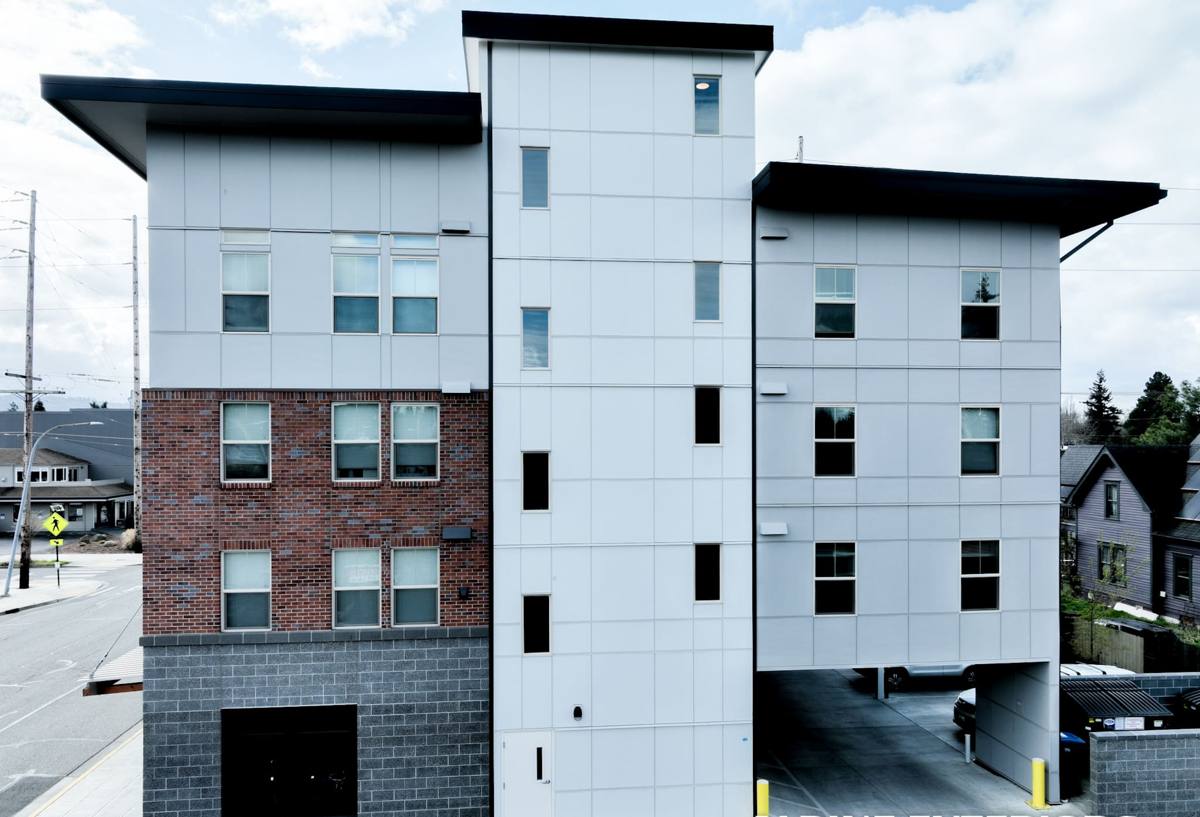
What Salt Air, Rain, and Moss Season Actually Do to Windows
It helps to understand the specific failure paths, because they change what "correct installation" means in this area.
Salt Air
Airborne salt from the bay accelerates corrosion on exposed hardware — hinges, locks, cranks, and especially aluminum components. It also degrades some sealants and finishes faster than they'd wear inland. This is why hardware and frame material choice matters more here than in a drier, inland part of the county.
Driving Rain
Whatcom County's winter storms don't just drop rain straight down — wind pushes it sideways into wall assemblies, which means the flashing and sealing details around a window do more work here than in a calm-weather climate. A window that's watertight in a still rain can still leak under wind-driven rain if the flashing was cut short or the sill pan was skipped.
Moss and Shade
Along the creek corridor, tree cover and lower sun exposure keep siding and trim damp longer after a storm. Sustained moisture near a window opening is what lets rot start in the wood framing behind the trim, often well before it's visible from outside. By the time staining or soft wood shows up around a frame, there's usually already hidden damage.
Signs Terrell Creek Homeowners Should Watch For
Most window failures don't announce themselves with a leak on day one. They show up as smaller signals first.
- Fogging or a permanent haze between panes on dual-pane windows — the seal has failed and the gas fill is gone
- Soft, spongy, or discolored wood trim or sill at the base of a window
- Visible daylight or a draft you can feel with a hand along the frame edge
- Paint bubbling or peeling on interior or exterior trim near the window opening
- Windows that are hard to open, close, or lock — frames can rack out of square as wood swells and shrinks with moisture cycles
- A musty smell in the room, especially on the shaded or creek-facing side of the house
- Visible corrosion or chalky white buildup on aluminum frames or hardware
- Noticeably higher heating bills in winter with no other explanation
Any one of these alone isn't an emergency. Two or three together, especially on a shaded or bay-facing wall, is usually a sign the window and the water management behind it both need attention.
What a Correct Window Replacement Job Actually Involves
Swapping a window sounds simple — pull the old one, set the new one, caulk the edges. Done that way, it fails faster in this climate than it should. A correct installation for a Terrell Creek home includes several steps that don't show once the trim is back on, which is exactly why they're easy for a rushed crew to skip.
Before the Old Window Comes Out
We check the rough opening for existing rot or water damage. If the framing behind the old window has been absorbing moisture, that gets addressed before anything new goes in — installing a new window over damaged framing just hides the problem for another few years.
Water Management, Not Just Caulk
A sill pan under the window directs any water that does get past the exterior seal back outside instead of into the wall cavity. Flashing tape integrates with the house wrap or building paper in the correct shingle-lap order — top piece overlapping the side pieces, side pieces overlapping the sill pan — so water always sheds downward and outward. Caulk is the last line of defense, not the only one, which matters given how much wind-driven rain this area sees.
Setting and Sealing the Unit
The window gets shimmed level, plumb, and square, then fastened per the manufacturer's schedule. Insulation goes into the gap between the frame and the rough opening — not packed tight, which can bow the frame, but filled enough to stop air movement. Interior and exterior sealant beads go in at the right points, with backer rod where gaps are too wide for sealant alone to bridge properly.
Trim and Finish
Exterior trim gets reinstalled or replaced with attention to how it sheds water — trim that traps moisture against the wall is a slow rot risk even on a brand-new window. Interior trim and paint or stain finish the job.
Choosing the Right Frame Material for This Location
Frame material choice matters more near the bay than it would a few miles inland, mainly because of how each material handles salt exposure and moisture cycling over time.
| Frame Material | Salt Air Behavior | Moisture Behavior | Maintenance |
|---|---|---|---|
| Vinyl | Doesn't corrode; UV and salt exposure can affect color/finish over many years | Won't rot; seams and welds are the points to install carefully | Low — occasional cleaning |
| Fiberglass | Very stable; resists corrosion and expands/contracts close to glass | Won't rot; dimensionally stable in wet-dry cycles | Low |
| Aluminum | More prone to corrosion and pitting in salt air over time unless properly coated | Conducts cold, can contribute to interior condensation | Moderate — hardware and finish need periodic attention |
| Wood / Wood-clad | Cladding protects the exterior face; any breach exposes wood to salt-driven decay | Highest rot risk if the exterior seal or cladding is ever compromised | Higher — finish and caulk lines need regular inspection |
We don't push one material on every homeowner — budget, the home's style, and personal preference all factor in. But for a bay-adjacent, shaded lot near Terrell Creek, we're upfront when a lower-maintenance material is going to hold up with less babysitting than the alternative, and we'll say so even if it's not the most expensive option on the list.
Our Process, Start to Finish
- Walkthrough and assessment — we look at each window from inside and out, check trim and sill condition, and note which openings are showing early water intrusion signs versus which are just aging out
- Written estimate — clear scope, material options, and pricing before anything is scheduled
- Scheduling around weather — window openings can't sit exposed during a storm, so we plan install days around the forecast, which is a bigger factor here than in drier parts of the state
- Removal and opening inspection — old window comes out, framing gets checked and repaired if needed before the new unit goes in
- Installation — sill pan, flashing, shimming, insulation, and sealing as described above
- Trim, finish, and cleanup — interior and exterior trim finished, worksite cleaned, old windows hauled off
- Final walkthrough — we check operation, locks, and seals with you before calling the job done
What Drives Cost on a Terrell Creek Window Job
We're not going to quote firm numbers here since every house is different, but these are the factors that actually move the price on a job in this area, roughly ordered by typical impact.
| Factor | Why It Matters |
|---|---|
| Number and size of windows | Straightforward — more openings and larger units mean more material and labor |
| Hidden rot or framing damage | Common along the creek corridor's shaded walls; repair work here is the biggest source of cost surprises, which is why we check before quoting a firm final number |
| Frame material | Fiberglass and higher-end vinyl cost more up front than basic vinyl, but often less over the ownership life of the window |
| Wall type and window style | Retrofitting into masonry or stucco, or changing a window's size or style, adds labor beyond a like-for-like swap |
| Access and site conditions | Second-story windows, tight side yards, or landscaping close to the house can add setup time |
| Interior and exterior trim work | Full trim replacement costs more than reusing sound existing trim |
The one we'll flag hardest is hidden rot. On a shaded, creek-adjacent lot, it's common enough that we build a proper inspection into the estimate process rather than guessing and adjusting the price mid-job.
Why a Crew That Already Works Terrell Creek Matters
None of the details above are exotic — sill pans, correct flashing laps, material selection for salt exposure — but they're details that get skipped by crews that don't regularly work this specific stretch of Whatcom County. A crew based somewhere dry and inland doesn't build the same instinct for where moisture collects on a shaded, bay-adjacent lot, or which frame materials are worth the extra upfront cost out here. We're not saying every outside contractor does bad work. We're saying local, repeated experience in this exact microclimate is what turns "installed correctly on paper" into "still watertight in five winters."
It also means we're not guessing at code requirements, egress rules, or typical framing conditions for homes built in this area during different decades — we've already seen the patterns.
Maintenance That Extends the Life of New Windows
A correct installation buys you years, but a little upkeep buys you more. In this climate, the routine is short but worth keeping to:
- Rinse salt residue off frames and hardware a couple of times a year, especially on bay-facing walls
- Keep gutters and downspouts clear so roof runoff isn't sheeting down over window trim
- Trim back vegetation that's shading a window and keeping trim damp longer than it should stay
- Check exterior caulk lines annually and touch up any that have cracked or pulled away
- Wipe down and lubricate hardware — locks, cranks, hinges — once a year to head off salt corrosion
- Watch for moss or algae buildup right at the sill, which signals standing moisture
None of this is complicated, but skipping it is exactly how a well-installed window ends up needing early attention anyway.
If your Terrell Creek area home has windows showing any of the signs above, or you're simply ready to stop fighting drafts, fog, and sticky frames, we're happy to take a look. The estimate is free, there's no pressure to book on the spot, and you'll get a straight answer about what your windows actually need — just fill out the form below to get started.