 Birch Bay Exterior
 Roofing Sandy Point: A Different Set of Conditions
Sandy Point sits close enough to the water that its homes take a different kind of beating than a roof three miles inland in Blaine or Custer. Salt-laden air off the Strait of Georgia works on exposed fasteners, flashing, and metal accessories year-round. Wind off the water drives rain sideways into eaves, ridge caps, and any flashing detail that wasn't installed tight the first time. And because this stretch of Whatcom County stays cool and damp for most of the year, moss and algae get a long growing season on any roof that holds shade or moisture.
None of that means Sandy Point roofs need something exotic. It means the fundamentals — tear-off, decking condition, underlayment choice, ventilation, and flashing detail — matter more here than they would in a drier climate, and cutting corners on any one of them shows up faster on a waterfront roof than an inland one.
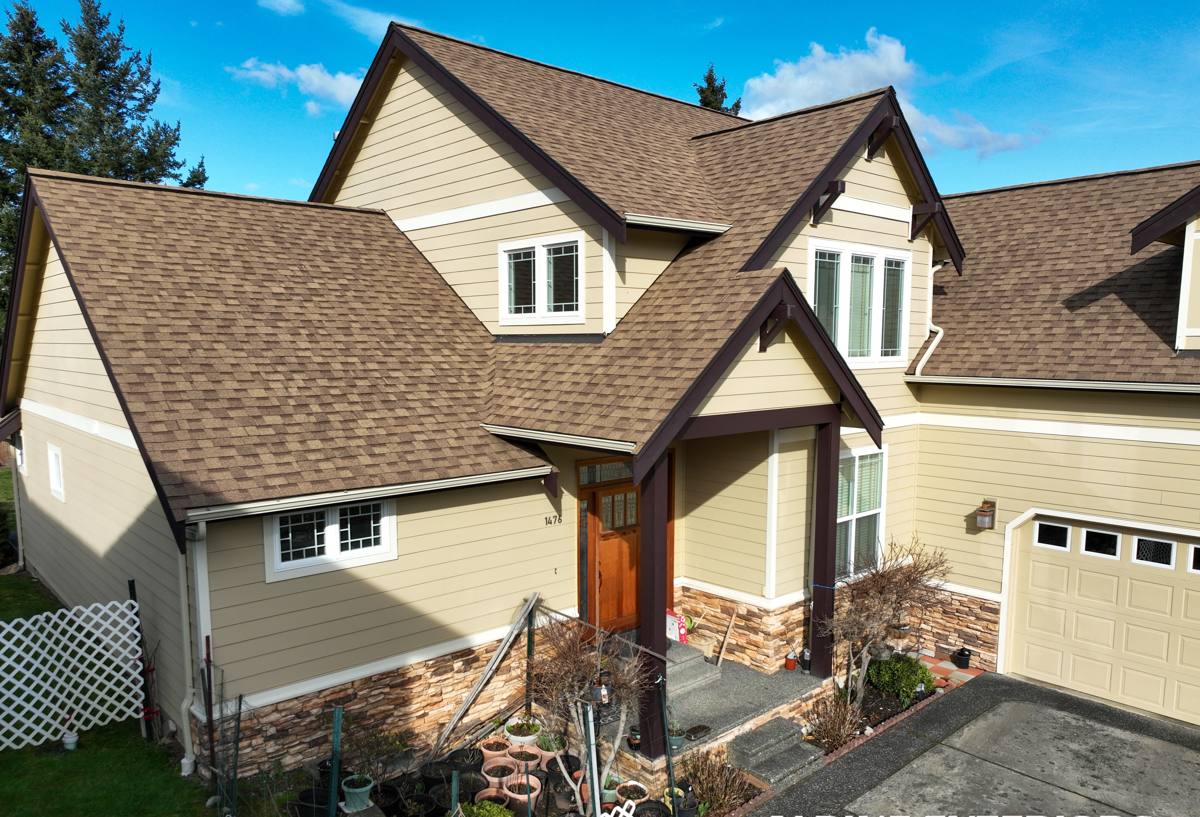
How to Tell a Roof Is Actually Done, Not Just Old
A lot of roofs get replaced too early because moss or streaking makes them look worse than they are, and just as many get patched too long because the damage isn't visible from the ground. Before you commit to a full replacement, it's worth knowing what actually signals the decking and structure underneath are failing, versus what's just cosmetic.
Signs worth a closer look
- Granule loss heavy enough that you're finding grit in gutters and downspouts every time it rains
- Shingles that are cupping, curling at the edges, or cracking when you press on them
- Soft or spongy spots when walked, especially near valleys or chimney flashing
- Daylight visible through the roof deck from inside the attic
- Persistent moss growth that's lifted shingle edges rather than just sitting on the surface
- Staining on interior ceilings or attic framing, even if it's not actively dripping
- Flashing around vents, skylights, or chimneys that's rusted, pulled loose, or caulked over repeatedly instead of properly sealed
One or two of these on their own might mean a repair. Several together, especially combined with a roof that's already 18-25 years old, usually means it's time to plan a replacement rather than keep chasing leaks.
What a Correct New Roof Installation Actually Involves
"New roof" covers a wide range of quality outcomes, and the difference is almost never visible from the street. It's in the layers underneath.
Tear-off and deck inspection
We remove the old roofing down to the deck rather than laying new material over old — overlays trap moisture and hide problems, which is a bad trade-off anywhere but a particularly bad one in a climate this damp. With the deck exposed, we check every sheet of plywood or OSB for soft spots, delamination, or water staining and replace anything compromised before new material goes down.
Underlayment
This is the roof's real waterproofing layer, and it matters more than most homeowners realize. In a climate with as much driving rain as Sandy Point sees, we treat underlayment as a primary defense, not an afterthought — synthetic underlayment across the field, with self-adhered ice-and-water membrane at eaves, valleys, and any penetration where wind-driven rain is most likely to find a way in.
Flashing
Flashing failures are the single most common source of roof leaks, and they're almost always an installation problem, not a material one. Step flashing at walls, counter-flashing at chimneys, and proper flashing at every vent and skylight get done individually and correctly — not bridged with a bead of caulk that will fail in a few winters.
Ventilation
A roof that can't breathe traps moisture underneath the deck, which accelerates rot and gives moss and algae an even easier foothold from below. Balanced intake and exhaust ventilation is part of a correct install, not an upsell.
Material Options and How They Hold Up Locally
There isn't one "correct" roofing material for Sandy Point — the right choice depends on your budget, your home's style, and how much long-term maintenance you want to take on. Here's how the common options actually perform under salt air, driving rain, and moss pressure.
| Material | Moss/algae resistance | Wind & wet-weather performance | Typical lifespan | Maintenance |
|---|---|---|---|---|
| Architectural asphalt shingle | Moderate — algae-resistant (AR) shingles help but don't eliminate moss | Good when properly nailed and flashed; rated for regional wind exposure | 25-30 years | Periodic moss/debris removal recommended |
| 3-tab asphalt shingle | Lower — less mass to resist moss intrusion at edges | Adequate but more vulnerable to wind lift over time | 15-20 years | More frequent inspection needed |
| Standing seam metal | High — smooth surface sheds moisture, little for moss to grip | Excellent; handles wind-driven rain and salt air well with proper coating | 40-50+ years | Low; occasional coating check over decades |
| Composite/synthetic shingle | Moderate to high depending on product | Good; engineered for wind resistance | 30-50 years | Low to moderate |
We don't push one material as the answer for every roof. What we do is talk through the actual trade-offs — upfront cost against lifespan, maintenance tolerance, and how the material's warranty structure holds up given the moisture and salt exposure your specific roof deals with — so you're choosing with full information rather than a sales pitch.
Moss and Algae: Managing It From the Start
Given how long the growing season runs in this part of Whatcom County, no roof here is going to be permanently moss-free without some level of ongoing attention. What a correct installation can do is reduce how fast moss takes hold and how much damage it does before you catch it.
Zinc or copper strips installed near the ridge let rain carry trace metal ions down the roof surface, which suppresses new moss growth over time — a low-maintenance addition worth discussing at the estimate stage. Beyond that, keeping trees trimmed back so the roof gets sun and airflow, and cleaning gutters and valleys where debris collects, does more to prevent moss than any product applied after the fact.
Our Installation Process
The process is the same whether the roof is on a modest single-story home or a larger waterfront property — what changes is the scale.
- On-site assessment — we walk the roof, check the attic if accessible, and look at the specific exposure your home has to wind and rain off the water.
- Written estimate — material options, scope, and a clear price, not a range with hidden add-ons.
- Scheduling around weather — we plan tear-off days around forecasted dry windows and keep the deck protected if conditions turn.
- Tear-off and deck repair — old roofing removed, deck inspected and repaired as needed.
- Underlayment, flashing, and material installation — done in the sequence that keeps water out at every stage, not just at the end.
- Final walkthrough — cleanup, magnetic nail sweep of the yard, and a review of the finished roof with you before we consider the job done.
Why a Crew That Already Works Sandy Point Matters
A roofing crew that mostly works inland jobs isn't necessarily going to do a bad job on a Sandy Point roof — but they're more likely to treat it like a standard install rather than adjusting for what's actually different here. A crew that regularly works this stretch of Birch Bay already knows which flashing details tend to fail first under this wind pattern, how much ice-and-water membrane coverage actually makes sense given the rain exposure, and what ventilation setup performs well on homes this close to the water.
That familiarity also shows up in smaller, practical ways: knowing which roads and driveways handle a material delivery truck without issue, understanding typical permitting turnaround with the county, and having a realistic sense of how weather windows actually play out here rather than working off a generic forecast.
What to Have Ready for Your Estimate
A little preparation makes the estimate visit faster and the resulting quote more accurate.
- Any history of past leaks or repairs, even minor ones you patched yourself
- Roughly how old the current roof is, if known
- Attic access, if you have any concerns about staining or ventilation
- Whether you're planning any related work — gutters, skylights, solar — that should be coordinated with the roof
- Your general timeline and any budget range you want to stay within
If your roof is showing its age or you just want an honest read on where it stands, we're glad to come take a look. The estimate is free, there's no pressure attached to it, and you'll get a straight answer about what your roof actually needs — use the form below to get started.