 Birch Bay Exterior
 Why Terrell Creek Roofs Take a Different Kind of Beating
Terrell Creek sits close enough to the water that homes here deal with a combination most inland roofs never see: salt-laden air, wind that comes off the water with real force, and long stretches of wet, overcast weather that never gives a roof much time to dry out. Whatcom County storms don't always bring the dramatic wind speeds you'd see further south, but they bring duration — days of driving rain pushed sideways by wind, followed by weeks of damp, shaded conditions that keep moisture sitting on the roof surface longer than it should.
That combination is why storm damage repair in this neighborhood isn't just "patch the hole and move on." A roof here can look fine from the ground after a storm and still have wind-lifted shingles, compromised flashing, or moisture working its way into the deck. We've built our repair process around what actually happens to roofs in this specific stretch of Birch Bay, not a generic checklist.
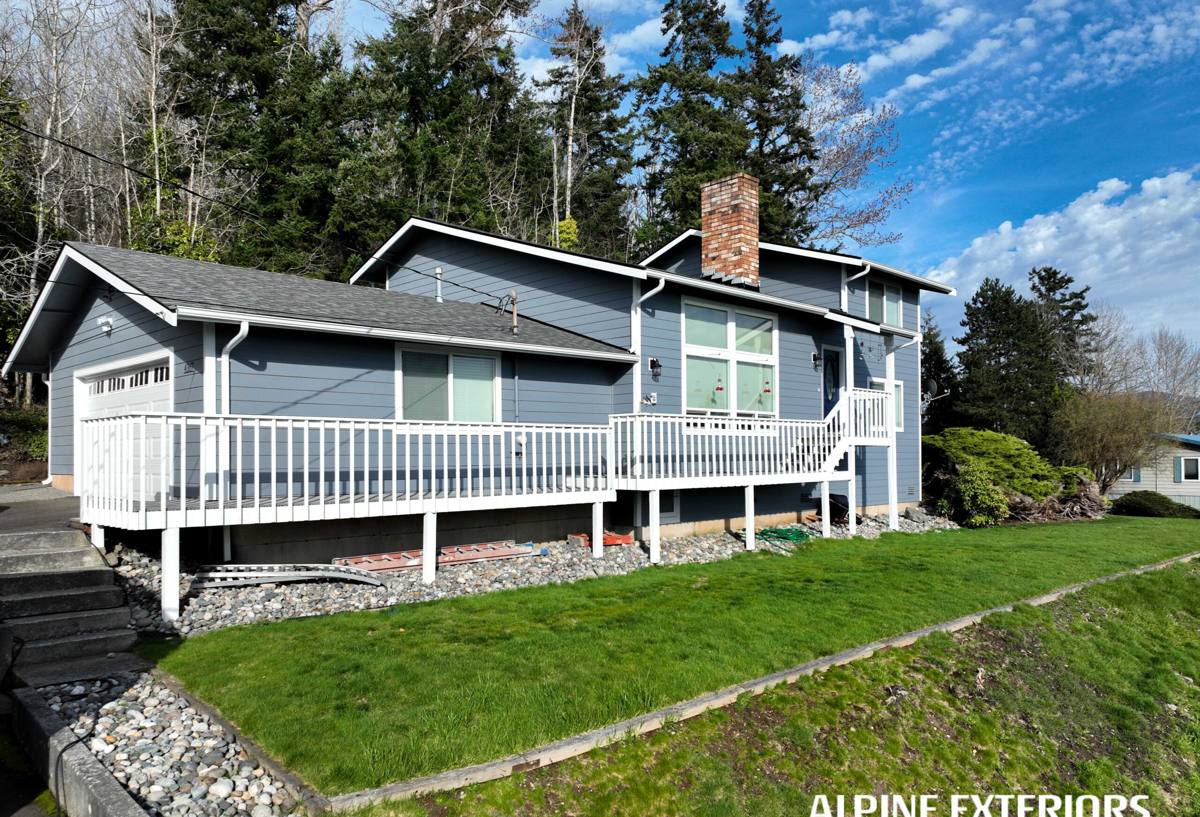
What Storm Damage Looks Like on a Terrell Creek Roof
Wind-Driven Rain and Uplift
Wind off the water doesn't just blow rain onto a roof — it drives it sideways and upward, forcing water under shingle edges, around vent boots, and into any flashing seam that isn't sealed tight. Repeated wind events gradually loosen shingle tabs and nails without necessarily tearing anything off outright. The damage builds quietly, then shows up as a leak weeks or months later, often nowhere near where the wind actually did the work.
Moss and Trapped Moisture
Birch Bay's long moss season is a direct result of shade, moisture, and mild temperatures sticking around for months at a time. Moss doesn't just look bad — its root structure holds water against the shingle surface and gradually lifts shingle edges, which is exactly the kind of small mechanical damage that turns a light rain into a real leak during the next storm. On a lot of Terrell Creek roofs, storm damage and moss damage are tangled together: the moss weakens the shingles, and the next wind event finishes the job.
Salt Air and Metal Components
Flashing, fasteners, gutters, and any exposed metal on a roof take a slow corrosion hit from salt-laden coastal air. A fastener that's lost some of its holding strength to corrosion is far more likely to back out or fail under wind load than one further inland. When we inspect storm damage here, we're always checking metal condition, not just shingle condition — a leak that looks like a shingle problem is sometimes actually a corroded flashing problem.
What a Proper Storm Damage Repair Involves
A repair that only addresses the visible damage tends to fail again in the next storm. A correct repair covers the whole path water could take, not just the spot where it showed up inside the house.
- Full roof inspection, not just the area near the reported leak — wind and moss damage rarely stay in one spot.
- Underlayment and decking check wherever shingles are removed, since prolonged moisture exposure can soften OSB or plywood decking before it's visible from above.
- Flashing evaluation at every penetration — chimneys, vents, skylights, and valleys — since these are the most common failure points in wind-driven rain.
- Matching materials as closely as possible to the existing roof, both for appearance and to avoid mixing incompatible products.
- Moss and debris removal from the surrounding roof area so the repair isn't immediately undermined by the same moisture problem that contributed to the damage.
How We Handle a Storm Damage Call in Terrell Creek
Our process is built to be straightforward and honest, especially when a homeowner is dealing with stress on top of a leak.
1. Inspection and Documentation
We walk the roof, photograph the damage, and identify not just what failed but why. This documentation matters for your own records and, if you're filing a claim, gives your insurance adjuster a clear picture instead of a vague description.
2. Straight Talk on Scope
We tell you plainly whether this is a targeted repair or whether the damage points to a bigger underlying issue — age of the roof, prior storm damage that was never addressed, or moss buildup that's compromised a wider area. We're not going to sell you a full replacement when a repair will genuinely hold, and we're not going to patch something we know won't last through the next storm season.
3. The Repair Itself
We match shingle type and color as closely as the market allows, replace compromised decking rather than covering it up, and re-flash and re-seal every affected penetration — not just the one that leaked.
4. Cleanup and Final Check
We clear debris, check gutters and downspouts for anything the storm knocked loose, and do a final walk-through so you know exactly what was done and why.
Working With Your Insurance Claim
Storm damage is one of the more common reasons Whatcom County homeowners file a roof claim, and the process goes more smoothly when the damage is documented clearly and promptly. We can provide photos, a written description of the damage, and an honest repair scope that an adjuster can review. We don't inflate damage to increase a claim, and we don't downplay it either — our job is an accurate assessment, not a sales pitch aimed at your insurance company.
If your policy has a separate wind or storm deductible, it's worth checking that figure before assuming a repair will be fully covered. We're happy to walk through what we found so you can make that call with real information.
Repair vs. Replacement: What Actually Decides It
Not every storm-damaged roof needs to come off. The decision usually comes down to a handful of factors, and we'll walk through each one with you rather than defaulting to the most expensive option.
| Factor | Favors Repair | Favors Replacement |
|---|---|---|
| Roof age | Under roughly 12-15 years | Near or past expected shingle lifespan |
| Extent of damage | Isolated to one section or penetration | Spread across multiple slopes |
| Decking condition | Solid, dry underneath removed shingles | Soft, discolored, or delaminating decking |
| Moss history | Minor, surface-level growth | Long-term moss with visible shingle lifting |
| Prior repairs | Few or none | Multiple patch jobs already on record |
These are guidelines, not hard rules — a 20-year-old roof with one damaged section can still make sense to repair if the rest of the roof is sound. We'll give you our honest read after the inspection, not before.
After the Storm: A Homeowner Checklist
Before a contractor even arrives, there are a few things worth doing yourself if it's safe to do so from the ground:
- Check ceilings and attic spaces for water stains, especially after a wind event with heavy rain
- Look at gutters and downspouts from the ground for obvious sagging, detachment, or debris blockage
- Note any shingle granules collecting in gutters or at downspout outlets — a sign of accelerated wear
- Photograph any visible roof damage from the ground for your own records
- Avoid getting on the roof yourself, particularly after a storm when surfaces may be wet or unstable
- Call for an inspection sooner rather than later — small storm damage left alone tends to compound with the next rain event, not stay the same size
Why Local Experience in Terrell Creek Matters
A crew that works this specific stretch of coastline knows things a generalist roofing outfit from further inland won't think to check: how far salt air corrosion typically progresses on exposed fasteners after a certain number of years, which roof orientations in this neighborhood take the worst of the prevailing wind, and how aggressively moss tends to establish itself given the tree cover and shade patterns common around Birch Bay. That local knowledge shortens the inspection, sharpens the diagnosis, and means fewer surprises once work starts.
It also means we're not guessing at code requirements or typical construction methods used in Whatcom County homes — we're working within what we already know about this area's building stock and climate demands.
Reducing Storm Damage Risk Going Forward
Once a repair is done, a little ongoing attention keeps the next storm from doing the same damage again. Regular moss removal, especially on north-facing or heavily shaded slopes, keeps shingle edges from lifting in the first place. Keeping gutters clear prevents water from backing up under lower shingle courses during heavy rain. And periodic inspection of flashing and fasteners — particularly on older roofs — catches salt-air corrosion before it becomes a failure point during the next windstorm.
None of this eliminates storm risk in a place like Terrell Creek, but it does mean less damage each time weather rolls through, and fewer surprise leaks in between.
If you're dealing with storm damage now, or just want a professional look at how your roof came through the last round of weather, we're glad to take a look. Fill out the form below for a free, no-pressure estimate — we'll tell you honestly what we find and what it would take to fix it.