 Birch Bay Exterior
 Terrell Creek's Microclimate: Shade, Moisture, and Salt in the Same Yard
The Terrell Creek watershed sits inland just enough from the open shoreline of Birch Bay to feel different from a beachfront lot, but it is still close enough to Whatcom County's marine air to catch salt-laden wind off the water. What makes this stretch of neighborhood unusual is the combination: homes tucked among mature trees and creek-side vegetation get more shade and standing moisture than open lots, while still absorbing the same salt exposure and driving rain that hits the rest of Birch Bay. That mix of shade, dampness, and salt air is exactly the combination that shortens the life of the wrong siding material.
Tree cover near the creek keeps siding wet longer after a storm than it would stay on a sun-exposed wall. Less direct sun means slower drying, and slower drying means more time for moss, algae, and mildew to take hold. Add Whatcom County's long wet season — a stretch that can run from fall through late spring — and you get siding that spends a large part of the year holding moisture against the wall.
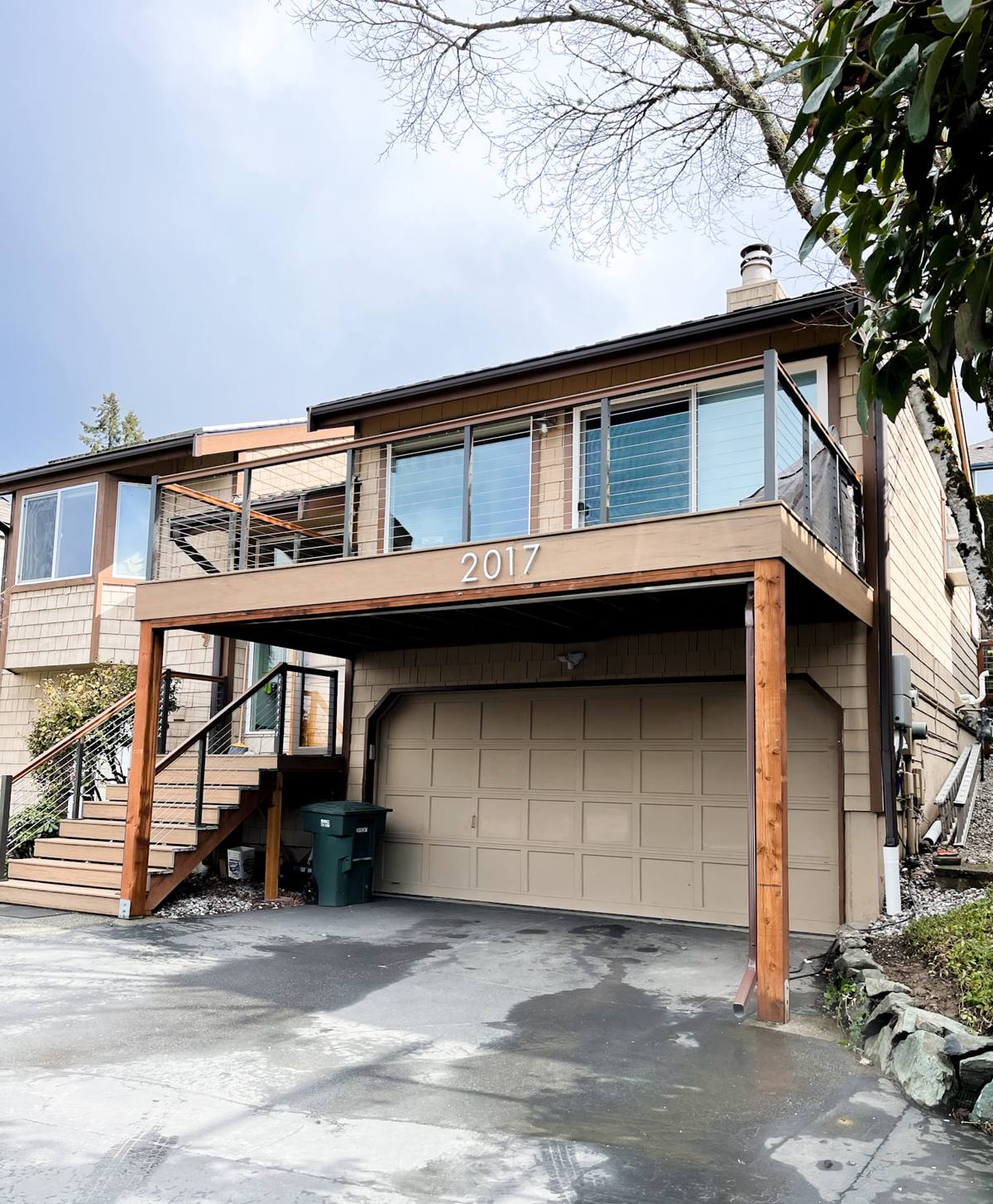
What a Long Moss Season Actually Does to Siding
Moss and algae aren't just cosmetic problems. On wood-based products they hold water directly against the substrate, feeding rot at seams, butt joints, and fastener penetrations. On vinyl, moss buildup in the panel laps traps moisture behind the cladding where it can't evaporate. The result in shaded, creek-adjacent yards is usually the same regardless of material: soft spots at the bottom courses, staining that won't pressure-wash clean, and premature failure at the joints long before the siding was supposed to need replacing.
Homes near Terrell Creek that still have their original wood or composite siding often show this pattern first at the north and east walls — the sides that get the least sun and the most standing shade from nearby trees. If you're seeing black-green staining that returns within weeks of cleaning, or paint that's bubbling low on the wall, that's moisture already inside the assembly, not just a surface issue.
Signs It's Time to Replace, Not Patch
- Soft, spongy siding when pressed near the bottom courses or under windows
- Moss or algae that regrows within a few weeks of cleaning, especially on shaded walls
- Visible gaps or warping at panel seams and butt joints
- Paint that's peeling or bubbling rather than just fading
- A musty smell near exterior walls inside the home, which can point to moisture behind the siding
Why We Install Only James Hardie Fiber Cement
Birch Bay Exterior Co made a deliberate choice to install one siding system: James Hardie fiber cement. We don't offer vinyl, LP SmartSide, Cemplank, Allura, primed spruce, or cedar, and that's worth explaining rather than glossing over.
Each of those alternatives has real strengths — cedar looks the part, vinyl is inexpensive, engineered wood products install fast. But every one of them has a weak point that matters specifically in a shaded, damp, salt-exposed spot like Terrell Creek. Wood and engineered-wood products depend on an intact factory coating and diligent field caulking to keep water out; once that coating is compromised at a cut edge or fastener, moisture gets in and doesn't dry out quickly under tree cover. Vinyl doesn't rot, but it flexes with temperature swings, can crack in cold snaps, and traps moss and grime in its lap joints where it's hard to fully clean.
James Hardie fiber cement is a cement, sand, and cellulose fiber composite. It doesn't feed mold or rot the way wood-based products can, it holds paint and factory finish far longer than wood, and it's rated non-combustible — a genuine advantage in a state where wildfire smoke and ember exposure are a real seasonal concern. Hardie's ColorPlus factory finish is baked on and warrantied against fading and cracking, which matters on a house that's going to sit under trees and take on ambient moisture for months at a stretch. For a neighborhood dealing with salt air, driving rain, and a long moss season, it's the material that holds up with the least ongoing maintenance.
Choosing the Right Hardie Product Line for This Location
James Hardie builds region-specific formulations, marketed as HZ5 and HZ10 engineered climate zones. Whatcom County, including Birch Bay and the Terrell Creek area, falls into a wet, moderate-freeze coastal zone. We spec the HZ5 formulation for this area because it's engineered for high-moisture, freeze-thaw climates like the Pacific Northwest coast — it resists moisture-related cracking and is formulated to perform in the humidity and rainfall pattern this area actually sees, rather than the drier or more extreme-freeze conditions HZ10 is built for elsewhere in the country.
Color selection matters here too. In a shaded, moss-prone spot, very dark colors show algae streaking sooner because the surface stays damp longer in low light. We'll talk through ColorPlus options with that in mind rather than picking purely on looks — plenty of darker tones still work well, but it's worth knowing how a given color behaves before it's on the wall.
What Correct Installation Involves
Fiber cement siding is only as good as the assembly behind it. A rushed or corner-cut install can leave a Hardie-clad home with the same moisture problems as a poorly installed wood or vinyl job. On every Terrell Creek project we treat the following as non-negotiable, not optional upgrades:
- Weather-resistant barrier installed and lapped correctly, with all penetrations sealed before a single course goes up
- Proper flashing at windows, doors, and any roof-to-wall intersections, so water is directed out and away rather than behind the cladding
- Correct fastening — Hardie specifies fastener type, spacing, and placement, and getting this wrong voids warranty coverage and invites cracking
- Manufacturer-spec clearances — gaps at grade, roofline, and decks so the siding never sits in standing water or constant splash-back
- Factory-cut and factory-primed edges used wherever possible, with any field cuts sealed per Hardie's installation instructions
- Caulking only where Hardie's install guide calls for it — over-caulking traps moisture just as badly as under-caulking
None of this is exotic. It's the difference between following the manufacturer's written installation instructions and not, and it's the single biggest factor in whether a fiber cement job lasts the 30-plus years it's capable of or starts showing problems in year five.
Our Terrell Creek Installation Process
- On-site assessment. We walk the property, check existing siding for hidden moisture or rot (common on shaded walls near mature trees), and inspect the sheathing condition before quoting.
- Tear-off and sheathing repair. Old siding comes off, and any water-damaged sheathing or framing found underneath gets repaired before anything new goes up — covering rot with new siding just delays the problem.
- Weather barrier and flashing installation. This is the layer that actually keeps water out; we don't shortcut it to save time.
- Hardie board installation to manufacturer spec — fastening, spacing, and clearances as outlined above.
- Trim, caulking, and touch-up at cut edges and fastener heads per Hardie's finishing guidelines.
- Final walkthrough so you can see the work up close and ask questions before we consider the job done.
Material Comparison for a Shaded, Salt-Air Location
| Material | Moisture/moss resistance | Maintenance burden | Typical lifespan here |
|---|---|---|---|
| James Hardie fiber cement | High — doesn't rot; factory finish resists staining | Occasional wash; repaint not typically needed for decades with ColorPlus | 30+ years with correct install |
| Vinyl siding | Moderate — doesn't rot, but traps moss/grime in laps; can crack in cold | Regular washing to prevent buildup in joints | 15–25 years, shorter in heavy shade |
| LP SmartSide / engineered wood | Lower — depends on intact coating; vulnerable at cut edges and fasteners | Requires diligent caulk/paint maintenance | Variable; shortened by prolonged shade/moisture |
| Cedar | Lowest without heavy upkeep — absorbs moisture, feeds moss/rot | Frequent staining/sealing and moss treatment | Shortest in shaded, damp settings without upkeep |
Why a Crew That Already Works Terrell Creek Matters
Siding work near the creek isn't quite the same as siding work on an open, sun-exposed lot elsewhere in Birch Bay. A crew that's already worked this specific area knows which walls are going to fight moss regrowth, understands how tree cover changes drying time and where extra flashing attention pays off, and has a feel for how Whatcom County's building department handles permitting and inspections for exterior work in this zone. That local familiarity shows up in small decisions — where to add extra flashing detail, which color options hold up better in shade, how to sequence the job around the area's wet stretches — that a crew passing through once wouldn't think to make.
It also matters for accountability. We're not driving in from out of the area for one job and leaving; we work this neighborhood regularly, which means the installation has to hold up because we'll be back through, and because our name is attached to houses our neighbors can see.
Keeping Your New Siding Performing Through Moss Season
Correctly installed James Hardie siding needs far less upkeep than the alternatives, but a little seasonal attention goes a long way in a shaded, damp spot like this.
- Rinse siding with a garden hose (not a pressure washer aimed directly at seams) once or twice a year, more often on shaded walls
- Trim back branches and vegetation that keep siding in constant shade or drop debris against the wall
- Check gutters and downspouts before the wet season so runoff isn't splashing back onto lower courses
- Look at caulking around windows and trim annually and flag any cracking early
- Address any moss regrowth promptly with a gentle wash rather than letting it establish
If you'd like an honest look at what your current siding is doing and what a correctly installed James Hardie system would look like on your Terrell Creek home, we're happy to come take a look. The estimate is free, there's no pressure, and we'll tell you straight what we see.