 Birch Bay Exterior
 Metal Roofing Built for the Terrell Creek Corner of Birch Bay
Homes around Terrell Creek sit close enough to Birch Bay and the Strait of Georgia that the weather off the water shapes every roofing decision, whether the owner realizes it or not. Salt-laden wind, long stretches of driving rain, and a moss season that barely takes a break from fall through spring put more stress on a roof here than the same house would see twenty miles inland. Metal roofing handles that combination better than most materials on the market, but only when it's specified and installed with this exact environment in mind. That's the gap we work in: we don't sell a generic metal roof and hope it holds up out here, we build the roof for the Terrell Creek climate specifically.
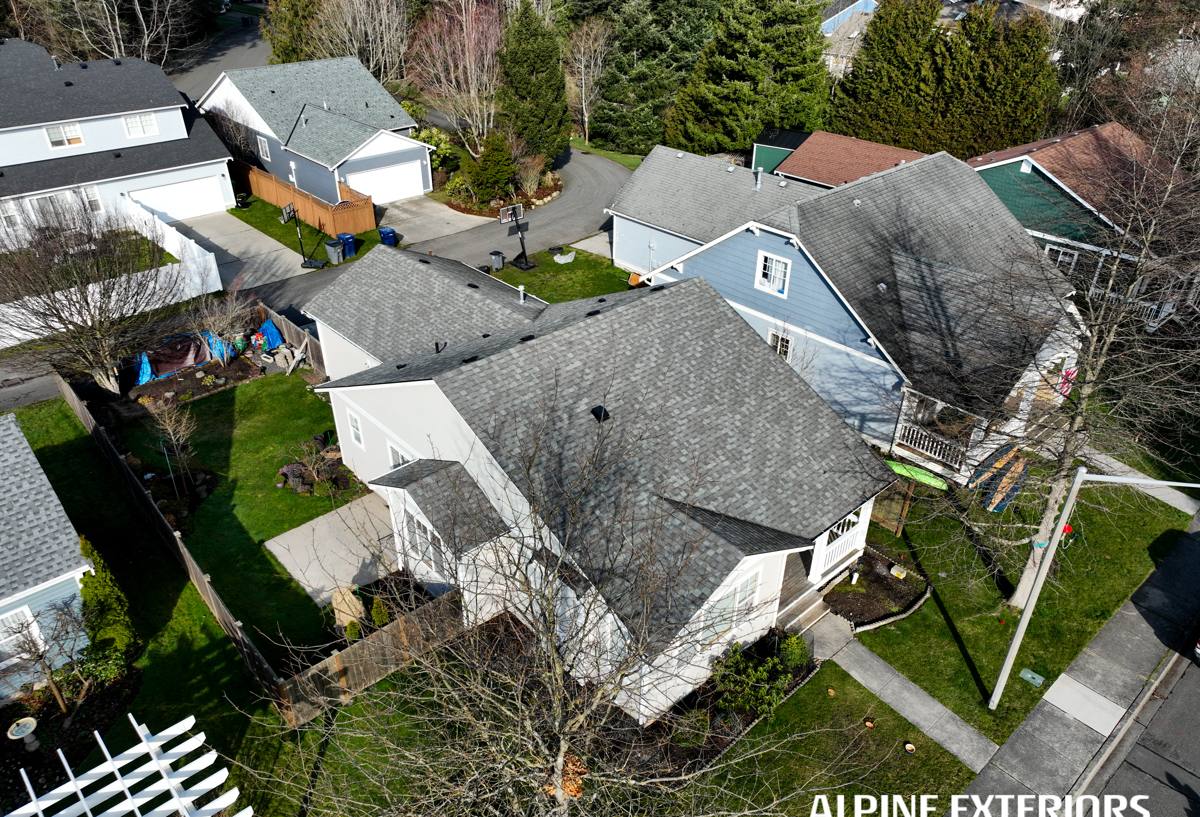
What Whatcom County's Coastal Climate Actually Does to a Roof
It helps to be specific about what "coastal wear" means, because it's not one thing — it's three separate mechanisms working on the roof at once.
Salt Air and Corrosion
Airborne salt from Birch Bay settles on every exposed surface, including roofing metal, flashing, and fasteners. Bare or poorly coated steel corrodes faster in this environment than the manufacturer's inland test data would suggest. The panel finish and the fastener grade matter more here than they would on a roof twenty miles from the water.
Driving Rain and Wind-Driven Water
Rain in this part of Whatcom County rarely falls straight down. Wind off the water pushes it sideways, which means water finds its way into laps, seams, and fastener penetrations that would stay dry in a calmer climate. Underlayment choice and seam design have to account for wind-driven rain, not just gravity drainage.
A Long Moss Season
Mild, wet winters and shaded lots near the creek and tree line give moss and lichen a long growing window — often close to year-round. Moss holds moisture against roofing material, and on some substrates it accelerates deterioration. Metal doesn't feed moss the way organic shingle surfaces do, but moss and algae can still take hold in debris and shaded valleys if the roof isn't detailed and maintained correctly.
Why Metal Roofing Fits This Environment
Metal isn't the right material for every house or every budget, but for the conditions around Terrell Creek, it solves more problems than it creates:
- Sheds wind-driven rain efficiently when seams and laps run with the prevailing weather
- Doesn't absorb water the way organic shingle mat does, so it dries out faster after a wet stretch
- Resists moss root penetration and general biological growth better than asphalt or wood surfaces
- Holds up to wind uplift when fastened and sealed to spec, which matters on exposed lots near the water
- Long service life reduces how often the roof is opened up and re-flashed — every penetration is a future leak point
The trade-off is that metal roofing is less forgiving of shortcuts. A poorly installed metal roof can leak, oil-can, or corrode prematurely faster than a poorly installed asphalt roof will fail — which is exactly why installation quality matters more here than the product spec sheet does.
Getting the Details Right for a Salt-Air Climate
Not all metal roofing is built the same, and the differences show up fastest in a coastal environment. Here's how we think through the main choices for a Terrell Creek home:
| Component | Coastal-Grade Choice | Why It Matters Here |
|---|---|---|
| Panel style | Standing seam (concealed fastener) preferred over exposed-fastener panels for most roof pitches | No exposed screw heads for wind-driven rain to work against or salt air to corrode over time |
| Panel finish | PVDF (Kynar-type) coatings over lower-grade SMP finishes | Better long-term color and chalk resistance in UV and salt exposure |
| Fasteners | Stainless steel or coated fasteners matched to the panel metal | Prevents galvanic corrosion, which shows up faster near saltwater |
| Underlayment | Synthetic, high-temp, self-adhering at eaves, valleys, and penetrations | Backup protection against wind-driven rain that finds its way past the panel laps |
| Flashing | Custom-formed, not universal stock pieces | Tight-fitting flashing at valleys and walls is where most metal roof leaks actually start |
How Our Metal Roofing Process Works
Every metal roof install follows the same sequence, but the details inside each step change based on the site — pitch, tree cover, wind exposure, and how close the lot sits to the bay.
1. On-Site Assessment
We walk the roof and the attic or crawlspace, not just the exterior. Ventilation, existing moisture damage, deck condition, and moss buildup all factor into the plan before we quote anything.
2. Tear-Off and Deck Inspection
Old roofing comes off down to the deck so we can check for soft spots, rot, or prior water damage — common on older roofs that have been fighting moss and moisture for years without full inspection.
3. Underlayment and Flashing
This is where the coastal-specific work happens: self-adhering membrane at vulnerable points, custom flashing at every wall, valley, and penetration, and attention to how wind off the water will hit the roof plane.
4. Panel Installation
Panels run and lap in the direction that sheds wind-driven rain for this specific roof's orientation, fastened with corrosion-appropriate hardware at the correct spacing for local wind exposure.
5. Final Detailing and Walkthrough
Trim, ridge caps, and penetration boots get a final check, and we walk the homeowner through what routine maintenance looks like for their specific roof.
Ventilation: The Part Homeowners Rarely Ask About
Metal roofing performs best with proper attic or roof-deck ventilation underneath it. In a marine climate like this one, humid air trapped under a metal roof without adequate airflow can lead to condensation on the underside of the panels — a problem that has nothing to do with the roof leaking and everything to do with ventilation design. We check intake and exhaust ventilation as part of every metal roofing project, because skipping this step is one of the most common reasons a metal roof develops moisture problems that get blamed on the material itself.
Living With a Metal Roof Near Terrell Creek
Metal roofing is genuinely low-maintenance compared to most alternatives, but "low-maintenance" isn't "no-maintenance" in a climate with this much moisture and tree cover. A short annual routine keeps a metal roof performing the way it's supposed to:
- Clear debris — needles, leaves, moss fragments — from valleys and around penetrations, especially on shaded sections near tree lines
- Check gutters and downspouts before the wet season ramps up; clogged gutters push water back under eave flashing
- Look for any moss or algae growth in shaded valleys and address it before it spreads across panels
- Inspect flashing and sealant at penetrations (vents, chimneys, skylights) every year or two, since these are the highest-risk leak points on any roof
- After major windstorms, do a visual check for lifted panels or displaced flashing
What a Metal Roof Costs, and What Drives the Price
Metal roofing costs more upfront than asphalt shingles, but the gap narrows over the life of the roof given how much less frequently it needs replacement or major repair. Exact pricing depends on the specifics of the job, but these are the main factors that move the number:
| Factor | Effect on Cost |
|---|---|
| Panel type | Standing seam runs higher than exposed-fastener panel systems |
| Roof complexity | Valleys, dormers, and multiple roof planes add labor and custom flashing work |
| Tear-off scope | Full tear-off to bare deck costs more than a straightforward re-roof but avoids covering existing damage |
| Ventilation upgrades | Adding or correcting attic ventilation adds cost but protects the roof investment |
| Access and pitch | Steep or hard-to-access roofs near trees or slopes take longer and cost more to work safely |
We give a written, itemized estimate before any work starts, so a homeowner can see exactly what they're paying for and why.
Why a Crew That Already Works This Area Matters
A roofing crew that mainly works inland jobs doesn't always think about salt-air fastener corrosion, wind-driven rain direction, or how long moss actually stays active in a shaded, damp lot near a creek. Those aren't exotic problems, but they're specific to this part of Whatcom County, and they change real decisions — fastener grade, flashing detail, panel direction, ventilation sizing. Working Birch Bay and the surrounding areas regularly means those details are part of the normal process, not an afterthought added after something fails.
If you're weighing a metal roof for a home near Terrell Creek, we're glad to take a look and walk through what your specific roof needs — no pressure, no obligation. Use the form below to request a free estimate.