 Birch Bay Exterior
 Why Windows Take More Punishment Near Terrell Creek
Homes around Terrell Creek sit close enough to Birch Bay and the Strait of Georgia that the air itself is different than it is even a few miles inland. Salt-laden moisture rides in on the wind, driving rain comes in sideways off the water during winter storms, and the long stretch of damp, low-light months each year gives moss and algae plenty of time to take hold on anything that stays wet. Windows are one of the first places all of that shows up — in fogged glass, swollen sashes, chalky or pitted hardware, and heating bills that creep up every year even though nothing looks obviously wrong from the curb.
Energy efficiency and durability are the same conversation out here. A window that leaks air is usually also a window that's letting in moisture, and a window that's absorbing moisture is one whose insulating performance is quietly getting worse every season. When we talk about "energy-efficient windows" for a Terrell Creek home, we're talking about a package that holds up to this specific coastal exposure while cutting the heat loss that drives Whatcom County winter energy bills.
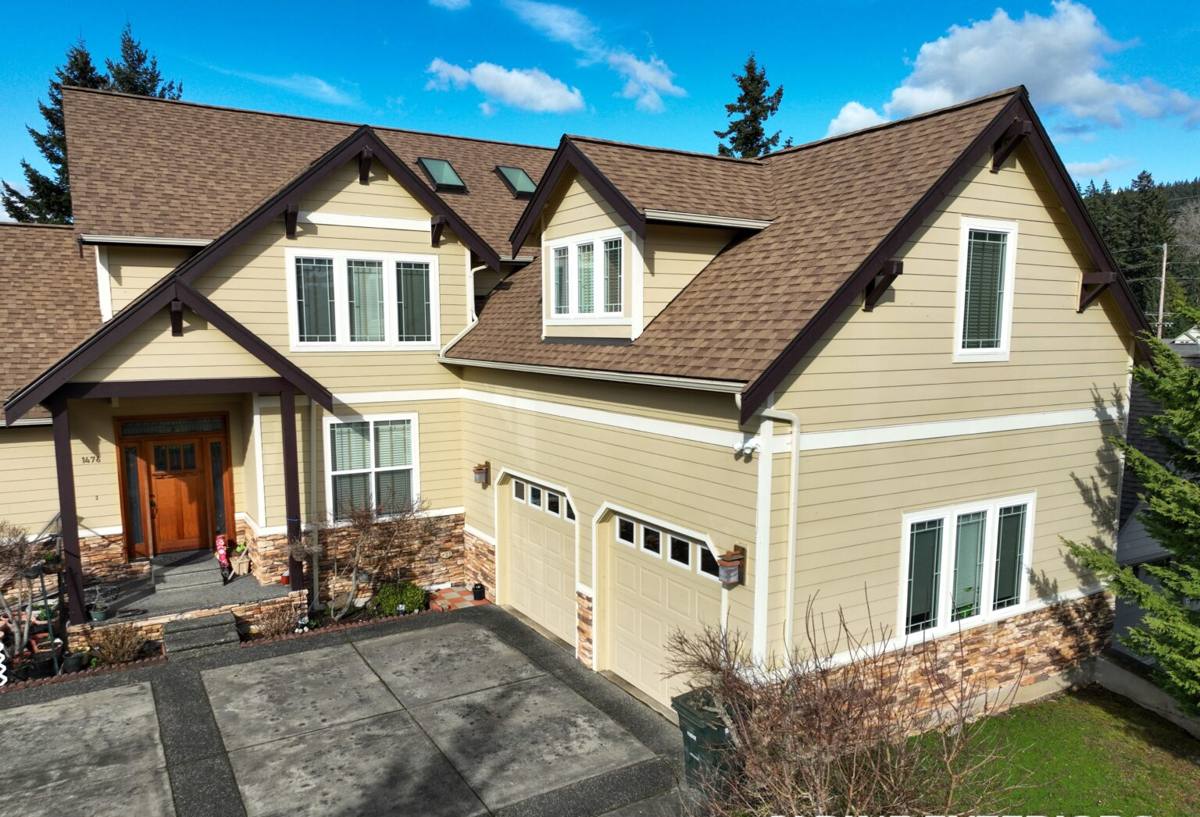
What "Energy-Efficient" Actually Means in This Climate
Western Washington is a heating-dominated climate — we spend far more energy keeping heat in during the fall, winter, and spring than we spend keeping heat out in summer. That changes which performance numbers actually matter for a home near Birch Bay compared to a window shopped for a hot, sunny climate.
| Rating | What It Measures | Why It Matters Here |
|---|---|---|
| U-Factor | How much heat escapes through the window | The single most important number for our climate — lower means less heat loss through the glass and frame all winter |
| SHGC (Solar Heat Gain Coefficient) | How much solar heat passes through the glass | Less critical than U-factor here, but still worth tuning on west-facing rooms that catch strong afternoon sun |
| Air Leakage | How much outside air moves through the assembly | Directly tied to comfort and drafts, and to how much wind-driven rain can find its way in around a poorly sealed unit |
| Condensation Resistance | How well the window resists interior fogging in cold, humid conditions | Important given how much moisture is already in the air near the water |
Look for windows carrying an NFRC (National Fenestration Rating Council) label and an ENERGY STAR rating for the Northern climate zone — that's the standard built for exactly the winter-heavy, moderate-summer conditions we get in Whatcom County. A salesperson quoting you a window rated for a hot, dry climate zone isn't necessarily lying about the product, but it isn't the product built for this address.
SHGC Isn't Nothing — It's Just Secondary
We still pay attention to solar heat gain, especially on south- and west-facing rooms that can overheat on the rare clear summer afternoon. But it's a secondary tuning decision, not the deciding factor it would be in a sunnier region. The bulk of the performance conversation for a Terrell Creek home is about stopping heat loss and moisture intrusion, not blocking sun.
Frame Materials: What Holds Up to Salt Air and What Doesn't
Frame material matters as much as glass out here, because the frame is what's directly exposed to salt spray, standing moisture, and constant wet-dry cycling. Our professional standard is to steer homeowners toward materials that are dimensionally stable and low-maintenance in this specific exposure, and to be upfront about the trade-offs of the alternatives rather than push whatever happens to be cheapest to install.
| Frame Material | Moisture & Salt-Air Behavior | Maintenance Load |
|---|---|---|
| Vinyl | Does not rot or corrode; performs well against salt air; can expand/contract with temperature swings if not installed with proper clearances | Low — occasional cleaning, no painting or sealing required |
| Fiberglass | Very stable dimensionally, excellent resistance to moisture and salt exposure, holds paint well if a color change is wanted later | Low to moderate — durable but a higher upfront cost than vinyl |
| Wood / Wood-Clad | Handsome and traditional, but exposed wood is genuinely vulnerable to the wet-dry cycling and driving rain typical of this area; clad versions protect the exterior face but interior wood still needs upkeep | Higher — periodic finishing, careful sealant inspection, faster response needed if a seal fails |
| Aluminum | Strong but a poor insulator unless thermally broken, and prone to condensation in our humid, cool winters | Low, but generally not our recommendation for energy-focused replacements here |
We're not saying wood windows are a bad product — plenty of homes look great with them. We're saying that in a marine, driving-rain environment like Terrell Creek, a wood window asks more of the homeowner in ongoing maintenance than vinyl or fiberglass does, and we'd rather tell you that upfront than have you find out the hard way in year six.
Glass Packages Built for a Wet, Cool Climate
The glass itself does most of the insulating work, and the right package for this area is a settled question more than a matter of taste.
Double-Pane vs. Triple-Pane
A quality double-pane window with a good Low-E coating and warm-edge spacer performs well for most Terrell Creek homes and is the more common, more budget-friendly choice. Triple-pane adds another layer of glass and gas fill for even lower U-factor and better sound dampening — worth considering on a room that's especially exposed to wind and noise off the water, or where a homeowner wants to push efficiency as far as it goes, but it's not a requirement for a solid result.
Low-E Coatings and Gas Fill
Low-emissivity coatings reflect heat back into the room in winter without meaningfully darkening the glass, and they're standard on any window worth installing today. Argon gas fill between the panes is denser than air and slows heat transfer further — it's a proven, inexpensive upgrade that's included on most quality window lines now rather than an exotic add-on.
Warm-Edge Spacers
The spacer that separates the panes at the edge of the glass affects both insulation and condensation resistance. Older aluminum spacers conduct heat and cold straight through, which is exactly where you'll see fogging and frost form first on an aging window. Warm-edge spacer technology (foam, composite, or similar) cuts that cold edge effect down significantly — a small detail that matters a lot in a humid coastal climate.
Installation Is Where Efficiency Is Actually Won or Lost
We say this to every homeowner because it's true regardless of how good the window itself is: a great window installed poorly will underperform a mid-grade window installed correctly. In a driving-rain environment like Birch Bay, installation quality isn't a nice-to-have — it's the difference between a window that lasts decades and one that starts leaking behind the trim within a few winters.
- Proper flashing integration with the existing wall assembly so wind-driven rain can't track behind the window into the framing
- Correct shimming and leveling so the sash operates smoothly and seals evenly for years, not just on install day
- Full insulation of the gap between the window frame and rough opening — an under-insulated gap is a direct energy leak even with a top-tier window
- Weather-resistant sealants applied and tooled correctly at every joint, sized for our wet-dry cycling rather than a one-size-fits-all bead
- Exterior trim and sill detailing that sheds water away from the opening instead of letting it pool and feed moss growth
We've replaced windows in this area that were only five or six years old, where the glass itself was fine but flashing had been skipped or shortcut and water had been quietly getting behind the trim the whole time. It's a maintenance and rot problem hiding behind what looks like a finished, efficient window.
Our Process for a Terrell Creek Window Replacement
- Walk-through and assessment. We look at each window's current condition, note where moisture, drafts, or condensation are showing up, and check how exposed the home is to wind and driving rain given its orientation.
- Measurements and product selection. We measure every opening individually — older homes often have openings that aren't perfectly uniform — and walk you through frame material, glass package, and grille or hardware options that fit your home and budget.
- Installation. Old windows are removed carefully to check the condition of the framing and sheathing underneath, any hidden moisture damage is flagged before it's covered back up, and new units go in with full flashing, insulation, and sealant detailing.
- Final inspection and walkthrough. Every window is operated, checked for square and even seal, and cleaned up before we consider the job done.
- Warranty paperwork. Manufacturer warranty registration and our own workmanship coverage are handed over in writing, not left as a verbal promise.
Signs Your Windows Are Already Costing You Money
Most homeowners don't replace windows because they woke up one day and decided to — they replace them because something started bothering them enough to act. Here's what we hear most from Terrell Creek and Birch Bay-area homeowners:
- A noticeable draft near the window even when it's fully latched shut
- Fogging or moisture trapped between the panes of a double-pane unit — a sign the seal has failed
- Sashes that are hard to open, stick, or won't stay up on their own anymore
- Visible staining, soft spots, or discoloration on the wood trim or sill around the window
- Moss, algae, or black streaking building up on the sill or exterior trim faster than it used to
- Rooms near the windows that feel noticeably colder than the rest of the house in winter
- A heating bill that keeps climbing even though nothing else about your usage has changed
Any one of these on its own might just mean a window needs servicing. Several of them together, especially on the side of the house that takes the most weather, usually means the windows have reached the point where repair is just delaying the inevitable.
Why Local Experience Matters for This Specific Area
Window performance claims on paper only mean so much until they meet the actual conditions of a site. Working regularly in and around Terrell Creek and Birch Bay means we already understand how a given home's orientation to the water, tree cover, and elevation affects how hard its windows get hit by salt air and driving rain — and we bring that into the product and installation decisions instead of treating every job the same way we would twenty miles inland. It also means we're not learning on your house how coastal Whatcom County weather behaves; we're applying what we've already seen work, and what we've seen fail, on homes very much like yours.
If your windows are drafty, fogged, hard to operate, or just costing more to heat around every winter, we're happy to take a look and talk through honest options for your home and budget — no pressure, no obligation. Reach out for a free estimate using the form below.