 Birch Bay Exterior
 Siding Repair Built for Custer's Weather, Not a Showroom
Custer sits a short drive inland from the Birch Bay shoreline, which means homes here get the worst of both worlds: coastal salt-laden air pushed in on the wind, and the heavy, sustained rainfall that defines a Whatcom County winter. Add in long stretches of shade and dampness that keep siding wet for days at a time, and you have a climate that is genuinely hard on exterior materials. A siding repair that would hold up fine in a drier inland climate can fail within a couple of seasons out here if it isn't done with this specific environment in mind.
This page is about one thing: doing siding repair correctly for Custer homes, understanding what's actually damaging your siding, and knowing when a patch is the right call versus when it's just delaying a bigger problem.
How Custer's Climate Actually Damages Siding
Salt Air and Wind
Birch Bay's salt air doesn't stop at the water's edge. Wind carries fine salt particles inland, and over time that salt accelerates corrosion on fasteners, trim flashing, and any exposed metal components tied into your siding system. It also settles into seams and joints, where it holds moisture longer than plain rainwater would. Homes closer to Birch Bay and along the open wind corridors around Custer tend to show this wear first, especially on west- and southwest-facing walls that catch the prevailing weather.
Driving Rain and Wind-Driven Moisture
Whatcom County doesn't just get a lot of rain, it gets a lot of rain pushed sideways by wind. That matters for siding because driving rain finds its way into gaps, laps, and seams that would stay dry in a straight-down rain. Poorly sealed joints, gapped panels, and failed caulk lines become entry points for water that then gets trapped behind the siding, where it can sit against sheathing and framing for weeks between dry spells.
An Extended Moss Season
Between the moisture, the shade from mature trees common around Custer properties, and the mild temperatures, moss and algae have a long growing season here — often close to year-round on north-facing and shaded walls. Moss itself doesn't eat through siding, but it holds water against the surface constantly, which is exactly the condition that causes paint failure, wood rot, and swelling in moisture-sensitive materials. A siding repair that doesn't address the underlying moisture and airflow problem will usually just grow moss again.
Signs a Custer Home Needs Siding Repair
Most homeowners don't catch siding problems until they're visible from the yard, but the damage usually starts weeks or months earlier, underneath. Here's what we tell Custer homeowners to watch for:
- Soft or spongy spots when you press on the siding, especially near the bottom courses or around windows
- Visible gaps, cracks, or separation at panel seams and corners
- Paint that's bubbling, peeling, or chalking in patches rather than evenly across the wall
- Persistent moss or dark streaking that keeps coming back after cleaning
- Warping, buckling, or panels that look wavy instead of flat
- Rust staining below nail heads or trim fasteners
- Higher heating bills or drafts near exterior walls, which can point to moisture getting past the siding into the wall assembly
- Interior signs like discoloration on drywall near exterior walls, which often means water has already made it through
If you're seeing more than one or two of these, it's worth getting the wall assessed before scheduling a repair — the visible symptom and the actual damaged area aren't always in the same spot.
What Kind of Siding You Have Changes the Repair
Not all siding fails the same way, and the material on your home determines both what's causing the damage you're seeing and what a correct repair looks like.
| Material | Common Failure Mode in This Climate | Repair Complexity |
|---|---|---|
| Cedar / wood siding | Rot from trapped moisture, paint failure, insect entry at damaged spots | High — rotted wood must be fully cut out, not just patched over |
| Vinyl siding | Cracking in cold snaps, warping from heat or improper installation, panels popping loose in wind | Moderate — matching discontinued colors or profiles can be difficult |
| LP SmartSide (engineered wood) | Edge swelling and delamination where moisture penetrates cut edges or seams | Moderate to high — swollen sections typically need full panel replacement |
| James Hardie fiber cement | Failures are usually installation-related — poor caulking, missing flashing, or panels installed too close to grade | Low to moderate when caught early — the board itself resists moisture damage |
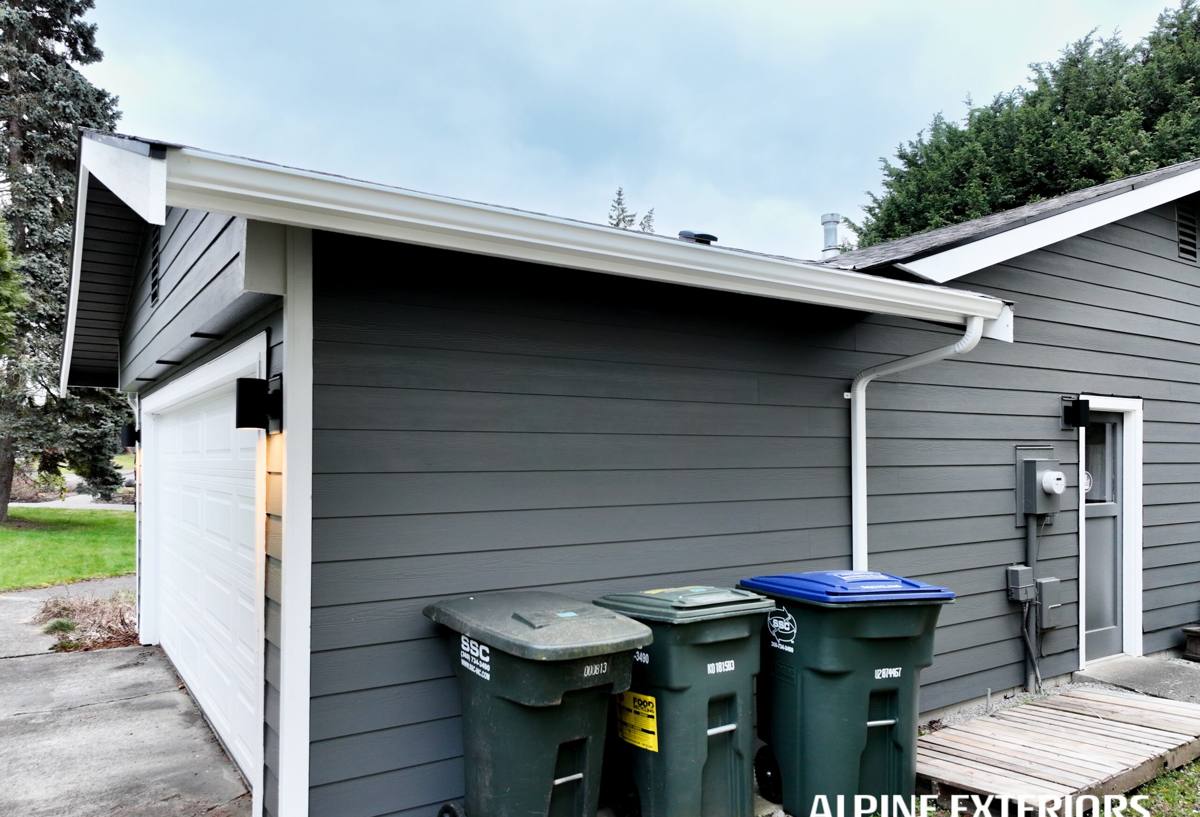
This is a big part of why we standardized on James Hardie for the homes we build and re-side: fiber cement doesn't rot, swell, or delaminate the way wood-based products can. When we do get called for a Hardie repair, it's almost always something correctable at the install detail level, not the board itself failing.
Doing the Repair Right vs. Just Patching It
A lot of siding "repairs" are really just cosmetic patches that cover a problem instead of fixing it. In a climate like Custer's, that approach tends to fail fast because the underlying moisture path never got addressed.
| Approach | Best For | What It Actually Fixes |
|---|---|---|
| Spot patch / caulk-and-paint | Small cosmetic issues with no moisture intrusion | Surface appearance only — does not address water behind the siding |
| Panel or board replacement | Localized damage where rot or cracking is contained to a few boards | Removes the damaged material and re-establishes proper flashing and overlap |
| Partial re-side (wall or section) | Widespread damage on one elevation, often the side that takes the worst weather | Full correction of underlying moisture barrier, flashing, and material |
A correct repair always starts with figuring out how water got in, not just where it's showing. That means checking flashing above windows and doors, looking at how the siding terminates near grade and around penetrations like hose bibs and vents, and inspecting the water-resistive barrier underneath once the damaged siding is removed. Skipping that step and just swapping a board is how the same repair ends up getting called back out in two years.
Our Siding Repair Process for Custer Homes
When we go out for a repair call in Custer, we treat it as a diagnostic job first and a repair job second.
- Assessment: We look at the damaged area and the surrounding sections, since salt-air and moisture damage often extends beyond what's visible.
- Root cause check: We identify why the failure happened — flashing, sealant, grade clearance, or a material issue — so the same problem doesn't recur.
- Material removal: Damaged siding and any compromised sheathing or barrier material is removed, not just covered.
- Underlying repair: Flashing, house wrap, and moisture barrier details are corrected before anything new goes back up.
- Reinstallation: New material is installed to manufacturer spec, with attention to fastening, clearances, and sealant placement suited to our wind and rain exposure.
- Honest recommendation: If the damage is isolated, we repair it. If it's a sign of a bigger issue across the wall or the whole exterior, we'll tell you that plainly rather than patching around it.
Why We Rebuild Damaged Sections in James Hardie
When a repair involves replacing more than a board or two — especially on wood, vinyl, or engineered wood siding that's showing this kind of moisture damage — we usually recommend transitioning that section to James Hardie fiber cement rather than matching the failing material. It's a practical call, not a sales pitch: fiber cement is non-combustible, doesn't swell or rot from moisture the way wood-based products can, and Hardie's ColorPlus factory finish holds color longer than field-applied paint has to fight against this climate's UV and moisture cycle. For a coastal-influenced area like Custer, that durability difference shows up in fewer repeat repair calls, not just a warranty document.
We're not going to tell you every repair needs to become a full re-side — plenty of damage is legitimately localized and fixable in the existing material. But when a wall is failing because the material itself is fighting a losing battle against this climate, we'll say so, and Hardie is what we recommend putting back up.
Why a Crew That Already Works Custer Matters
Siding repair is detail work, and the right detail depends on knowing what this specific stretch of Whatcom County throws at a house. A crew that mostly works drier inland climates may not think twice about a marginal flashing detail or a sealant gap that would be fine somewhere else but becomes a real leak point here, where wind-driven rain and salt air are a near-constant. Working Custer and the greater Birch Bay area regularly means we've seen how these specific failure patterns develop over multiple seasons, not just at the moment of the service call.
It also means faster, more accurate estimates. We're not guessing at how your home's exposure compares to a house three counties over — we know what a west-facing wall near Birch Bay typically deals with, and we price and plan the repair accordingly.
Get an Honest Look at Your Siding
If you're seeing soft spots, recurring moss, peeling paint, or gaps in your siding, it's worth having someone look at it before the next wet season makes the damage worse. We'll give you a straightforward assessment of what's actually going on, what it will take to fix it correctly, and what your realistic options are — no pressure, no upsell. Reach out for a free estimate using the form below.