 Birch Bay Exterior
 Why Decks in Sumas Wear Out Faster Than Homeowners Expect
Whatcom County puts a deck through more abuse than most homeowners realize. Sumas sits inland from the coast, but it still gets the long, wet Pacific Northwest winters, driving rain that blows sideways during a storm front, and the kind of persistent dampness that keeps moss and algae growing on horizontal surfaces for months at a time. Add in the coastal moisture patterns that carry inland across the county, and you've got a climate that's genuinely hard on exterior wood and fasteners.
Decks fail from the ground up and from the inside out. Moisture gets trapped where boards meet joists, where railings meet posts, and especially where the deck ledger board attaches to the house. That's the joint that matters most structurally, and it's usually the last thing a homeowner thinks to check. By the time surface boards look obviously bad — gray, splintering, spongy underfoot — the framing underneath has often been absorbing water for a season or two already.
A long moss season doesn't just make a deck look neglected. Moss and algae hold moisture against the wood surface, which accelerates rot in exactly the spots that already drain poorly. Combined with the driving rain that's typical here, low spots, tight board gaps, and shaded corners become the first places a deck starts to fail.
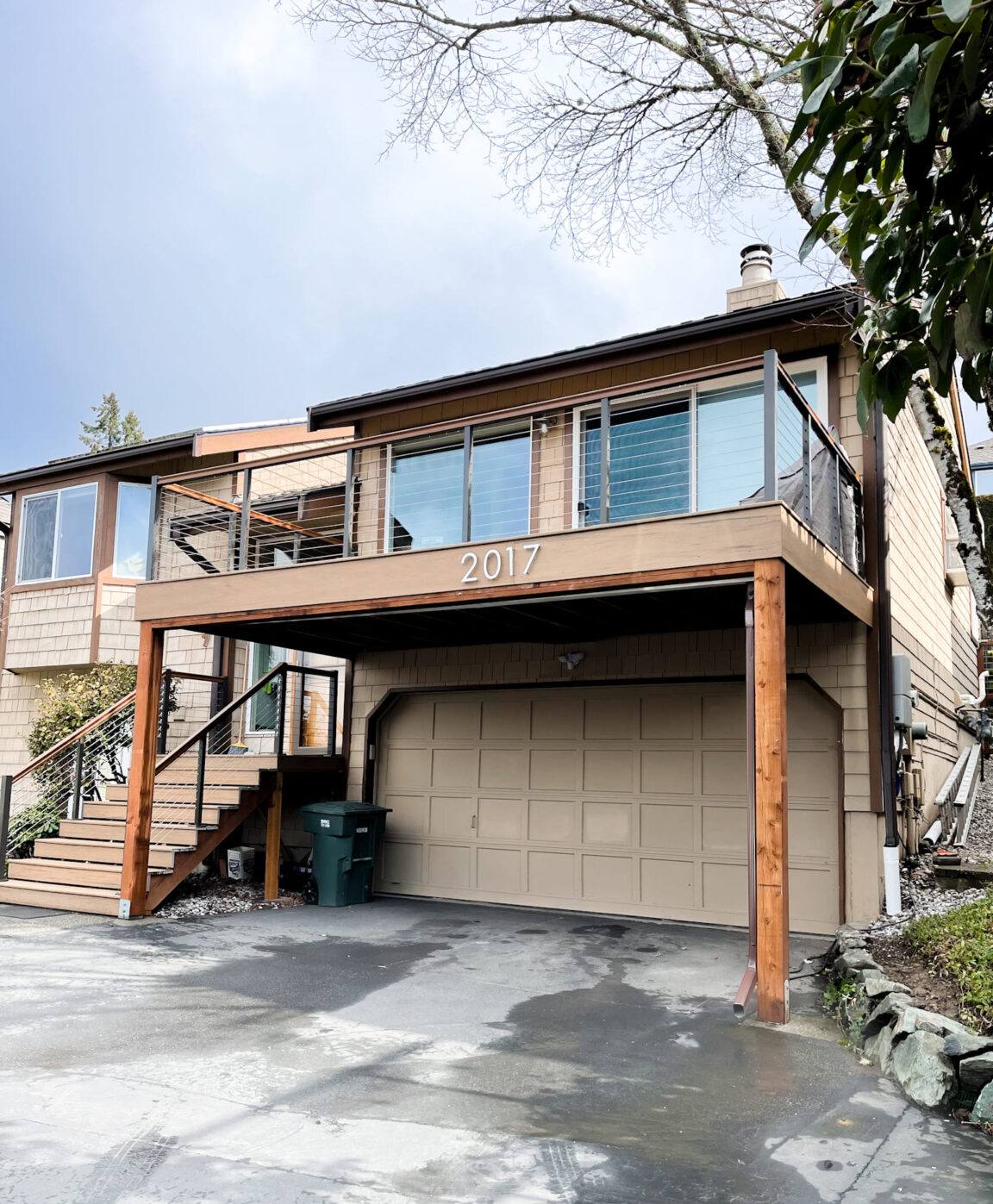
What a Correct Deck Repair Actually Involves
Deck repair isn't just swapping out a few bad boards. Done right, it starts with a structural assessment, not a cosmetic one. That means checking the parts of the deck you can't see from standing on it.
The Structural Layer
- Ledger board attachment to the house — the single most common source of catastrophic deck failure when flashing has failed or fasteners have corroded
- Joists and beams for soft spots, splitting, or rot at connection points
- Post bases and footings for settling, rot at ground contact, or inadequate connection hardware
- Railing posts and guard connections, which take constant lateral stress and are often under-fastened from the original build
The Surface Layer
- Decking boards — checking for cupping, splitting, and soft or spongy sections
- Fastener condition — old nails or corroded screws that have backed out or rusted through
- Drainage and board spacing, since tight or clogged gaps trap water and organic debris
- Stairs and stringers, which see concentrated foot traffic and often show wear before the rest of the deck does
A repair that only addresses what's visible from the top — replacing a few gray boards and calling it done — leaves the framing problems in place. Those problems don't go away; they just keep working under a new surface.
Signs Your Deck Needs Repair, Not Just a Cleaning
Some of these are obvious once you know to look for them. Others get missed for years because they don't look urgent.
- Boards that flex, bounce, or feel soft when you walk across them
- Any visible gap, crack, or rust streaking at the ledger board where the deck meets the house
- Railings or posts that wiggle when pushed — this is a safety issue, not a cosmetic one
- Persistent moss or dark staining that comes back within weeks of cleaning
- Fasteners that are visibly rusted, popped up, or missing entirely
- Gaps between decking boards that have closed up completely, trapping debris and water
- Discoloration or swelling at board ends, which is usually the first place moisture gets in
If you're seeing two or more of these, it's worth having someone look at the structure, not just the surface.
Repair vs. Replacement: How We Make the Call
Not every deck problem means starting over, and not every deck can be patched. The honest answer depends on where the damage is and how far it's spread.
| Factor | Favors Repair | Favors Replacement |
|---|---|---|
| Framing condition | Joists and ledger are sound, damage is isolated | Rot has spread through multiple structural members |
| Age of deck | Under 10-15 years, built to a reasonable standard | Original construction is outdated or undersized for current code |
| Fastener type | Hardware is intact, just a few failures | Widespread corrosion across most connections |
| Surface damage | Limited to a few boards or one section | Cupping, splitting, or softness across most of the deck |
| Budget priority | Extend usable life at lower upfront cost | Want long-term durability and don't want to repeat the repair in a few years |
As a general range, targeted repairs — a section of decking, a railing rebuild, ledger reflashing — often run in the low thousands depending on scope. Full deck reconstruction is a bigger investment but resets the clock on the whole structure. We'll walk you through which category your deck actually falls into before any work starts, and we won't push a full rebuild if a repair will genuinely hold up.
Our Deck Repair Process
- On-site inspection. We check the ledger, framing, posts, and surface, including probing suspect areas for soft wood rather than relying on a visual look alone.
- Written scope and estimate. You get a clear breakdown of what's structural, what's cosmetic, and what we recommend versus what's optional.
- Structural repair first. Any framing, ledger, or post issues get addressed before we touch surface boards — fixing the surface over a bad structure just hides the problem.
- Flashing and moisture management. Proper flashing at the ledger board is what keeps water from getting behind the house siding and into the rim joist — this step gets skipped more often than it should on quick repairs.
- Surface repair or replacement. Damaged boards are replaced with correctly spaced, properly fastened material matched as closely as possible to the existing deck.
- Final check. We test railings, stairs, and connection points for movement before calling the job done.
Material Choices and Why They Matter Here
What you repair with matters as much as how you repair it, especially given how much moisture Whatcom County decking has to shed every year.
Pressure-Treated Lumber
Still the standard for framing because it's rot-resistant where it counts — joists, beams, posts — and it's cost-effective for structural repairs that won't be visible day to day.
Cedar
A common choice for visible decking in this region because of its natural resistance to moisture and insects, though it does require ongoing sealing or staining to keep that resistance working for you over time.
Composite Decking
Lower maintenance and resistant to the moss and staining that plague wood surfaces here, but it comes with a real trade-off: composite doesn't flex or repair the same way wood does, board matching across manufacturing runs can be inconsistent, and it typically costs more upfront. We'll tell you honestly whether composite makes sense for your situation rather than defaulting to whatever has the best margin.
Whatever material is used for the repair, we match fastener hardware to the decking type — mismatched fasteners are a quiet, common cause of staining and premature failure.
Why It Matters to Hire a Crew Already Working in Sumas
Deck repair done wrong is worse than a deck left alone, because a poorly reflashed ledger or an under-fastened railing creates a safety issue that isn't visible until it fails. Working regularly in Whatcom County means we're used to what this climate does to a deck over years, not just what it looks like on the day of a quote — the driving rain patterns, the long stretch of moss season, and how quickly untreated framing softens once water gets behind a board.
A local crew also means faster response if a repair needs a follow-up visit, familiarity with the permitting expectations that apply to structural deck work in the area, and no guesswork about how the local weather will affect curing times or material choices during the job.
Keeping Your Deck in Good Shape After Repair
A repair is only as good as the maintenance that follows it. A few habits go a long way in this climate:
- Clean moss and algae off the surface at least once a year, ideally before the wet season sets in
- Keep board gaps clear of leaves and debris so water can actually drain
- Reseal or restain wood decking on the schedule the product calls for — skipping a cycle is when moisture starts winning
- Check railings and stair connections for movement each spring
- Look at the ledger board area annually — it's the first place a small problem turns into a big one
If you're noticing soft spots, loose railings, or a deck that's just not holding up the way it used to, we're happy to take a look and give you a straight answer about what it needs. Reach out for a free, no-pressure estimate using the form below.