 Birch Bay Exterior
 Building a Deck That Actually Holds Up in Sumas
A deck in Sumas has to earn its keep every month of the year, not just on the handful of dry weekends between spring and fall. Whatcom County's weather pattern — long stretches of driving rain, humidity that never fully lifts, and a moss season that can run from October well into May — puts real, ongoing stress on outdoor structures. Add the salt-tinged air that moves in off the water and settles across this part of the county, and you have a combination that goes after wood fiber, fastener coatings, and footings in ways a lot of standard deck-building specs simply aren't written for.
We build and repair decks throughout this area, and Sumas properties tend to show a consistent pattern of problems when the original build didn't account for local conditions: soft spots at the ledger board, moss creeping into board gaps until it holds moisture against the wood, and hardware that's rusted or seized years before it should have. None of that is inevitable. It's the result of choices made — or skipped — during the original build.
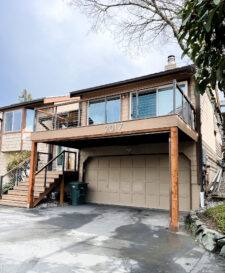
What Local Conditions Actually Do to a Deck
Driving Rain and Standing Moisture
Rain that comes in sideways doesn't just fall on a deck surface — it gets pushed under railings, into fastener holes, and behind ledger boards where it can sit against house framing for days. Over time, that moisture finds any gap in flashing or any exposed end grain and works its way in. Decks that look fine from a few feet away can have soft, water-damaged framing underneath if the original build didn't flash and seal the vulnerable spots correctly.
A Long Moss Season
Moss doesn't just make a deck slippery — it holds water against the board surface long after a rain has stopped, which is exactly what accelerates rot in wood decking and can dull or stain composite surfaces if it's left to build up. In this county, moss season isn't a short annoyance; it's a large part of the year, and a deck's board spacing, drainage, and surface material all affect how much of a moss problem you'll actually have.
Salt Air and Metal Fatigue
Salt-laden air accelerates corrosion on anything metal — fasteners, joist hangers, railing hardware, and structural connectors. A deck built with standard, uncoated hardware in this environment can develop rust streaks and weakened connections years ahead of schedule. The fix isn't complicated, but it does mean spending a little more up front on the right-rated hardware instead of whatever's cheapest at the yard.
What a Correctly Built Deck Needs Here
None of this requires exotic construction methods. It requires attention to the details that matter most in a wet, coastal-influenced climate, applied consistently rather than skipped to save time or cost.
- Ledger board flashing done right. The ledger — where the deck attaches to the house — is the single most common failure point on decks in this region. Proper flashing, a water-resistant barrier behind it, and correct fastener spacing keep water from tracking into the house framing.
- Corrosion-resistant hardware throughout. Hot-dip galvanized or stainless fasteners, joist hangers, and structural screws rated for ground contact and coastal exposure — not standard exterior-grade hardware that's really meant for drier climates.
- Footings set below frost depth and on solid bearing soil. Whatcom County soil can hold a lot of moisture, which affects how footings settle over time if they aren't sized and set correctly.
- Board spacing and airflow for drainage. Gaps that are too tight trap debris and moisture; gaps that are too wide create a tripping and safety issue. Getting this right also cuts down significantly on moss buildup between boards.
- Ventilated substructure. Skirting and framing that still allow airflow underneath the deck so the space below can dry out between rain events instead of staying damp for weeks.
Choosing a Decking Material for This Climate
There's no single "correct" decking material — the right choice depends on budget, maintenance appetite, and how much sun or shade the deck actually gets. What matters is going in with realistic expectations about how each option behaves in a wet, moss-prone environment.
| Material | How it handles moisture & moss | Maintenance | Typical lifespan here |
|---|---|---|---|
| Pressure-treated wood | Resists rot chemically but still absorbs moisture; needs sealing to shed water and slow moss growth | Annual cleaning and re-sealing/staining | 15-20 years with upkeep |
| Cedar | Naturally moisture-resistant and attractive, but softer and more prone to surface wear in constant damp | Regular cleaning, periodic oil or sealant | 15-25 years with upkeep |
| Composite decking | Doesn't absorb water the way wood does, so it resists rot; moss can still grow on the surface if it's shaded and damp | Periodic washing, no staining or sealing | 25-30+ years |
| PVC/cellular decking | Fully moisture-resistant, best option for shaded or persistently damp areas | Occasional washing | 25-30+ years |
We're honest with homeowners about the trade-offs. Wood costs less up front but asks for real annual maintenance to hold up in this climate — skip a year or two of sealing and you're playing catch-up on moisture damage. Composite and PVC cost more initially but largely take moisture out of the equation, which matters more here than in a drier region. We install what fits your budget and your maintenance plans, not just what we'd prefer to sell.
Our Build Process
- On-site assessment. We look at the house's ledger area, the yard's drainage and sun exposure, soil conditions, and how much moss or shade the location deals with, then talk through material options based on what we see.
- Design and layout. We plan board direction, footing placement, and railing layout to work with the site rather than against it — including drainage paths that keep water moving away from the house and foundation.
- Permitting. Deck projects above certain heights or attached to the home typically require a permit in Whatcom County jurisdictions. We handle that process so the build is documented and up to code, not something that becomes a problem at resale.
- Footings and framing. Footings set to proper depth and bearing, framing built with corrosion-resistant hardware throughout, and ledger flashing installed correctly the first time.
- Decking and railing installation. Board spacing set for drainage and moss resistance, railings installed to current code height and spacing requirements.
- Final walkthrough. We go over the finished deck with you, including what maintenance it will actually need going forward given the material you chose.
Maintaining a Deck Once It's Built
A well-built deck still needs some ongoing attention in this climate — the goal is to make that maintenance manageable rather than a constant chore.
- Sweep off leaves and debris regularly, especially in fall, so moisture and organic matter don't sit on the surface.
- Clean moss and algae off the surface and railings before they get established — a stiff brush and a deck-safe cleaner handle most of it if you stay ahead of it.
- Check and clear gaps between boards so water and debris keep draining instead of pooling.
- Inspect fasteners and hardware once a year for early rust or looseness, particularly near the ledger board.
- Re-seal or re-stain wood decking on the schedule the product calls for — don't wait until it's visibly worn.
- Keep vegetation trimmed back from the deck edges so airflow underneath and around it isn't blocked.
What We Find on Older Decks in This Area
A lot of our repair calls in Sumas and the surrounding area come down to a handful of recurring issues: ledger boards that were never properly flashed and are now soft or water-damaged behind the siding; standard hardware that's rusted through after years of damp, salt-influenced air; board spacing so tight that moss has essentially cemented itself between the boards; and footings that have shifted or settled unevenly in saturated soil. Most of these are fixable without a full rebuild if they're caught early — which is part of why a periodic inspection is worth the time, especially on a deck more than ten years old.
Why Hire a Crew That Already Works Sumas
Building a deck that holds up here isn't about following a generic national spec — it's about knowing how this county's rain, moss, and air actually behave against a structure over years, not just how it looks the day it's finished. We work throughout Birch Bay and the surrounding Whatcom County communities, and that means we're not guessing at flashing details or hardware ratings — we're applying what we've already seen hold up, and what we've already seen fail, on decks in this exact climate. That local familiarity shows up in the small decisions: where to add extra flashing, which fastener grade to spec, how tight to set board gaps for the amount of shade and moss a given site actually gets.
Get a Straightforward Estimate
If you're planning a new deck in Sumas or you've got an existing one that's showing its age, we're happy to take a look and give you an honest read on what it needs. Reach out for a free, no-pressure estimate using the form below.