 Birch Bay Exterior
 Asphalt Shingle Roofing Built for Sumas Conditions
Homes in the Sumas area of Whatcom County deal with a specific combination of weather that a lot of roofing crews never have to think about: salt-laden marine air pushing inland, long stretches of driving rain off the water, and a moss season that can run most of the year in shaded, north-facing sections of a roof. Asphalt shingle roofing remains one of the most practical, cost-effective options for this area — but only when it's specified and installed with these conditions in mind. A shingle roof that would hold up fine in a dry inland climate can fail early here if the underlayment, ventilation, and flashing details aren't matched to what this stretch of Washington actually throws at a house.
This page covers what a correct asphalt shingle roofing job looks like specifically for Sumas homes near Birch Bay — not generic roofing advice, but the details that matter for this climate and this community.
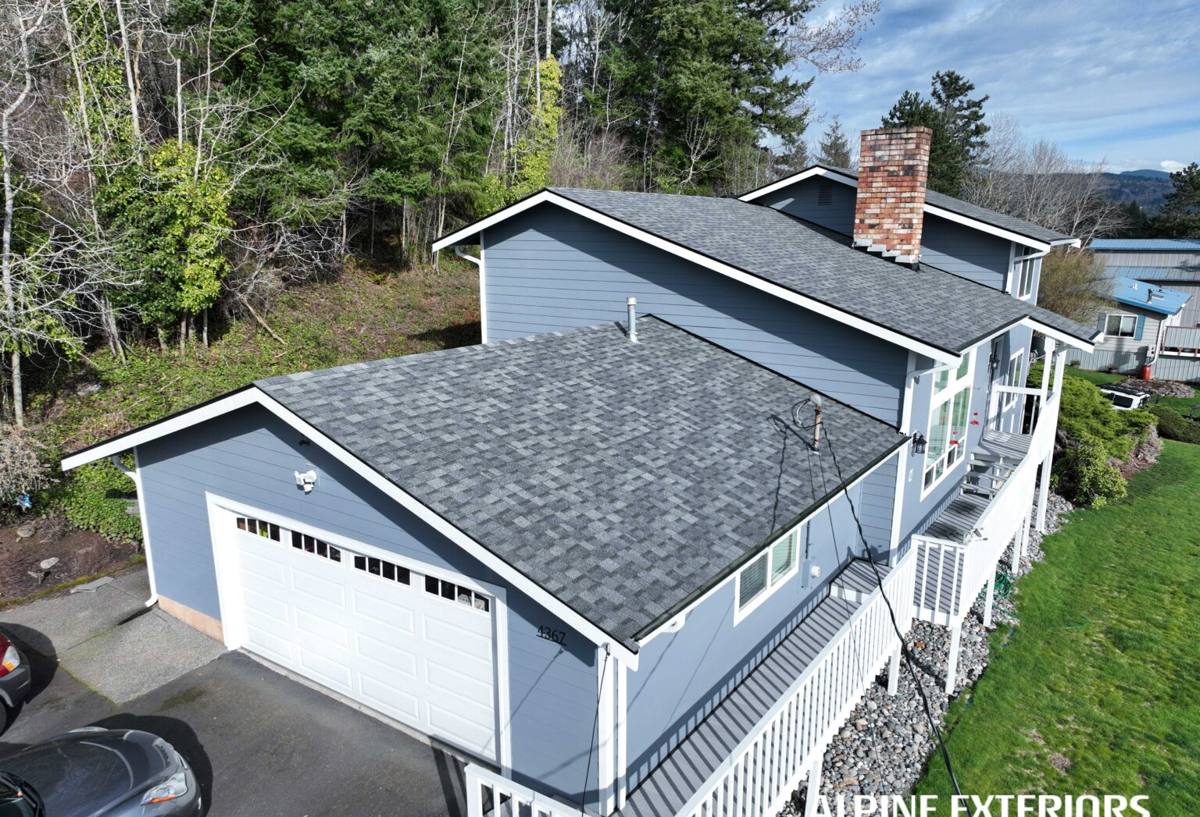
Why Local Conditions Change the Job
Three things drive almost every asphalt shingle problem we see on homes in this part of Whatcom County:
Salt Air and Wind-Driven Moisture
Even homes set back from the immediate shoreline get regular exposure to salt-carrying wind. Over years, that air accelerates corrosion on exposed metal — nail heads, flashing, vent stacks — faster than it would inland. Fasteners and flashing that aren't rated for coastal exposure corrode first, and once a nail head rusts through or a flashing seam opens up, water finds its way underneath the shingles long before the shingles themselves look worn out.
Driving Rain
Rain here rarely falls straight down. Wind-driven rain gets pushed sideways and upward under shingle tabs, into valleys, and around any penetration — chimneys, skylights, plumbing vents. A roof design that relies only on gravity to shed water (thin underlayment, minimal valley protection, short nails) will leak in this climate even when every shingle is intact.
Moss and Algae Season
Shaded roof sections, especially north- and east-facing slopes under tree cover, stay damp for extended periods much of the year. That moisture supports moss and algae growth that lifts shingle edges, holds water against the roof deck, and shortens the life of the roofing system if it isn't managed. Left unchecked, moss doesn't just look bad — it physically separates shingles from the surface below them.
What a Correct Asphalt Shingle Install Involves Here
A shingle roof is a system, not just a layer of shingles. For Sumas homes, we treat every layer of that system as a chance to address the specific problems above.
Underlayment and Ice/Water Barrier
We install synthetic underlayment rated for this region's moisture exposure, with self-adhered ice-and-water shield along eaves, valleys, and around every roof penetration — the spots where wind-driven rain is most likely to get pushed backward under the shingle line. This is the layer that keeps a roof watertight even if a shingle gets damaged or lifted in a storm.
Ventilation
Balanced intake and exhaust ventilation keeps the underside of the roof deck dry and reduces the temperature swings that cause shingles to crack prematurely. In a climate with this much ambient moisture, poor attic ventilation is one of the most common hidden causes of early roof failure — trapped moisture works on the deck from underneath while moss works on it from above.
Flashing and Valleys
We use corrosion-resistant flashing at chimneys, sidewalls, and valleys, sealed and layered correctly with the shingle courses (not just caulked over the top). Given the salt exposure in this area, we don't rely on standard galvanized flashing alone in spots where it will see direct weather — the extra cost of better material here is cheap compared to a reopened leak in five years.
Fastening
Correct nail placement, count, and length matter more in a windy, wet climate than most homeowners realize. Under-nailed or over-driven shingles are one of the top causes of wind lift and leaks we find on older Sumas-area roofs during inspections.
Comparing Shingle Options for This Climate
Not every asphalt shingle product performs the same way under salt air, wind, and moss pressure. Here's how the common options stack up for homes in this area:
| Shingle Type | Wind Rating | Moss/Algae Resistance | Typical Lifespan Here | Best For |
|---|---|---|---|---|
| Standard 3-tab | Lower | Standard granules only | 15-20 years | Budget projects, secondary structures |
| Architectural/laminate | Higher | Standard, improves with algae-resistant option | 25-30 years | Most primary homes |
| Algae-resistant (copper/zinc granules) | Higher | Best | 25-30 years | Shaded, tree-covered slopes |
| Impact-resistant (Class 4) | High | Standard to enhanced | 25-30+ years | Homes with heavy debris/branch exposure |
For most Sumas homes, we recommend architectural shingles with algae-resistant granules as the baseline — the upgrade cost over standard architectural shingles is modest, and it directly addresses the moss and staining problem this climate causes. We size that recommendation to the specific roof, not a blanket rule; a roof with full sun exposure and little tree cover has less to gain from the algae-resistant upgrade than a heavily shaded one.
Our Process for Sumas Roofing Projects
- Inspection and assessment — We check the deck, flashing, ventilation, and existing moss or moisture damage before quoting anything, so the estimate reflects what your roof actually needs.
- Tear-off and deck check — Old roofing comes off completely so we can inspect the deck underneath for soft spots or rot, which is common wherever moss has been sitting for years.
- Deck repair — Any damaged sheathing gets replaced before anything new goes down. Installing new shingles over a compromised deck just hides the problem.
- Underlayment and flashing — Ice-and-water shield, synthetic underlayment, and corrosion-resistant flashing go in per the details above.
- Shingle installation — Correct nailing pattern and manufacturer specifications, adjusted for wind exposure on your specific site.
- Ventilation check — We confirm intake and exhaust venting is balanced for the finished roof.
- Cleanup and final walkthrough — Site cleared, magnetic sweep for stray fasteners, and a walkthrough so you know what was done and why.
Maintenance That Actually Matters in This Climate
A well-installed asphalt shingle roof still needs upkeep in a climate like this one. The maintenance that pays off is simple, but it's specific to salt air, rain, and moss — not generic roof care advice.
- Clear moss and debris from valleys and shaded slopes at least once a year, more often under heavy tree cover
- Clean gutters before the fall rains start so water has somewhere to go besides under your shingles
- Check for lifted, cracked, or missing shingles after any significant windstorm
- Trim back overhanging branches that keep sections of the roof shaded and damp
- Watch for streaking or dark staining, which usually signals algae growth starting
- Have attic ventilation checked periodically — trapped moisture is invisible from the ground
- Schedule a professional inspection every two to three years, or after any major storm
Repair or Replace?
Not every roofing problem in Sumas means a full replacement. Isolated flashing leaks, a handful of wind-damaged shingles, or a moss-related soft spot in one section can often be repaired if the rest of the roof is sound and the shingles still have useful life left. Replacement makes more sense when the shingles are past their expected lifespan, granule loss is widespread, multiple leaks are showing up in different areas, or the deck itself has taken on water damage in more than one spot. An honest inspection should tell you which situation you're in — and if a repair will genuinely hold, we'll say so rather than push a full reroof you don't need yet.
Why It Matters to Hire a Crew That Works This Area
Roofing crews that mostly work drier, inland climates don't always account for salt air corrosion, the specific wind-driven rain patterns here, or how aggressively moss establishes itself on shaded Whatcom County roofs. A crew that regularly works in and around Birch Bay and Sumas has already seen which details fail first in this climate and builds around them by default — corrosion-resistant fasteners, upgraded flashing, algae-resistant shingles where shading calls for it. That local pattern recognition is the difference between a roof that's technically installed correctly and one that's actually built for where it sits.
It also matters for accountability. A local crew is easy to reach if a question comes up two years after the job, and has a reputation in the community worth protecting — not just a one-time transaction.
Get a Straightforward Estimate
If you're weighing a repair, a full reroof, or just want an honest read on where your roof stands, we're happy to take a look. We'll walk the roof, explain what we find in plain terms, and give you a free, no-pressure estimate — use the form below to get started.