 Birch Bay Exterior
 Bellingham Roofs Deal With a Different Kind of Weather
Homes in Bellingham sit close enough to Bellingham Bay and the greater Puget Sound to pick up salt-laden air on a regular basis, and close enough to the Cascade foothills to catch heavy, wind-driven rain off the water almost every fall and winter. Add in a moss season that can run eight months or longer in shaded, north-facing yards, and you have a roofing climate that punishes shortcuts. A repair that would hold up fine in a drier part of the state can fail within a season here if it isn't built for wind-driven moisture and constant dampness.
Birch Bay Exterior Co works this stretch of Whatcom County regularly, and storm damage repair on Bellingham homes is one of the calls we get most after a windstorm rolls through off the water. This page walks through what that repair actually involves, what we look for, and how we approach it differently than a general roofing outfit that only shows up after storms make the news.
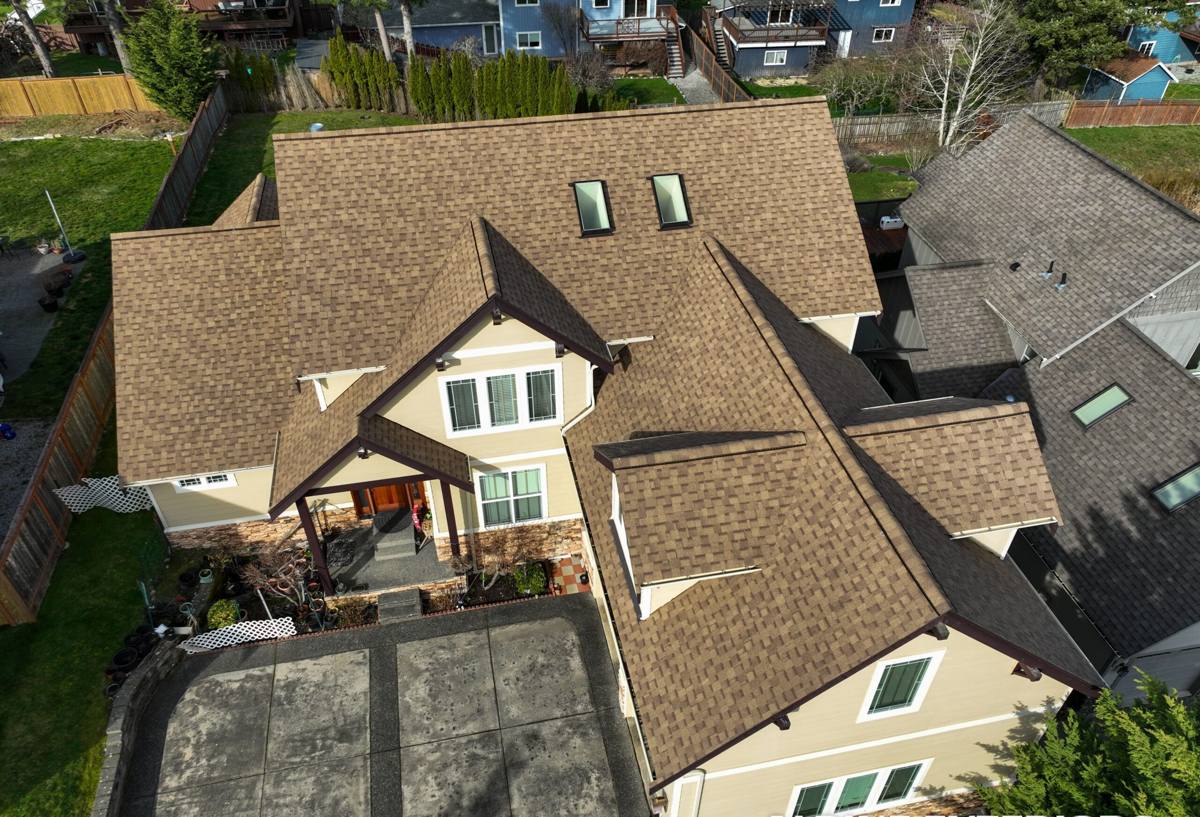
What Actually Counts as Storm Damage
Not every roof problem that shows up after a storm was caused by the storm. Wind and heavy rain are very good at exposing weaknesses that were already there — aging flashing, thin spots in the underlayment, moss that's been quietly lifting shingle edges for a year or two. Part of an honest inspection is telling you which is which.
Signs worth having checked
- Missing, cracked, or curled shingles, especially on the side of the roof that faces prevailing wind off the water
- Granule buildup in gutters or downspouts after a windstorm
- Lifted or bent flashing around chimneys, vents, and skylights
- Water staining on interior ceilings that appeared or worsened after a storm
- Visible daylight through the attic decking, or damp insulation near the roofline
- Moss mats that separated from the roof surface and pulled shingle granules with them
Some of these are obvious from the ground. Others — like a flashing seam that opened up half an inch — aren't visible unless someone gets up there and looks closely.
Why Salt Air and Moss Change the Repair, Not Just the Roof
Two things make Bellingham repairs different from a generic patch job. First, salt-influenced air accelerates corrosion on exposed metal — nails, flashing, drip edge — faster than it would inland. A repair that uses standard fasteners or bare flashing in a coastal-influenced area can start rusting at the repair site within a couple of years, which undoes the work. Second, moss doesn't just sit on top of shingles looking bad. Its root structure works into shingle laps and granule surfaces, holding moisture against the roof deck long after the rain has stopped. A storm that knocks moss loose in patches often reveals soft, moisture-damaged decking underneath that a surface-level repair would simply cover back up.
That's why a proper storm repair here isn't just "replace what blew off." It includes checking the decking condition under and around the damaged area, using corrosion-resistant fasteners and flashing, and addressing any moss growth on the surrounding roof so the repair isn't undermined within a year or two.
What a Correct Storm Damage Repair Involves
A repair done right, whether it's a dozen shingles or a full slope, follows the same logic:
- Confirm the extent of damage — not just what's visible from the ground, but the decking and underlayment condition beneath the damaged shingles.
- Match materials correctly — shingle type, weight, and color close enough that the repair doesn't stand out or create a weak seam against the existing roof.
- Replace compromised underlayment — if wind-driven rain got past the shingle layer, the felt or synthetic underlayment underneath may need replacing even if the shingles above it look salvageable.
- Rebuild flashing properly — flashing that was bent or lifted in a storm should be replaced, not just re-bent and re-nailed, since metal fatigue at the bend point is a common repeat-failure spot.
- Address moss at the repair boundary — clearing moss immediately around the repaired section so it doesn't re-lift the new work.
- Verify the repair blends into the drainage path — a patch that's structurally fine but interrupts water flow can create a new leak point somewhere else on the roof.
Our Process, Start to Finish
1. Inspection and honest assessment
We walk the roof, check the attic side where accessible, and tell you plainly whether you're looking at a repair, a partial re-roof of one slope, or something that doesn't need us at all. We don't pad a repair into a bigger job to make the visit worthwhile.
2. Written scope before any work starts
You get a clear description of what will be repaired, what materials will be used, and why — before anything is torn off. No verbal-only estimates.
3. Weather-aware scheduling
Given how much of the year sees rain here, we sequence tear-off and dry-in carefully so a roof is never left exposed longer than necessary. Temporary weatherproofing goes on the same day if full repair has to wait for materials.
4. The repair itself
Decking checked and replaced where soft, underlayment and flashing rebuilt to current standards, shingles matched and fastened with corrosion-resistant hardware suited to a coastal-influenced climate.
5. Final walkthrough
We show you the completed work and explain anything a homeowner should keep an eye on going forward — usually moss management, since that's the recurring issue on most roofs in this area.
Repair or Replace? How We Make That Call
Storm damage doesn't always mean a full new roof, and it doesn't always mean a small patch either. The right call depends on a few honest factors:
| Factor | Points Toward Repair | Points Toward Replacement |
|---|---|---|
| Age of existing roof | Under 12-15 years, still within useful life | Near or past manufacturer's expected lifespan |
| Extent of damage | Isolated to one slope or section | Spread across multiple slopes or the ridge line |
| Decking condition | Solid, dry decking under damaged shingles | Soft or delaminating decking found in multiple spots |
| Moss history | Light, manageable growth | Long-term heavy moss with granule loss across the roof |
| Prior repairs | Roof has no history of repeated leak points | Same areas have been patched more than once before |
We'll walk you through where your roof lands on this before recommending either path — there's no benefit to us pushing a full replacement when a proper repair will genuinely hold.
Materials: What We Use and Why
For storm repairs in this climate, we lean toward materials built specifically to handle sustained moisture and algae/moss exposure — algae-resistant shingle lines, corrosion-resistant flashing and fasteners, and synthetic underlayment rather than older felt products where it makes sense. This isn't about one brand being better than another across the board; it's about matching material choice to how much standing moisture and shaded, damp exposure a given roof actually sees. A shingle or underlayment that performs fine in a dry climate can be the wrong choice for a shaded, north-facing slope a few blocks from the water, and we'll say so rather than install what's easiest.
Storm Damage and Insurance Claims
Many storm repairs in this area involve a homeowner's insurance claim. We're not a public adjuster and won't promise a specific claim outcome, but we can provide a clear written assessment of the damage, photos, and a scope of repair that your insurer's adjuster can review alongside their own inspection. Having a documented, professional assessment on hand tends to make that conversation go smoother, whichever way it lands.
What to Do Right After a Storm
- Do photograph visible damage from the ground before cleanup begins
- Do check the attic for new water staining if it's safe to access
- Do call for an inspection promptly — small openings let in a lot of water over a wet week
- Don't get on the roof yourself to inspect or tarp it, especially on wet or mossy surfaces
- Don't assume a roof is fine just because no leak has shown up indoors yet
- Don't sign a repair agreement from a storm-chasing crew that isn't based in the area and won't be around if something needs a follow-up visit
Why a Locally Familiar Crew Matters
After any regional windstorm, out-of-town crews show up in Whatcom County offering fast repairs and move on before the season is over. The problem with that isn't just accountability if something goes wrong — it's that they often don't build for the conditions that caused the damage in the first place. A crew that works Bellingham and Birch Bay routinely knows which slopes take the worst of the wind off the bay, how fast moss re-establishes itself in shaded yards, and which fastener and flashing choices actually hold up through a full wet season rather than just looking finished on install day. That local pattern recognition is most of what separates a repair that lasts from one you'll be calling about again next winter.
If a recent storm left your roof damaged, or you're not sure whether what you're seeing needs attention, we're happy to take a look. Fill out the form below for a free, no-pressure estimate — we'll tell you plainly what we find and what it would take to fix it right.