 Birch Bay Exterior
 Siding Repair Built for Cherry Point's Coastal Exposure
Cherry Point sits on the open water along Whatcom County's shoreline, just up the coast from Birch Bay, and that location comes with a specific set of siding problems. Homes here take a steadier dose of salt-laden air than houses even a few miles inland, the wind off the Strait drives rain sideways into wall assemblies during winter storms, and the shaded, damp stretches of the property stay wet long enough for moss and algae to get a foothold. None of that is unusual for this part of the county. But it does mean that "siding repair" in Cherry Point isn't quite the same job as siding repair in a drier, more sheltered neighborhood — the failure patterns are different, and the fix has to account for why the damage happened in the first place, not just patch what's visible.
We work this stretch of coastline regularly, which matters more than it sounds. A repair crew that doesn't normally deal with marine exposure will often patch the symptom and miss the underlying moisture path, and the same spot fails again in a year or two.
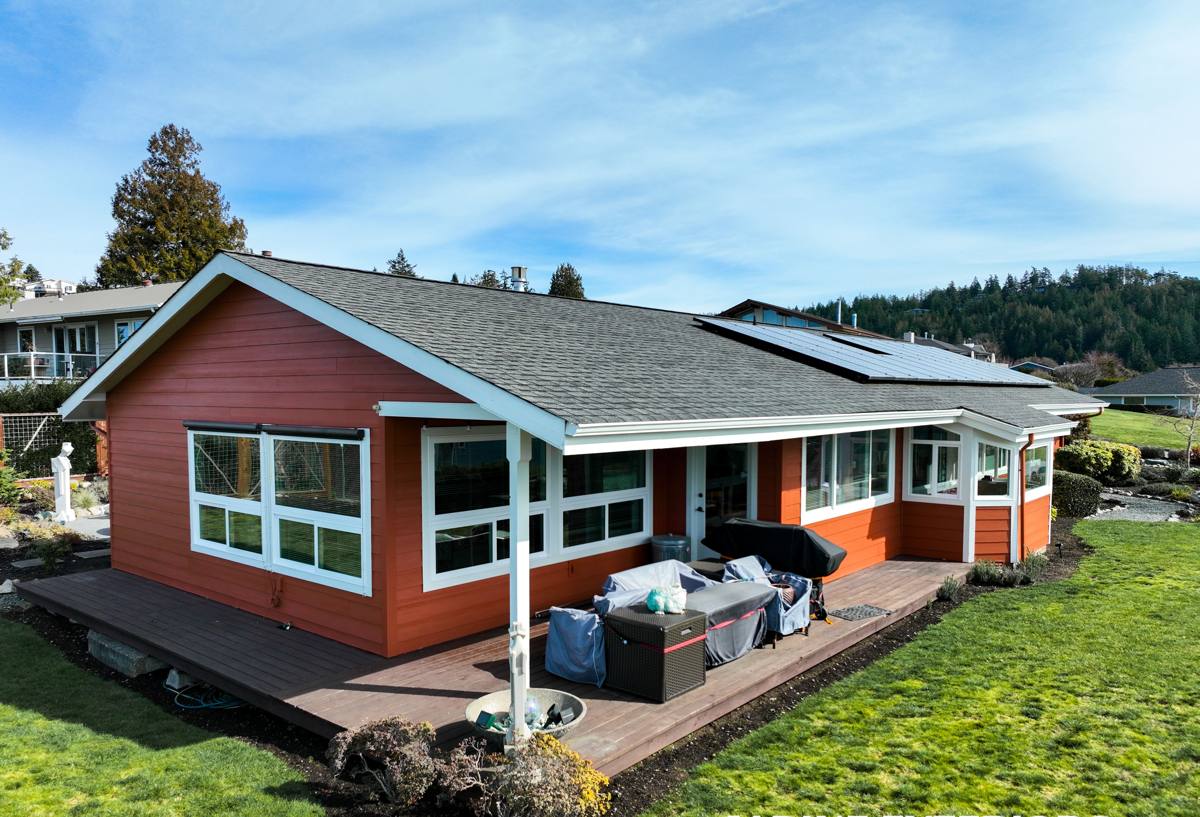
Signs Your Siding Needs Repair, Not Full Replacement
Most siding problems we're called out for in Cherry Point don't require tearing the whole house down to the studs. They're localized — a section, a corner, an area below a downspout — and can be repaired correctly if they're caught before the damage spreads. Watch for:
- Soft, spongy, or crumbling spots when you press on the siding, especially near the bottom courses
- Visible gaps or separation at butt joints, corners, or trim where caulking has failed
- Persistent green or black staining that comes back within weeks of cleaning
- Paint that's bubbling, peeling, or chalking unevenly in patches rather than across the whole wall
- Warping, cupping, or bowing panels — a sign moisture has gotten behind the material
- Rust streaks or corroded fasteners, common where salt air accelerates metal fatigue
- Cracked or split boards near window and door trim, where water tends to concentrate
Any one of these in isolation is usually a straightforward repair. Multiple signs across several elevations, or damage that keeps reappearing in the same spot after a patch, is a signal that the problem is bigger than the surface — often a flashing or drainage issue behind the siding rather than the siding itself.
Where Damage Concentrates on Cherry Point Homes
Because of the wind and salt exposure here, damage isn't evenly distributed. The elevation facing the water and prevailing weather almost always shows wear first and worst. Areas below roof-to-wall transitions, around window heads, and near ground level where splash-back and moss growth are heaviest tend to need attention years before the rest of the house.
What a Correct Repair Actually Involves
A repair that holds up in this environment is more than cutting out a bad board and nailing in a new one. Done right, it includes:
- Diagnosis before demo. We find out why the damage happened — failed caulking, a flashing gap, a clogged gutter dumping water onto a wall — before replacing anything, so the same failure doesn't repeat.
- Checking what's behind the siding. If water has been getting in, the house wrap or weather barrier underneath may also need attention. Replacing siding over a compromised barrier just delays the next repair.
- Matching material and profile. Repairs should match the existing reveal, texture, and thickness so the patch doesn't stand out or create a water-trapping seam.
- Correct fastening and flashing. Proper nailing patterns and new flashing at any disturbed joints or transitions — this is where a lot of quick patch jobs cut corners.
- Sealing and finishing to spec. The right sealant at the right joints, and a finish coat that matches the existing color and sheen rather than leaving an obvious patch.
Repair Cost Factors
Every repair is different, but the factors that drive cost are consistent. This gives you a general sense of what to expect before we come out and give you an exact number.
| Factor | Lower Cost | Higher Cost |
|---|---|---|
| Extent of damage | Isolated section, single elevation | Multiple areas, spread across the house |
| Underlying cause | Failed caulking or trim only | Water intrusion behind the siding requiring barrier repair |
| Access | Ground level, clear access | Second story, tight side yards, obstructed areas |
| Material match | Common Hardie profile still in production | Discontinued profile or color requiring custom matching |
| Root cause work | None needed | Flashing, gutter, or grading corrections required |
As a rule, the sooner damage is addressed, the smaller and less expensive the repair. Waiting through another wet season almost always turns a patch into a larger job.
Why We Only Repair and Rebuild with James Hardie Fiber Cement
We install and repair exclusively with James Hardie fiber cement siding — we don't work in vinyl, LP SmartSide, or the other fiber cement alternatives on the market, and that standard matters especially for repair work in an area like this one. Fiber cement doesn't rot, doesn't feed moss and algae growth the way wood-based products can, and it holds up to the freeze-thaw and salt-air cycle far better than vinyl, which tends to become brittle and crack over time in coastal wind exposure.
When we repair a Hardie installation, we're also working with a product that has a well-documented, climate-engineered lineup — Hardie's HZ product lines are formulated for specific climate zones, including the wetter marine conditions typical of this part of Washington. That means a repaired section, matched correctly, performs the same as the rest of the wall rather than becoming the next weak point. And because Hardie's ColorPlus factory finish is engineered to resist fading and moisture intrusion better than field-applied paint, a proper color-matched repair blends in and stays that way, rather than visibly aging faster than the surrounding siding within a season or two.
If your existing siding is a different material — cedar, primed spruce, vinyl, or another fiber cement brand — we'll still assess and repair it honestly. But if the damage is extensive enough that you're deciding between a major repair and a partial reside, we'll tell you straight that Hardie is what we'd put on the wall, and why.
What We Watch For With Existing Fiber Cement
Fiber cement is a strong performer in this climate, but repairs still need to address a few product-specific details: cut edges must be sealed per manufacturer specification, fastener placement has to follow Hardie's guidelines to avoid cracking, and any patched section needs proper clearance from grade, decks, and roof lines to avoid the moisture wicking that causes most of the damage we see in the first place.
Our Repair Process
We keep the process straightforward and low-pressure:
- On-site inspection of the damaged area and a check of surrounding sections for related issues
- A plain-language explanation of what caused the damage and what's needed to fix it correctly
- A written estimate that separates the visible repair from any root-cause work (flashing, drainage, etc.)
- Repair work matched to your existing siding's profile, reveal, and color as closely as possible
- A final walkthrough so you can see the completed work before we consider the job done
We don't upsell a full reside when a repair will genuinely hold. We also won't quietly patch over a problem that's going to come back — if the underlying cause needs attention, we'll explain why and let you decide how to proceed.
Why Local Experience in Cherry Point Matters
A siding crew that mostly works drier, inland neighborhoods can do fine repair work in general and still miss what's specific to this stretch of Whatcom County coastline. Knowing which elevations take the brunt of the weather here, how fast moss re-establishes in the shaded, damp corners of a coastal lot, and how salt air accelerates fastener corrosion changes how a repair is diagnosed and detailed. It's the difference between a patch that lasts a season and one that lasts as long as the rest of your siding.
Simple Maintenance That Extends the Life of a Repair
Once your siding is repaired, a little regular upkeep goes a long way in this climate:
- Rinse siding annually to clear salt residue, especially on the water-facing elevation
- Keep gutters clear so overflow doesn't wash directly down the wall
- Trim back vegetation that keeps siding shaded and damp longer than it needs to be
- Re-check caulking at trim and joints every couple of years — it's usually the first thing to fail
- Address small issues (a loose panel, cracked caulk) promptly before winter storm season
If you're seeing damage on your Cherry Point home — or you just want an honest opinion on whether it's a repair or something bigger — we're happy to come take a look. The estimate is free, there's no pressure to move forward, and you'll get a straight answer either way.