 Birch Bay Exterior
 Windows Built for Semiahmoo's Marine Climate
Homes along the Semiahmoo shoreline and throughout Birch Bay sit in one of the more demanding window environments in Whatcom County. You're close enough to the water that salt-laden air is a constant, driving rain off the Strait comes in sideways more often than not, and the long gray stretch of fall through spring keeps everything damp for months at a time. Windows here don't fail because they're old in the abstract sense — they fail because that specific combination of salt, moisture, and wind pressure finds every weak point in the frame, the seal, and the flashing.
A window installation done right in this area accounts for all of that from the start. One done without local experience tends to look fine for a year or two, then starts showing the same problems we see over and over: fogged glass, soft trim, and drafts that seem to come from nowhere.
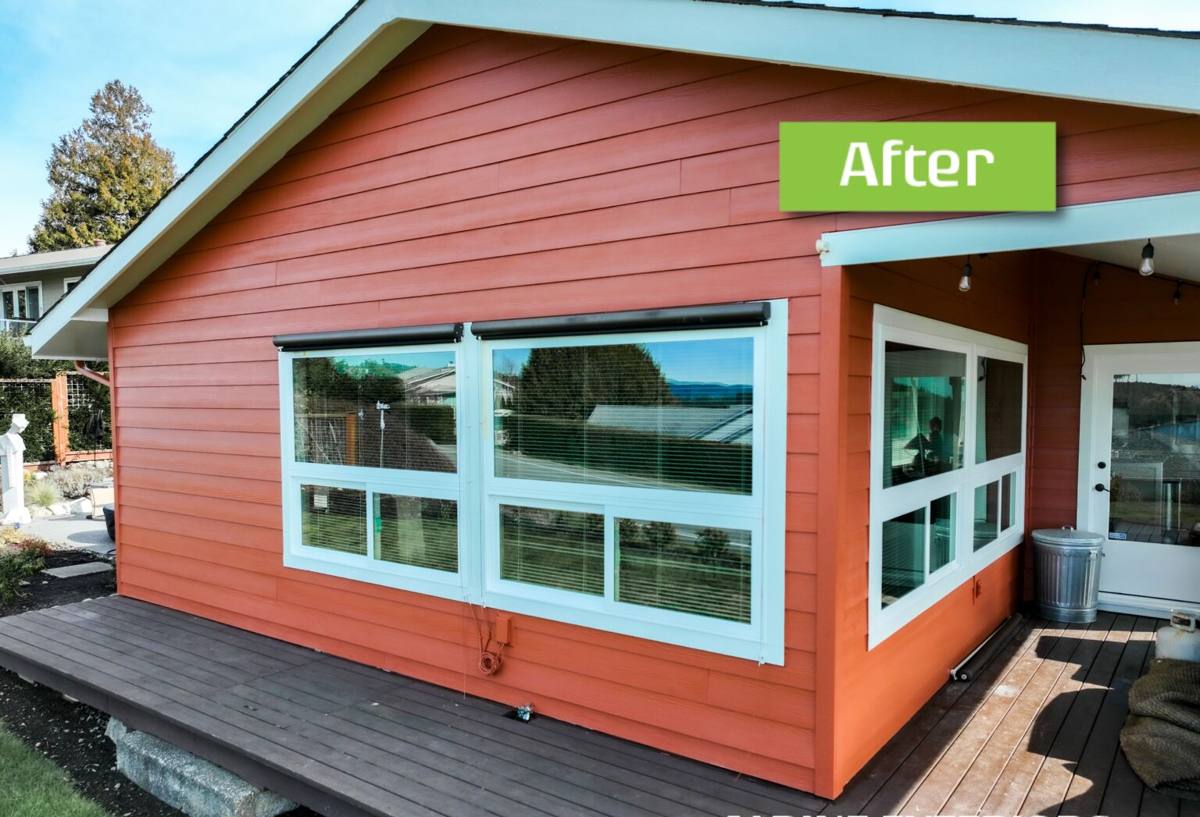
What Salt Air, Rain, and Moss Actually Do to Windows
Salt Air and Metal Components
Window hardware — hinges, locks, balance systems, and especially aluminum or lower-grade cladding — corrodes faster near open water. Salt in the air settles on metal surfaces and accelerates oxidation, which is why hardware on an older west- or north-facing window in this area often feels stiff, sticks, or fails to latch flush years before the glass itself gives out.
Driving Rain and Wind-Driven Water
Rain that falls straight down is relatively easy to shed. Rain that's pushed sideways by wind off the water finds its way under poorly lapped flashing, through gaps in old caulk, and into any seam that wasn't properly sealed at install. Over time, that moisture gets behind the siding and into the wall framing around the window opening — often well before a homeowner notices anything wrong on the inside.
Moss and Prolonged Dampness
Whatcom County's long wet season keeps north-facing walls, trim, and sills damp for extended stretches. That dampness is exactly what moss and mildew need to take hold. Once moss establishes itself on sills or trim, it holds moisture against the wood or composite material continuously, which speeds up rot in a way that intermittent rain alone doesn't.
Signs a Semiahmoo Home Needs Window Attention
- Visible fogging or moisture between panes of double-glazed glass — a sign the seal has failed
- Soft or discolored wood trim around the frame, especially on the sill or bottom corners
- Windows that are difficult to open, close, or lock, particularly on the weather-exposed sides of the house
- Noticeable drafts or cold spots near the window even when it's fully closed
- Peeling paint or bubbling finish on interior trim, which often points to moisture intrusion rather than just age
- Visible moss or dark staining on exterior sills, casings, or the wall just below a window
Any one of these on its own might not mean a full replacement is needed. Several together, especially on the same window or the same side of the house, usually means water has already gotten past the original seal.
What a Correct Installation Actually Involves
Window installation quality is decided almost entirely by what happens before the new window is even set in the opening. The window itself matters, but a good window installed poorly will fail faster than a modest window installed correctly.
Removal and Opening Inspection
Once the old window is out, the rough opening needs a real look — not a glance. This is the point where hidden rot, soft framing, or old water damage around the perimeter gets found and dealt with, rather than sealed over and left to keep spreading behind the new window.
Flashing and Water Management
Flashing has to be layered correctly — sill pan first, then side flashing, then head flashing — so that any water that does get behind the siding is directed back out and down, never trapped against the framing. This is the single most common shortcut on rushed jobs, and it's also the one that causes the most damage down the line, because problems from bad flashing don't show up for a year or more.
Sealing and Insulation
The gap between the window frame and the rough opening needs to be insulated and sealed with the right materials — not just caulked shut on the outside and left hollow inside. Low-expansion foam or backer rod and sealant around the perimeter closes off both air leaks and a path for moisture, without bowing the frame out of square.
Exterior Trim and Weatherproofing
The exterior trim and caulk joints are the last line of defense against driving rain. In a marine climate, these joints need to be done with sealants rated for continuous UV and moisture exposure, not general-purpose caulk that will crack and open a gap within a season or two.
Choosing the Right Window for a Coastal Whatcom County Home
There's no single "best" window material — the right choice depends on exposure, budget, and how much upkeep you want to do. Here's how the common options generally compare for a home dealing with salt air and heavy rain:
| Frame Material | Coastal Durability | Maintenance | Typical Trade-offs |
|---|---|---|---|
| Vinyl | Good — won't corrode or rot | Low | More affordable; limited color/finish options; can flex on very large sizes |
| Fiberglass | Very good — stable and corrosion-resistant | Low | Higher upfront cost; handles temperature swings well |
| Wood (clad exterior) | Fair to good if properly maintained | Higher — finish needs upkeep | Classic look; the cladding protects the wood, but any breach in the finish invites rot |
| Aluminum | Poor to fair near salt air unless marine-grade | Moderate | Prone to corrosion and condensation in this climate; we generally steer clients away from standard aluminum this close to the water |
For most Semiahmoo-area homes, we lean toward vinyl or fiberglass frames for the exposed sides of the house, since they hold up to salt air without the ongoing finish maintenance that wood clad or the corrosion risk that standard aluminum can bring. That's a matter of matching the material to the exposure, not a knock on any of these products used correctly in the right setting.
Glass and Glazing for Wind and Moisture
Beyond the frame, the glass package matters for both comfort and durability in this climate:
- Double-pane, low-E glass is the standard baseline for this region — it manages heat loss and condensation reasonably well for most homes
- Triple-pane is worth considering on the most wind- and weather-exposed walls, where the extra insulating layer reduces condensation risk and cuts drafts noticeably
- Impact-resistant or laminated glass can be a reasonable upgrade for homes with direct, unobstructed exposure to wind off the water, where wind-driven debris is more of a concern
- Argon or krypton gas fills improve insulation value but can diminish slightly faster over the life of the window if seals aren't installed correctly — another reason installation quality matters as much as the glass spec
Our Installation Process
- On-site assessment — we look at each window's exposure, current condition, and the state of the surrounding trim and siding, not just the glass
- Honest recommendation — we tell you which windows need replacement now, which can wait, and why, based on what we actually find
- Careful removal — old windows come out cleanly, with attention to protecting interior and exterior finishes
- Opening repair if needed — any rot, soft framing, or old water damage gets addressed before the new window goes in, not covered over
- Proper flashing and sealing — sill pan, side and head flashing, and weather-rated sealants installed in the correct order for this climate
- Final fit and finish — interior and exterior trim set, hardware tested, and the opening checked for square, level, and a tight seal
- Walkthrough — we go over the finished work with you before we consider the job done
What Window Installation Typically Costs
Costs vary based on window size, material, glass package, and whether the opening needs repair work beyond a straightforward swap. In broad terms, expect the total to shift with these factors:
| Factor | Impact on Cost |
|---|---|
| Frame material (vinyl vs. fiberglass vs. wood clad) | Fiberglass and wood clad generally cost more than vinyl |
| Glass package (double vs. triple pane, impact-rated) | Upgraded glass adds cost but can reduce long-term energy and maintenance costs |
| Opening condition | Hidden rot or framing damage found during removal adds labor and material |
| Window size and configuration | Larger or custom-shaped windows cost more than standard sizes |
| Number of windows and access | Multi-window jobs and second-story access affect labor time |
We give a firm, itemized estimate after seeing the actual windows and openings — not a ballpark over the phone — because the condition behind the old window matters as much as the size of the new one.
Why It Matters That We Already Work in Semiahmoo
A crew that installs windows regularly in Semiahmoo and greater Birch Bay already knows which sides of a house typically take the worst of the weather, what kind of moisture damage tends to hide behind older flashing in this area, and which materials hold up without excessive upkeep here. That's not a substitute for a careful on-site look at your specific home, but it does mean fewer surprises and a process that's already built around what this climate actually does to a window installation over time — not a generic approach borrowed from a drier part of the state.
If you're noticing drafts, sticking hardware, moss around your trim, or you just want a straight answer on whether your windows still have some life left in them, we're happy to take a look. Reach out for a free, no-pressure estimate using the form below.