 Birch Bay Exterior
 Semiahmoo's Coastal Climate and What It Does to a Roof
Homes in Semiahmoo sit close enough to the water that roofing materials take a different kind of beating than they would ten miles inland. Salt-laden air corrodes exposed metal faster, driving rain off the Strait finds every weak seam in a roof system, and the long wet season that defines this part of Whatcom County keeps roof surfaces damp for months at a stretch. That combination — salt, wind-driven moisture, and shade from mature trees common in this area — is exactly what grows moss, and moss is what shortens the life of an otherwise good roof.
None of this means Semiahmoo homes need exotic materials or gimmicks. It means the installation details that get skipped on an easy inland job — flashing laps, fastener choice, underlayment coverage, ventilation balance — are the details that actually matter here. A new roof installed to a general national standard and a new roof installed for this specific coastline are not the same job, even if they use the same shingle.
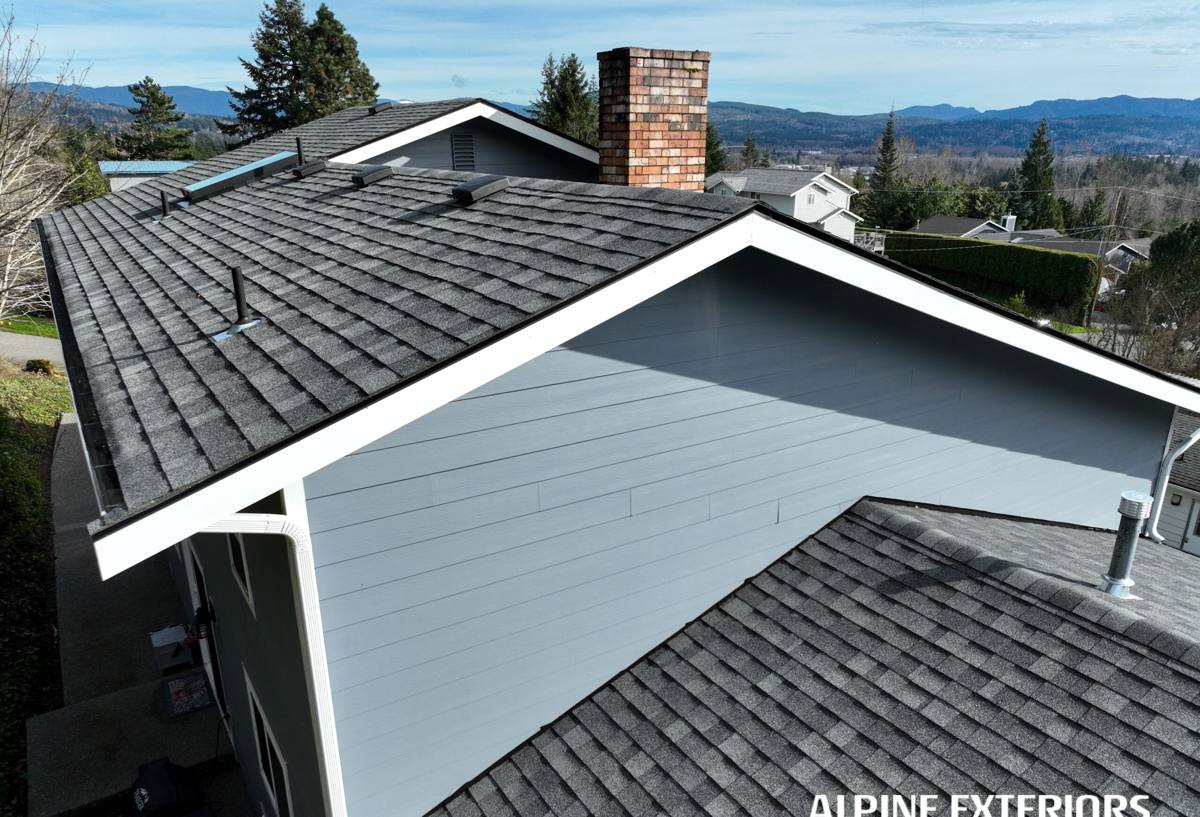
What "Correctly Installed" Actually Means Here
A new roof is more than laying shingles in rows. On a coastal Birch Bay-area home, a correct installation addresses the roof as a full system: deck, underlayment, flashing, fasteners, and ventilation all working together to shed water and resist salt corrosion over decades, not just years.
Deck Inspection Comes First
Once the old roofing is stripped, the plywood or OSB decking underneath gets inspected board by board. Coastal moisture and old moss growth can hide soft spots or delaminated sheathing that won't show up from the ground. Any bad decking gets replaced before a single new shingle goes down — installing new roofing over compromised deck is the single most common shortcut that leads to early failure.
Underlayment Sized for Wind-Driven Rain
Standard felt underlayment is not our default choice for a site exposed to sideways rain off the water. A synthetic or self-adhered underlayment, with extra coverage at eaves, valleys, and rakes, gives the roof a real second line of defense if wind ever forces water up under the shingle tabs.
Roofing Material Options for a Salt-Air, High-Moisture Site
There is no single "best" roofing material for every Semiahmoo home — it depends on the roof's exposure, the home's style, and the owner's budget and maintenance expectations. Here's how the common options actually perform in this climate:
| Material | Salt-Air Durability | Moss Resistance | Typical Lifespan Here | Maintenance Needs |
|---|---|---|---|---|
| Architectural (laminate) asphalt shingle | Good with corrosion-resistant fasteners and flashing | Moderate — benefits from zinc/copper strips | 20-30 years | Periodic moss treatment, gutter clearing |
| 3-tab asphalt shingle | Fair | Lower profile sheds moss less easily | 15-20 years | More frequent moss/algae treatment |
| Standing seam metal | Very good with marine-grade coatings and stainless fasteners | High — sheds moss quickly due to slick surface | 40-plus years | Low; occasional fastener/sealant check |
| Metal shingle/panel systems | Good, coating-dependent | Good | 30-50 years | Low to moderate |
We don't push one product on every roof. What we do insist on is matching fasteners, flashing metal, and coatings to whatever material is chosen — a great shingle installed with the wrong fastener corrodes at the nail head long before the shingle itself wears out.
Our New Roof Installation Process
- On-site assessment — we walk the roof and attic, check pitch, layers, decking access, and drainage patterns specific to the lot.
- Written scope and material selection — you get a clear breakdown of what's being removed, replaced, and installed, with material options suited to the exposure.
- Tear-off and deck inspection — full removal of old roofing, deck inspected and repaired as needed before anything new goes on.
- Underlayment and flashing installation — sized and detailed for wind-driven rain, with extra attention at valleys, chimneys, skylights, and wall intersections.
- Ventilation check and correction — intake and exhaust balanced so the attic can actually dry between wet spells.
- Roofing installation — laid to manufacturer specification with fastener spacing and pattern that holds up to coastal wind.
- Final walkthrough — ridge, flashing, and gutter lines reviewed with you before we call the job done.
Ventilation, Moss, and Long-Term Roof Health
Moss doesn't just sit on top of a roof looking bad — its root structure holds moisture against the shingle surface and lifts edges over time, and moss on a roof section usually means that section is staying damp longer than it should. Two things control that: sun exposure, which we can't change, and attic ventilation, which we can.
A roof deck that vents properly stays closer to outdoor temperature, which reduces the internal condensation that keeps the underside of a roof damp during our long wet stretch. On a new roof installation we check intake at the soffits and exhaust at the ridge, and correct any imbalance we find — often the biggest single upgrade available on an older Semiahmoo home, moss concerns aside.
Zinc and Copper Strips
For homes with heavy tree cover or a north-facing slope that stays shaded most of the day, a zinc or copper strip near the ridge is a simple, low-cost addition that discourages new moss growth as rain washes trace metal down the roof face. It's not a substitute for good ventilation, but it's a useful supplement on shaded roofs.
Flashing, Fasteners, and Wind-Driven Rain Details
Most roof leaks in this area don't start in the open field of shingles — they start at a flashing detail: a chimney, a wall-to-roof transition, a valley, a vent pipe. Salt air accelerates corrosion on lower-grade flashing metal and fasteners, so we spec corrosion-resistant metal and coated or stainless fasteners at these transitions rather than the minimum the material manufacturer allows.
Step flashing at walls, properly lapped valley metal, and correctly sealed penetrations matter more here than in a dry inland climate, because wind-driven rain actively pushes water sideways and upward into any gap that isn't detailed correctly. This is where installation experience on this specific coastline shows up — a crew that hasn't worked exposed sites like this can get every shingle course straight and still leave a roof vulnerable at the details.
Signs Semiahmoo Homeowners Shouldn't Ignore
A full new roof installation is a bigger decision than a repair, and it's worth knowing what points toward "replace" rather than "patch":
- Granule loss heavy enough that gutters are filling with grit
- Shingles curling, cupping, or cracking across multiple roof sections
- Persistent moss or dark streaking that returns shortly after cleaning
- Daylight visible through the roof deck from inside the attic
- Soft or spongy spots underfoot when walking the roof
- Repeated flashing leaks around chimneys, vents, or skylights
- A roof at or past the upper end of its material's expected service life
One or two of these on their own might mean a targeted repair is enough. Several at once, especially on an older roof, usually means repair costs start approaching replacement cost without buying back much life.
Why a Crew That Already Works Semiahmoo Matters
Roofing crews that mostly work drier, inland jobs default to standard national-spec details, and those details are conservative for a marine environment. A crew that regularly works Semiahmoo and the surrounding Birch Bay area already knows which slopes stay shaded and mossy longest, which fastener and flashing upgrades are worth the modest added cost here, and how much ventilation correction a typical older attic in this area actually needs.
That local pattern recognition shows up in small decisions throughout the job — where to add extra underlayment, whether a zinc strip is worth it on a given roof, how aggressively to detail a valley facing prevailing wind. None of it is complicated, but skipping it is exactly how a technically "correct" roof still underperforms on this coastline.
What to Expect During the Job
A typical full tear-off and replacement on a residential roof runs from a couple of days to about a week, depending on roof size, pitch, and how many layers of old roofing come off. Expect noise during tear-off, a dumpster or trailer staged for debris, and the driveway or a section of yard used for material staging and disposal loading. Permitting requirements are handled as part of the job where the local jurisdiction requires them for a full replacement.
Weather windows matter more here than in a dry climate — we schedule and sequence work around Whatcom County's rain patterns so the deck isn't left exposed longer than necessary, and we'll communicate clearly if a stretch of weather pushes the timeline.
If your Semiahmoo home's roof is showing its age or you just want an honest read on whether repair or replacement makes more sense, we're glad to take a look. Fill out the form below for a free, no-pressure estimate.