 Birch Bay Exterior
 Why Sandy Point Windows Wear on a Different Timeline
Sandy Point sits close enough to the water that its homes take a different kind of beating than houses even a few miles inland. Salt-laden air corrodes hardware and finishes faster than plain moisture does. Wind-driven rain doesn't just fall — it gets pushed sideways into every gap, seam, and joint in a window assembly. And the long, damp stretch of fall through spring that Whatcom County sees every year gives moss, algae, and mildew months to work into any surface that stays wet longer than it should. None of this is unique to one house. It's a function of geography, and it means windows here age differently than the manufacturer's brochure assumes.
We've replaced windows across Birch Bay and the surrounding shoreline communities long enough to know that a window that performs fine in a drier, more sheltered part of the county can fail early at Sandy Point if it's not installed with that exposure in mind. That's the lens we bring to every job here — not a generic install, but one built for the conditions actually hitting the house.
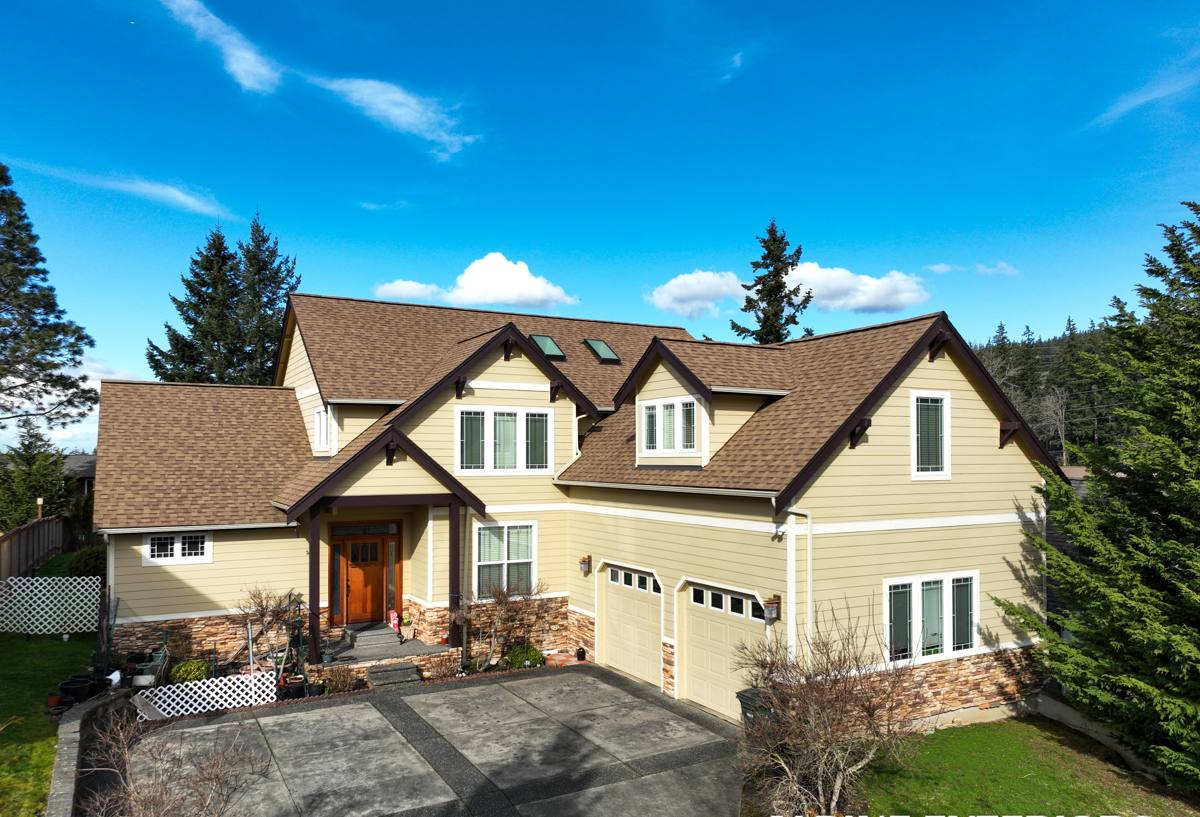
What Salt Air and Driving Rain Actually Do to a Window
It helps to understand the failure modes, because they're not always obvious until the damage is already done.
Salt Air
Airborne salt is corrosive to metal hardware — hinges, locks, balance systems, and screen frames all corrode faster near the water. It also breaks down some finishes and coatings over time, leaving pitting or a chalky look on surfaces that would otherwise hold up for decades.
Wind-Driven Rain
Standard rain falls straight down and mostly sheds off a window. Wind-driven rain gets forced horizontally and even upward into flashing laps, nailing fins, and sill pans. A window and flashing detail that's "good enough" in calm conditions can leak here, and the water often doesn't show up as a visible drip — it tracks behind the wall finish and rots framing long before anyone sees a stain.
Moss and Sustained Moisture
Whatcom County's moss season isn't a cosmetic issue confined to roofs. Moss and algae need sustained damp shade to establish, and north-facing or tree-shaded window walls at Sandy Point can hold moisture long after the rest of the house has dried out. Left alone, that constant dampness breaks down caulking, wood trim, and even some composite materials faster than dry-side weathering ever would.
Signs a Sandy Point Home May Need Window Replacement
Some of these show up gradually enough that homeowners get used to them before recognizing they're a problem.
- Fogging or a permanent haze between panes of double-glazed glass — a sign the seal has failed and the gas fill is gone
- Soft, spongy, or discolored wood at the sill or lower corners of the frame
- Hardware that's stiff, corroded, or won't latch fully closed anymore
- Persistent drafts you can feel by hand near the frame edges, even with the window latched
- Green or black growth on the frame or sill that returns shortly after cleaning
- Visible daylight or a wider-than-original gap between the sash and frame
- Paint or finish that's bubbling, peeling, or chalking specifically on the window trim rather than the wall around it
- A noticeable jump in heating cost without any other explanation
Any one of these on its own might just mean a repair. Several together, especially on the sides of the house most exposed to weather off the water, usually means the window assembly itself has reached the end of its useful life.
What a Correct Replacement Involves Here
Window replacement done right is mostly about what happens before the new window ever goes in, and what happens around its edges after it does. In a marine-exposure area like Sandy Point, a few steps matter more than they would elsewhere.
Opening Inspection and Prep
Before anything new goes in, we check the rough opening for hidden rot, soft sheathing, or old flashing that's failed. Installing a new window into a compromised opening just hides the problem behind a new frame — it doesn't fix it.
Flashing and Water Management
This is the step that determines whether a window leaks in five years or lasts thirty. Proper sill pan flashing, correctly lapped house wrap, and sealed nailing fins are what keep wind-driven rain from tracking into the wall cavity. We treat this as non-negotiable, not an upsell.
Sealing and Insulation
Low-expansion foam or backer rod and sealant around the frame perimeter closes off air and moisture paths without bowing the frame out of square — a mistake that causes windows to operate poorly for the life of the installation.
Hardware and Finish Selection
Given the corrosion risk from salt air, we lean toward hardware and finishes with proven coastal performance rather than whatever is cheapest to stock. It costs a little more up front and saves a service call in a few years.
Frame Material Comparison for Marine-Exposed Homes
There's no single "best" window material for every house — it depends on exposure, budget, and how much upkeep you want to do. Here's how the common options actually behave in a salt-air, high-rainfall setting like Sandy Point.
| Material | Salt Air / Moisture Behavior | Maintenance | General Cost Tier |
|---|---|---|---|
| Vinyl | Won't corrode or rot; performs well against salt air; can discolor over many years of UV and coastal exposure | Low — occasional cleaning | Lower to mid |
| Fiberglass | Very stable dimensionally; strong resistance to moisture and corrosion; holds paint and finish well over time | Low | Mid to higher |
| Aluminum-Clad Wood | Good weather protection on the exterior face, but any breach in the cladding exposes wood beneath to rot risk in a wet climate | Moderate — cladding seams need periodic checking | Higher |
| Bare Wood | Attractive but the most vulnerable to sustained moisture, moss growth, and rot in this specific climate without diligent upkeep | High — regular refinishing required | Mid to higher |
We'll walk through these trade-offs honestly during your estimate rather than steering everyone toward one product. A shaded, north-facing wall that stays damp for months at a time is a different decision than a sheltered, sun-exposed elevation on the same house.
Our Window Replacement Process
- On-site assessment — we look at each window's exposure, current condition, and the framing behind it, not just the glass
- Straightforward proposal — clear scope, materials, and pricing with no pressure to decide on the spot
- Opening prep — remove the old unit, inspect and repair the framing and sheathing as needed
- Flashing and installation — sill pan, house wrap integration, and a square, properly shimmed install
- Sealing and finish work — interior and exterior trim, caulking, and a final operational check on every window
- Walkthrough — we show you what was done and answer questions before we consider the job finished
Why Local Sandy Point Experience Matters
A crew that mainly works drier, more sheltered inland jobs doesn't always think about sill pan flashing or corrosion-resistant hardware as a default — because most of their work doesn't demand it. Working regularly in Birch Bay and along the Sandy Point shoreline means we're used to sizing up a house's specific wind and rain exposure before we ever quote the job, and we know which details can't be skipped here even though they might be optional somewhere else in Whatcom County.
It also means we're not guessing at how a given product line holds up locally — we've seen how different materials and installation approaches age in this exact climate over years, not just in a manufacturer's testing lab.
Living With Salt Air, Rain, and Moss After Replacement
New windows reduce maintenance, but they don't eliminate the climate. A little routine care keeps them performing the way they should for the long haul.
- Rinse frames and hardware periodically to clear salt residue, especially on wind-facing sides of the house
- Keep weep holes clear of debris so water can drain out rather than pooling in the frame
- Check and refresh exterior caulking every year or two, since UV and moisture break it down faster near the water
- Trim back vegetation that shades window walls and traps moisture, encouraging moss and algae growth
- Operate locks and hardware periodically through the seasons so corrosion doesn't set in unnoticed
- Address any new soft spots, discoloration, or sticking sashes promptly rather than waiting
Getting an Honest Estimate
Every Sandy Point home carries its own mix of sun exposure, wind direction, and shade, so the right window and installation approach isn't identical from house to house. We're happy to take a look, tell you plainly what we see, and give you a straightforward estimate with no pressure attached — use the form below to get started with a free consultation.