 Birch Bay Exterior
 Why Sandy Point's Waterfront Setting Changes the Siding Equation
Sandy Point sits close enough to the water that its houses live in a different microclimate than homes a few miles inland in Whatcom County. Salt-laden air moves through the neighborhood constantly, wind-driven rain hits siding at angles that inland homes rarely see, and the long, damp Pacific Northwest off-season gives moss and algae months to take hold on anything that stays wet. None of that is unique to one street or one lot — it's the baseline condition for exterior materials anywhere near Birch Bay's shoreline. Siding here isn't just decorative. It's the first line of defense against constant moisture cycling, and it needs to be chosen and installed with that in mind, not treated like a general-purpose product bolted onto a house.
Homeowners who've lived in Sandy Point for a while usually already know this instinctively — they've watched paint fail early, seen wood trim soften at the bottom edges, or noticed green film creeping up north-facing walls faster than it should. That lived experience is the reason a siding job here needs to be evaluated differently than the same job forty miles inland.
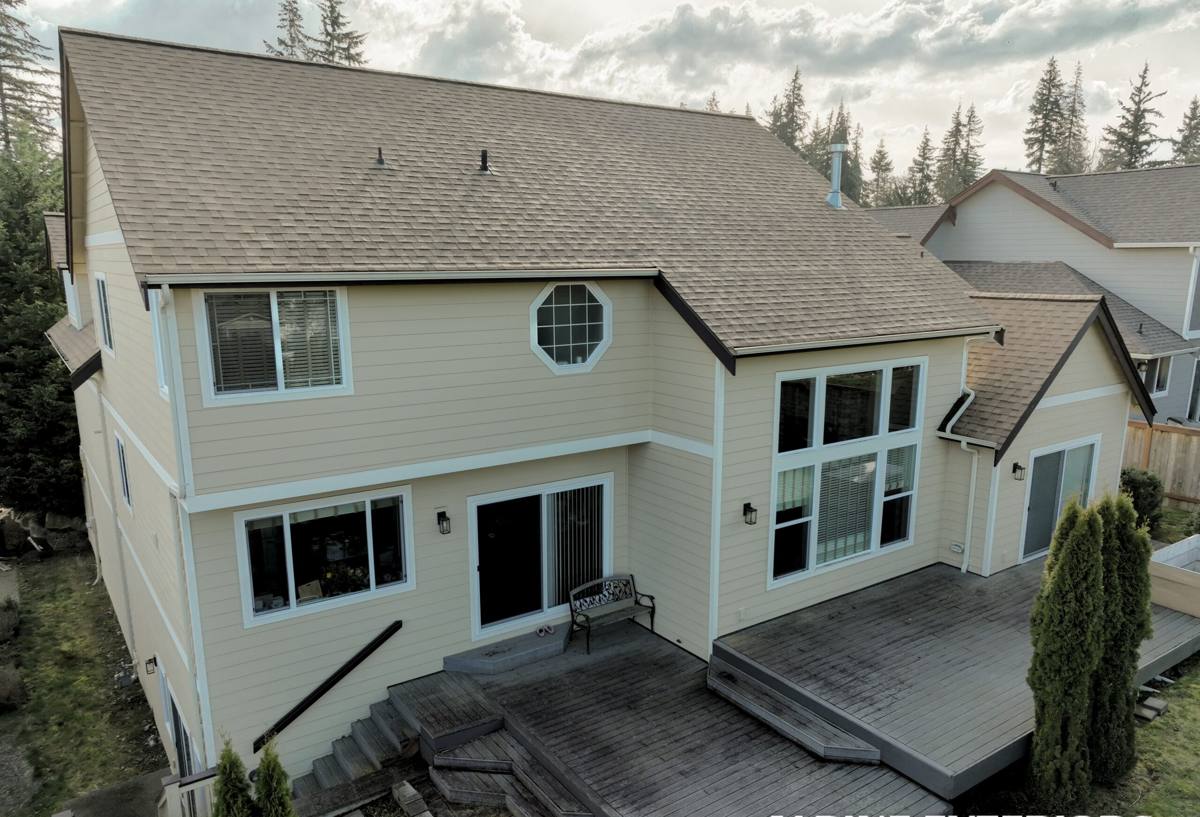
What Salt Air, Driving Rain, and Moss Season Actually Do to Siding
Salt Air
Airborne salt is corrosive to metal fasteners, flashing, and trim, and it accelerates the breakdown of lower-grade paint and coatings. Over years, salt exposure can chalk out finishes, dull colors, and weaken the surface layer of materials that weren't engineered to resist it. Fasteners and flashing that aren't rated for coastal exposure can begin corroding from the inside of a wall assembly long before any problem is visible from the street.
Driving Rain
Wind off the water doesn't just drop rain straight down — it pushes it sideways, forcing water up under laps, into seams, and behind poorly sealed trim. A siding system that would perform fine in a calm, sheltered yard can fail at a waterfront lot simply because the water is arriving from a different direction and with more force.
Moss Season
Whatcom County's wet season stretches long, and in a shaded or north-facing wall at Sandy Point, siding can stay damp for days at a stretch. Materials and finishes that hold moisture at the surface give moss, algae, and mildew exactly the conditions they need to establish themselves — and once established, they hold even more moisture against the wall, compounding the problem year over year.
What a Correct Siding Installation Involves Here
The material matters, but installation quality is what actually determines whether a siding system holds up in this environment. A correct job in a coastal Whatcom County setting includes:
- A continuous, properly lapped weather-resistive barrier behind the siding, with every seam and penetration sealed before a single course goes up
- Flashing at every window, door, and horizontal trim transition, installed to shed water outward rather than trap it against the sheathing
- A rainscreen gap that lets any moisture that does get behind the siding drain and dry out instead of sitting against the wall assembly
- Corrosion-resistant fasteners driven to the manufacturer's specified pattern and depth — not just "close enough"
- Correct caulking at joints and trim, using sealants rated for exterior, coastal exposure rather than general-purpose product
- Proper clearance between the bottom of the siding and grade, decks, or roof lines, so splash-back and standing water don't sit against the material
Skip any one of these steps and you can end up with a good product performing like a mediocre one. This is the part of the job that doesn't show up in a sales brochure but is exactly what determines whether siding lasts 10 years or 40 in a place like Sandy Point.
Why We Only Install James Hardie Fiber Cement Here
We install James Hardie fiber cement siding exclusively, and a waterfront neighborhood like Sandy Point is precisely the environment that decision is built around. Hardie's HZ5 product line is engineered specifically for regions with significant moisture exposure — the Pacific Northwest coast qualifies. Fiber cement is non-combustible, dimensionally stable in freeze-thaw and wet-dry cycling, and resistant to the kind of moisture absorption that causes wood-based and engineered wood products to swell, delaminate, or rot at cut edges.
The factory-applied ColorPlus finish is baked on under controlled conditions rather than field-painted, which gives it far better resistance to fading, chalking, and the salt-air breakdown that dulls standard paint jobs faster near the water. It also means touch-up and long-term color consistency are more predictable, which matters on a house that's going to face a few decades of this climate.
We don't install vinyl, LP SmartSide, Cemplank, Allura, primed spruce, or cedar, and in a coastal microclimate the reasons are sharper than they are elsewhere. Vinyl can warp and its seams are a chronic entry point for wind-driven rain. Wood-based products need consistent maintenance to keep moisture out of cut edges and fastener holes, and a missed maintenance cycle in a wet, salty environment shows up fast. We'd rather install one product correctly and stand behind it than offer several options and hope the cheaper ones hold up somewhere they weren't really built for.
Comparing Siding Materials in a Coastal Microclimate
| Material | Moisture Behavior | Salt Air Durability | Long-Term Maintenance |
|---|---|---|---|
| James Hardie Fiber Cement (HZ5) | Dimensionally stable, resists swelling and rot | Factory finish resists fading/chalking | Occasional washing; no repainting cycle |
| Vinyl | Can warp with heat/cold cycling; seams allow water intrusion | Can chalk and become brittle over time | Low, but limited repair options if damaged |
| Wood / Primed Spruce / Cedar | Absorbs moisture at cut edges and joints | Vulnerable without consistent recoating | Regular painting/sealing required |
| Engineered Wood (e.g. LP SmartSide) | Resin-treated but still moisture-sensitive at exposed edges | Coating performance varies by exposure | Moderate; edge sealing and monitoring needed |
Our Process for a Sandy Point Siding Installation
1. On-Site Assessment
We start by walking the property and looking specifically at wind exposure, shade patterns, drainage around the foundation, and where the current siding or sheathing is showing the earliest signs of moisture stress. A house facing open water or prevailing wind gets evaluated differently than one tucked behind a windbreak of trees or neighboring structures.
2. Tear-Off and Substrate Check
Once old siding comes off, we inspect the sheathing underneath for soft spots, rot, or existing moisture damage before anything new goes up. Covering a compromised substrate with new siding just hides a problem — it doesn't fix it.
3. Weather Barrier and Flashing
We install a continuous weather-resistive barrier and integrate flashing at every window, door, and trim transition so water is directed out and away from the wall assembly, not funneled behind it.
4. Rainscreen and Fastening
A rainscreen gap goes in to give any incidental moisture a path to drain and dry. Hardie siding is then fastened to manufacturer spec with corrosion-resistant fasteners, sized and spaced correctly for the HZ5 product line.
5. Trim, Caulking, and Finish Detailing
Trim, corners, and joints are sealed with coastal-rated sealant, and we double-check clearances at grade, decks, and roof intersections before calling the job complete.
6. Final Walkthrough
We walk the finished job with the homeowner, point out anything they should watch for seasonally, and answer questions about maintenance specific to their lot's exposure.
Why Hiring a Crew That Already Works Sandy Point Matters
Siding installation isn't uniform across Whatcom County, and a crew that mostly works inland jobs may not default to coastal-grade fastening, flashing, and sealant practices unless a homeowner specifically asks. A crew that regularly works in and around Birch Bay and Sandy Point already knows which walls tend to take the worst of the wind-driven rain, where moss establishes first, and how much clearance a given lot needs at grade based on drainage patterns common to the area. That familiarity shows up in fewer surprises during tear-off and a finished installation that's already accounting for conditions specific to a waterfront setting, rather than treating it as a standard job.
It also matters for the long term. A local crew is easier to reach if a question comes up two years after installation, and they're already familiar with how James Hardie's warranty coverage applies to installations in this specific climate.
Signs Your Current Siding Is Losing the Battle
- Paint that's chalking, peeling, or fading noticeably faster on wind- or water-facing walls
- Soft or spongy spots when you press on wood-based siding or trim
- Persistent green or black staining that returns shortly after cleaning
- Visible warping, buckling, or gapping at seams and corners
- Rust streaking from fasteners or trim hardware
- Rising energy bills that may point to a compromised weather barrier behind the siding
Any one of these on its own isn't necessarily an emergency, but a few showing up together, especially on the sides of the house that face the water or prevailing wind, usually means the siding is no longer doing its job as a moisture barrier.
Maintenance After a Correct Install
One of the practical advantages of fiber cement in this climate is how little ongoing maintenance it asks for compared to wood-based alternatives. A periodic rinse to keep salt residue and organic buildup from accumulating, an annual look at caulking and trim joints, and prompt attention if a fastener ever shows early corrosion are really the extent of it. There's no repainting cycle to keep pace with, which matters a lot on a property where the weather doesn't give paint an easy ride.
Get a Straightforward Estimate
If your Sandy Point home's siding is showing its age, or you're planning ahead before the next wet season sets in, we're happy to take a look and give you an honest read on what it needs. Reach out for a free, no-pressure estimate using the form below.