 Birch Bay Exterior
 Why Sandy Point Roofs Wear Differently Than Roofs Inland
Sandy Point sits close enough to the water that its roofs live a harder life than a roof ten miles inland in Whatcom County. Salt-laden air corrodes exposed metal faster, driving rain off the Strait finds every weak seam and nail pop, and the shaded, moisture-heavy tree cover that gives the neighborhood its character also gives moss exactly what it wants: shade, standing moisture, and organic debris to root into. None of that is unique to one street or one house. It's a neighborhood-wide condition, and it means a roof that would last 25 years in a drier part of the county can start failing a decade earlier here if it wasn't built or maintained with that climate in mind.
This page is about one job, done right, for this one area: replacing a roof on a Sandy Point home. Not a general overview of roofing — the specific decisions that matter when the roof in question is going to sit a few blocks from saltwater and under a marine layer for a big chunk of the year.
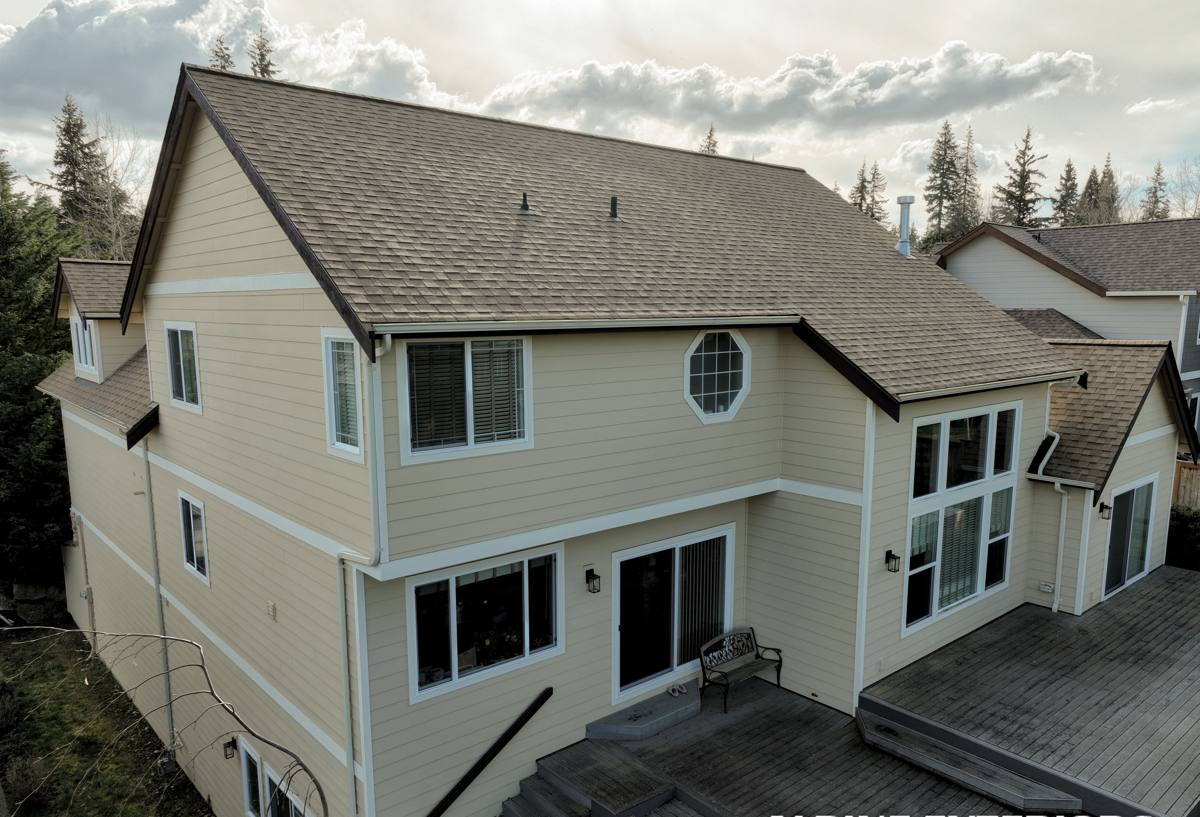
How Salt Air, Rain, and Moss Actually Damage a Roof
Salt Air
Airborne salt accelerates corrosion on anything metal — flashing, fasteners, vent stacks, gutter hardware. A fastener that's rated for general use inland can start showing rust streaks within a few years this close to the water. Once a fastener corrodes, it loses holding strength and the seal around it degrades, which is exactly where leaks start.
Driving Rain
Storms coming off the water don't just fall straight down — wind-driven rain gets pushed sideways and upward under shingle edges, around chimney flashing, and into any gap that a calmer rain would never reach. A roof detailed for typical rainfall can still leak in a wind-driven event if the underlayment, flashing laps, and edge details weren't built for it.
Moss
Whatcom County's wet, mild winters and shaded lots are ideal moss conditions. Moss doesn't just look bad — it holds moisture against the roofing material, lifts shingle edges as it grows, and works its way under tabs and around fasteners. Left long enough, it turns a cosmetic problem into a structural one by keeping the deck damp longer than it should ever stay.
Individually, any one of these is manageable. Together, and over years, they're why so many roof replacement calls in this neighborhood aren't emergencies — they're roofs that were slowly compromised by conditions the original installation didn't fully account for.
Signs a Sandy Point Roof Needs Replacement, Not Just Repair
- Granule loss heavy enough that you can see bare, shiny patches on asphalt shingles, especially on south- and west-facing slopes
- Moss or algae covering more than a small section, particularly on north-facing or shaded slopes that stay damp longest
- Soft or spongy decking felt when walking the roof, or sagging visible from the ground
- Repeated leaks in different spots after previous patch repairs
- Flashing around chimneys, skylights, or wall intersections that's rusted, lifted, or was never properly step-flashed
- Shingles curling, cracking, or losing their seal in a pattern that follows wind exposure, not just age
- Interior signs — ceiling stains, musty attic smell, or visible daylight in the attic
One or two of these can often be repaired. When several show up together, or the roof is already past 18-20 years old in this climate, replacement is usually the more honest recommendation — patching a roof that's failing from multiple causes at once tends to cost more over a few years than doing the job once, correctly.
What a Correct Roof Replacement Involves Here
A roof replacement built for Sandy Point's conditions isn't just "new shingles on the old deck." The parts that matter most are the ones you won't see once the job is done.
Full Tear-Off and Deck Inspection
We remove the old roofing down to the deck rather than layering over it. That's the only way to find soft, rotted, or delaminated sheathing before it's buried under a new roof — a real risk on homes that have had slow moisture intrusion from moss or old flashing failures.
Ice-and-Water and Underlayment Strategy
Given the wind-driven rain this area sees, we pay particular attention to underlayment coverage at eaves, valleys, and any low-slope transitions — the areas most likely to take on water that a standard felt underlayment alone wasn't designed to stop.
Flashing Done Properly, Not Just Caulked
Chimneys, skylights, sidewalls, and vent penetrations get step flashing and counter-flashing installed correctly, not sealant relied on as the primary barrier. Caulk fails; properly lapped metal flashing doesn't depend on it holding forever.
Ventilation That Matches the Climate
A roof deck that can't breathe traps moisture, and trapped moisture is what accelerates rot and helps moss get a foothold from underneath as well as on top. Balanced intake and exhaust ventilation is part of a correct replacement, not an optional upgrade.
Corrosion-Resistant Fasteners and Metal
Given the salt air, we use fasteners and flashing metals selected for coastal-adjacent exposure rather than the cheapest standard option — it costs a little more up front and saves a lot of premature corrosion later.
Material Choices That Make Sense for This Climate
There's no single "right" roofing material for every home — it depends on budget, roof pitch, and how much moss and moisture resistance matters to you. Here's how the common options compare for a Sandy Point application specifically.
| Material | Moss/Moisture Resistance | Salt-Air Durability | Maintenance | Typical Lifespan Here |
|---|---|---|---|---|
| Architectural asphalt shingle | Good with algae-resistant granules; still needs periodic moss removal | Good when fasteners/flashing are corrosion-resistant | Moderate — periodic moss/debris clearing | 20-25 years |
| Standing seam metal | Excellent — moss struggles to grip smooth metal | Very good with proper coatings; needs quality fasteners | Low | 40-50+ years |
| Synthetic/composite shingle | Very good; resists moisture absorption | Good | Low to moderate | 30-40 years |
| Cedar shake | Poor without diligent, ongoing maintenance | Fair — wood is more sensitive to sustained damp/salt exposure | High | Highly variable, shortened by neglect |
We're honest about the trade-offs on cedar shake specifically because it's a real question we get in this neighborhood: it can look great, but wood roofing in a shaded, damp, salt-air environment demands a level of upkeep most homeowners underestimate before moss and moisture problems set in. That's a maintenance-burden conversation, not a knock on the product — it's just not what we'd put on our own roof three blocks from the water without a serious maintenance commitment behind it.
What Roof Replacement Costs Depend On
We won't quote a number without seeing the roof, but the real cost drivers are consistent from house to house:
| Factor | Why It Matters |
|---|---|
| Roof size and number of planes | More squares and more complex geometry mean more material and labor |
| Pitch and access | Steep or hard-to-access roofs take longer and require more safety setup |
| Deck condition | Rot found during tear-off means sheathing replacement, which adds cost but shouldn't be skipped |
| Material chosen | Asphalt, metal, and composite carry different material and install costs |
| Flashing and ventilation scope | Homes with multiple chimneys, skylights, or poor existing ventilation need more detail work |
| Tear-off layers | Removing multiple old roofing layers costs more than a single-layer tear-off |
A straightforward single-layer asphalt replacement on a modest Sandy Point roof will land differently than a complex multi-plane roof needing deck repair and metal flashing throughout — the honest answer is always "it depends," and we'll walk you through exactly what's driving your number before any work starts.
Our Sandy Point Roof Replacement Process
- On-site inspection. We walk the roof and attic, check for moss patterns, soft decking, and flashing condition, and take photos to review with you.
- Written estimate. A clear scope — tear-off, deck repair allowance if needed, material, flashing, ventilation — with no vague line items.
- Material selection. We talk through the trade-offs above based on your budget and how much moss maintenance you're willing to take on long-term.
- Scheduling around weather. Roof replacement needs a dry work window; we schedule with Whatcom County's wet-season patterns in mind and monitor forecasts closely.
- Tear-off and deck inspection. Any rotted or compromised sheathing is identified and replaced before new roofing goes down.
- Installation. Underlayment, flashing, ventilation, and roofing material installed to manufacturer specs and adjusted for this area's exposure.
- Final walkthrough. We review the finished roof with you, including gutter and downspout condition, before calling the job done.
Why Hiring a Crew That Already Works Sandy Point Matters
A roofing crew that's worked this specific stretch of Birch Bay isn't guessing about how a roof holds up here — they've seen which flashing details actually stop wind-driven rain, which fastener choices hold up against salt air over years rather than months, and which north-facing slopes need extra attention to moss. That local pattern recognition doesn't replace good workmanship, but it means fewer surprises: fewer callbacks for leaks that a generic install missed, and material choices that match what actually performs in this microclimate rather than what performs fine somewhere drier.
It also means a crew that can be reached easily if a question comes up after the job — not a company that did one job in the area and moved on.
Before You Hire: A Practical Checklist
- Ask whether the estimate includes a full tear-off or a layer-over, and understand the difference in what you're getting
- Confirm the underlayment and flashing approach for valleys, chimneys, and any low-slope sections
- Ask what fastener and flashing materials are being used and whether they're suited to salt-air exposure
- Confirm ventilation will be assessed and corrected, not just left as-is
- Get the deck-repair pricing structure in writing before work starts, so a bad-decking surprise doesn't turn into a bad-pricing surprise
- Verify licensing, bonding, and insurance for Washington State
- Ask how debris, old moss, and tear-off material will be handled and hauled away
If a contractor can't answer these clearly before the tear-off starts, that's worth noticing.
Get a Free, No-Pressure Estimate
If your Sandy Point roof is showing moss buildup, granule loss, curling shingles, or you just want an honest read on how many years it has left, we're glad to take a look. The estimate is free, there's no pressure to book on the spot, and you'll get a straightforward explanation of what we see and what it would take to fix it right. Use the form below to get started.