 Birch Bay Exterior
 Why Decks in Sandy Point Wear Out Faster Than You'd Expect
Sandy Point sits close to the water, and that proximity shapes everything about how a deck ages here. Salt-laden air moves off the bay and settles on every exposed surface, wind-driven rain finds its way into joints and fastener holes that inland decks rarely have to deal with, and low, shaded lots near the shoreline stay damp long after a storm has passed. A deck built to a generic spec, or one that was fine on a dry inland lot, often shows real trouble within a decade out here. The failures we see most in this part of Whatcom County are rarely about bad luck. They're about materials and hardware that weren't matched to a saltwater, high-moisture environment in the first place.
None of this means a deck in Sandy Point is a losing battle. It means the build has to account for the conditions from the ground up: corrosion-resistant hardware, materials that don't wick or hold moisture, and a framing approach that lets air move and water drain instead of pooling under the boards.
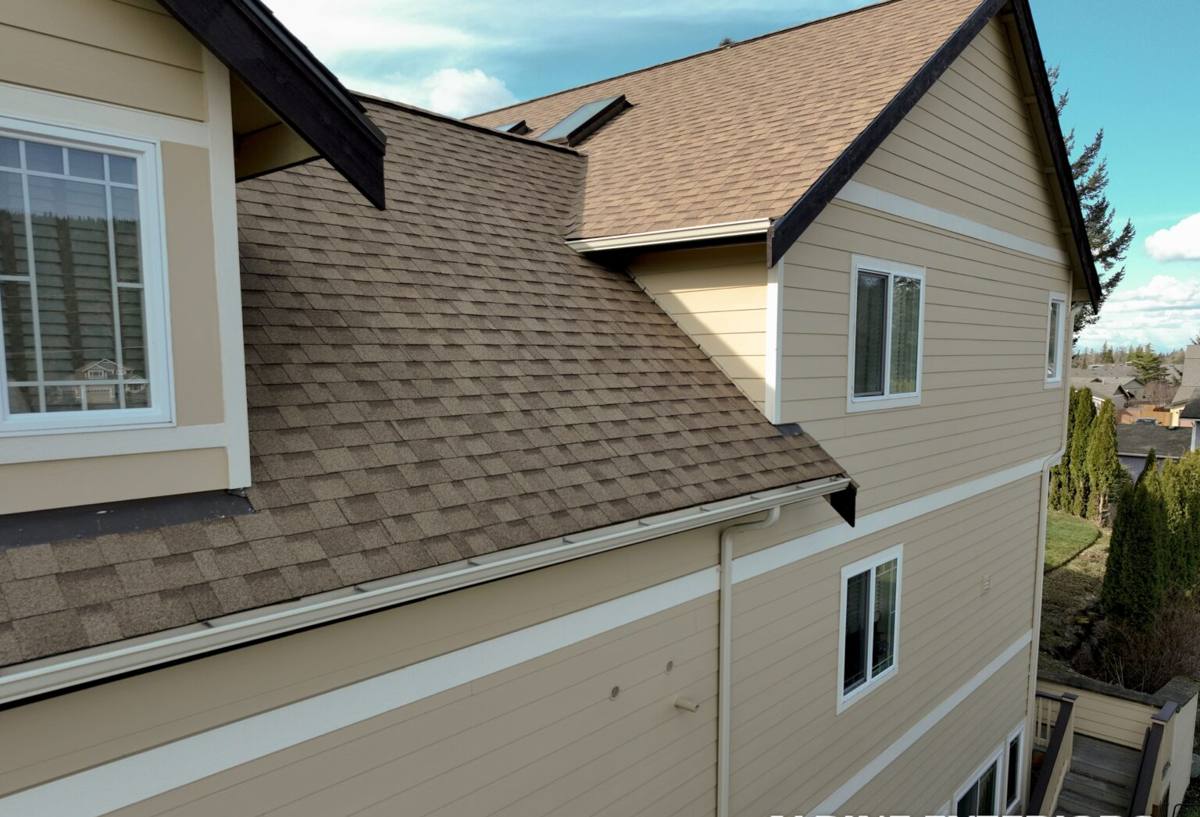
What Salt Air, Driving Rain, and Moss Actually Do to a Deck
Salt and Metal Fasteners
Airborne salt is corrosive to standard steel hardware. Nails, screws, and joist hangers that aren't rated for coastal or salt-exposed use will start to rust well before the wood around them fails. Once a fastener corrodes, it loses holding strength and can stain the surrounding wood or composite, which is often the first visible clue that something underneath isn't right.
Trapped Moisture and Rot
Driving rain off the water doesn't just fall straight down, it gets pushed sideways into ledger boards, stair stringers, and the gaps between deck boards. On a deck with poor drainage or tight board spacing, that water has nowhere to go. It sits in end grain and fastener holes, and that's where rot starts, usually from the inside out, long before the surface looks bad.
Moss, Algae, and Slip Hazards
Shaded, moisture-heavy lots near Birch Bay grow moss on almost any horizontal wood surface that isn't regularly cleaned. Beyond the cosmetic issue, moss and algae hold water against the deck surface and create a genuinely slick, unsafe walking surface, especially on stairs. A deck that stays damp and shaded for months at a time needs a surface and a maintenance plan built around that reality, not one borrowed from a sunny inland yard.
Signs Your Deck Has Reached the End of Its Life
Not every deck problem means full replacement. Localized rot at one post base, a loose railing, or a few cracked boards can often be repaired. But there's a point where patching stops making sense, either because the structure itself is compromised or because repair costs start rivaling a rebuild. Watch for these signs:
- Soft, spongy, or spring-feeling deck boards, especially near the house or in shaded corners
- Rust streaks running down from fasteners or hardware
- Wood that's gray, splintering, or feels damp to the touch even on dry days
- Posts that wobble, or a structure that sways more than it used to
- Persistent moss or algae that returns within weeks of cleaning
- Gaps opening up between boards, or boards cupping and warping
- Ledger board separation or staining where the deck meets the house
- Stairs or railings that feel less solid than they did a year or two ago
If you're seeing two or more of these, especially structural ones like soft framing or a wobbly post, it's worth having someone look at the whole deck rather than chasing individual repairs.
Choosing Materials for a Shoreline Property
Material choice matters more here than it does further inland, because the environment is actively working against whatever you pick. There's no single "best" material for every budget and situation, but there are real trade-offs worth understanding before you decide.
| Material | Performance Near Salt Air | Maintenance | Typical Lifespan |
|---|---|---|---|
| Pressure-treated wood | Decent if fasteners and finish are upgraded; untreated hardware fails faster here | Regular cleaning, moss removal, and re-sealing every 1-3 years | 10-15 years with upkeep |
| Cedar | Naturally rot-resistant but softer surface; still needs sealing against salt spray | Annual cleaning and periodic sealing | 15-20 years with diligent care |
| Composite decking | Doesn't rot or splinter; some early composite products had moisture-absorption issues we now avoid by material selection | Periodic washing to prevent surface algae; no sealing needed | 20-25+ years, warranty-backed |
| PVC/capped polymer | Fully sealed surface, best resistance to salt and moisture of the common options | Occasional washing | 25+ years, warranty-backed |
We don't push one product on every job. A cedar or treated-wood deck can absolutely work in Sandy Point if the framing, fasteners, and finish schedule are right, and it costs less upfront. Composite and PVC cost more to install but shift the ongoing burden away from sealing and staining, which matters if you don't want to be back on your knees with a sealant brush every couple of years. The honest answer depends on your budget, how much upkeep you want to do, and how the deck is oriented to sun, shade, and wind.
What a Correct Deck Replacement Actually Involves
Footings and Framing
Everything starts below the surface. Footings need to be sized and set correctly for local soil and frost conditions, and framing lumber should be rated for ground contact or exposure as appropriate, not just whatever was on hand. On sandy, low-lying lots near the water, we pay close attention to footing depth and drainage around posts so they aren't sitting in standing water after every rain.
Fasteners and Hardware
This is where a lot of coastal decks fail early, and it's an easy thing for a rushed job to skip. Joist hangers, structural screws, and connectors should be stainless steel or rated specifically for coastal/high-corrosion exposure, not standard galvanized hardware that looks fine on the shelf but wasn't built for salt air.
Decking, Fascia, and Finish Work
Board spacing, direction, and fastening method all affect how well a deck sheds water and resists moss. Hidden fastener systems give a cleaner look but need to be installed correctly to avoid trapping moisture at the connection points. Fascia and trim get the same hardware and material standards as the structure itself, since they take direct weather exposure too.
Drainage and Airflow Underneath
A deck that can't breathe underneath stays damp longer after every rain. Proper spacing, grading beneath the deck, and in some cases a drainage or ventilation gap between the ledger and the house all help the structure dry out between storms instead of staying wet through the winter.
Our Deck Replacement Process
We keep the process straightforward because a deck replacement shouldn't feel like a mystery.
- On-site evaluation. We walk the existing deck, check the framing, footings, and any hidden rot, and talk through what you actually want from the new deck, budget included.
- Material and design decisions. Based on the site's sun, shade, wind exposure, and your maintenance preferences, we walk through material options honestly, including cost and long-term upkeep, not just the upfront number.
- Tear-off and structural assessment. Once the old deck comes down, we can see the framing and ledger connection clearly and confirm the plan before rebuilding, since what's underneath doesn't always match what a surface inspection suggested.
- Rebuild. Footings, framing, fasteners, decking, railing, and stairs go in to spec, with hardware and finish choices matched to the site's exposure.
- Final walkthrough. We go over the finished deck with you, cover care and maintenance for whatever material you chose, and make sure everything is solid before we call it done.
Permits and Local Considerations Near the Shoreline
Deck replacement projects in Whatcom County, especially on properties close to the shoreline, can involve permitting and setback requirements that differ from a straightforward inland rebuild. Depending on the scope of the project, the deck's footprint, and its proximity to the water, additional review may apply. We handle the permit process as part of the job rather than leaving homeowners to sort it out, so the project stays on the right side of local requirements from the start.
Why Hire a Crew That Already Works in Sandy Point
A contractor who mostly builds decks on dry, inland lots will often default to standard hardware and standard framing details, because that's what works where they usually work. Out here, that default isn't good enough. A crew that's already replaced decks in Sandy Point and elsewhere around Birch Bay knows to spec coastal-rated hardware without being asked, understands how the local moss season affects material choice, and has a feel for how sun, shade, and wind move across these shoreline lots. That familiarity shows up in fewer surprises during the build and a deck that's actually built for the conditions it has to survive, not just the conditions on a generic spec sheet.
It also matters for the boring but important stuff: knowing what local permitting looks like, having a realistic sense of how weather windows affect scheduling on the water side of the county, and being someone you can call in three years if a question comes up, not a name from an app that did one job and moved on.
If your deck in Sandy Point is showing its age, or you're just not sure whether it needs repair or full replacement, we're glad to take a look. Reach out for a free, no-pressure estimate using the form below, and we'll give you a straight read on where your deck stands and what it would take to get it right.