 Birch Bay Exterior
 Roofing on Lummi Island Is Its Own Kind of Job
Lummi Island sits out in the salt water off the Whatcom County coast, and that changes what a roof has to deal with compared to a house a few miles inland. Wind off the water carries salt onto every exposed surface, rain comes in sideways during winter storms, and the tree cover that gives the island its character also means shade, damp air, and a long moss season on north-facing slopes. A roof out here earns its keep. When it's time to replace one, the job needs to be planned around those conditions, not just around whatever shingle happens to be on the truck.
This page covers what a correct roof replacement looks like specifically for Lummi Island homes — what wears out first, what a solid installation includes, how we run the project, and why it matters to work with a crew that's already spent time roofing on the island rather than one doing it for the first time.
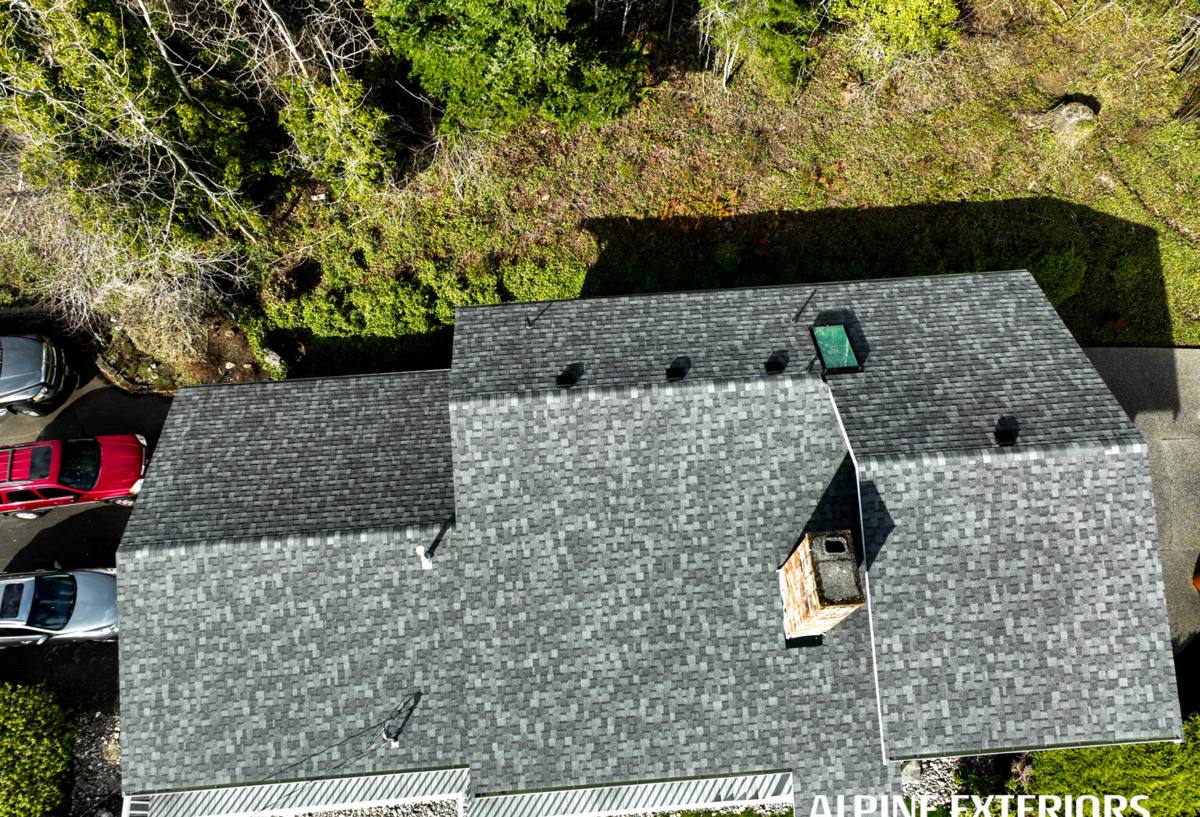
Why Lummi Island Roofs Wear Differently
Salt Air
Airborne salt settles on roofing materials and metal components year-round, not just during storms. Over time it accelerates corrosion on exposed fasteners, flashing, and any metal roofing that isn't rated for a marine environment. It also degrades the granule coating on asphalt shingles a little faster than you'd see inland, which shortens the effective life of the roof even if the shingle itself is a good product.
Driving Rain
Storms coming off the water don't just drop rain straight down — wind pushes it sideways and up under the edges of shingles, around vents, and into any flashing that isn't sealed correctly. A roof that would hold up fine in a calm inland rain can leak on Lummi Island if the underlayment, flashing, and edge details weren't built for wind-driven water.
Moss
Tree cover, shade, and persistent moisture add up to a long moss season, especially on north- and east-facing slopes that don't get much sun to dry out. Moss holds moisture against the roof surface, works its way under shingle edges, and can lift and loosen roofing material over several seasons if it's never addressed. It's one of the most common reasons we see otherwise decent-looking roofs failing early out here.
Signs a Lummi Island Roof Needs Replacing, Not Just Repair
- Granule loss heavy enough that you can see bare or shiny patches on the shingles
- Moss growth that's spread across multiple sections rather than a small isolated patch
- Soft or spongy decking felt underfoot during an inspection
- Curling, cupping, or cracked shingles, especially on wind-exposed slopes
- Staining or discoloration on interior ceilings, particularly after wind-driven storms
- Corroded or failing flashing around chimneys, vents, and valleys
- A roof that's already had several patch repairs and is nearing 20+ years old
One or two of these on their own might just call for a repair. Several together, especially on a roof that's getting up in age, usually mean replacement is the more honest recommendation — patching a roof that's failing broadly just delays the same problem and spends money that would go further toward a full replacement.
What a Correct Roof Replacement Involves Here
A roof replacement is more than swapping old shingles for new ones. On a marine-exposed, moss-prone site like Lummi Island, several details matter more than they would on a typical inland roof:
Full Tear-Off
We remove the existing roofing down to the deck rather than layering over it. That lets us actually see the condition of the decking, catch any rot or soft spots hidden under the old material, and start the new roof system on a clean, sound surface.
Deck Repair
Any decking that's soft, delaminated, or water-damaged gets replaced before anything new goes down. Installing new roofing over compromised decking just guarantees an early failure, regardless of how good the shingle is.
Ice-and-Water Shield in Vulnerable Areas
Valleys, eaves, and areas around penetrations get a self-adhering waterproof membrane underneath the primary roofing. This is standard practice in wind-driven rain regions like this one — it's the backup layer that keeps water out even if wind pushes rain past the shingle surface.
Proper Ventilation
Balanced intake and exhaust ventilation keeps moisture from building up in the attic space, which matters for both the underside of the roof deck and for keeping moss and mildew from getting a foothold from the inside out.
Corrosion-Resistant Fasteners and Flashing
In a salt-air environment, the metal components matter as much as the shingle. We use fasteners and flashing rated for coastal exposure rather than standard-grade material that will corrode faster this close to the water.
Choosing a Roofing Material for This Environment
There's no single "best" roof for every Lummi Island home — the right choice depends on your roof's exposure, slope, budget, and how much upkeep you want to take on. Here's how the common options stack up against the salt air, rain, and moss this area throws at a roof:
| Material | Salt Air Behavior | Moss Resistance | Maintenance |
|---|---|---|---|
| Architectural asphalt shingle | Good with corrosion-resistant fasteners and flashing | Moderate — benefits from periodic cleaning on shaded slopes | Low to moderate |
| Standing seam metal | Excellent when using marine-rated coatings and fasteners | Very good — moss struggles to hold on smooth metal | Low |
| Cedar shake | Requires diligent maintenance near salt exposure | Poor without regular treatment — moss favors the texture | High |
| Composite/synthetic shake | Good — engineered for consistent weather resistance | Good, especially with algae/moss-resistant formulations | Low to moderate |
For homes with heavy shade and a history of moss, we'll often recommend a shingle line with a moss-resistant treatment built in, or steer toward metal on slopes where moss keeps coming back no matter what. We'll walk your specific roof and give you a straight recommendation rather than pushing whatever's easiest for us to install.
Getting the Job Done on the Island
Lummi Island is reached by a county ferry from the Lummi Peninsula, which is a real factor in how a roofing project gets scheduled and staged — not a dealbreaker, just something that needs to be planned for. Material deliveries, dumpster drop-off and pickup, and crew transport all have to work around ferry timing rather than being able to just drive straight to the site whenever convenient. A contractor who hasn't worked the island before often underestimates this and it shows up as delays once the project is underway.
We plan Lummi Island jobs with that logistics reality built into the schedule from the start — staging materials efficiently, coordinating crew and equipment trips, and setting a realistic timeline with you up front instead of discovering the ferry schedule mid-project.
Our Roof Replacement Process
- On-site inspection — we assess the current roof, decking condition, ventilation, and any moss or moisture issues specific to your property's exposure.
- Written estimate — a clear scope of work and pricing, including material options, so you know exactly what you're paying for before anything starts.
- Scheduling — we build the timeline around weather windows and island logistics so the project moves efficiently once it begins.
- Tear-off and deck inspection — old roofing comes off, decking is inspected and repaired as needed.
- Underlayment and flashing — waterproof membrane and corrosion-resistant flashing go in at all the vulnerable points.
- Roofing installation — new material installed to manufacturer specification and local wind/exposure conditions.
- Final walkthrough — we review the completed work with you and answer any questions before we consider the job done.
Cost Factors for a Lummi Island Roof Replacement
Every roof is different, so we don't publish flat pricing — but these are the factors that most influence what a project costs:
| Factor | Why It Matters |
|---|---|
| Roof size and pitch | More square footage and steeper slopes mean more material and labor time |
| Number of existing layers | Tearing off multiple old layers takes more time than a single-layer tear-off |
| Decking condition | Rot or soft decking found during tear-off adds repair cost not visible from the ground |
| Material choice | Asphalt, metal, and composite shakes vary widely in material cost and installed labor |
| Roof complexity | Valleys, dormers, chimneys, and skylights all add flashing work and time |
| Access and logistics | Ferry-based delivery and staging adds planning time compared to a mainland site |
Living With Your New Roof
A new roof still needs a little attention in this climate to get its full lifespan out of it. A few habits go a long way:
- Have gutters and downspouts cleared before the fall storm season so wind-driven rain has somewhere to go
- Keep an eye on shaded, north-facing slopes for early moss regrowth and address it before it spreads
- Trim back tree limbs that overhang the roof to cut down on shade, debris, and moss-friendly conditions
- Schedule a roof check after any major windstorm to catch lifted shingles or flashing early
- Don't ignore small leaks — in a wind-driven rain environment, small entry points get worse fast
Why Hire a Crew That Already Works Lummi Island
Roofing here isn't the same job as roofing a sheltered inland lot. A crew that's already worked on the island understands the ferry-based logistics, knows how salt exposure and moss actually behave on real roofs out here, and won't be figuring out the site conditions for the first time on your project. We're a Birch Bay-based crew that regularly works Whatcom County's coastal properties, including Lummi Island, so the planning, material choices, and installation details reflect what actually holds up in this environment — not generic assumptions from a job somewhere drier and more sheltered.
If your roof is showing its age or you're just trying to plan ahead, we're happy to take a look and give you a straightforward, no-pressure estimate. Use the form below to get started.