 Birch Bay Exterior
 Why Roofs in Birch Bay Village Wear Differently
Birch Bay Village sits close enough to the water that salt air is a daily fact of life, not an occasional nuisance. Add Whatcom County's long wet season, driving rain off the Strait of Georgia, and a moss season that can run from fall through spring, and you have a roofing environment that's genuinely tougher than what most manufacturers design for on a national average basis. A roof that would go a decade between service calls in a dry inland climate can develop real problems in half that time here if it isn't maintained and repaired correctly.
That's the backdrop for every repair call we take in this neighborhood. We're not guessing at what the climate does to a roof — we see the same failure patterns repeat house after house, and that pattern recognition is what separates a fast, correct repair from a patch job that fails again next winter.
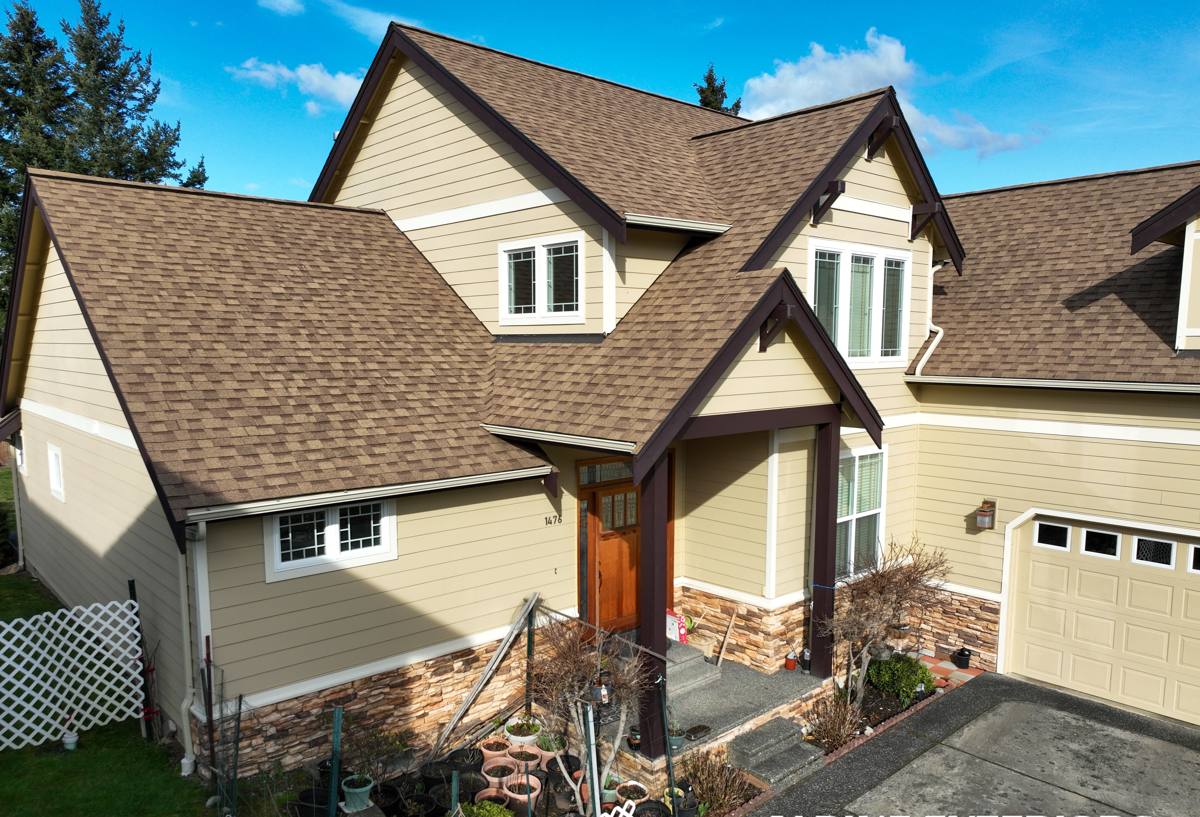
Signs Your Roof Needs Repair — Before It Needs Replacement
Subtle signs homeowners often miss
Most roof failures don't start with a dramatic leak. They start small: a slightly discolored ceiling patch that dries out and gets ignored, a few lifted or cupped shingles near a valley, granules collecting in the gutter, or a soft spot near a chimney or vent that you'd only notice if you walked the roof. In a marine climate, these early signs move faster from "watch it" to "fix it now" than they would somewhere drier, because constant moisture doesn't give materials time to fully dry between rain events.
Signs that need attention now
- Active dripping or staining on an interior ceiling or wall, especially after a heavy rain
- Visible daylight through the roof deck from inside the attic
- Shingles that are cracked, curling, or missing outright after wind
- Moss buildup thick enough to hold water against the roofing material
- Rusted, lifted, or separated flashing around chimneys, skylights, or vent pipes
- Sagging sections of roofline, which can indicate deck or structural moisture damage
If you're seeing any of the items in that second list, it's worth a look sooner rather than later. Small repairs done promptly are almost always cheaper than the drywall, insulation, and framing repairs that follow a roof leak left unaddressed through a wet Whatcom County winter.
Moss, Algae, and Salt Air: The Real Culprits
Why moss is more than cosmetic
Moss doesn't just make a roof look neglected — it actively holds moisture against the roofing surface long after the rest of the roof has dried out. Over a long moss season, that trapped moisture works its way under shingle edges, degrades the granule surface that protects asphalt shingles from UV and weather, and can eventually lift or rot the material beneath. Moss growing in a thick mat on a north-facing slope or shaded valley is one of the most common reasons we get called out to Birch Bay Village homes for repair work that could have been prevented with earlier maintenance.
What salt air does to the details
Salt-laden air accelerates corrosion on anything metal: flashing, fasteners, gutter hardware, and vent caps. A fastener or flashing seam that would last many years inland can corrode and lose its seal years earlier this close to the water. Because flashing failures are one of the leading causes of roof leaks in general, this is a detail we check closely on every repair call in this area — not just at the spot where the leak showed up, but at every flashing point on the roof, since corrosion rarely happens in just one place.
What a Correct Roof Repair Actually Involves
Diagnosis before patching
A repair that only addresses the spot where water showed up inside the house often misses the actual entry point, which can be feet away depending on how the water traveled across the deck. A correct repair starts with tracing the leak to its real source — checking flashing, underlayment condition, shingle laps, and deck integrity in the surrounding area, not just the ceiling stain directly below.
Matching materials, not just covering the hole
Whenever possible, we match the existing roofing material's type, profile, and where practical, color, so a repair blends in rather than becoming a visible patch that ages differently than the surrounding roof. When an exact match isn't available — common on older roofs — we'll explain the honest trade-offs and let you decide how much that matters to you.
Rebuilding the water path correctly
Roofing works as a system: shingles, underlayment, flashing, and ventilation all have to work together to shed water. A repair that replaces shingles but reuses failed flashing, or that skips proper underlayment at a valley, will often leak again within a season or two. We rebuild the water path at the repair site the way it should have been built originally, including proper flashing laps and sealant where it belongs — not as a substitute for correct layering.
Common Roof Repair Types We Handle in Birch Bay Village
| Repair Type | Typical Local Cause | What the Repair Involves |
|---|---|---|
| Flashing repair or replacement | Salt-air corrosion, sealant failure, storm impact | Remove failed flashing, inspect deck beneath, install and properly lap new flashing |
| Moss and debris remediation | Long moss season, shaded or north-facing slopes | Careful removal, treatment to slow regrowth, inspection of material condition underneath |
| Shingle or panel replacement | Wind-driven rain, storm damage, age-related cracking | Remove damaged material, check underlayment and deck, install matched replacement |
| Valley and deck repair | Chronic moisture from moss or poor prior flashing work | Open the area, assess deck for rot, rebuild valley underlayment and flashing correctly |
| Vent, skylight, or chimney flashing | Corrosion, settling, sealant breakdown over time | Reseat or replace flashing boot or metal, restore proper watertight lap |
Our Process, From Call to Completion
- Initial conversation. We ask what you're seeing — stains, drips, visible damage — and when it started, so we know where to look first.
- On-site inspection. We walk the roof (weather permitting) and check the interior signs, tracing the likely path water is taking rather than assuming the leak is directly above the damage.
- Honest scope and estimate. You get a clear explanation of what's actually wrong, what we recommend, and why — including if a repair genuinely isn't the right call and replacement makes more sense.
- The repair. Work is done to the same standard we'd want on our own home: correct flashing laps, matched materials where possible, and no shortcuts on underlayment or sealant.
- Follow-up. We tell you what to watch for and what routine maintenance — like moss control — will help the repair last.
Repair or Replace? Honest Cost Factors
Not every roof problem calls for a full replacement, and not every leak can be permanently solved with a patch. These are the factors that actually determine which side of the line your roof falls on.
| Factor | Leans Toward Repair | Leans Toward Replacement |
|---|---|---|
| Age of roofing material | Well within expected service life | At or beyond expected service life for the material |
| Extent of damage | Isolated to one area (a valley, a flashing point) | Recurring leaks in multiple, unrelated areas |
| Deck condition | Solid, dry decking beneath the damaged area | Soft, rotted, or repeatedly wet decking |
| Material availability | Close match to existing roofing still available | Discontinued material, poor match likely |
| Repair history | First repair in this area of the roof | Same area has already been patched more than once |
Repair costs vary widely depending on scope — a single flashing repair is a modest expense, while a valley rebuild with deck repair costs more. We'll always give you a specific number for your situation rather than a generic estimate, and we'll tell you plainly if replacement is the more cost-effective path over the long run.
Why a Crew That Already Works Birch Bay Village Matters
Roofing crews who don't work this area regularly often don't recognize how much faster salt air and a long moss season accelerate wear compared to what they're used to elsewhere in Whatcom County or further inland. That shows up as under-scoped repairs — a crew that treats a flashing failure as an isolated fastener issue instead of checking the rest of the roof for the same corrosion pattern, because they haven't seen how consistently it shows up on homes exposed to marine air.
Working in and around Birch Bay regularly also means we're familiar with the practical realities of the area — narrower access on some lots, HOA or neighborhood expectations around material appearance, and the seasonal timing that makes certain repairs (especially moss remediation) more effective when done before the wettest months set in rather than during them. None of that replaces a proper inspection of your specific roof, but it does mean fewer surprises and a faster, more accurate diagnosis from the first visit.
Simple Maintenance That Extends a Repair's Lifespan
- Keep gutters and downspouts clear so water doesn't back up under roof edges
- Remove moss buildup before it forms a thick, moisture-holding mat
- Trim back overhanging branches that keep sections of roof shaded and slow to dry
- Check attic ventilation — poor airflow traps moisture against the underside of the deck
- Have flashing points checked periodically, since salt-air corrosion is gradual and easy to miss from the ground
- Address small leaks immediately rather than waiting for a dry stretch to "see if it's still a problem"
A roof repair done correctly, paired with basic seasonal maintenance, holds up far better against this climate than either one alone. If you're seeing signs of a problem, or just want a second opinion on a roof that's had issues before, we're glad to take a look and give you a straightforward assessment. Fill out the form below for a free, no-pressure estimate — there's no obligation, just an honest read on where your roof stands.