 Birch Bay Exterior
 Windows on the Point Whitehorn Waterfront Take a Different Kind of Beating
Point Whitehorn sits close enough to the water that homes here deal with a combination most inland Whatcom County houses never see: salt-laden air rolling off the Strait, wind-driven rain that hits siding and window frames sideways instead of straight down, and a wet, shaded season long enough to grow a healthy crop of moss on anything that holds moisture. Windows are one of the first places that combination shows up as a problem — not in a dramatic way, but as slow, quiet failure behind the trim that homeowners usually don't notice until there's a soft spot in the wall or a window that won't latch right anymore.
We install windows across Birch Bay and the surrounding Whatcom County coastline, and Point Whitehorn homes get a specific set of considerations from us because of where they sit. This page covers what that means in practice — what the climate does to windows out here, what a correct installation actually requires, and what our process looks like from first look to final walkthrough.
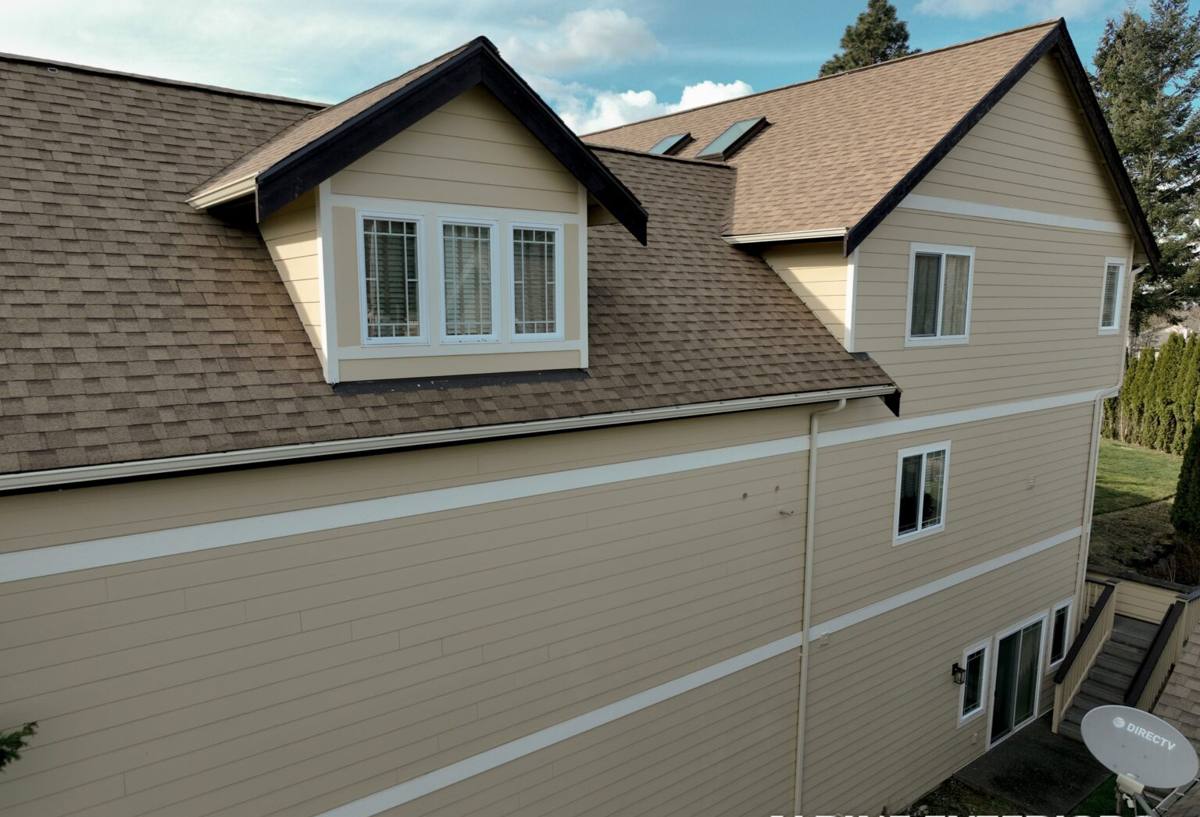
What Salt Air, Driving Rain, and Moss Season Do to Windows Over Time
Salt Air
Airborne salt is corrosive to metal hardware — hinges, cranks, locks, and especially aluminum or steel components that weren't specified for a marine-adjacent environment. It also breaks down some sealants and finishes faster than a standard product datasheet assumes, because most of those ratings are tested for general exposure, not for a house sitting a short distance from saltwater with onshore wind for a good part of the year.
Driving Rain
Wind-driven rain doesn't just fall on a window — it gets pushed sideways and upward against the frame and into any gap in the flashing or sealant. A window that would stay bone-dry in a calm rain somewhere inland can take on water at Point Whitehorn during a storm coming off the water, if the installation wasn't detailed for that kind of exposure. This is almost always a flashing and sequencing issue, not a window quality issue — even a good window leaks if it's installed like it's going into a sheltered inland wall.
Moss and Sustained Moisture
Whatcom County's long wet season keeps north-facing and shaded walls damp for extended stretches, and that's exactly the condition moss and mildew need to get established on sills, trim, and the wood framing hidden behind it. Once organic growth takes hold against wood, it holds moisture against that wood instead of letting it dry, which accelerates rot underneath paint or trim that can still look fine from a few feet away.
Signs a Point Whitehorn Home May Need Window Attention
None of these mean a window has completely failed, but each one is worth taking seriously in this environment before it becomes a wall repair instead of a window repair:
- Fogging or a permanent haze between panes of a double-pane window (seal failure)
- Soft, spongy, or discolored wood at the sill or bottom corners of the frame
- Windows that have become hard to open, close, or latch
- Visible gaps, cracked caulk, or peeling paint around the exterior trim
- A musty smell near a window that isn't explained by anything else in the room
- Noticeably colder air near a closed window on a windy day
- Moss or black staining creeping onto the sill, casing, or nearby siding
If you're seeing more than one of these, especially on a wall that faces the water or gets the brunt of the weather, it's worth having it looked at before the next wet season.
What a Correct Window Installation Actually Involves
The window itself is often the easy part. What separates a window that lasts through Whatcom County winters from one that starts failing in a few years is almost entirely in the details most homeowners never see once the trim goes back on.
Removal Without Collateral Damage
Old windows need to come out without tearing up the surrounding wall assembly, and whatever is uncovered — old flashing, damaged sheathing, hidden rot — needs to be dealt with honestly before anything new goes in. Installing a new window over a rotten or improperly flashed opening just seals the problem back inside the wall.
Flashing and Water Management
Proper flashing directs any water that gets behind the exterior cladding back out, rather than letting it pool at the sill or track down into the wall. In a driving-rain environment like Point Whitehorn, the sequencing of house wrap, flashing tape, and sill pan matters as much as the materials themselves — water management is a system, not a single product.
Air Sealing and Insulation
Gaps around the rough opening need to be sealed and insulated correctly — not overpacked with spray foam, which can bow a frame, and not left with unsealed gaps, which invite both drafts and moisture. This is also where a lot of the comfort improvement from new windows actually comes from.
Level, Plumb, and Square
A window that isn't installed level, plumb, and square will operate poorly and stress its own seals over time, shortening the life of hardware and weatherstripping regardless of how good the window is.
Frame Material Trade-Offs for a Coastal Whatcom County Property
There's no single "best" window material — the right choice depends on exposure, maintenance appetite, and budget. Here's how the common options hold up specifically in a salt-air, high-rain setting like Point Whitehorn:
| Frame Material | Salt Air Behavior | Maintenance | Notes for This Area |
|---|---|---|---|
| Vinyl | Doesn't corrode; UV can fade dark colors over many years | Low — occasional cleaning | Solid default for most coastal homes; good value and moisture tolerance |
| Fiberglass | Very stable, resists corrosion and expansion/contraction well | Low | Strong choice for the most exposed walls; higher upfront cost |
| Wood | Vulnerable to rot and moss growth if finish isn't maintained | High — repainting/refinishing on a schedule | Can work with disciplined upkeep; higher risk in shaded, damp spots |
| Aluminum | Prone to corrosion and pitting near saltwater over time | Moderate | We're cautious recommending bare aluminum this close to the water |
We'll talk through these trade-offs against your specific walls and exposure rather than pushing one material across the board — a south-facing, sheltered wall and a north-facing wall that takes wind straight off the water aren't the same problem.
Our Installation Process
- On-site assessment — we look at existing windows, framing condition, and exposure wall by wall, not just take measurements
- Honest scope — if we find rot or old flashing issues during the assessment, we tell you before work starts, not after demo
- Material selection — we walk through frame and glass options suited to each wall's actual exposure
- Removal and prep — careful removal, inspection of the opening, and repair of anything compromised underneath
- Flashing and sealing — sill pan, flashing tape, and house wrap integration sequenced correctly for wind-driven rain
- Installation — set level, plumb, square, and properly fastened per manufacturer spec
- Insulation and air sealing — gaps filled correctly, no over-foaming, no gaps left open
- Exterior trim and interior finish — sealed and finished to shed water, not just look finished
- Final walkthrough — we check operation, seals, and answer questions before we call it done
What Affects the Cost of a Window Installation Here
| Factor | Why It Matters |
|---|---|
| Number of openings | More windows means more labor and material, but per-window cost often drops with larger jobs |
| Frame material and glass package | Vinyl, fiberglass, and upgraded glass (low-E, gas fill) all carry different price points |
| Condition behind the old window | Hidden rot or old flashing failures found during removal add repair time before the new window goes in |
| Exposure and wall access | Second-story or heavily exposed walls facing the water can require more careful flashing and staging |
| Trim and finish work | Matching existing trim profiles or repainting disturbed siding adds to the scope |
We give a straightforward, itemized estimate after the on-site assessment rather than a phone-quote guess — the honest answer depends on what we find at your walls, not a blanket per-window price.
Why a Crew That Already Works Point Whitehorn Matters
Window installation isn't identical from one town to the next, even within the same county. A crew that regularly works this stretch of Whatcom County coastline already knows which walls tend to take the worst of the wind-driven rain, what moss and moisture damage typically looks like once trim comes off, and which flashing details actually hold up here versus what a generic installation guide assumes for a sheltered inland lot. That familiarity shows up as fewer surprises during the job and a better first-time result — not because of anything mysterious, just repetition on the actual conditions this area produces.
It also means we're a known, findable business in the community if a question comes up after the work is done, rather than a crew that installed windows here once and moved on.
After Installation: Keeping Windows Performing in This Climate
- Rinse salt residue off frames and glass periodically, especially after storms
- Keep weep holes and drainage tracks clear of debris and moss
- Check exterior caulk lines annually and touch up before gaps open up
- Trim back vegetation that keeps a wall or window shaded and damp
- Address any soft trim or discoloration early rather than waiting
A well-installed window in this climate should need only routine attention, not repeat repairs — if you're finding yourself back at a window every year, that's usually a sign of an installation or flashing issue rather than normal wear.
If you're weighing whether it's time to replace windows on a Point Whitehorn property, or just want a second opinion on a wall that's been giving you trouble, we're happy to take a look. Use the form below for a free, no-pressure estimate — we'll tell you honestly what we see and what your options are.