 Birch Bay Exterior
 Why Point Whitehorn Roofs Wear Differently
Point Whitehorn sits close enough to the water that its roofs live a harder life than roofs a few miles inland. The combination of salt-laden air off the Salish Sea, wind-driven rain that comes in sideways during winter storms, and a moss season that can run for the better part of the year adds up to a specific set of failure points. We see it on nearly every service call out here: fasteners and flashing that corrode faster than the shingles around them, moss colonies that get a foothold in shaded, north-facing slopes and never really let go, and small leaks that started as a single lifted shingle and turned into a stained ceiling because nobody caught it early.
None of this means Point Whitehorn homes need exotic roofing. It means the repair work has to account for the environment rather than treat every roof the same way a drier, inland job would be treated. That's the difference between a repair that holds for years and one that reopens the same leak the next wet season.
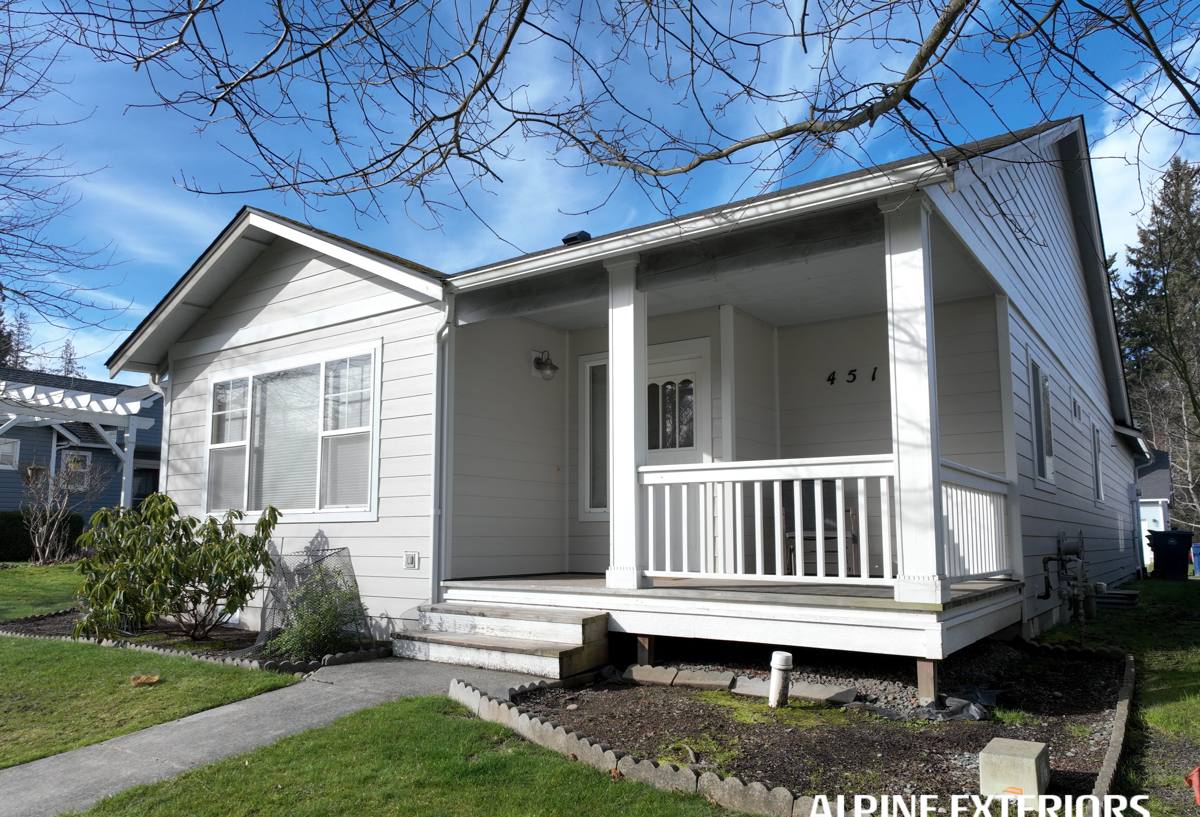
What Driving Rain and Salt Air Actually Do to a Roof
Wind-Driven Rain
Rain that falls straight down mostly runs off. Rain that comes in at an angle — which is common during Whatcom County's winter systems — gets pushed up and under shingle edges, around vent boots, and behind flashing that would otherwise shed water fine. This is why so many "mystery leaks" trace back to flashing and penetration details rather than the shingles themselves. A repair that only replaces damaged shingles without addressing the flashing and underlayment underneath is treating the symptom, not the cause.
Salt Air and Corrosion
Being close to saltwater accelerates corrosion on exposed metal — nails, flashing, gutter fasteners, and vent housings all age faster here than they would twenty or thirty miles inland. We pay attention to what metal is used in a repair for this reason. Galvanized fasteners that would last decades in a dry inland attic can start showing rust streaks in a fraction of that time near the water, and rusted fasteners are a common source of small leaks that are easy to miss during a quick look from the ground.
Moss and Organic Growth
Moss doesn't just look bad — it holds moisture against the roofing material, lifts shingle edges as it grows, and works its way into seams over time. Shaded, north-facing roof planes and areas under overhanging trees are the usual starting points. Left unaddressed for a full moss season, what starts as a cosmetic issue becomes a structural one as moisture finds its way past the shingle mat.
Signs Your Roof Needs Repair, Not Just a Look
Most roof problems give warning signs well before they become emergencies. Homeowners in Point Whitehorn should watch for:
- Dark streaks or thick moss growth on shaded roof planes, especially heading into spring
- Granules collecting in gutters or at downspout outlets (a sign of shingle wear)
- Curling, cracked, or missing shingles after a windstorm
- Rust staining around metal flashing, vent boots, or nail heads
- Water stains or discoloration on interior ceilings, especially near chimneys, skylights, or where roof planes meet
- Sagging sections of roofline or soft spots felt underfoot on a walk-through
- Daylight visible through the roof deck from inside the attic
- Gutters pulling away from the fascia or overflowing during heavy rain
Any one of these is worth a call. Several at once usually means the roof has been quietly losing ground for a while.
What a Correct Repair Actually Involves
A roof repair done right is more than swapping out a few shingles. It starts with figuring out how water is actually getting in, which isn't always where the stain shows up inside — water can travel along rafters or sheathing before it drips somewhere visible. A proper repair typically covers:
Diagnosis Before Anything Else
We trace the leak path from the interior stain or attic evidence back to the actual entry point, rather than assuming the nearest shingle is the culprit. This step alone prevents a lot of repeat service calls.
Matching Materials, Not Just Colors
Shingles fade and weather over time, so an exact color match isn't always possible on an older roof. What matters more is matching the shingle type, weight, and profile so the repair performs the same as the surrounding material — a lightweight patch on a heavier architectural shingle roof will wear unevenly and stand out both visually and functionally.
Flashing and Underlayment Detail
Given how much of our leak work traces back to flashing, we replace corroded or improperly lapped flashing rather than caulking over it. Caulk is a short-term patch, not a repair — it fails faster in this climate than a properly lapped and fastened flashing detail.
Fastener and Metal Choice
Where corrosion resistance matters — near the coast, under constant moisture exposure — we use fasteners and flashing rated for it rather than defaulting to the cheapest standard-grade hardware.
Moss and Debris Removal Done Without Damage
Moss removal has to be done carefully. Aggressive scraping or pressure washing can strip granules and shorten the life of otherwise sound shingles. We remove growth with methods that clear the moss without damaging the roofing material underneath it.
Our Point Whitehorn Roof Repair Process
- Inspection and Diagnosis — We walk the roof (weather permitting) and check the attic from inside, looking for the actual water path rather than just the visible symptom.
- Honest Assessment — We tell you plainly whether this is a repair, a larger repair, or a sign the roof is nearing the end of its service life. We don't upsell a full replacement when a repair will genuinely hold.
- Written Scope and Estimate — You get a clear description of what's being fixed and why, before any work starts.
- Repair Work — Damaged materials removed, decking checked and replaced if compromised, correct underlayment and flashing installed, matching shingles or roofing material set and fastened.
- Cleanup and Final Check — Site cleaned of debris and old materials, and we do a final water-path check to confirm the fix.
Repair or Replace? How We Help You Decide
Not every roof problem calls for a full replacement, and not every roof is worth continuing to patch. The honest answer usually comes down to a few factors:
| Factor | Leans Toward Repair | Leans Toward Replacement |
|---|---|---|
| Age of roof | Under roughly two-thirds of expected shingle lifespan | Near or past expected lifespan for the material |
| Extent of damage | Localized — one slope, one penetration, a storm-damaged section | Widespread wear, multiple leak points, granule loss across most planes |
| Decking condition | Solid, no soft spots or rot | Soft, spongy, or visibly rotted sheathing found during inspection |
| Moss/algae history | Recently treated, isolated growth | Long-term untreated growth that has compromised the shingle mat |
| Cost over time | Repair cost is a small fraction of full replacement | Repeated repairs are starting to add up close to replacement cost |
We'll walk you through where your roof falls on this before recommending a direction — the goal is the right call for your house, not the bigger invoice.
What Influences Roof Repair Cost
Roof repair pricing varies a lot based on the specifics of the job, and we'd rather explain the factors than throw out a number that doesn't apply to your roof. In general, smaller isolated repairs (a section of flashing, a handful of shingles) run in the low hundreds of dollars, while larger repairs involving decking replacement or extensive flashing work can run into the low thousands. The main variables:
- Extent of damage — one bad spot versus several areas needing attention
- Roof access and pitch — steeper roofs and difficult access take more time and safety setup
- Decking condition — rotted sheathing found under the surface adds material and labor
- Material match — some shingle profiles and colors are easier to source than others
- Height and complexity — multi-story homes, chimneys, skylights, and valleys add time
We give you a written estimate after inspection, not a phone-quote guess, so you know what you're actually paying for before we start.
Preventive Maintenance That Extends Roof Life Out Here
Given the moss season and the salt air, a Point Whitehorn roof benefits from a maintenance rhythm that's a bit more attentive than a drier inland roof would need:
Annual or Twice-Yearly Inspection
Catching lifted shingles, early moss growth, or flashing wear before winter storms hit prevents small issues from becoming interior damage.
Gutter Clearing
Clogged gutters back water up under the roof edge, which is a common and preventable cause of edge rot and fascia damage in this area.
Moss Management
Treating moss before it establishes heavily — rather than after — is far less invasive to the roofing material and considerably less work.
Attic Ventilation Check
Poor attic ventilation traps moisture, which accelerates decking rot and can shorten shingle life from underneath, independent of anything happening on the roof surface. It's an easy thing to overlook because it isn't visible from the ground.
Why Hiring a Crew That Already Works Point Whitehorn Matters
Roofing crews that mostly work drier, inland jobs sometimes miss the details that matter here — using standard-grade fasteners where corrosion-resistant hardware would hold up better, or treating a moss problem as purely cosmetic instead of a moisture issue. We work roofs in Birch Bay and along the Whatcom County coastline regularly enough that the salt air, the driving rain angle, and the moss cycle aren't a surprise — they're just part of how we scope and price the job from the start. That translates into fewer repeat visits and repairs that are built for the conditions your roof actually faces, not generic conditions.
Get a Straight Answer About Your Roof
If you're seeing moss buildup, a stain on the ceiling, or storm damage after a windy stretch, it's worth getting eyes on it before the next round of rain. We offer free, no-pressure estimates — we'll tell you honestly whether you're looking at a simple repair, a bigger fix, or something that can wait. Fill out the form below to get started.