 Birch Bay Exterior
 Why Roofs Wear Differently Out at Point Whitehorn
Point Whitehorn sits close to the water along the Whatcom County coastline, and that proximity changes how a roof ages compared to homes further inland. Salt-laden air corrodes exposed metal faster, driving rain off the Strait pushes moisture into laps and seams that a calmer climate would never test, and the long, damp shoulder seasons here give moss and algae months to gain a foothold on north-facing slopes. None of this means a roof is doomed early — it means the installation has to account for these conditions from the start, not just meet a generic code minimum.
We install roofs across Birch Bay and the surrounding Whatcom County waterfront, and the difference between a roof that holds up out here and one that doesn't usually comes down to details most homeowners never see: fastener choice, underlayment overlap, flashing sequencing, and ventilation balance. Those are the things this page focuses on.
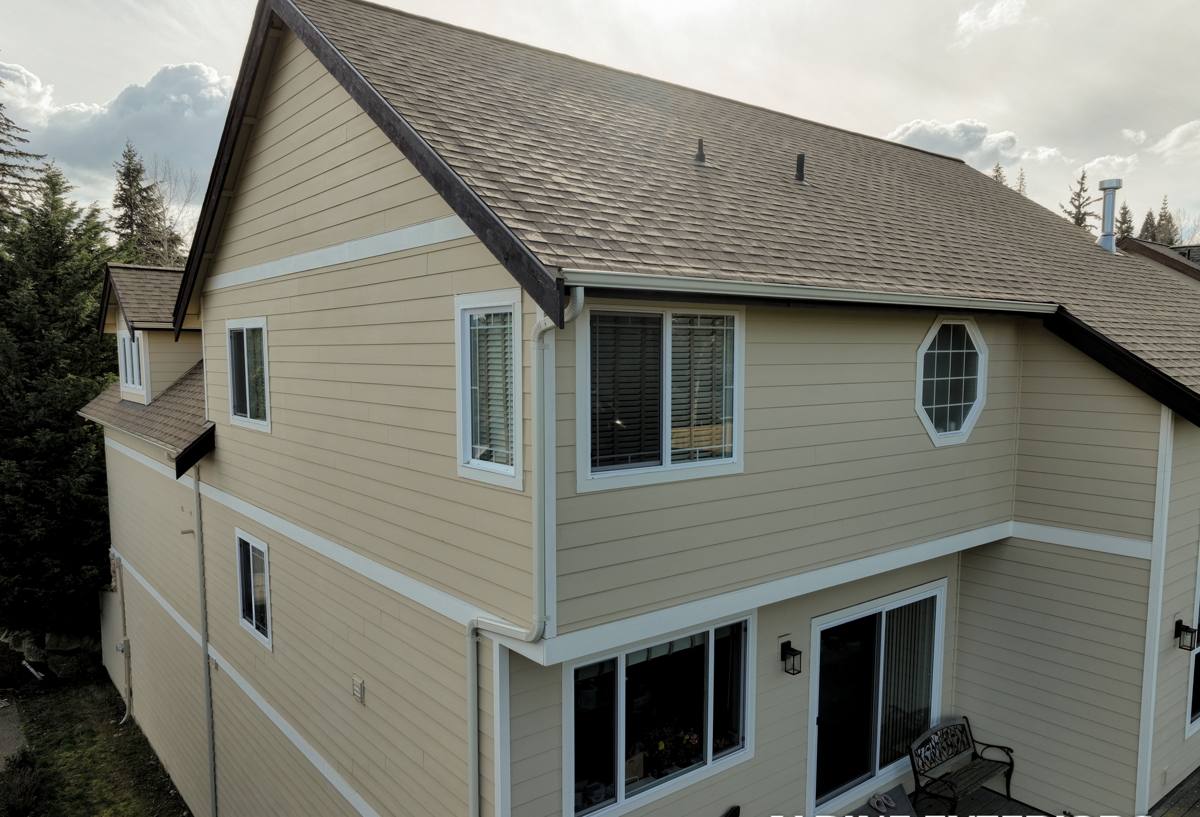
Signs a Repair Won't Cut It Anymore
Not every roof problem calls for full replacement. But there are signs that patching is just delaying the inevitable, especially on a coastal property where damage tends to be more widespread than it looks from the ground.
- Granule loss heavy enough that you're finding grit in gutters every season, not just after a storm
- Multiple layers of moss regrowth in the same spots year after year despite cleaning
- Soft or spongy decking felt underfoot in the attic, especially near valleys or eaves
- Daylight visible through the roof deck at any point
- Shingles that are curling, cracking, or losing their seal across large sections rather than one localized spot
- A roof already past or close to the end of its rated lifespan combined with any of the above
If you're only seeing one isolated issue — a single damaged flashing point or a small area of wind-lifted shingles — a repair is usually the right call, and we'll say so plainly. A new roof installation makes sense when the underlying material is broadly failing, not just showing its age in one spot.
What a Correct Installation Actually Involves
A new roof is more than laying new shingles over what's there. Done right, it's a full system, and skipping steps is exactly what shows up as a leak two winters later.
Tear-off and deck inspection
We remove the existing roofing down to the deck rather than layering over it. This lets us actually see the plywood or OSB underneath, which matters here because moisture that's been working its way in slowly can rot decking in ways that aren't visible from above. Any soft or damaged sheathing gets replaced before anything new goes down.
Underlayment
This is the layer that actually keeps water out if wind-driven rain gets past the surface material, which happens more often on an exposed coastal lot than people expect. We use synthetic or ice-and-water underlayment appropriate to the roof's exposure, with extra coverage at eaves, valleys, and any low-slope transitions where standing water is more likely.
Flashing
Flashing around chimneys, vents, skylights, and wall transitions is where most roof leaks actually originate — not the field of the shingles. We install new flashing rather than reusing old pieces, and we pay particular attention to step flashing at wall intersections, which is a common weak point on homes with dormers or additions.
Fastening and material selection
Salt air accelerates corrosion on standard fasteners and exposed metal components. We use fasteners and flashing metals rated for coastal exposure rather than the cheapest compliant option, because replacing corroded fasteners in five years costs far more than spending a little more upfront.
Roofing Material Options for a Coastal Whatcom County Home
There's no single "best" roofing material for every home — it depends on your budget, roof pitch, and how much maintenance you want to take on. Here's how the common options generally compare for a property exposed to salt air and moss growth.
| Material | Moss/Moisture Behavior | Salt Air Durability | Maintenance |
|---|---|---|---|
| Architectural asphalt shingle | Good with proper ventilation; algae-resistant granule options available | Good — minimal exposed metal to corrode | Periodic moss removal on shaded slopes |
| Standing seam metal | Excellent shedding, low moss retention | Requires coated/marine-grade fasteners and finish to avoid premature corrosion | Low, but finish and fastener condition should be checked periodically |
| Cedar shake | Prone to moisture retention and moss without diligent upkeep | Moderate; needs treatment | Higher — regular cleaning and treatment required |
| Composite/synthetic shingle | Good, resists moisture absorption | Good | Low to moderate |
For most Point Whitehorn homes, a quality architectural asphalt shingle with algae-resistant granules offers the best balance of cost and coastal durability. Metal is a strong choice on steeper, more exposed roofs where shedding rain and snow quickly matters more than upfront cost. We'll walk through what fits your specific roof rather than pushing one product across every job.
Ventilation: The Step That Prevents the Next Moss Problem
Moss doesn't just grow because a roof is shaded — it grows where moisture lingers, and poor attic ventilation is one of the biggest hidden contributors. An underventilated attic traps warm, moist air against the underside of the roof deck, which condensates, keeps shingles damp longer after rain, and gives moss and algae exactly the conditions they need to establish.
As part of a new roof installation, we check and correct the balance of intake (soffit) and exhaust (ridge or roof) ventilation. This isn't an upsell — it's a functional part of the roofing system, and getting it wrong is one of the most common reasons a brand-new roof develops moss problems within a couple of seasons in this climate.
Our Installation Process
- On-site inspection and honest assessment of whether you need a repair or a full replacement
- Written estimate covering materials, tear-off, disposal, and any deck repair contingencies
- Material selection walkthrough based on your roof's exposure, pitch, and budget
- Tear-off, deck inspection, and any needed sheathing repair
- Underlayment, flashing, and ventilation correction
- Installation of the new roofing material per manufacturer specification
- Final walkthrough and cleanup, including magnetic sweep for stray fasteners
We keep the process straightforward because a roof replacement is disruptive enough without surprises added on top of it. If we find deck damage once tear-off starts, we'll show you before repairing it, not just add it to the invoice afterward.
Why Local Experience with Point Whitehorn Homes Matters
A crew that mostly works inland doesn't always think about wind exposure the way a coastal job demands. Homes near Point Whitehorn and along the Birch Bay shoreline often sit more exposed to prevailing wind and driving rain than properties even a few miles inland, and that changes decisions like fastener schedule, underlayment coverage, and how flashing gets detailed at penetrations.
We also know the practical side of working in this area — permitting through Whatcom County, typical weather windows for tear-off work, and how to sequence a job so your home isn't exposed to an incoming system mid-install. That local familiarity isn't a marketing line; it's the difference between a crew guessing at coastal conditions and one that's already accounted for them.
After Installation: What Keeps a New Roof Performing
A correctly installed roof still benefits from basic upkeep, especially in a moss-prone, salt-air environment. A few habits go a long way:
- Clear debris from valleys and gutters at least twice a year, more often under overhanging trees
- Have moss growth addressed early rather than letting it establish and lift shingle edges
- Keep gutters and downspouts flowing freely so water isn't backing up under the roof edge
- Have flashing points checked after any major windstorm
- Trim back branches that keep a section of roof shaded and damp longer than the rest
What Affects the Cost of a New Roof Here
Every roof is priced on its own specifics, but the main cost drivers on a coastal Whatcom County home are generally: roof size and pitch, how many layers of old roofing need tear-off, the amount of deck repair required, material choice, and the complexity of penetrations like chimneys, skylights, and dormers. Coastal-rated fasteners and additional underlayment coverage add a modest amount over a standard inland install, but they're what keeps the roof performing for its full expected lifespan instead of failing early at the fasteners or flashing.
If your roof is showing its age, or you just want an honest read on whether repair or replacement makes more sense for your home, we're happy to come take a look. Use the form below to request a free, no-pressure estimate — we'll tell you what we actually see, not just what sells a bigger job.