 Birch Bay Exterior
 Roofing on a Peninsula: What Point Roberts Homes Are Up Against
Point Roberts sits on its own small peninsula, bordered by water on three sides and connected to the rest of Whatcom County only by a road that runs through Canada. That geography does more than make the community unusual — it shapes what a roof has to survive out there. Homes get near-constant exposure to salt-laden air coming off the water, driving rain pushed in by marine wind, and a moss season that runs long into the year thanks to shade, humidity, and mild temperatures that never really dry things out.
Asphalt shingles wear differently in this kind of environment than they do twenty miles inland. Salt air accelerates the breakdown of granules and adhesives, driving rain finds its way under shingle tabs that have started to curl, and moss holds moisture against the roof deck long after a storm has passed. None of that is unique to Point Roberts — it's the reality up and down the Whatcom County coastline — but the exposure here tends to be more constant because there's so little land buffer between most homes and open water.
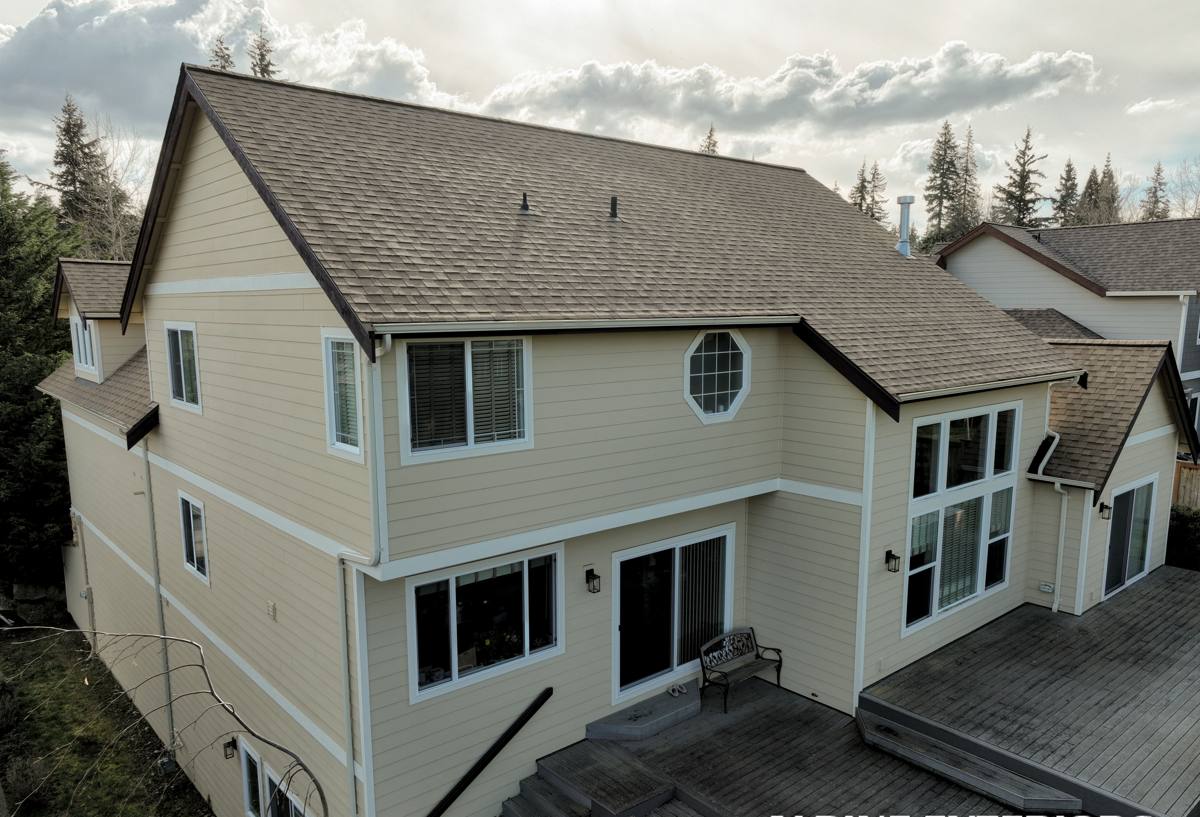
Why Metal Roofing Holds Up Better Out Here
Metal roofing isn't the right fit for every home or every budget, but for a property that takes the kind of weather Point Roberts sees, it solves several problems at once. A properly installed metal roof sheds water fast instead of absorbing it, which matters when driving rain is coming in sideways off the water. It doesn't give moss the same foothold that a shingle roof's rough, granulated surface does. And with the right coating system, it resists the salt-air corrosion that shortens the life of lower-grade metals and fasteners.
It's also a long-term play. A well-installed steel roof with a quality finish will typically outlast two or three shingle roofs on the same house, which matters on a peninsula where every re-roof means coordinating materials, crews, and scheduling across the border. Fewer re-roofs over the life of the house is a real advantage here, not just a marketing line.
Where Metal Roofing Doesn't Make Sense
We'll say this plainly: metal roofing costs more upfront than asphalt, and it's not the right call for every budget or every home. If a roof deck has structural issues that need addressing first, or if a homeowner is planning to sell in the next couple of years and isn't looking to recoup a premium investment, a well-installed asphalt or composite roof may be the more sensible choice. Part of an honest estimate is telling you when metal isn't worth it.
Getting Materials and Crews to a US Exclave
Point Roberts' geography isn't just a climate factor — it's a logistics factor, and it's one that trips up crews who don't already work this area regularly. Materials, tools, and workers all have to move through a border crossing to get here, which means paperwork, timing, and border-wait unpredictability become part of the job schedule, not an afterthought. A crew that hasn't planned for that can show up without the right material on-site, or lose a day to a crossing delay mid-project — which on a roofing job means a longer window with your home exposed to weather.
We build border logistics into how we quote and schedule Point Roberts jobs from the start: material orders are placed with enough lead time to clear customs before the install date, and we plan crew and equipment crossings so the job isn't stalled waiting on something that should have been handled the week before. This is one of the biggest practical differences between a contractor who's worked Point Roberts before and one who's quoting it cold.
Metal Roofing Systems We Install
Not all metal roofing is the same product wearing different colors. The fastening method, panel profile, and coating system all affect how the roof performs in a salt-air, high-moisture environment. Here's how the main options compare for a Point Roberts home:
| System | How It's Fastened | Best Fit | Maintenance Load |
|---|---|---|---|
| Standing seam | Concealed clips, no exposed fasteners through the panel face | Waterfront and high-exposure homes; long-term ownership | Low — no exposed screws to fail over time |
| Exposed-fastener panel | Screws driven through the panel face into the deck | Outbuildings, garages, budget-conscious re-roofs | Moderate — fastener washers age and need periodic checking |
| Stone-coated steel | Interlocking panels, fastened similar to tile | Homes wanting a shingle or shake look with metal durability | Low to moderate — coating and seams should be inspected |
For homes with direct or near-direct water exposure, we lean toward standing seam because there's no exposed fastener for salt air to work on over the years. Exposed-fastener systems can still be the right, cost-effective choice for a shop or accessory structure where the budget and the exposure risk are both lower.
What a Correct Installation Actually Involves
Metal roofing fails early almost exclusively because of installation mistakes, not because the material itself gave out. A few things separate a roof that will genuinely last from one that looks fine for a couple of years and then starts leaking:
Deck and Underlayment
The roof deck needs to be sound before anything goes on top of it — soft or delaminated sheathing gets replaced, not covered. Over that, we use a high-temperature, self-adhered underlayment rated for the kind of moisture load this climate produces, not a basic felt that was designed for a shingle roof.
Flashing and Penetrations
Every chimney, vent pipe, and roof-to-wall transition is a place where driving rain looks for a way in. These get custom-formed flashing and proper step flashing at walls, not generic trim pieces and caulk. Caulk is a maintenance item, not a waterproofing strategy — it should never be the only thing keeping water out at a critical joint.
Fasteners and Hardware
In a salt-air environment, fastener quality matters as much as the panel itself. We use corrosion-resistant fasteners and hardware rated for coastal exposure, and on standing seam systems, the concealed-clip design keeps fasteners out of direct weather entirely.
Ventilation
A metal roof installed over a poorly ventilated attic can trap moisture underneath it, which defeats a lot of the durability advantage. We check and correct intake and exhaust ventilation as part of the job, not as a separate line item someone has to ask for.
Our Process, Start to Finish
Because of the border crossing, we run Point Roberts jobs on a slightly more structured timeline than a typical Birch Bay project. Here's what that looks like:
- On-site inspection and measurement, including a look at deck condition, existing ventilation, and any moss or moisture damage already present.
- A written estimate that spells out the system recommended, why it fits your specific exposure, and what's included — no vague allowances.
- Material ordering, timed with enough lead to clear customs before your scheduled install date.
- Tear-off (when replacing an existing roof) and deck repair, with damaged sheathing addressed before anything new goes down.
- Underlayment, flashing, and panel installation, following manufacturer specifications for fastener spacing and seam sealing.
- Final walkthrough and site cleanup, including a magnetic sweep for stray fasteners.
Living With a Metal Roof: Maintenance in This Climate
A metal roof is lower-maintenance than shingles, not maintenance-free. In a moss-prone, salt-air environment, a short annual check keeps small issues from becoming expensive ones:
- Clear debris and organic buildup from valleys and around penetrations, where moss and moisture like to collect even on metal.
- Check gutters and downspouts are flowing freely — clogged gutters push water back up under roof edges.
- Look at exposed fasteners (if you have an exposed-fastener system) for signs of backing out or washer wear.
- Inspect flashing around chimneys, vents, and wall transitions for any sealant that's cracked or pulled away.
- Rinse off heavy salt residue after long dry spells, especially on roofs facing open water directly.
- Watch for scuffs or scratches in the coating after storms or fallen branches — exposed bare metal should be touched up promptly.
Repair or Replace? How We Help You Decide
Not every issue on a metal roof means a full replacement. Isolated fastener failures, a damaged panel from storm debris, or flashing that's failed at one penetration are usually repairable. We recommend replacement when the underlying deck has widespread moisture damage, when a large percentage of the roof's fasteners or seams are failing at once, or when the existing system was installed incorrectly to begin with and the problems are structural rather than cosmetic. Part of our inspection is being straight with you about which category your roof falls into before we recommend a scope of work.
Why Local Experience on This Peninsula Matters
Point Roberts isn't a place you can quote the same way you'd quote a job in downtown Bellingham. A crew that already works this community understands the border logistics, knows how the local exposure to Boundary Bay and the Strait of Georgia tends to affect different sides of a roof, and doesn't have to learn those lessons on your project. We've built our scheduling, material ordering, and installation approach around what actually works on this stretch of coast — not a generic process applied to an unfamiliar location.
If you're weighing a metal roof for your Point Roberts home, we're glad to walk the property with you, look at what your current roof is dealing with, and put together a straightforward estimate — no pressure, no pushy sales pitch, just an honest look at what your home needs and what it would take to do the job right. Fill out the form below to get started.