 Birch Bay Exterior
 A Peninsula With Its Own Set of Problems
Point Roberts sits at the tip of a peninsula, cut off from the rest of Washington State by land and reachable from the mainland U.S. only by driving through Canada or crossing by water. That geography shapes more than commute times — it shapes how a house ages. Homes here sit close to open water on multiple sides, which means near-constant exposure to salt-laden air, wind that drives rain sideways instead of straight down, and a long stretch of the year when moisture just doesn't leave the wood, trim, or siding surface long enough to dry out.
We work throughout Birch Bay and Whatcom County, and Point Roberts is one of the more demanding stops on our route — not because the work is different in kind, but because the margin for error is smaller. A siding system that's "good enough" inland will show its weaknesses here faster: chalking paint, swelling seams, moss creeping up north-facing walls, fasteners bleeding rust through the finish. This page is about what actually holds up in that environment, and what a correct install looks like when we're the ones doing it.
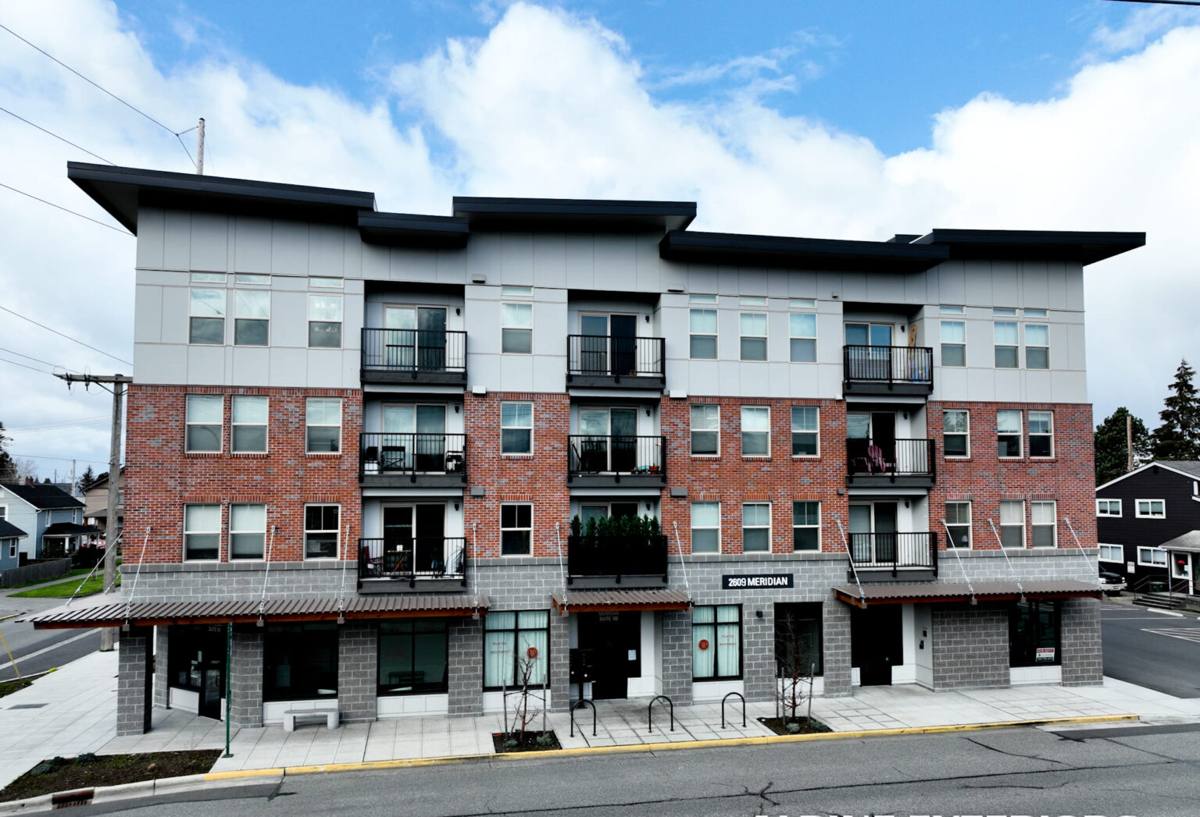
What Point Roberts Siding Has to Withstand
Salt Air
Airborne salt is corrosive and it's relentless near open water. It attacks exposed metal fasteners and flashing, and it accelerates the breakdown of factory finishes that weren't formulated to resist it. Over years, a siding product with a thin or inconsistent coating will fade unevenly, chalk, or start showing bare substrate at the most exposed elevations first — usually the west and south walls that face the water directly.
Driving Rain
Wind off the water doesn't just fall on a house, it pushes rain sideways into every lap, joint, and penetration. That means the details most homeowners never think about — how a piece of trim is capped, how a J-channel is flashed, how the bottom edge of a panel is finished — matter more here than they would on a sheltered inland lot. A siding system can be rated for a coastal climate and still fail locally if it's installed with sheltered-climate habits.
The Long Moss Season
Whatcom County's wet season stretches long, and Point Roberts gets more of it thanks to marine air that keeps humidity up even on days without rain. North- and east-facing walls, anything shaded by trees or a neighboring structure, and horizontal trim ledges hold moisture longest — and that's exactly where moss and algae take hold. Left alone, that growth holds water against the siding surface and keeps it damp for days after the rest of the house has dried.
Why We Only Install James Hardie Here
We standardized on James Hardie fiber cement siding for every home we side, and a coastal community like Point Roberts is a good illustration of why. Fiber cement is non-combustible and dimensionally stable — it doesn't swell, cup, or rot the way wood-based products can when they stay damp for extended periods. Hardie's ColorPlus factory-applied finish is baked on under controlled conditions, which gives it more consistent UV and color resistance than field-applied paint, and that matters when a house is getting sustained salt exposure and sun off the water in the same season.
Just as important: Hardie builds region-specific products. Their HZ5 line is engineered for climates like ours — cooler, wetter, with freeze-thaw cycles — as opposed to their HZ10 line, which is built for hot, humid southern climates with different moisture and expansion behavior. Installing the wrong regional formulation, or a generic fiber cement product not engineered for either condition, is a common corner cut. We don't cut it.
Comparing Siding Options for a Coastal Lot
| Siding Type | Salt Air Behavior | Moisture/Moss Resistance | Long-Term Maintenance |
|---|---|---|---|
| Vinyl | Can warp or discolor under sustained UV and temperature swings | Traps moisture behind panels if house wrap and flashing aren't perfect | Low upfront upkeep, but limited repair options once damaged |
| Cedar / untreated wood | Absorbs salt-laden moisture, accelerates weathering | Prone to moss, mildew, and rot without frequent sealing | Highest ongoing maintenance — refinishing on a recurring cycle |
| Primed spruce / engineered wood | Coating is only as good as the field application and reapplication schedule | Vulnerable at cut edges and fastener points if not sealed correctly | Moderate to high — repainting and edge-sealing over time |
| James Hardie fiber cement (HZ5) | Factory ColorPlus finish resists fading and chalking from UV and salt | Dimensionally stable; doesn't swell or rot when damp for extended periods | Low — periodic rinsing and inspection, no refinishing cycle for the substrate |
What Correct Installation Involves Here
The product is only half the equation. In a climate this demanding, the installation details determine whether a Hardie system performs for decades or underperforms in ten years because of shortcuts. On a Point Roberts home, we pay particular attention to:
- A drainage plane behind the siding — a rainscreen gap or drainable house wrap so any moisture that gets past the siding has somewhere to go besides the sheathing.
- Flashing at every penetration — windows, doors, hose bibs, light fixtures, and deck ledgers all need proper head flashing and kick-out flashing where rooflines meet walls, since wind-driven rain finds gaps that gravity-only installs miss.
- Correct fastener choice and placement — corrosion-resistant fasteners, placed and countersunk per Hardie's specifications, to avoid the rust streaking that shows up fast in salt air.
- Manufacturer-specified clearances — proper gaps at grade, roof lines, and decks so the siding never sits in standing water or gets buried in landscaping mulch.
- Factory-finished cut edges sealed — any field cut through the ColorPlus coating gets treated with Hardie's touch-up or edge sealer so raw fiber cement isn't left exposed to moisture.
Skipping any one of these doesn't show up on day one. It shows up in year five or six, when a homeowner is dealing with a stain, a soft spot, or a section that's failing while the rest of the wall looks fine.
Dealing With the Moss Season Directly
No siding product stops moss from landing on a wall — moss needs moisture and a surface to hold onto, and it will attempt to grow on almost anything in this climate. What changes is how the surface responds. A factory-cured cement substrate under a durable finish doesn't feed moss growth or soften underneath it the way wood fiber products can, and it tolerates the occasional gentle cleaning without the finish breaking down. We also make sure trim details don't create the flat ledges and tight, unventilated corners where moss and standing debris tend to collect in the first place — small design decisions during install that reduce how much maintenance a homeowner has to do later.
Working in an Exclave: What It Means for Your Project
Point Roberts' logistics are genuinely different from a job in Birch Bay proper or elsewhere in Whatcom County. Material deliveries, crew scheduling, and even simple site visits have to account for border crossing time, and that's something we plan for up front rather than discovering mid-project. Because we already work this peninsula regularly, we schedule Hardie material drops and crew days in batches to avoid the inefficiency — and the delays — that catch contractors who only come out here occasionally. That matters for you as a homeowner: fewer surprise gaps in your project timeline, and a crew that isn't learning the logistics on your job.
Cost Factors for a Point Roberts Hardie Project
| Factor | Why It Matters Here |
|---|---|
| Home size and wall complexity | More corners, gables, and trim details mean more flashing and cut-edge sealing work |
| Tear-off vs. install over existing sheathing | Removing failing siding lets us inspect and correct sheathing and moisture damage before it's covered up |
| Product line and profile | HardiePlank lap siding, HardiePanel vertical siding, and HardieShingle each price differently and suit different architectural styles |
| Site accessibility and scheduling | Exclave logistics affect delivery and crew timing, which we factor into project planning rather than passing along as last-minute delays |
| Existing moisture damage | Homes with a history of trapped moisture may need sheathing repair before new siding goes on |
Our Process for This Job
- On-site assessment of current siding condition, moisture exposure by elevation, and existing flashing details.
- Recommendation on Hardie product line and profile suited to the home's exposure and architectural style.
- Written estimate covering tear-off (if needed), moisture barrier and flashing work, and the Hardie install itself.
- Coordinated material delivery and crew scheduling that accounts for Point Roberts access.
- Installation to manufacturer specification, including fastener pattern, clearances, and sealed cut edges.
- Final walkthrough covering maintenance expectations and the transferable warranty coverage.
If you're weighing a siding replacement on a Point Roberts home and want a straight answer about what your walls actually need, we're glad to take a look. Reach out for a free, no-pressure estimate — we'll walk the exterior with you, point out what we see, and explain exactly what a correct James Hardie install would involve on your house.