 Birch Bay Exterior
 Roofing a Point Roberts Home Is Not the Same as Roofing Anywhere Else
Point Roberts sits on its own peninsula, surrounded by water on three sides and cut off from the rest of Washington State by the Canadian border. That geography means salt-laden marine air reaches every roof in the community, not just the ones closest to the shoreline. It also means homes here often go longer between service visits, simply because fewer roofing crews make the trip regularly. Birch Bay Exterior Co works throughout Whatcom County, and Point Roberts is a community we know well — the wind exposure, the tree cover, the moisture patterns, and what all of that does to an asphalt shingle roof over time.
This page is about one job done right: asphalt shingle roofing for Point Roberts homes. Not a general overview of roofing services, but what actually matters when you're choosing shingles, planning an installation, or deciding whether a roof needs repair or full replacement in this specific environment.
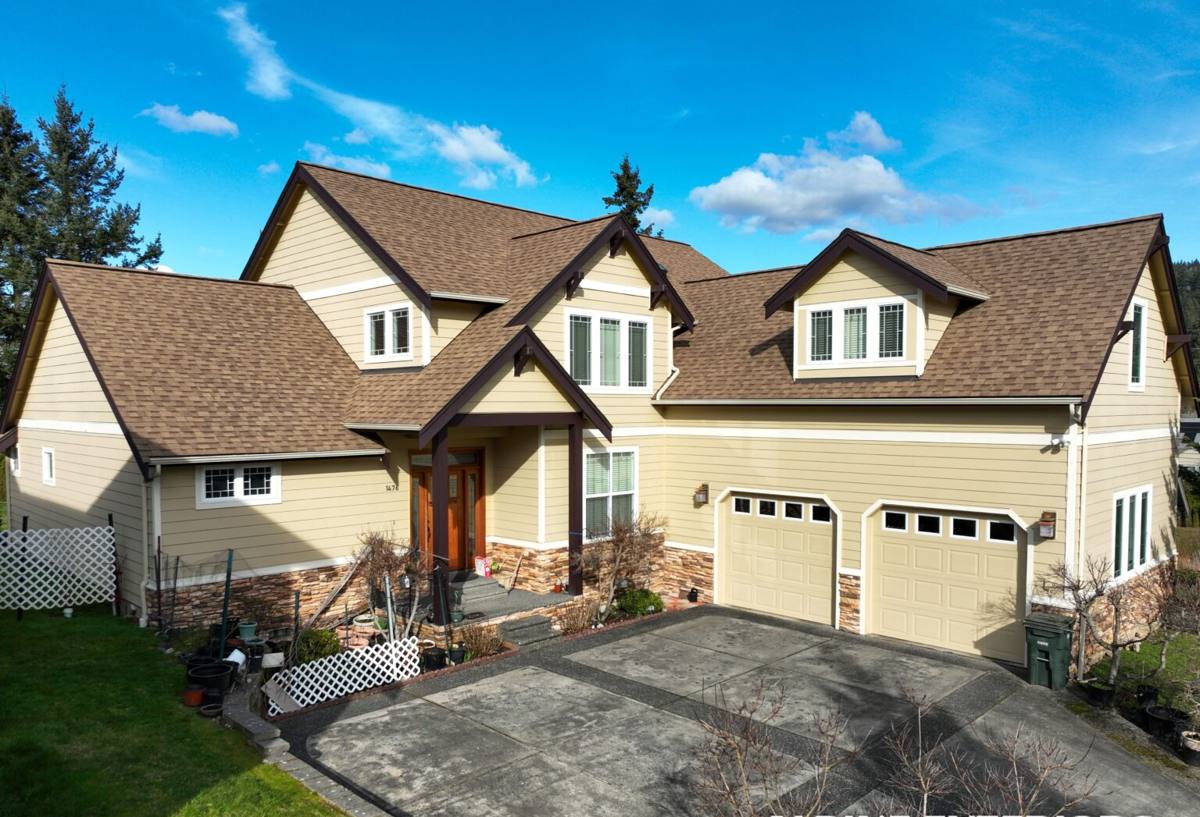
What Salt Air, Rain, and Moss Actually Do to a Roof
Salt Air and Corrosion
Airborne salt from the surrounding water doesn't just affect metal railings and hardware — it accelerates corrosion on roofing fasteners, flashing, and vent components. Standard galvanized nails and low-grade flashing can start showing rust streaks and pitting years before they would inland. On a shingle roof, corroded fasteners lose their grip strength, and corroded flashing develops pinholes that let water in long before the shingles themselves show any wear.
Driving Rain and Wind-Driven Water
Whatcom County gets its share of Pacific storms, and Point Roberts catches wind off open water with little to break it up. Driving rain doesn't just fall straight down — it gets pushed sideways and upward under shingle edges, around chimneys, and into valleys. A roof that's fine in a light, straight-down rain can still leak in a wind-driven storm if the underlayment, flashing, and shingle overlaps weren't installed with that in mind.
Moss and Shade
Between the marine humidity and the tree cover common on many lots, Point Roberts has a long moss season — often close to year-round on north-facing slopes or roofs shaded by conifers. Moss isn't just a cosmetic issue. As it spreads, it lifts shingle edges, holds moisture against the roof deck, and creates a foothold for rot underneath. Left unchecked for a few seasons, a mossy roof can develop soft decking that a simple shingle replacement won't fix — the plywood underneath has to be addressed too.
Choosing the Right Asphalt Shingle for This Environment
Not every asphalt shingle is built the same way, and the differences matter more in a climate like this than they would in a drier, calmer region. Here's how the common options compare for a Point Roberts home:
| Shingle Type | Wind Resistance | Algae/Moss Resistance | Typical Lifespan |
|---|---|---|---|
| 3-Tab Shingles | Lower — lighter weight, fewer nailing points | Only if algae-resistant (AR) rated | 15-20 years |
| Architectural (Dimensional) | Higher — heavier, layered construction | Better base resistance, best with AR granules | 25-30 years |
| Impact-Resistant (Class 4) | High — reinforced mat | Depends on granule treatment | 25-30+ years |
| Algae-Resistant (AR) Granules | Depends on base shingle | Highest — copper/zinc granules resist growth | Adds years of clean appearance |
For most Point Roberts homes, we lean toward architectural shingles with algae-resistant granules as the baseline. The extra weight and thicker profile hold up better to wind, and the AR treatment slows the moss and algae staining that's almost guaranteed here without it. We'll walk through the honest trade-offs — cost, appearance, and expected service life — for your specific roof rather than pushing one product across the board.
What a Correct Installation Actually Involves
Tear-Off and Deck Inspection
We don't install new shingles over old ones, and we don't recommend it here. A full tear-off lets us inspect the actual roof deck for soft spots, rot, or moisture damage that's common under moss growth or aging flashing. Any damaged plywood gets replaced before a single new shingle goes down — skipping this step is one of the most common ways a "new roof" fails early.
Underlayment and Ice-and-Water Protection
A synthetic underlayment goes down across the full deck as the first line of defense against wind-driven rain. In vulnerable areas — eaves, valleys, and around any roof penetrations — we add a self-adhering ice-and-water membrane for a second layer of protection where leaks are most likely to start.
Flashing Details That Matter
Flashing is where most roof leaks actually originate, not in the field of the shingles themselves. That means proper step flashing along walls and chimneys, counter-flashing that's integrated correctly (not just caulked over old metal), valley flashing sized for real water volume, and corrosion-resistant pipe boots and vent flashing chosen specifically because of the salt air. Using standard-grade metal here is a shortcut that shows up as a rust stain and a leak a few years down the road.
Ventilation
Proper attic ventilation does double duty: it keeps the roof deck cooler and drier, and it reduces the moisture buildup that feeds moss and mildew from underneath. A balanced system of intake vents at the eaves and exhaust at the ridge keeps air moving instead of trapping humid air against the underside of the deck — which matters a lot in a climate this wet.
Our Process for Point Roberts Projects
- Inspection and estimate. We look at the current roof, the deck condition where visible, ventilation, and any signs of moss, rust, or past repairs, then give you a clear written estimate.
- Material selection. We go over shingle options, colors, and warranty terms so you understand the trade-offs before committing to anything.
- Scheduling. Because Point Roberts is reached by crossing into Canada and back into the U.S., we plan material delivery and crew scheduling in advance so the job runs on one continuous timeline rather than stopping and starting.
- Tear-off and installation. Full removal of old roofing, deck inspection and repair as needed, then installation following manufacturer specifications for nailing pattern, exposure, and flashing.
- Cleanup and walkthrough. Job site cleanup including magnetic sweep for nails, followed by a walkthrough so you can see the finished work and ask questions before we consider the job done.
Why Local Experience in Point Roberts Actually Matters
A roofing crew that only occasionally works this far out tends to plan around convenience rather than the community's realities. We schedule around the border crossing so a job isn't interrupted mid-tear-off by a logistics problem. We know to spec corrosion-resistant hardware and flashing as a default here, not an upsell. And because we've seen what moss and salt air do to roofs in this specific area over time, we're not guessing at what "built for this climate" actually means — we're applying what we've learned from other Point Roberts and Whatcom County roofs.
That local knowledge also means fewer surprises. If your roof has moss damage, rusted flashing, or ventilation problems typical of homes in this area, we've likely already seen the same issue nearby and know what it takes to fix it properly rather than patch around it.
What Affects the Cost of a Point Roberts Roofing Project
Every roof is different, so we won't quote a price without seeing yours, but these are the main factors that move the number up or down:
| Factor | Why It Matters |
|---|---|
| Roof pitch and complexity | Steeper slopes and more valleys/hips take longer and require more flashing detail |
| Deck condition | Rot or soft decking found during tear-off requires plywood replacement before shingles go down |
| Number of existing layers | More layers to remove means more tear-off labor and disposal |
| Shingle grade chosen | Architectural and impact-resistant shingles cost more upfront but last longer in this climate |
| Access and site conditions | Tree cover, steep lots, and equipment access can add time to a project |
We'll break down exactly which of these apply to your roof during the estimate, so there's no guesswork about where the cost is coming from.
Signs Your Point Roberts Roof Needs Attention
Because of the moss and moisture in this area, roof problems here often develop gradually rather than showing up as an obvious sudden leak. A few things worth checking or having a professional look at:
- Visible moss or dark streaking, especially on north-facing or shaded slopes
- Granules collecting in gutters or at the base of downspouts
- Shingle edges that look lifted, curled, or cupped
- Rust staining around vent pipes, flashing, or chimney metal
- Soft or spongy spots noticeable when walking the roof (or visible sagging from the ground)
- Daylight visible through the attic roof deck, or damp insulation after storms
- Roof age approaching or past 20 years without a full inspection
Catching these early is almost always cheaper than waiting until they turn into a full deck replacement.
Maintenance That Extends the Life of Your Roof
Asphalt shingle roofs in Point Roberts benefit from more regular attention than the same roof would need in a drier climate. A yearly check of gutters, valleys, and any moss growth — along with prompt moss treatment before it spreads — goes a long way toward avoiding early failure. Trimming back overhanging branches also helps, since it reduces both shade (which feeds moss) and the risk of debris damage during wind events. If your roof already has established moss, professional removal is worth doing carefully — scraping or pressure-washing incorrectly can strip granules and shorten the shingle's remaining life just as fast as the moss itself.
Get a Straightforward Estimate
If your Point Roberts roof is showing moss, aging flashing, or you're just planning ahead for a replacement, we're happy to take a look and give you an honest assessment — no pressure, no obligation. Fill out the form below to schedule a free estimate.