 Birch Bay Exterior
 Siding Repair for Nooksack-Area Homes in Birch Bay
The Nooksack area sits close enough to the water that homes here take a different kind of beating than siding just a few miles inland. Between salt-laden air off the bay, wind-driven rain that gets pushed sideways into wall assemblies, and a moss season that seems to run longer every year, siding in this pocket of Whatcom County works harder than the manufacturer's spec sheet ever accounts for. Birch Bay Exterior Co. repairs siding in this neighborhood regularly, and the patterns of failure we see here are consistent enough that we can usually tell what's wrong before we even get a ladder up.
This page is about siding repair specifically — not full replacement, not a new install. If your siding is fundamentally sound but has isolated damage, moisture intrusion, or failing sections, repair is often the right call. We'll walk through what that actually involves, what correct repair work looks like on this coastline, and why a local track record matters more here than almost anywhere else in the county.
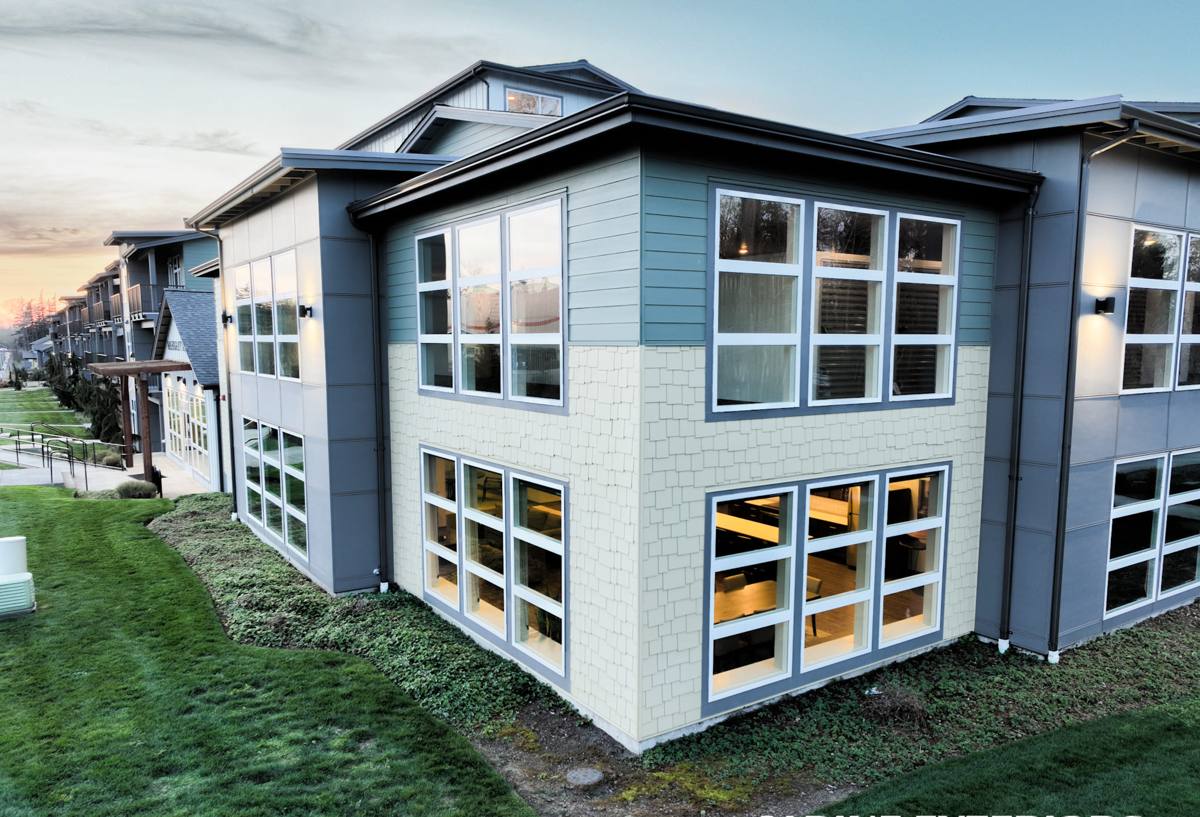
Why Nooksack's Climate Is Hard on Siding
Salt Air and Corrosion
Proximity to Birch Bay means airborne salt settles on every exterior surface, including siding, fasteners, and flashing. Salt accelerates corrosion in metal components — nail heads, flashing seams, and any exposed hardware — long before the siding material itself shows visible wear. A repair that only addresses the siding panel and ignores corroding fasteners or flashing underneath is a repair that fails again within a couple of years.
Driving Rain and Wind-Driven Moisture
Storms coming off the water don't just fall straight down — they get pushed horizontally into wall surfaces, seams, and butt joints. That means water finds its way into gaps that would stay dry in a more sheltered inland location. Siding repair here has to account for wind-driven rain, not just gravity-fed drainage, which changes how seams, caulking, and flashing details need to be handled.
Moss and Sustained Moisture
Whatcom County's long wet season, combined with tree cover common in and around Nooksack, gives moss plenty of time to establish itself on siding, trim, and anything shaded or north-facing. Moss holds moisture against the surface far longer than open air would allow, which is a problem for any siding material that isn't inherently moisture-resistant. Left alone, moss-trapped moisture is one of the most common root causes of the rot and delamination we get called out to repair.
What a Correct Siding Repair Actually Involves
A siding repair that's done right is not just "replace the bad board and caulk the edges." On homes exposed to Birch Bay's coastal conditions, a proper repair means diagnosing why that section failed in the first place — otherwise you're just deferring the same damage a season or two down the road.
- Identify the actual moisture source — bulk water intrusion, trapped condensation, or capillary wicking from ground contact
- Inspect the water-resistive barrier (house wrap) and flashing behind the damaged section, not just the visible siding
- Check fasteners and hardware for corrosion, especially in sections facing prevailing wind and salt exposure
- Confirm proper clearance from grade, decks, and hardscaping — a common contributor to bottom-course rot
- Match replacement material and profile so the repair doesn't create a visible patchwork or a future weak seam
- Reseal and re-flash penetrations, seams, and joints using materials rated for sustained wet exposure
- Verify paint or factory finish continuity so the repaired section weathers at the same rate as the rest of the wall
Skipping any of these steps doesn't necessarily show up right away. It shows up in twelve to twenty-four months, when the same section fails again — except now there's often more damage to the sheathing or framing behind it, because moisture was never fully addressed.
Common Siding Repair Issues We See Near Birch Bay
Rot and Delamination at Butt Joints
Horizontal siding seams are a natural weak point, and in wind-driven rain conditions, water can work its way behind poorly sealed or poorly flashed joints. On wood-based and composite siding products, this often leads to swelling, delamination, or soft spots that spread beyond the original joint if not caught early.
Fastener and Flashing Corrosion
Because of the salt exposure here, we frequently find corroded fasteners or degraded flashing well before the siding face itself looks obviously damaged. This is one of the reasons a proper inspection needs to look past the surface — corrosion problems are often what's actually driving a "random" failure a homeowner assumed was just bad luck.
Moss-Related Surface Breakdown
Shaded and north-facing walls near Nooksack often develop moss growth that holds moisture against the siding surface for extended periods. Over time this can degrade paint or factory finishes, promote rot in moisture-sensitive materials, and create conditions where minor damage becomes major damage simply because it stayed wet longer than it should have.
Impact and Wear Damage
Cracked or chipped siding from incidental impact — branches, debris, ladders, equipment — is straightforward on its own, but if left unrepaired through a wet season, minor impact damage becomes an entry point for the moisture issues above.
Repair vs. Replacement: How We Make the Call
Not every siding problem near Birch Bay needs a full re-side. Our approach on a repair call is to assess how isolated the damage actually is, and whether the underlying wall assembly is still sound.
| Situation | Usually Repair | Usually Replacement |
|---|---|---|
| Damage limited to a few boards or one wall section | Yes | No |
| Moisture intrusion found but sheathing/framing is dry | Yes | No |
| Rot has spread into sheathing or framing | No | Yes, for that section or more |
| Siding material is discontinued or hard to color-match | Sometimes | Often, for uniform appearance |
| Failures are widespread across multiple walls | No | Yes |
| Original installation had systemic flashing/wrap errors | No | Yes |
We'll always tell you honestly which category your home falls into. A repair-only approach only makes sense when it actually solves the problem — patching over a systemic moisture issue just to avoid a bigger job isn't a service we're willing to sell, because it doesn't hold up in this climate.
Our Siding Repair Process
1. On-Site Assessment
We inspect the damaged area and the surrounding wall assembly, not just the obviously affected boards. That includes checking for hidden moisture, corrosion, and moss-related buildup in adjacent sections that may be heading toward the same failure.
2. Honest Scope and Estimate
You'll get a clear explanation of what's actually wrong, what needs to be repaired versus monitored, and a straightforward estimate. If we find something that suggests a repair won't hold — like advanced rot behind the siding — we'll tell you before starting work, not after.
3. Correct-Spec Repair Work
We address the root cause — flashing, house wrap, fasteners, drainage — alongside the visible siding damage. Replacement material is matched as closely as possible for a repair that blends in rather than standing out as an obvious patch.
4. Finish and Follow-Through
Repaired sections are sealed, finished, and inspected before we consider the job done. We also point out anything nearby that's trending toward a future issue, so you can plan for it rather than get surprised by it.
Why a Locally-Familiar Crew Matters for Nooksack Repairs
Siding repair isn't a generic task you can spec identically in every climate. A crew that mostly works drier, inland, or less coastal areas may not instinctively check for the salt-driven corrosion or wind-driven rain intrusion patterns that show up consistently around Birch Bay. We work this coastline regularly, so we already know where to look first — behind the joint facing prevailing weather, under the moss-shaded section, around the fasteners closest to the water. That local pattern recognition is the difference between a repair that fixes the visible problem and one that fixes the actual problem.
How This Connects to Our James Hardie Standard
Birch Bay Exterior Co. installs James Hardie fiber cement siding exclusively for new installs and full re-sides — we don't install vinyl, LP SmartSide, or other fiber cement alternatives. That standard exists because of exactly the conditions described above: salt air, driving rain, and heavy moss exposure are hard on materials that are moisture-sensitive by nature. Hardie's fiber cement doesn't rot, and its ColorPlus factory finish is engineered to hold up under sustained coastal exposure better than field-applied paint systems.
If you're calling us for a repair on existing James Hardie siding, that work is usually straightforward — Hardie repairs are typically isolated to fastener, flashing, or impact issues rather than material breakdown. If you're calling about repeated repair problems on a different siding material, we'll be honest with you about what we're seeing and let you decide whether ongoing repair or an eventual switch to Hardie makes more sense for your home and budget. We're not going to push a full replacement on a repair call unless the underlying wall assembly actually calls for it.
Signs You Should Get a Repair Assessed Soon
- Soft, spongy, or discolored siding, especially near the bottom courses or around windows and doors
- Visible moss buildup on shaded or north-facing walls that hasn't been cleaned in a season or more
- Rust streaking near fasteners, trim, or flashing seams
- Gaps, cracking, or separation at butt joints and corners
- A section of siding that looks or feels different from the wall around it after a storm
- Peeling or bubbling paint concentrated in one area rather than spread evenly across the home
Catching these early is almost always cheaper and simpler than waiting until damage spreads into the sheathing or framing behind the siding.
If you're seeing any of these signs on a Nooksack-area home, we're happy to come take a look. We offer free, no-pressure estimates — we'll tell you plainly whether you're looking at a straightforward repair, a bigger scope, or something you can reasonably keep an eye on for now.