 Birch Bay Exterior
 Roof Repair in Nooksack: Built for Whatcom County Weather
Nooksack sits inland from the water but still catches the same weather pattern that defines this whole corner of Whatcom County: marine air rolling in off the Salish Sea, long wet winters, and a shoulder season where a roof rarely gets a full day to dry out. Homes here don't fail the same way roofs fail in drier climates. The damage is slower, quieter, and easy to miss until it shows up as a stain on a ceiling. A roof repair done right in this area has to account for that — not just patch what's visible, but understand why that spot failed in the first place.
This page is about roof repair specifically, not full replacement. Most roofs in decent structural shape don't need a tear-off — they need a contractor who can find the actual source of a leak, fix it correctly, and leave the rest of the roof in better shape to handle the next few winters.
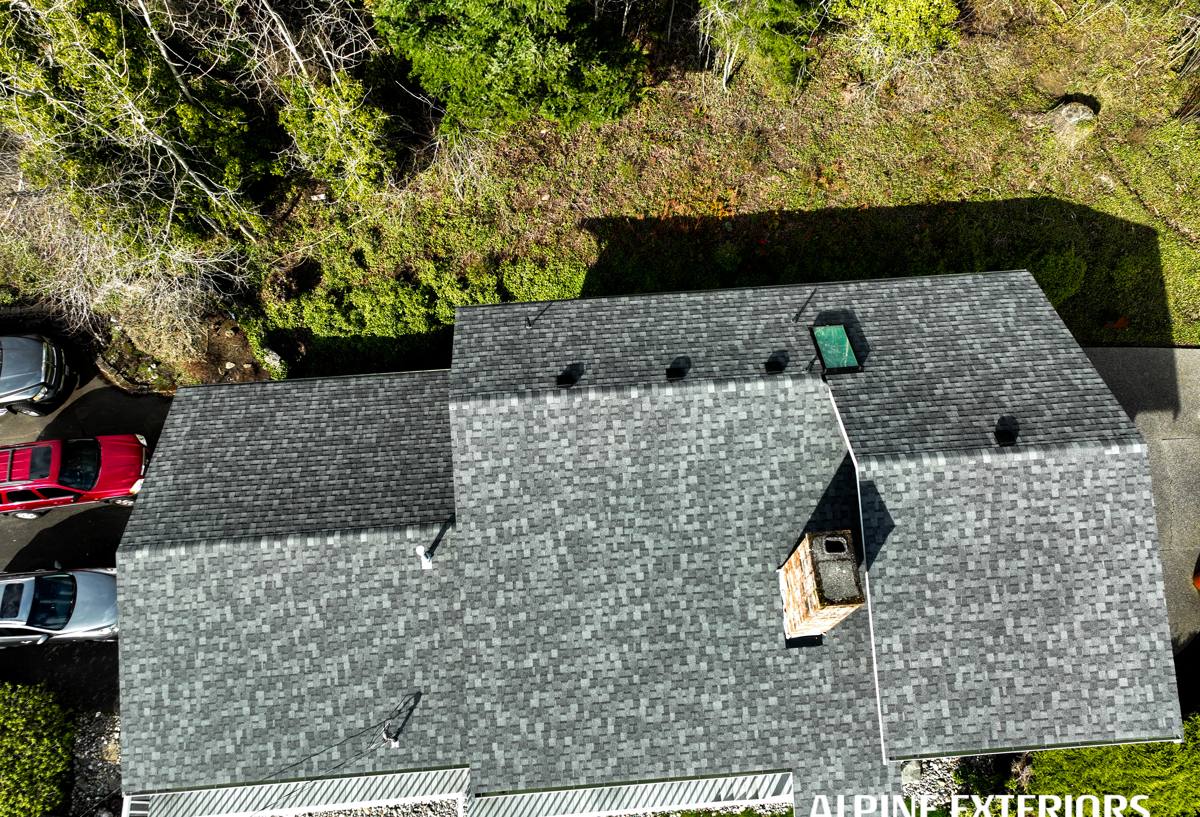
How Salt Air, Rain, and Moss Wear Down a Roof Here
Salt Air and Metal Fatigue
Being close to Birch Bay and the broader Whatcom County coastline means airborne salt is a constant, low-level factor even well inland. Salt-laden air accelerates corrosion on exposed metal — flashing, fasteners, gutter hangers, and vent boots all age faster here than they would in a landlocked climate. A roofing nail or a piece of flashing that would last decades elsewhere can start showing rust streaks in a fraction of that time. This matters most at repair joints, since a poorly matched or untreated fastener becomes the weak point that fails first.
Driving Rain and Wind-Driven Leaks
Rain in this region doesn't always fall straight down. Wind off the water pushes it sideways, which means water finds its way under shingles, around chimney flashing, and into valleys that would stay dry in a calmer climate. A repair that only addresses the surface — sealing a visible crack, for example — often misses the real entry point a few inches away where wind-driven rain is getting pushed uphill under the shingle line.
A Long Moss Season
Whatcom County's moss season runs long, and Nooksack's mix of tree cover and persistent moisture gives moss plenty of time to establish itself on north-facing slopes and shaded valleys. Moss isn't just cosmetic. It holds water against the roofing material, lifts shingle edges as it grows, and traps organic debris that keeps the surface damp long after a storm has passed. Left alone, it turns a small leak into rot in the decking underneath.
Common Roof Repair Issues We Find in the Nooksack Area
Every roof is different, but a handful of problems show up again and again on homes in this area:
- Flashing that has separated or corroded around chimneys, skylights, and roof-to-wall transitions
- Shingles lifted or cracked from moss growth and repeated freeze-thaw cycling
- Nail pops and fastener backout from age and thermal movement
- Clogged or damaged valleys where two roof planes meet and water concentrates
- Soft or spongy decking under a roof section that's been holding moisture for a while
- Gutter and downspout failures that push water back up under the roof edge instead of away from it
Some of these are quick fixes. Others are early warning signs of a bigger issue that's cheaper to address now than after another wet season.
What a Correct Roof Repair Actually Involves
Diagnosis Before Patching
The most common mistake in roof repair isn't bad workmanship — it's fixing the wrong spot. Water tracks along decking and rafters before it shows up as a stain, so the leak's visible symptom inside the house is often several feet from where the water is actually getting in. A correct repair starts with tracing that path from the inside out and confirming the actual entry point before any shingles or flashing get touched.
Matching Materials and Technique
Once the source is found, the fix needs to match what's already on the roof — same shingle type and, where possible, similar age and exposure, proper flashing technique at transitions, and fasteners suited to this climate's corrosion exposure. A patch that doesn't match the surrounding material can shed water differently than the rest of the roof, which sometimes creates a new leak point a season or two later.
Repair or Replace? How We Help You Decide
Not every roof issue calls for a full replacement, and not every leak should be treated as "just a patch." We look at the whole roof, not just the damaged section, before recommending either option.
| Factor | Leans Toward Repair | Leans Toward Replacement |
|---|---|---|
| Roof age | Under 15-20 years, most materials still sound | At or past the expected service life for the material |
| Extent of damage | Isolated to one section, valley, or penetration | Spread across multiple slopes or recurring in the same areas |
| Decking condition | Solid, no soft spots when walked | Soft, delaminated, or visibly rotted decking |
| Repair history | First or second repair in this area | Same spot has been patched multiple times before |
| Moss and moisture damage | Surface growth without underlying rot | Moss has been present long enough to affect the decking |
We'll walk you through where your roof falls on this before recommending anything — a repair when a repair is the honest answer, and a straight explanation if replacement is genuinely the better value.
Our Roof Repair Process in Nooksack
- Inspection of the affected area and the full roof, including attic access where possible, to trace the actual water path
- A clear explanation of what we found, in plain language, before any work starts
- A written estimate that covers the repair scope — no vague line items
- The repair itself, using materials matched to your existing roof and fasteners suited to this area's salt and moisture exposure
- Cleanup of the work area, including removal of any old material or debris generated by the repair
- A final check confirming the fix from both the roof surface and, where relevant, the interior side
We explain what we're doing and why at each step. If a repair turns out to be more involved than it looked from the ground — say, we find soft decking once shingles are pulled back — we stop and talk to you before moving forward, not after.
After the Repair: Keeping Moss and Debris From Coming Back
A good repair holds up longer with a little routine attention, especially in a climate that gives moss and debris this much time to work. A simple seasonal checklist goes a long way:
- Clear gutters and valleys of needles, leaves, and moss debris at least twice a year
- Trim back tree limbs that keep a section of roof shaded and damp longer than the rest
- Check for new moss growth on north-facing slopes each fall before the wet season sets in
- Look at flashing around chimneys and vents for early rust or separation
- Confirm downspouts are directing water away from the foundation and not backing up under roof edges
None of this requires climbing on the roof yourself — a lot of it can be checked from the ground or during a routine gutter cleaning.
Why Hire a Crew That Already Works in Nooksack and Birch Bay
A roof repair contractor who mainly works elsewhere in the state doesn't necessarily know how differently a roof ages under this area's salt air and moss cycle. We work on homes throughout Birch Bay and the surrounding Whatcom County communities, including Nooksack, so we're not guessing at how a shingle, a flashing joint, or a fastener holds up here — we see it season after season. That translates into repairs that account for the actual conditions this roof will keep facing, not a generic fix pulled from a manual written for a different climate.
It also means straightforward answers. If a repair is genuinely all your roof needs, that's what we'll recommend. If we see signs that point toward a bigger issue, we'll explain exactly what we found and why it matters, so you can make the call with real information instead of guesswork.
If you've got a leak, a soft spot, or a section of roof that's been bothering you, we're happy to take a look. Reach out for a free, no-pressure estimate using the form below — we'll walk the roof, tell you what we find, and give you a straight answer on what it actually needs.