 Birch Bay Exterior
 Building New in Nooksack? The Windows Decide a Lot More Than the View
When you're framing a new home in or around Nooksack, window choice tends to get pushed down the priority list behind foundation, roofing, and siding decisions. That's backwards. In Whatcom County, the windows you rough-in now determine how much moisture gets into your wall cavities for the next 30 years, how much your heating bills run every winter, and how much maintenance you're doing on ladders in ten years. New construction is the one time you get to do this right from the studs out, before drywall, siding, and trim make changes expensive.
We install new-construction windows throughout the Birch Bay area and out to Nooksack on a regular basis, and the two jobs are not identical. Nooksack sits further inland and gets less direct salt exposure than the immediate shoreline, but it shares the same driving rain patterns, the same long wet season, and the same moss-friendly humidity that defines this part of Whatcom County. That combination shapes almost every decision below.
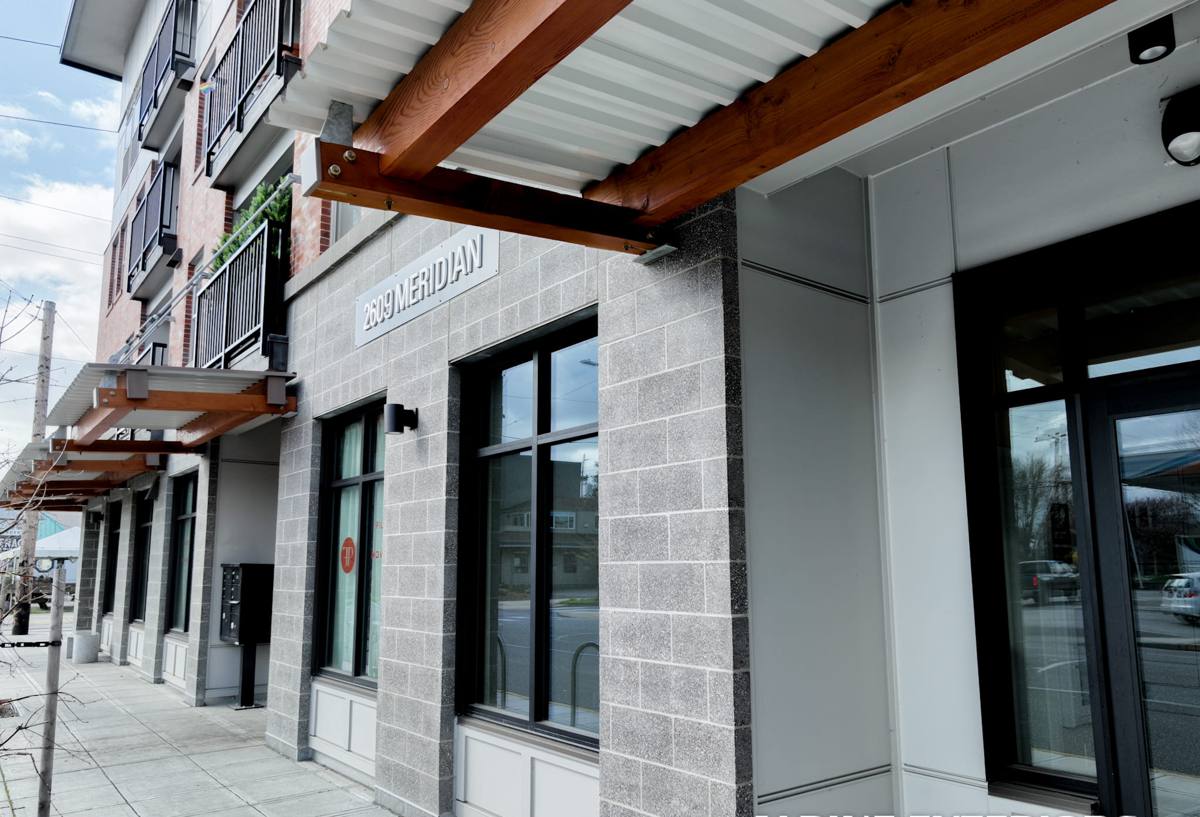
What Whatcom County's Climate Actually Does to a New Window Install
Driving Rain, Not Just Rain
Anyone who's lived here through a November storm knows the difference between rain falling straight down and rain coming sideways off the water. Wind-driven rain gets forced up and under trim, into nailing flanges, and behind siding laps that would stay dry in a calmer climate. A new-construction window install has to assume wind-driven rain will hit that opening from more than one direction over the life of the house, not just from straight overhead.
Long Wet Season, Slow Drying
Whatcom County doesn't just get a lot of rain, it gets rain spread across most of the year with long stretches of high humidity and low sun exposure in between storms. Any moisture that does get past a flashing detail has fewer dry, sunny days to evaporate out before the next system rolls through. That's why sloppy flashing work that might get away with it in a drier climate causes real rot here within a few seasons.
Moss Season and What It Means for Windows
Moss doesn't grow on window glass, but it grows readily on horizontal trim, sills, and anywhere organic debris and moisture sit together in shade. On a new build, sill design and drainage details determine whether moss and algae take hold on your window trim in year two or stay manageable for a decade. This is a design decision made at rough-in, not a maintenance problem to solve later.
What "Correct" Looks Like on a New-Construction Window Install
New-construction windows have a nailing flange that gets integrated directly into the wall's water-resistive barrier (WRB) system, unlike a retrofit replacement window that goes into an existing opening. Done correctly, that means:
- WRB (house wrap or equivalent) lapped correctly over the head flashing and under the sill pan, following proper shingle-lap order so water drains out and over, never into the wall
- A sill pan under every opening, sloped to the exterior, so any water that does get past the window has somewhere to go besides your framing
- Flashing tape at the jambs and head, applied to clean, dry sheathing, with corners detailed to eliminate the small gaps where leaks actually start
- Proper rough opening sizing with shim space for the window to be set plumb, level, and square without racking the frame
- Fasteners in the correct flange locations at the correct spacing, so the window performs to its rated wind and water resistance
- Backer rod and sealant at the interior and exterior perimeter, sized and placed for the specific gap, not just a bead of caulk run around the trim
Every one of those steps is inspectable during the build and invisible once siding and trim go on. That's exactly why it matters who does this work and how carefully they document it.
Our Process for New-Construction Windows
1. Plan Review and Product Selection
We look at your plans, your orientation to prevailing weather, and your siding type before recommending specific windows and flashing methods. A window on a wall exposed to the prevailing southwest weather gets treated differently than one tucked under a deep eave.
2. Rough Opening Verification
We check rough openings against the actual window sizes before install day, not after. Framing tolerances add up, and catching a problem here costs nothing compared to catching it after the window is set.
3. Sill Pan and Flashing Installation
Sill pans, WRB integration, and flashing tape go in following manufacturer instructions and standard shingle-lap sequencing, with photos taken at each step. This is the part of the job that determines whether the house stays dry, and it's also the part that gets covered up fastest, so we document it.
4. Window Setting and Fastening
Windows get set plumb, level, and square, shimmed correctly, and fastened per the manufacturer's specified pattern. We check operation (opening, closing, locking) before moving on, since a window that binds after the wall closes up is a much bigger fix.
5. Interior and Exterior Sealing
Backer rod and sealant go in at appropriate joints, insulation gets placed around the frame without over-packing it (which can bow the frame), and interior trim details are coordinated with your framer or finish crew.
6. Final Walkthrough
We walk every opening with you or your builder before we consider the job done, confirming operation, seals, and that documentation matches what's in the walls.
Choosing Window Types and Materials for This Climate
There's no single "best" window brand or material for every new build here — the right call depends on your budget, your exposure, and your siding plan. What we do have is a professional standard on how any window gets installed and finished for this climate.
| Frame Material | Typical Strengths | What to Watch For Here |
|---|---|---|
| Vinyl | Lower cost, low maintenance, good energy performance | Confirm reinforced frames on larger openings; quality varies a lot between product lines |
| Fiberglass | Very stable dimensionally, holds paint well, long service life | Higher upfront cost; worth it on larger or highly exposed openings |
| Wood (clad exterior) | Interior warmth and appearance, classic look | Exterior cladding and flashing detail matter even more given our wet season; any exposed wood needs a real maintenance plan |
| Aluminum | Slim sightlines, strong for large spans | Higher thermal conductivity; look for thermally broken frames to avoid condensation issues |
Whatever material you choose, low-E glass with an appropriate solar heat gain coefficient for our cloudy, mild climate is worth discussing rather than defaulting to a generic package. We'll walk through the trade-offs against your budget rather than pushing one product line.
Cost Factors for New-Construction Window Packages
Every new build's window package prices out differently, but the factors that move the number the most are consistent:
| Factor | Why It Matters |
|---|---|
| Number and size of openings | Larger units and more of them raise both material and labor cost directly |
| Frame material | Vinyl, fiberglass, wood-clad, and aluminum sit at different price points |
| Wall exposure | Openings facing prevailing wind-driven rain may warrant extra flashing detail and labor time |
| Access and building stage | Coordinating with your framing schedule affects crew efficiency and scheduling |
| Glass upgrades | Tempered, laminated, or higher-performance low-E glass adds cost per unit |
We'll always give you an honest range once we've seen your plans, rather than a number pulled out of thin air over the phone.
Why Hire a Crew That Already Works Nooksack and Birch Bay
New-construction window installation is unforgiving of shortcuts because the mistakes get buried behind siding and drywall for years before they show up as a stain, a soft spot, or a mold smell. A crew that already installs windows across Whatcom County — from the immediate coast at Birch Bay out to inland communities like Nooksack — has seen how these details actually perform in our specific weather, not just in a manufacturer's install manual written for a national market.
That local pattern recognition matters most on the calls that aren't spelled out in any spec sheet: how much extra flashing lap to add on a wall that catches the prevailing wind, which sill details actually resist moss buildup here versus on paper, and how to sequence work around our wet season instead of fighting it. We coordinate directly with builders and framers so window installation fits your construction schedule instead of becoming the delay.
A Few Things Worth Asking Any Contractor Before You Sign
- Will you use a sill pan on every opening, and can you show me the detail you follow?
- How do you document flashing and WRB integration before it gets covered by siding?
- What's your process if a rough opening doesn't match the window dimensions?
- Do you coordinate directly with my framer or builder on scheduling?
- What warranty coverage applies to the installation itself, separate from the manufacturer's product warranty?
If a contractor can't answer these clearly, that's worth knowing before the walls close up, not after.
If you're planning a new build in Nooksack or anywhere around Birch Bay, we're happy to look at your plans and talk through window options honestly, including what fits your budget and what doesn't. Reach out for a free, no-pressure estimate using the form below.