 Birch Bay Exterior
 New Roof Installation for Sumas Homes
A new roof is one of the biggest investments a homeowner in Sumas will make, and it's not a project where "close enough" is good enough. Sumas sits in Whatcom County, close enough to the coast that homes here deal with a specific mix of weather: salt-laden air moving in off the Strait, long stretches of driving rain through fall and winter, and a moss season that can run most of the year on shaded or north-facing slopes. A roof system that isn't built with that combination in mind will show problems years before it should — premature granule loss, soft decking, moss undermining shingles, or fasteners corroding from the inside out.
This page covers what a correct new roof installation looks like for a Sumas property specifically: the materials that hold up here, the parts of the job that get skipped by crews in a hurry, and what our process actually involves from tear-off to final walkthrough.
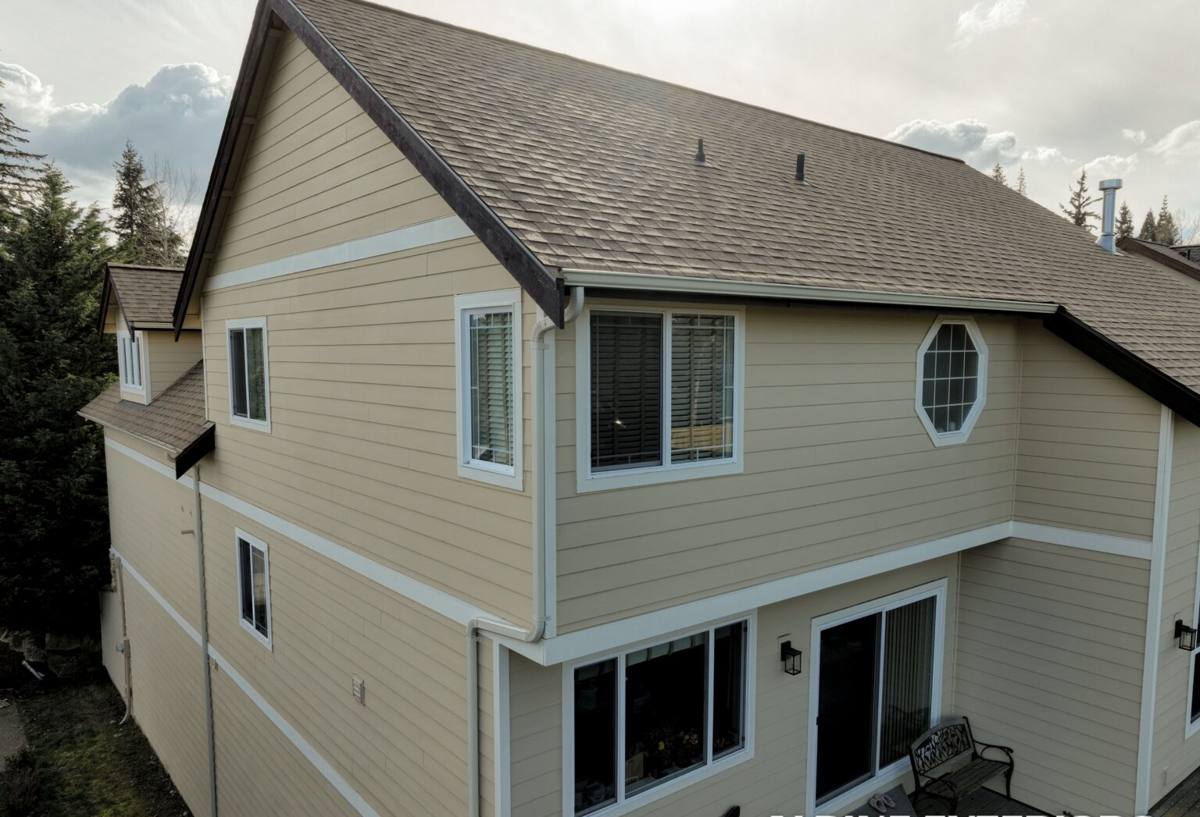
Why Sumas Roofs Take More Abuse Than People Expect
Salt Air and Metal Fatigue
Even at a distance from open water, salt-carrying air corrodes exposed metal faster than most homeowners expect. Flashing, fasteners, vent caps, and drip edge are the first components to fail on a roof that used standard-grade hardware. Once flashing corrodes at a seam or valley, water finds its way underneath the roofing material long before the shingles themselves look worn — which is why so many "roof leaks" in this area actually start as flashing failures, not shingle failures.
Driving Rain and Wind-Driven Water
Whatcom County storms don't just drop rain straight down — wind pushes it sideways, under shingle tabs, up under ridge caps, and into any gap that a fair-weather installation would never have exposed. A roof built for a drier climate, with minimal underlayment or loosely sealed penetrations, will hold up fine on a calm day and fail the first time a real coastal storm rolls through.
Moss, Shade, and Moisture Retention
Sumas has plenty of tree cover and enough overcast, damp stretches to give moss a long growing season. Moss doesn't just look bad — its root structure lifts shingle edges, traps moisture against the roof deck, and accelerates rot in exactly the spots that are hardest to inspect from the ground. North-facing slopes and roof sections shaded by mature trees are almost always the first to show moss growth and the first to need attention.
What a Correct New Roof Installation Actually Involves
A roof replacement is more than swapping old shingles for new ones. The materials and steps underneath the visible surface are what determine whether the roof performs for 20-plus years or starts causing problems in five.
Tear-Off and Deck Inspection
We remove the existing roofing down to the deck rather than layering over old material. This lets us actually see the plywood or OSB sheathing underneath, which is the only way to catch soft spots, delamination, or rot before they're sealed under a new roof. Any damaged decking gets replaced — this isn't an upsell, it's a structural requirement. Installing new shingles over compromised decking just guarantees a shorter roof life and a harder repair later.
Underlayment Selection
Given how much wind-driven rain this area sees, underlayment choice matters more here than in drier climates. Synthetic underlayment generally outperforms old-style felt for water resistance and durability during installation, and we use self-adhered ice-and-water membrane in vulnerable areas — valleys, eaves, and around penetrations — where wind-driven water is most likely to find a way in.
Flashing and Metal Components
Because salt air accelerates corrosion, flashing quality and installation technique are not places to cut corners. Properly formed, correctly lapped flashing at valleys, chimneys, skylights, and wall intersections is one of the biggest differences between a roof that stays watertight and one that develops slow leaks within a few years.
Ventilation
A roof deck that can't breathe traps moisture from both directions — condensation from inside the attic and dampness from the outside climate. Balanced intake and exhaust ventilation helps the deck dry out between rain events and reduces the conditions moss and rot both depend on.
Shingle or Material Installation
Proper nailing patterns, correct exposure, and manufacturer-specified fastening are what keep a roof performing in high wind. Installation shortcuts here are invisible on day one and expensive by year three.
Material Options for Sumas Conditions
There's no single "best" roofing material for every home — the right choice depends on your roof's slope, sun and shade exposure, budget, and how much long-term maintenance you're willing to take on. Here's how the common options compare for a coastal Whatcom County property.
| Material | Moss Resistance | Wind/Rain Performance | Typical Lifespan | Maintenance |
|---|---|---|---|---|
| Architectural asphalt shingle | Moderate (algae-resistant granules help) | Strong with proper nailing and underlayment | 25-30 years | Periodic moss/debris removal |
| Standing seam metal | High — sheds moss and debris well | Excellent in wind-driven rain | 40-50+ years | Low; occasional fastener/seam checks |
| Cedar shake | Low without diligent upkeep | Good when properly maintained | 20-30 years | High; regular treatment and inspection |
| Composite/synthetic shake | Moderate to high | Strong | 30-50 years | Low to moderate |
We don't push cedar shake as a default recommendation on shaded, moisture-heavy lots — not because it's a bad product, but because it demands a level of ongoing maintenance that most homeowners underestimate at the time of installation. If you want that look, we'll talk through what upkeep it realistically requires so there are no surprises.
Our Installation Process
- On-site inspection and estimate. We walk the roof, check the attic where accessible, and note slope, ventilation, flashing condition, and any problem areas before quoting anything.
- Material selection. We go over options based on your roof's exposure, your budget, and how much maintenance you want to take on long-term.
- Scheduling around weather. Given how much rain this region gets, we plan tear-off and installation around forecast windows and keep the deck protected if weather moves in mid-project.
- Tear-off and deck inspection. Old roofing comes off, decking gets inspected, and any needed repairs are identified before anything new goes down.
- Underlayment and flashing installation. Ice-and-water membrane in vulnerable zones, synthetic underlayment across the field, and properly formed flashing at every penetration and transition.
- Roofing material installation. Installed to manufacturer spec for nailing pattern, exposure, and fastening.
- Ventilation check. We confirm intake and exhaust venting is balanced for the attic space.
- Cleanup and final walkthrough. Site is cleared of debris and nails, and we walk the finished roof with you before calling the job done.
Signs Your Sumas Roof May Need Replacing, Not Repairing
- Granules collecting in gutters or at downspout outlets
- Shingles that are curling, cupping, or cracking, especially on south- or west-facing slopes
- Moss growth that returns quickly after cleaning, particularly on shaded slopes
- Soft or spongy spots when walking the roof deck
- Daylight visible through the attic roof boards
- Rusted, lifted, or missing flashing around chimneys, vents, or valleys
- Roof age approaching or past the material's expected lifespan
- Interior water stains on ceilings, especially after wind-driven storms
Not every one of these means you need a full replacement — some are repairable. But if you're seeing two or more of these signs together, it's usually a sign the roof system as a whole is past the point where patch repairs make financial sense.
What Drives the Cost of a New Roof
Every roof is different, and we won't quote a number without seeing the actual job, but the factors below are what typically move the price up or down.
| Factor | Why It Matters |
|---|---|
| Roof size and number of facets | More square footage and more valleys/hips mean more material and labor |
| Pitch and access | Steeper roofs and difficult access slow the job and increase safety requirements |
| Decking condition | Rotted or delaminated sheathing found during tear-off requires replacement before roofing goes on |
| Material choice | Asphalt, metal, and shake carry very different material and labor costs |
| Number of penetrations | Chimneys, skylights, and multiple vents each require additional flashing work |
| Tear-off layers | Removing multiple existing roofing layers adds labor and disposal cost |
Why Hire a Crew That Already Works in Sumas
Roofing crews that mostly work drier inland regions or come from out of the area sometimes underbuild for what this part of Whatcom County actually experiences — lighter underlayment, standard-grade fasteners instead of corrosion-resistant hardware, or ventilation calculations that don't account for how much moisture this climate holds against a roof deck. A crew that regularly works Birch Bay, Sumas, and the surrounding area builds these details in as standard practice, not as an upgrade, because we've seen what happens to roofs that skip them.
Local experience also means faster, more accurate estimates. We already know what typical slope, exposure, and material conditions look like for homes in this area, so we're not guessing at what your roof needs — we're confirming it on-site.
Maintaining Your New Roof
A properly installed roof still benefits from basic upkeep, especially in a climate that favors moss and holds moisture:
- Clear gutters and downspouts at least twice a year so water actually drains instead of backing up under roofing edges
- Trim back overhanging branches to reduce shade, debris, and moss-friendly conditions
- Have moss professionally removed rather than pressure-washed, which can strip granules and shorten shingle life
- Schedule a roof inspection after any major windstorm
- Address small leaks or flashing issues promptly — they rarely stay small in this climate
Get a Free Estimate
If your Sumas home needs a new roof, we're happy to come take a look, walk you through what we find, and give you a straightforward estimate — no pressure, no hard sell. Fill out the form below to get started.