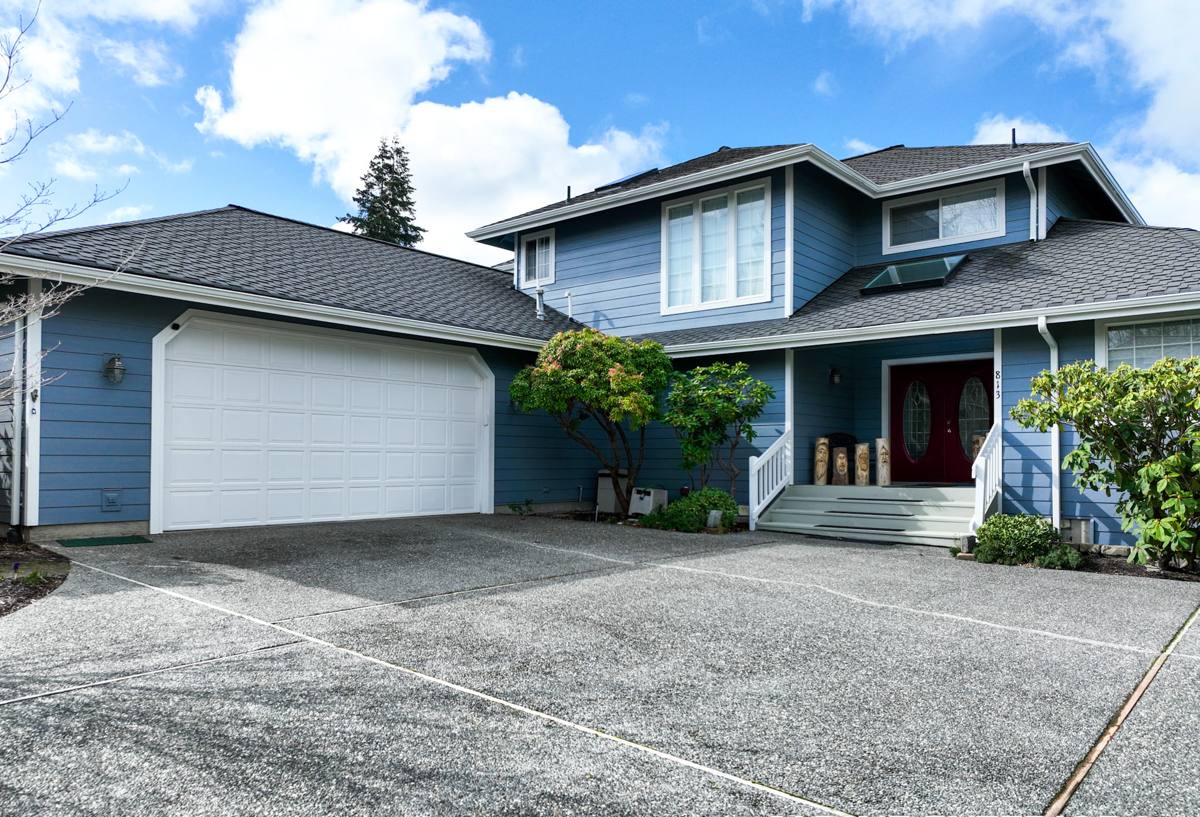
 Birch Bay Exterior
 Building New in Lynden Is a Chance to Not Repeat Old Mistakes
If you're framing a new home or a new addition in Lynden, the windows are one of the few components you only get to install correctly once without tearing something apart. On a replacement job, we're working around what's already there. On new construction, the window opening, the flashing sequence, and the water management plan all get built at the same time — which means there's no excuse for a bad installation, but also no room for shortcuts to hide behind drywall and siding for the next fifteen years.
Lynden sits inland from the water compared to our home base in Birch Bay, but it's still very much Whatcom County weather: long wet stretches from fall through spring, humidity that lingers on north-facing walls, and cold winter outflow winds that push down out of the Fraser Valley. New-construction windows here need to be selected and installed with that in mind from the first day of framing — not adjusted for after the fact.
Why the Local Climate Should Drive Window Decisions
A lot of new-construction window problems in this region aren't about the window unit itself — they're about how it was integrated into the wall assembly. Whatcom County's climate puts three specific stresses on that assembly:
- Driving rain: Wind-driven rain off Pacific storm systems doesn't just fall on a window, it pushes against it. Flashing and sealant details that would be fine in a dry climate aren't enough here.
- Marine-influenced humidity: Even inland in Lynden, the air carries more moisture than most of the country sees. That moisture finds any gap in a wall assembly and stays there instead of drying out quickly.
- Long moss and mildew season: Shaded elevations and north-facing walls stay damp for months at a time, which is hard on unprotected wood trim and sill details if they weren't detailed to shed water in the first place.
None of these are exotic problems. They're the same climate factors that show up in every window failure we get called out to fix on older homes — the difference is that on new construction, you can build the assembly to handle them from the start instead of retrofitting a fix later.
Fraser Valley Outflow Winds
Lynden's proximity to the Canadian border means winter outflow wind events are a real factor, more so than in a lot of the county. These are cold, gusty winds that put real pressure on window units and the seals around them. A window that's rated for typical Puget Sound wind loads but installed with a sloppy sealant job can still whistle or leak during one of these events. It's worth confirming your window's design pressure rating matches what your builder or engineer specified for the site, not just what's standard for the model.
New-Construction Windows vs. Replacement Windows — What's Actually Different
Homeowners sometimes assume "new-construction window" just means a newer window. It actually refers to a different physical product with a nailing fin, installed with a different method than a replacement (pocket or insert) window. Getting these confused — or having a crew install a new-construction window like it's a replacement, or vice versa — is one of the more common sources of leaks we see.
| Factor | New-Construction Window | Replacement (Insert) Window |
|---|---|---|
| Frame design | Has a nailing fin around the perimeter | No fin; fits inside the existing frame |
| Installed into | A rough opening in bare framing, before siding | An existing window frame that stays in place |
| Water management | Integrates directly with house wrap and flashing tape | Relies on the condition of the original frame and sill |
| Best used when | Framing a new home, addition, or fully re-sided wall | Existing frame is sound and you're not touching siding |
| Sizing flexibility | Opening can be built to any size needed | Limited to the existing opening's dimensions |
For a true new build in Lynden, the nailing-fin window is almost always the right call — it lets us build a complete, continuous water management plane around every opening instead of working within the constraints of something already there.
What a Correct New-Construction Installation Actually Involves
The window unit itself matters less than most people think. What matters more is the sequence of steps around it — this is where leaks either get prevented or get built in permanently.
The Flashing Sequence
Water has to be directed out and down at every layer, in the right order. That generally means: sill pan flashing first, so any water that gets past the window has a dedicated path out; back dam detail so water can't run back into the wall cavity; window installed and fastened per the manufacturer's schedule; then flashing tape at the jambs and head, lapped correctly with the house wrap so water sheds over the top layers, never under them. Skip or reverse any one of these steps and you've built a leak path that won't show up until years later, usually as rot inside the wall.
House Wrap Integration
The window flashing has to tie into the house wrap as one continuous water barrier — not sit next to it or overlap it incorrectly. This is where a lot of production framing crews cut corners because it's slower work and doesn't affect how the house looks on move-in day.
Sealants and Backer Rod
Sealant is the last line of defense, not the primary one — but it still has to be done right: proper backer rod so the sealant bead has the correct depth-to-width ratio, and a sealant rated for the temperature swings and UV exposure this climate delivers. Sealant alone, without the flashing sequence behind it, will eventually fail.
Choosing a Window Frame Material for a Lynden New Build
We install a mix of frame materials depending on the home's design, budget, and exposure. There's no single "best" material — there are trade-offs.
| Frame Material | Strengths | Trade-Offs |
|---|---|---|
| Vinyl | Cost-effective, low maintenance, good thermal performance | Limited color/finish options; can expand and contract more with temperature swings |
| Fiberglass | Very stable dimensionally, strong, holds paint well | Higher upfront cost than vinyl |
| Wood-clad | Traditional interior look, warm appearance | Exterior cladding and sealant joints need regular inspection given our wet season; more maintenance sensitive than vinyl or fiberglass |
| Aluminum | Slim sightlines, strong | Poor thermal performance unless thermally broken — not our default recommendation for this climate |
For most new-construction projects we work on in this area, vinyl or fiberglass ends up being the practical choice given the humidity and moss-season moisture exposure — they simply demand less upkeep over the long run. Wood-clad windows can be the right architectural choice, but we're upfront with clients that they come with a higher maintenance commitment in a climate that stays damp as long as ours does.
Our Process on New-Construction Jobs
- Plan review: We look at the window schedule, rough opening sizes, and design pressure requirements before anything gets ordered.
- Coordination with your builder or GC: New-construction windows have to land at the right point in the framing schedule — too early or too late causes delays for everyone.
- Sill pan and flashing installation: Done before the window goes in, not as an afterthought.
- Window setting and fastening: Per manufacturer spec, checked for level, plumb, and square before final fastening.
- Flashing tape and house wrap tie-in: Continuous water barrier from sill to head.
- Final sealant and inspection: Interior and exterior sealant details finished, then a walk-through before siding closes it all in.
That last point matters more than people expect: once siding goes on, the flashing work is hidden for the life of the house. We treat the pre-siding inspection as a hard checkpoint, not a formality.
What New-Construction Windows Cost — and What Drives the Range
Pricing on new-construction window packages varies a lot based on quantity, size, glass upgrades, and frame material, so we won't quote a number here that wouldn't hold up project to project. What we can tell you is what actually moves the price:
| Cost Factor | Why It Matters |
|---|---|
| Frame material | Vinyl is generally the most budget-friendly; fiberglass and wood-clad cost more per unit |
| Glass package | Low-E coatings and gas-filled units cost more but perform better against our climate and heating/cooling loads |
| Window size and count | Larger openings and more units mean more material and more flashing labor |
| Custom shapes or sizes | Non-standard sizes usually mean special-order lead times and higher per-unit cost |
| Site access and scheduling | Coordinating around a framing schedule with other trades can affect labor efficiency |
We'll always give you a real, itemized number for your specific plan — not a ballpark that falls apart once the order gets placed.
A Checklist If You're Building New in Lynden
- Confirm whether your window schedule specifies design pressure ratings appropriate for local wind exposure, including outflow wind events
- Ask your window crew to walk you through their flashing sequence before installation starts, not after
- Make sure sill pan flashing is part of the plan — it's not optional in this climate
- Verify the house wrap and window flashing will be inspected before siding closes the wall
- Choose a frame material based on the maintenance commitment you're actually willing to keep up with, not just upfront cost
- Get installation timing coordinated directly with your builder's framing schedule to avoid delays
Why It Matters to Hire a Crew That Already Works in Lynden
New-construction window installation isn't complicated in theory, but it's easy to get wrong in practice, especially when a crew is used to a drier climate's standards or treats the flashing sequence as optional. We work new builds and additions across Whatcom County, including Lynden, and we size up every job against the same wet-climate standard we'd apply to a house sitting right on the water in Birch Bay. That means sill pans, correct flashing laps, and sealant details that are built for driving rain and a long damp season — not just built to pass a quick inspection.
If you're planning a new build or addition in Lynden, we're happy to take a look at your plans, talk through window selection, and give you a straightforward, no-pressure estimate using the form below.