 Birch Bay Exterior
 Why Cottonwood Beach Needs a Different Approach to Metal Roofing
Homes along the Cottonwood Beach shoreline sit in a tougher environment than a roof three miles inland ever sees. The combination of salt-laden air off the water, wind-driven rain that finds its way under standard shingle laps, and a moss season that runs longer than almost anywhere else in Whatcom County means a metal roof here has to be specified and installed differently than a catalog installation somewhere dry. We're not talking about a different product line — we're talking about different fastener choices, different flashing details, and a different maintenance conversation with the homeowner before we ever climb a ladder.
A metal roof is a good match for this stretch of coast when it's done right. It sheds moss better than most other roofing materials, handles wind uplift well, and doesn't absorb water the way organic shingles do. But "metal roof" covers a wide range of products and installation quality, and in a salt-air environment the gap between a correct install and a mediocre one shows up faster — sometimes in a few seasons instead of a decade or more.
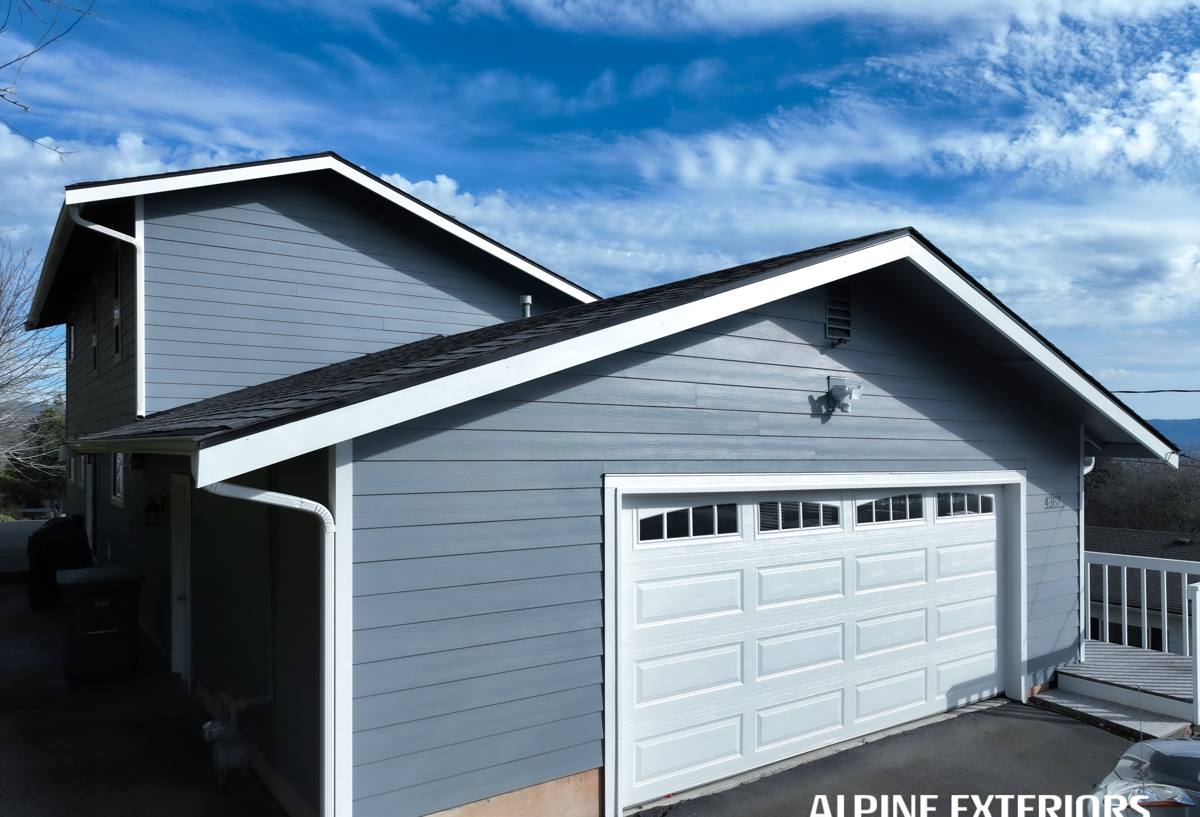
What Salt Air, Rain, and Moss Actually Do to a Roof Over Time
Three things work against a roof in this location, and they compound each other:
Salt Air
Airborne salt from the Salish Sea settles on every exposed surface, including fasteners, flashing edges, and any cut or scratched metal panel edge. Left unaddressed, it accelerates corrosion at exactly the points where a roof is most vulnerable — screw heads, panel seams, and valley flashing. This is why fastener and coating selection matters more here than it would for the same house set back from the water.
Driving Rain
Storms off the water tend to push rain sideways rather than straight down. That means water gets forced up under laps and around penetrations that would stay dry in a calmer climate. Underlayment quality, seam design, and flashing detail all have to account for wind-driven rain, not just gravity.
Moss
Whatcom County's damp, mild winters give moss a long growing season. Moss holds moisture against a roof surface, and on organic materials that moisture eventually works its way into the substrate. Metal doesn't feed moss growth the way wood or asphalt granules do, but moss can still take hold in shaded valleys, around chimneys, and anywhere debris collects — and once it does, it holds grit and moisture against the panel finish.
None of these is a reason to avoid metal roofing. They're the reason the installation details below aren't optional extras — they're the difference between a roof that performs for decades in this climate and one that develops problems early.
Choosing the Right Metal Roofing System for This Location
Not every metal roofing system is a good fit for a coastal, high-moss property. Here's how the common options compare for a home in the Cottonwood Beach area:
| System | Fastener Exposure | Best Fit Here | Trade-Offs |
|---|---|---|---|
| Standing seam (concealed fastener) | Fasteners hidden under interlocking seams | Best choice for direct coastal exposure | Higher upfront cost, requires experienced crew |
| Exposed-fastener panel | Screws penetrate the panel face | Workable on sheltered slopes, secondary structures | Every fastener is a future maintenance point in salt air |
| Metal shingle or tile profile | Varies by product | Good for matching a traditional roofline | More seams and laps than standing seam, more detailing at valleys |
We lean toward standing seam for homes with direct or near-direct water exposure, specifically because concealed fasteners remove the most common corrosion and leak point in a salt environment. Exposed-fastener panels aren't a bad product, but every screw is a maintenance item, and in this climate those washers and screw heads take the brunt of the salt exposure first.
What a Correct Metal Roofing Installation Involves
A metal roof is only as good as what's underneath it and how the details are handled. Panels are the visible part; the underlayment, fastening, and flashing are what actually keep water out over time.
Underlayment and Moisture Barrier
We use a high-temperature, self-adhered synthetic underlayment rather than basic felt, especially at eaves, valleys, and around penetrations. In a driving-rain climate, this second line of defense is what catches the water that wind pushes past the panel seams before it ever reaches the roof deck.
Fasteners and Flashing Details
Fastener material and coating need to match the panel metal to avoid galvanic corrosion, and every fastener location gets checked for proper torque — overdriven screws crush the washer and create a leak path, underdriven screws never seal. Flashing at valleys, chimneys, vents, and wall transitions gets formed and lapped correctly for the direction wind-driven rain actually hits this property, not just laid to a generic diagram.
Ventilation
A sealed, watertight metal roof still needs to breathe. Proper intake and exhaust ventilation keeps moisture from condensing on the underside of the panels and prevents the attic-side moisture problems that show up when a roof is airtight but under-ventilated.
- Panel and fastener metals matched to avoid galvanic corrosion
- Self-adhered underlayment at eaves, valleys, and penetrations
- Flashing custom-formed for each roof transition, not one-size-fits-all trim
- Fastener torque checked panel by panel, not spot-checked
- Balanced intake and exhaust ventilation confirmed before panels go on
- Valleys and low-slope sections detailed for wind-driven rain, not just vertical runoff
Our Process for Cottonwood Beach Projects
We start with an on-site walkthrough of the existing roof, the slopes, and the exposure the house actually gets — a roof facing open water gets treated differently than one tucked behind a windbreak of trees, even a few hundred feet apart. From there we talk through panel profile, color, and fastener system with the homeowner, including the honest cost and maintenance trade-offs of each option, before any contract is written.
During installation, we tear off down to the deck rather than roofing over existing material, so we can check for hidden moisture damage before it's covered up — this matters more here than in a drier region, since trapped moisture under an old roof has usually had a long, damp head start. Flashing and ventilation get built out to match the specific roofline, and every job gets a final walkthrough with the homeowner before we consider it finished.
Maintenance in a Coastal, High-Moss Climate
Metal roofing is low-maintenance compared to most alternatives, but "low-maintenance" isn't "no-maintenance" this close to the water. A short annual routine keeps a metal roof performing for its full service life:
- Clear leaves, needles, and debris from valleys and low-slope sections, especially after fall storms
- Check for moss establishing in shaded valleys or around chimneys and remove it before it spreads
- Rinse accumulated salt film off the roof surface periodically, particularly on sections facing open water
- Inspect flashing and fastener lines visually once a year for any early signs of corrosion or loosening
- Keep gutters and downspouts clear so water isn't backing up against eave flashing
Homeowners who do this basic upkeep get the full lifespan out of their roof. Homeowners who ignore a roof entirely for a decade — regardless of material — are the ones who end up with an early repair bill.
Cost Factors for Metal Roofing in This Area
Every roof is different, but the same handful of factors drive price on most Cottonwood Beach jobs:
| Factor | Why It Matters Here |
|---|---|
| Panel system chosen | Standing seam costs more upfront than exposed-fastener panel, but reduces long-term corrosion risk near the water |
| Roof complexity | More valleys, dormers, and penetrations mean more custom flashing work, which drives labor time |
| Tear-off condition | Moisture damage found under an old roof (more common in this climate) can add deck repair before panels go on |
| Ventilation upgrades | Older homes often need intake or exhaust ventilation added or corrected as part of the reroof |
| Access and exposure | Steep slopes or difficult site access near the shoreline can affect crew time and staging |
We give a firm, itemized estimate after the on-site walkthrough, not a phone-quote guess — there are too many climate and site-specific variables at Cottonwood Beach properties to price a roof sight unseen.
Why Hiring a Crew That Already Works This Area Matters
A roofing crew that mostly works inland jobs will default to inland detailing — standard fastener spacing, standard flashing laps, standard underlayment. On a shoreline-exposed home, that's not enough. A crew that regularly works properties around Birch Bay and Cottonwood Beach already knows which slopes take the worst of the wind-driven rain, how far the moss season actually runs in a given winter, and which flashing details hold up against salt exposure versus which ones fail early. That local pattern recognition doesn't show up on a spec sheet, but it shows up in how long the roof lasts.
If you're weighing a metal roof for a Cottonwood Beach property, we're happy to walk the roof with you, talk through the panel and fastener options that make sense for your specific exposure, and give you a straight, no-pressure estimate — no obligation, no sales pressure, just an honest look at what your roof needs. Use the form below to get started.