 Birch Bay Exterior
 A roof over a Bellingham home earns its keep. Between the salt-laden air drifting in off the water, wind-driven rain that doesn't fall straight down, and a moss season that can stretch across most of the year on shaded slopes, this is not a forgiving climate for roofing material or roofing shortcuts. Metal roofing has become a common question we get from Bellingham homeowners precisely because it holds up well against those three pressures when it's specified and installed correctly — and performs no better than anything else when it isn't. This page walks through what a Bellingham home actually needs from a metal roof, the real differences between metal roofing systems, what correct installation involves, and how our process works from first look to final walk-through.
Why Bellingham's Climate Puts Metal Roofing on the Table
Three conditions shape roofing decisions in this part of Whatcom County, and they don't act alone — they compound each other. Salt air moving inland off the water accelerates corrosion on any exposed metal component, from fasteners to flashing to vent stacks. Driving rain, pushed sideways by wind rather than falling straight, finds its way into laps and seams that a calmer climate would never test. And a long, damp moss season keeps shaded and north-facing roof slopes wet for extended stretches, which is exactly the condition moss needs to establish and spread.
A properly specified metal roof answers all three at once: a continuous, steep-shedding surface with far fewer seams for wind-driven rain to exploit, a smooth face that gives moss little to grip, and a coated steel or aluminum panel that resists corrosion when the coating and fasteners are chosen for a marine environment. That's the case for metal roofing here — not that it's automatically better than every alternative, but that it lines up well with what this specific climate throws at a roof.
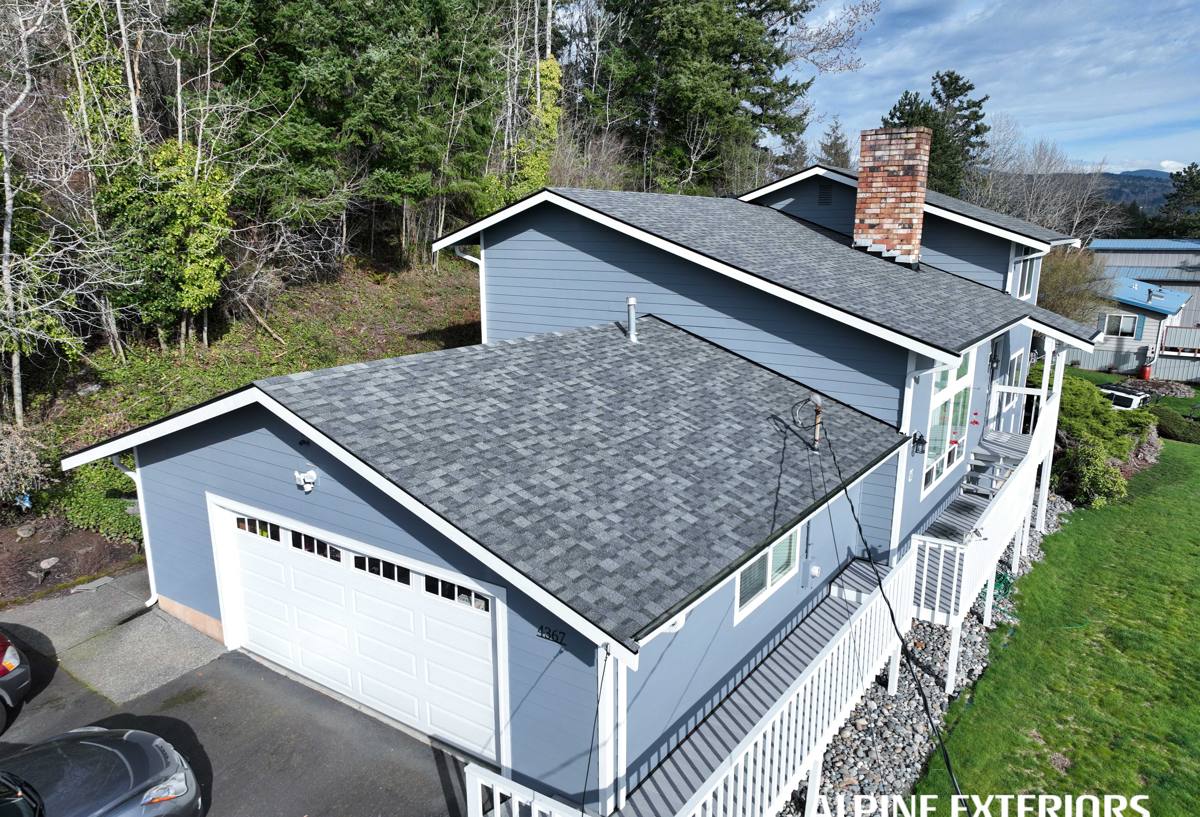
Is Metal Roofing the Right Call for Your Home?
When Metal Roofing Makes the Most Sense
Metal tends to be the strongest fit for homes with steep or moderately steep rooflines, homes with significant shade or tree cover where moss has been a recurring problem, homes near enough to the water that salt exposure has visibly corroded fasteners or flashing on the current roof, and homeowners planning to stay in the home long enough for the longer service life to pay off against the higher upfront cost. It also suits homeowners who want to stop dealing with moss treatments and gutter granule buildup as a recurring maintenance chore.
Signs Your Current Roof Is Working Against You
These are the signals we see most often on Bellingham homes before a homeowner starts asking about metal roofing:
- Moss returning within a season of cleaning, especially on shaded or north-facing slopes
- Rust staining below nail heads, flashing, or vent stacks
- Shingle granules collecting heavily in gutters and downspouts
- Curling, cupping, or cracked shingles across large sections of the roof
- Recurring leaks at valleys, chimney flashing, or roof-to-wall transitions during wind-driven rain
- A roof at or past its material's expected service life for this exposure
Any one of these can sometimes be addressed with a repair. Several together, especially on a roof already near the end of its expected life, usually points toward a full replacement conversation rather than another patch.
Metal Roofing Systems: What's Actually Out There
"Metal roofing" covers a few genuinely different systems, and the differences matter more than the marketing usually lets on. We'll walk through which fits a given roof during the estimate, but here's the honest breakdown.
Standing Seam
Standing seam panels run in continuous vertical lengths with raised, interlocking seams and concealed fasteners. Because the fasteners aren't exposed to weather and the seams are mechanically locked rather than just overlapped, this is the system that best resists wind-driven rain and holds up longest against a marine environment. It costs more upfront than the alternatives below, largely due to material and installation labor.
Exposed-Fastener Panel
These panels are also continuous ribbed sheets, but they're fastened directly through the panel face with gasketed screws rather than hidden clips. It's a more affordable way to get a metal roof, and it performs well on many roofs — but the exposed fasteners are the first thing to show wear in a salt-air climate, and gaskets on exposed screws eventually need attention as they age. It's a reasonable option on the right roof, with the trade-off understood upfront rather than discovered later.
Stone-Coated Steel
This is steel roofing manufactured to mimic the profile of shingles, shakes, or tile, with a stone-chip coating bonded to the surface. It gives a more traditional roofline appearance while keeping most of metal's durability advantages. It sits in the middle of the cost range and is a good fit for homeowners who want metal's performance without a standing-seam look.
| System | How It Handles Salt Air & Wind-Driven Rain | Moss Resistance | Relative Cost |
|---|---|---|---|
| Standing seam | Excellent — concealed fasteners, mechanically locked seams | Very high; smooth, steep-shedding surface | Highest |
| Exposed-fastener panel | Good, but exposed fasteners and gaskets are the first wear point | High | Lowest of the three |
| Stone-coated steel | Very good; coated steel core with a textured surface | Good to high, depending on profile and pitch | Mid-range |
What a Correct Metal Roof Installation Involves
A metal roof is only as good as the assembly underneath and around it. Most of the failures we get called out to inspect trace back to shortcuts in the layers a homeowner never sees once the job is done.
Underlayment
Given how much wind-driven rain this area sees, we treat underlayment as a real second line of defense, not an afterthought. That means a high-temperature-rated synthetic or self-adhered underlayment suited to metal roofing, with full self-adhered membrane at eaves, valleys, and other vulnerable points where wind-driven rain is most likely to test the assembly.
Flashing and Penetrations
Chimneys, skylights, vent penetrations, and roof-to-wall transitions are where the majority of roof leaks actually originate, metal roof or otherwise. We use corrosion-resistant flashing appropriate for a marine environment and integrate it properly with the underlayment and panel system, rather than leaning on sealant to do the job flashing geometry should be doing.
Fastening, Layout, and Thermal Movement
Metal panels expand and contract with temperature swings more than shingles do, and a system that doesn't account for that movement will eventually work fasteners loose or oil-can under stress. Correct installation means using clips and fastener spacing designed for that movement, laying panels out to minimize unnecessary seams and cuts, and using coated, corrosion-resistant fasteners suited to salt air rather than whatever standard hardware happens to be on the truck.
Ventilation
Proper intake and exhaust ventilation keeps the roof deck drier, reduces condensation risk on the underside of metal panels, and helps the whole assembly perform the way it's designed to. This matters in any climate, but especially one where humidity stays elevated for long stretches of the year.
Our Installation Process
- On-site assessment. We inspect the existing roof, deck condition, ventilation, pitch, and any current problem areas, and take accurate measurements for the estimate.
- System selection. We go over which metal roofing system fits the home's exposure, pitch, and budget, with the real trade-offs explained rather than glossed over.
- Tear-off and deck inspection. Old roofing comes off so we can see the actual deck condition; any soft or damaged sheathing is repaired before anything new goes down.
- Underlayment and flashing installation. The moisture barrier and flashing go in first, since this layer determines whether the roof stays dry regardless of what's on top of it.
- Panel installation. Panels are laid out and fastened to manufacturer specification, accounting for thermal movement and minimizing unnecessary seams.
- Ventilation check. Intake and exhaust ventilation are confirmed to be functioning correctly before close-out.
- Final walk-through. We review the finished roof with the homeowner and go over care, warranty, and what to expect going forward.
Cost Factors for a Bellingham Metal Roof
Every roof prices out differently, and we don't quote a number without seeing the roof — pitch, access, and existing conditions can shift a bid more than most homeowners expect. These are the main variables that move the price.
| Factor | Why It Matters Here |
|---|---|
| System chosen | Standing seam costs more upfront than exposed-fastener panel or stone-coated steel, largely due to labor |
| Roof size and complexity | More valleys, dormers, and penetrations mean more flashing detail and cutting labor |
| Pitch and access | Steep or hard-to-access roofs take longer and require more safety setup |
| Deck condition | Rot or soft sheathing found during tear-off adds repair cost that isn't visible until the old roof comes off |
| Underlayment upgrade | Full self-adhered membrane coverage costs more than minimum underlayment but reduces wind-driven rain risk |
| Panel material and finish | Steel and aluminum price differently, and factory-applied coating quality affects long-term corrosion resistance |
Why Hire a Crew That Already Works Bellingham
A roofer who mainly works drier, inland jobs isn't wrong about roofing in general — they're working from a different set of defaults. Fastener specs, flashing choices, and underlayment coverage that hold up fine on a typical inland roof are often undersized for what salt air and wind-driven rain do to a roof here year after year. A crew that already works Bellingham and the surrounding Whatcom County coastline has seen which details actually fail in this exposure, not just which ones fail in a manufacturer's install guide written for average conditions.
That local experience also shows up in smaller ways that add up: knowing which slopes on a given lot tend to hold moss longest, recognizing early corrosion on existing flashing for what it is, and specifying coatings and fasteners rated for this environment as the default rather than an upsell.
Living With a Metal Roof in This Climate
A correctly installed metal roof needs less upkeep than shingles, but it isn't maintenance-free. A few habits go a long way here:
- Keep gutters clear so water isn't backing up under roof edges during heavy rain
- Rinse off debris and organic buildup periodically, especially under overhanging trees
- Have any scratched or damaged coating touched up promptly, since bare steel corrodes faster once exposed
- Trim back tree cover that keeps a section of roof shaded and slow to dry
- Schedule a periodic check of flashing points and fasteners, particularly after major windstorms
If you're weighing metal roofing against another option for your Bellingham home, or your current roof is showing its age, we're glad to take a look and talk through honest options for your specific roofline. Reach out for a free, no-pressure estimate using the form below.