 Birch Bay Exterior
 Siding Repair in Marietta: A Different Kind of Wear
The stretch of Whatcom County around Marietta and Birch Bay sits close enough to the water that homes here take a slower, steadier beating than siding just a few miles inland. Salt-laden air off the bay works into fasteners and seams. Driving rain off Puget Sound and the Strait pushes moisture sideways into joints that were never meant to hold water. And the long gray stretch from fall through spring gives moss, algae, and mildew months to establish themselves on north-facing and shaded walls. None of that shows up overnight — it shows up as a soft spot behind a downspout, a bubbled seam near a window, or a patch of siding that never quite dries out after a storm.
Siding repair done right in this area isn't about slapping a patch over a bad spot. It's about understanding why that spot failed in the first place, because if the underlying cause — bad flashing, a failed caulk joint, trapped moisture behind the cladding — isn't addressed, the same failure comes back within a season or two.
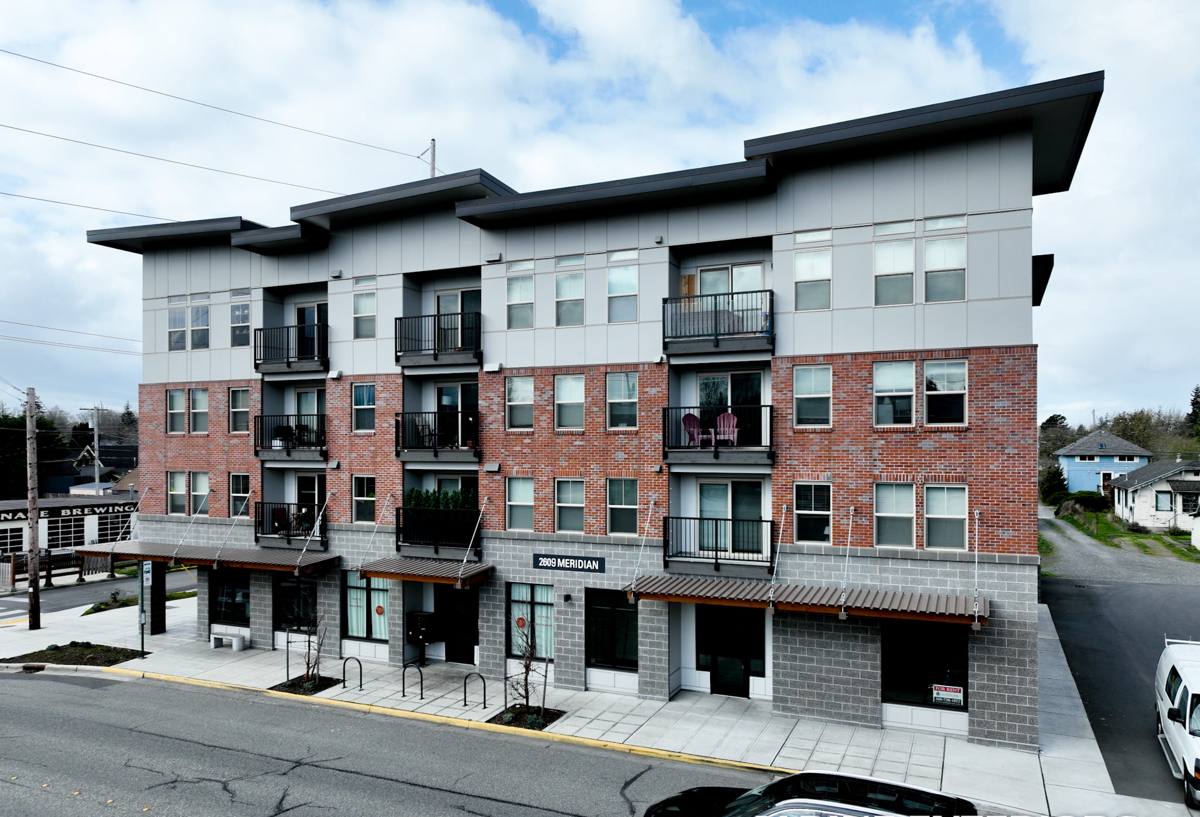
Signs Marietta Homeowners Should Watch For
Visual Cues
- Bubbling, buckling, or warping panels, especially near windows, doors, and roof lines
- Dark streaking or persistent moss/algae growth that keeps returning after cleaning
- Cracked or chipped caulk at panel joints and trim
- Nail pops or fasteners backing out of the siding face
- Soft or spongy siding when pressed near ground level or under downspouts
Less Obvious Warning Signs
Some of the most important signs aren't visible from the driveway. Musty smells near an exterior wall, peeling interior paint on that same wall, or a slight give in the sheathing when you press on it from inside an unfinished area (garage, crawlspace access) usually mean moisture has already gotten past the siding. By the time those symptoms show up, the repair often needs to include the water-resistive barrier and flashing behind the cladding, not just the visible panel.
What a Correct Siding Repair Actually Involves
A repair that's done to last starts with diagnosis, not demolition. Our process on Marietta-area homes typically includes:
1. Find the Water Path
Before removing anything, we trace how water is getting in — a failed kick-out flashing above a lower roofline, a gap at a window head, a butt joint that was never back-primed. Repairing the visible damage without fixing the entry point just buys time.
2. Open Up and Inspect
We remove enough siding to see the sheathing and water-resistive barrier underneath. If the barrier is torn, improperly lapped, or missing at a critical transition, that gets corrected as part of the repair — not left for the next contractor to find.
3. Replace Damaged Material with Matching Product
Whenever the original siding is James Hardie fiber cement, we repair with the same product line and, where possible, the same ColorPlus finish, so the patch doesn't stand out as a different texture or sheen a year later. Where a home has a different siding material, we'll talk honestly about whether a spot repair makes sense or whether that section is a candidate for a proper fiber cement replacement.
4. Rebuild the Flashing and Drainage Details
This is the step that gets skipped most often on quick patch jobs, and it's the one that actually prevents a repeat failure. Flashing at windows, doors, and roof-to-wall transitions gets rebuilt to shed water the way it was designed to, not just caulked over.
5. Reseal and Finish
Correct sealant, correct joints, correct fastener pattern. On a coastal property, we pay particular attention to fastener corrosion resistance given the salt exposure.
Repair or Replace? How We Help You Decide
Not every damaged section needs a full re-side, and not every home is a good candidate for another round of patchwork. The honest answer depends on how much of the wall is affected, what's underneath it, and how the existing material has held up.
| Factor | Leans Toward Repair | Leans Toward Replacement |
|---|---|---|
| Extent of damage | Isolated to one or two areas | Recurring failures across multiple walls |
| Sheathing condition | Dry, solid where exposed | Soft, delaminated, or water-stained |
| Siding material | Fiber cement in otherwise good shape | Original material is failing by design (see below) |
| Age of siding | Well within its expected service life | Nearing or past the age where recurring repairs cost more than replacement over time |
| Water-resistive barrier | Intact and properly lapped | Torn, missing, or improperly installed behind large sections |
We'll give you a straight answer either way. If a targeted repair genuinely solves the problem, that's what we'll recommend — a repair job doesn't need to become a sales pitch for a full re-side.
Why We Only Repair and Replace With James Hardie Fiber Cement
When a repair calls for new material — whether it's patching in a damaged section or a homeowner decides a full re-side makes more sense — we install James Hardie fiber cement exclusively. We don't install vinyl, LP SmartSide, Cemplank, Allura, or wood siding, and it's worth explaining why, especially for a climate like this one.
Vinyl siding can warp and pull away from fasteners in sustained wind, and it doesn't hold paint the way fiber cement does if a homeowner ever wants to change the color. Wood-based products, including engineered wood siding, are more sensitive to sustained moisture exposure than fiber cement — and sustained moisture is exactly what a salt-air, high-rainfall coastal climate delivers for months at a time. Fiber cement is non-combustible, holds its factory ColorPlus finish for years without repainting, and is engineered by James Hardie in climate-specific product lines (their HZ5 formulation is built for regions with this kind of moisture exposure). When we repair a Hardie section, we're patching a product that was already the right call for this environment. When we replace a failing section of a different material, we're moving the home to a product built to hold up here long-term.
That said, this page is about repair specifically — we're not going to talk a homeowner with one damaged panel into a whole-house replacement. If your existing siding is Hardie and the damage is contained, a proper repair keeps the rest of your investment intact.
Why a Crew That Already Works Marietta Matters
Siding repair is a trade where local knowledge saves homeowners money. A crew that's worked houses in and around Marietta and Birch Bay already knows which orientations take the worst weather, how far salt air travels inland on this stretch of coastline, and what moss and algae growth patterns typically mean about a wall's moisture history before we even get a ladder up. That's the difference between guessing at a repair scope over the phone and giving an accurate estimate on the first visit.
There's also a practical timing benefit. Whatcom County's wet season runs long, and a repair that gets scheduled and completed before the next heavy rain stretch is a repair that doesn't have extra weeks to let moisture spread further into the wall assembly. A crew already working the area can usually get to a repair faster than one dispatching a special trip from farther away.
After the Repair: Keeping It From Happening Again
A good repair should also come with honest maintenance guidance, since a coastal exterior needs a bit more attention than one set back from the water.
- Rinse siding periodically to clear salt residue, especially on walls facing open water or prevailing wind
- Keep gutters and downspouts clear so water isn't overflowing onto siding below
- Trim back vegetation that keeps a wall shaded and damp, which accelerates moss and algae growth
- Recaulk joints at the manufacturer's recommended interval — caulk fails well before fiber cement does
- Have flashing at windows, doors, and roof transitions checked every few years, since these are the most common points of hidden water entry
- Address any new bubbling, soft spots, or staining promptly rather than waiting for it to spread
What to Expect When You Call Us
We start with a walk-around inspection, not a sales script. If we find damage, we'll explain what caused it, what it will take to fix correctly, and give you a clear scope before any work starts. If the damage is more extensive than expected once we open up a section, we'll show you what we found and talk through the options — we don't expand a job without explaining why.
If you're seeing early signs of trouble on a Marietta-area home — a stained corner, a soft spot, siding that never quite dries after a storm — it's worth having it looked at before the next wet season gets further into it. We're happy to come take a look and give you a straightforward, no-pressure estimate using the form below.