 Birch Bay Exterior
 Why Marietta Roofs Wear Differently Than Roofs Inland
Marietta sits close enough to the water that the air itself becomes part of your roof's maintenance problem. Homes here don't fail the same way roofs do twenty miles inland in Whatcom County. The combination of salt-laden air, wind-driven rain off the bay, and a moss season that can run eight or nine months out of the year means roofing materials, fasteners, and flashing details all get tested harder and faster than a spec sheet assumes.
Salt Air and Metal Fasteners
Salt air accelerates corrosion on anything metal — nail heads, flashing, vent boots with metal collars, and gutter hangers all take the hit first. On a lot of roofs we inspect in this area, the shingles themselves still have years left, but the exposed metal has already started to rust, stain, or lose its seal. That's a repair issue long before it's a full-roof issue, and it's one of the most common reasons a roof starts leaking even though the field of the roof looks fine.
Driving Rain and Wind-Driven Water
Rain that comes in sideways off the water doesn't behave like a straight-down storm. It gets pushed up under shingle tabs, around chimney flashing, and into any gap where the underlayment or flashing wasn't lapped correctly to begin with. A roof that would stay dry in a calm downpour can still leak in a Birch Bay wind event if the repair — or original install — didn't account for horizontal water movement.
The Long Moss Season
Whatcom County's damp, mild climate keeps conditions right for moss and algae growth for most of the year. Moss doesn't just look bad — it holds moisture against the roofing material, lifts shingle edges as it grows, and works its way under tabs and around fasteners. Left alone through a few wet seasons, what starts as a cosmetic issue becomes a genuine repair need.
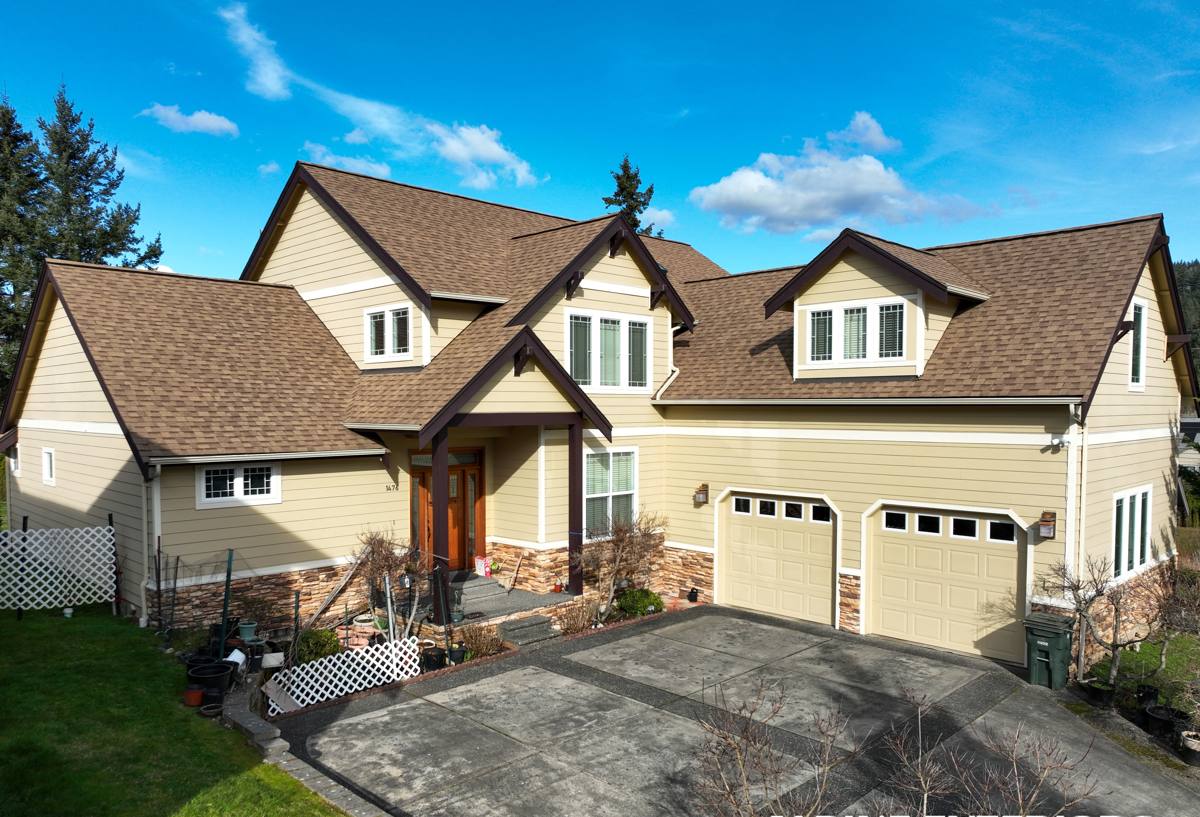
Common Roof Repair Needs We See in Marietta
Every roof and every house is different, but certain repair calls come up again and again in this neighborhood specifically because of the coastal exposure:
- Rusted or failing flashing around chimneys, skylights, and roof-to-wall transitions
- Lifted or cracked shingle tabs from wind and moss intrusion
- Corroded vent boots and pipe collars letting water track down into the attic
- Gutter and edge-metal corrosion that lets water back up under the roof edge
- Moss-related granule loss and soft spots on north-facing slopes that stay shaded and damp longer
- Nail pops and fastener failure where salt exposure has weakened the metal over time
What a Correct Repair Actually Involves
Diagnosis Before Patching
The most common mistake we see with prior repairs isn't bad workmanship — it's treating the symptom instead of the source. A stain on a ceiling doesn't always mean the leak is directly above it; water can travel along rafters or underlayment before it shows up inside. A correct repair starts with tracing the water path, checking the attic side where possible, and confirming the actual entry point before anything gets sealed or replaced. Patching over the wrong spot just delays the same leak reappearing a season later.
Matching Materials and Flashing Details
Repairs need to match the existing roofing system, not just cover a hole. That means using compatible shingle types and weights, flashing metals that won't corrode against dissimilar metals already on the roof, and fastener types rated for coastal exposure. A patch that looks fine on day one but uses the wrong metal combination or the wrong nail can start failing again within a year or two — especially with the salt air working against it continuously.
Roof Repair vs. Replacement: How We Help You Decide
Not every issue we find calls for a full roof replacement, and we won't push you toward one if a targeted repair will genuinely hold up. Here's how we generally think about it:
| Factor | Repair Usually Makes Sense | Replacement Worth Considering |
|---|---|---|
| Age of roofing material | Roof is under roughly two-thirds of its expected lifespan | Roof is near or past its expected service life |
| Extent of the problem | Isolated to flashing, a section of shingles, or one penetration | Multiple areas failing, or granule loss/soft decking spread across slopes |
| Underlying decking | Decking is solid where inspected | Decking shows rot or soft spots from long-term moisture |
| History of repairs | First or second repair on this roof | Repeated repairs to the same areas over recent years |
| Moss/algae condition | Surface growth without granule loss underneath | Growth has been present for years with visible material breakdown |
We'll always give you a straight answer based on what we actually find on your roof — not a default recommendation either way.
Signs Your Marietta Roof Needs a Repair Call
- Water stains on interior ceilings or walls, especially after wind-driven rain
- Visible rust streaks running down from flashing, vents, or gutters
- Shingle tabs that look lifted, curled, or cracked, particularly on shaded slopes
- Moss growth thick enough to see from the ground, or green streaking along shaded edges
- Granules collecting in gutters or at downspout outlets
- Daylight visible through the attic roof deck, or damp insulation below the roofline
Our Repair Process, Start to Finish
- Inspection and diagnosis. We check the roof surface, flashing points, and attic access where available to trace the actual source of the problem, not just where the damage shows.
- Honest scope and estimate. You get a clear explanation of what's failing, why, and what it will take to fix it correctly — including whether a repair is the right call or a bigger conversation is warranted.
- Correct materials for the exposure. We use flashing metals, fasteners, and shingle products suited to salt air and coastal wind, not whatever's fastest or cheapest to source.
- Proper sequencing and lapping. Flashing and underlayment get installed in the order and overlap that actually sheds wind-driven rain, not just rain falling straight down.
- Cleanup and walk-through. We clear debris, check gutters and downspouts near the repair area, and walk you through what was done and what to watch going forward.
Materials and Methods We Trust for This Climate
For flashing and exposed metal near the coast, we favor corrosion-resistant metals and fastener coatings built for prolonged salt exposure over standard galvanized options — the upfront material cost difference is small compared to redoing the same repair in a few years. For sealants, we use products rated for continued UV and moisture exposure rather than general-purpose caulks, since a coastal roof rarely gets a real dry season to fully cure lower-grade products. We also pay close attention to ventilation during any repair that opens up part of the roof system — trapped moisture in an attic is a major contributor to the rot and mold issues we see on older Whatcom County homes, and it's much easier to address while we're already up there.
Moss, Algae, and Long-Term Roof Health
Moss removal is often part of a repair visit, but it's worth understanding as ongoing maintenance rather than a one-time fix. In a climate like Birch Bay's, moss spores are always present in the air and will recolonize a roof over time regardless of the product used. What matters more is addressing the conditions that let it take hold — overhanging branches shading the roof, gutters that stay clogged and hold moisture at the edge, and any low spots where water sits after a storm instead of draining. We'll flag these during a repair visit even when they're outside the immediate scope of work, because they're usually what caused the original problem.
Why a Crew That Already Works Marietta Matters
A roofer who mainly works drier, inland parts of Whatcom County can still do competent work, but they're often solving for conditions that don't match what your roof actually faces day to day. Knowing how far wind-driven rain typically pushes water up a slope in a Birch Bay storm, which flashing metals hold up against salt air over years rather than months, and how aggressively moss grows back on a shaded north slope near the water — that comes from doing this work in this specific area repeatedly, not from a general roofing background. It affects which materials we reach for, how we detail flashing, and what we flag for you as preventive maintenance versus what actually needs fixing now.
If you're dealing with a leak, visible roof damage, or just want an honest read on a roof that's showing its age, we're glad to take a look. Estimates are free, there's no pressure, and you'll get a straight answer about what your roof actually needs — use the form below to get started.