 Birch Bay Exterior
 Why Decks Near Birch Bay Wear Out Faster Than Homeowners Expect
If you live in or around Marietta, you already know the weather here isn't gentle on outdoor structures. Whatcom County's marine climate brings a near-constant mix of moisture, salt-laden air off the Salish Sea, and long stretches of gray, wet months where wood surfaces rarely get a chance to fully dry out. That combination is hard on decks in ways that homeowners further inland simply don't deal with.
Salt air accelerates corrosion on fasteners, hardware, and any exposed metal connectors. Driving rain — especially when it comes in sideways off the water during winter storms — finds its way into every gap, seam, and end-cut on a deck, then sits there. And the region's long moss season means organic growth gets a foothold on any horizontal wood surface that stays shaded or damp for more than a few days at a stretch. Individually, each of these is manageable. Together, over years, they're what turns a solid-looking deck into one with soft boards, rusted fasteners, and a structure that's no longer trustworthy.
A deck built or repaired without this climate in mind will show problems years before it should. A deck replaced correctly — with the right materials, fastening, and drainage details — can handle decades of this weather without becoming a liability.
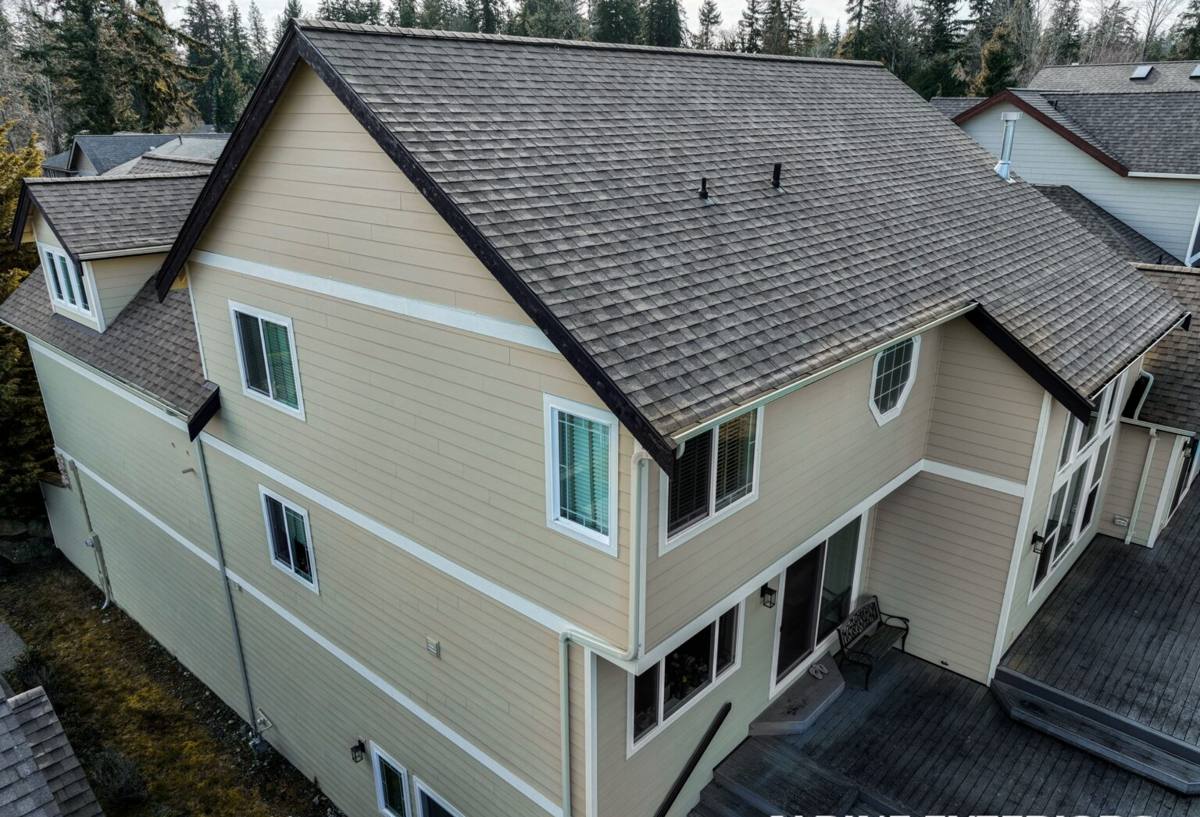
Signs Your Deck Needs Replacement, Not Just Repair
Not every deck problem calls for a full tear-off. But there's a point where patching individual boards stops making sense — either because the structure underneath is compromised, or because the cost of ongoing repairs starts to rival the cost of doing it right, once.
- Soft, spongy, or spring-loaded decking boards, especially near the house or at board ends
- Visible rot or dark staining at the ledger board where the deck attaches to the house
- Rusted, corroded, or failing joist hangers and fasteners
- Persistent moss or algae growth that returns within weeks of cleaning
- Wobble or movement in the railing posts or overall structure
- Gaps that have widened significantly between boards, or boards that have cupped or crowned
- A deck more than 20-25 years old built with older lumber grades and fastening standards
If you're seeing two or more of these, especially anything involving the ledger board or the structural framing, it's worth having it evaluated before deciding between repair and replacement.
What a Correct Deck Replacement Actually Involves
A deck replacement isn't just swapping old boards for new ones. Done right, it's a structural project, and the parts you don't see are what determine whether the deck lasts 10 years or 30.
Ledger Board and Structural Connections
The ledger board — where the deck attaches to the house — is the single most common failure point on decks in wet marine climates. If it's not properly flashed to shed water away from the house framing, moisture gets trapped between the ledger and the siding and rots both from the inside out, often long before it's visible from outside. A correct replacement means proper flashing, correct lag bolt or through-bolt spacing (not just deck screws), and confirming the connection meets current structural standards rather than just replicating whatever was there before.
Footings and Framing
Footings need to be sized and set to local frost depth and soil-bearing requirements, not guessed at. Joists, beams, and posts should be sized for the actual span and load, and all structural hardware — hangers, post bases, hurricane ties — should be corrosion-resistant hardware rated for exterior and ground-contact use, which matters more here than in a drier inland climate.
Fasteners and Hardware
Standard fasteners corrode faster in salt-influenced air. Stainless steel or high-grade coated fasteners cost more up front but avoid the rust streaking and premature hardware failure that plagues decks built with basic galvanized screws in this kind of environment.
Choosing the Right Decking Material for a Marine Climate
There's no single "best" decking material — there's a best material for your budget, your maintenance appetite, and how much moss and moisture exposure your specific site gets. Here's how the common options actually compare for a property near Birch Bay.
| Material | Typical Lifespan | Moisture & Moss Behavior | Maintenance |
|---|---|---|---|
| Pressure-treated wood | 10-15 years | Absorbs moisture; prone to moss/algae if not cleaned and sealed regularly | Annual cleaning and re-sealing recommended |
| Cedar | 15-20 years | Naturally rot-resistant but still needs sealing; can gray and hold moisture if neglected | Periodic sealing/staining to maintain resistance |
| Composite (standard) | 20-25+ years | Won't rot, but uncapped composite can absorb surface moisture and stain or grow moss if boards stay shaded | Occasional washing; no sealing/staining |
| Capped composite / PVC | 25-30+ years | Fully sealed outer layer sheds water and resists moss and staining best of the group | Low — occasional rinsing |
In our experience, homes with shaded, north-facing, or tree-covered decks near Birch Bay tend to fight moss no matter what material is used — but capped composite and PVC decking make that fight far easier because moss and algae have nothing porous to grip onto. Wood decking can absolutely still be the right call for homeowners who want a natural look and are willing to keep up with sealing, but it's a genuine maintenance commitment in this climate, not a one-and-done finish.
Our Deck Replacement Process
- On-site assessment — we evaluate the existing structure, ledger connection, footings, and framing to determine what's salvageable and what isn't.
- Material and layout consultation — we walk through decking, railing, and hardware options based on your budget, sun/shade exposure, and how much maintenance you actually want to do.
- Permitting — where required, we handle the permit process with Whatcom County so the structure is inspected and code-compliant, not just built to look right.
- Demolition and disposal — full removal of the old deck, including hauling away old lumber and hardware.
- Structural rebuild — footings, framing, ledger flashing, and structural connections built or upgraded to current standards.
- Decking, railing, and finish work — installation of your chosen decking and railing system, with attention to fastener spacing and drainage gaps between boards.
- Final walkthrough — we go over the finished deck with you, including any maintenance recommendations specific to the material you chose.
Permits and Code Considerations in Whatcom County
Deck replacements that involve structural changes — new footings, a larger footprint, or a deck more than a modest height above grade — typically require a permit and inspection. Guardrail height, baluster spacing, and stair requirements are all governed by code, and these details get checked closely because they're safety-related, not cosmetic. Building on an existing footprint with like-for-like framing sometimes qualifies for a simpler process, but that's determined case by case, not assumed. We handle this step as part of the job rather than leaving it for the homeowner to sort out.
Keeping a New Deck Performing Long-Term
Even the best-built deck benefits from a little seasonal attention, especially given how much moisture and moss pressure this area sees for months at a time.
- Sweep debris and standing leaves off the deck surface regularly, especially in fall
- Rinse or lightly wash the deck a few times a year to keep moss and algae from establishing
- Check and clear drainage gaps between boards so water isn't pooling
- Inspect railing posts and stairs annually for movement or loosening
- For wood decking, reapply sealant or stain on the manufacturer's recommended schedule, not just when it looks worn
- Trim back overhanging branches or vegetation that keeps sections of the deck shaded and damp
- Watch the area where the deck meets the house — that ledger connection is worth a visual check each year
Why a Crew That Already Works in Marietta and Birch Bay Matters
Deck-building fundamentals don't change from town to town, but the details that determine whether a deck holds up do. Knowing how much salt exposure a site gets, how long moss stays established on shaded decking in this specific climate, and which fastener and flashing choices actually hold up here versus in a drier region — that's the kind of knowledge that comes from working on decks in this exact area, not from a general contracting playbook. A crew that regularly works Marietta and the greater Birch Bay area has already seen which details matter most for the weather this stretch of Whatcom County gets, and builds accordingly from the start rather than learning it the hard way on your project.
If your deck is showing its age or you're planning a replacement and want it done right the first time, we're happy to take a look and give you a straightforward assessment. Reach out for a free, no-pressure estimate using the form below.