 Birch Bay Exterior
 Building Decks for Marietta's Coastal Conditions
Marietta sits close enough to the water that its weather behaves differently than towns even a few miles inland. Homes here deal with salt-laden air rolling off the Salish Sea, long stretches of driving rain through the fall and winter, and a moss and algae season that can run eight months or longer in shaded yards. A deck built without those conditions in mind will show problems early — soft spots at the ledger board, green film on the walking surface, corroding hardware, and fasteners that back out or stain the wood around them. We build and repair decks throughout the Birch Bay area, including Marietta, and the approach we use here is different from what we'd spec for a dry inland lot.
This page covers what a deck in Marietta actually needs to hold up, how we build to meet that, and what to expect if you're planning a new deck or replacing one that's showing its age.
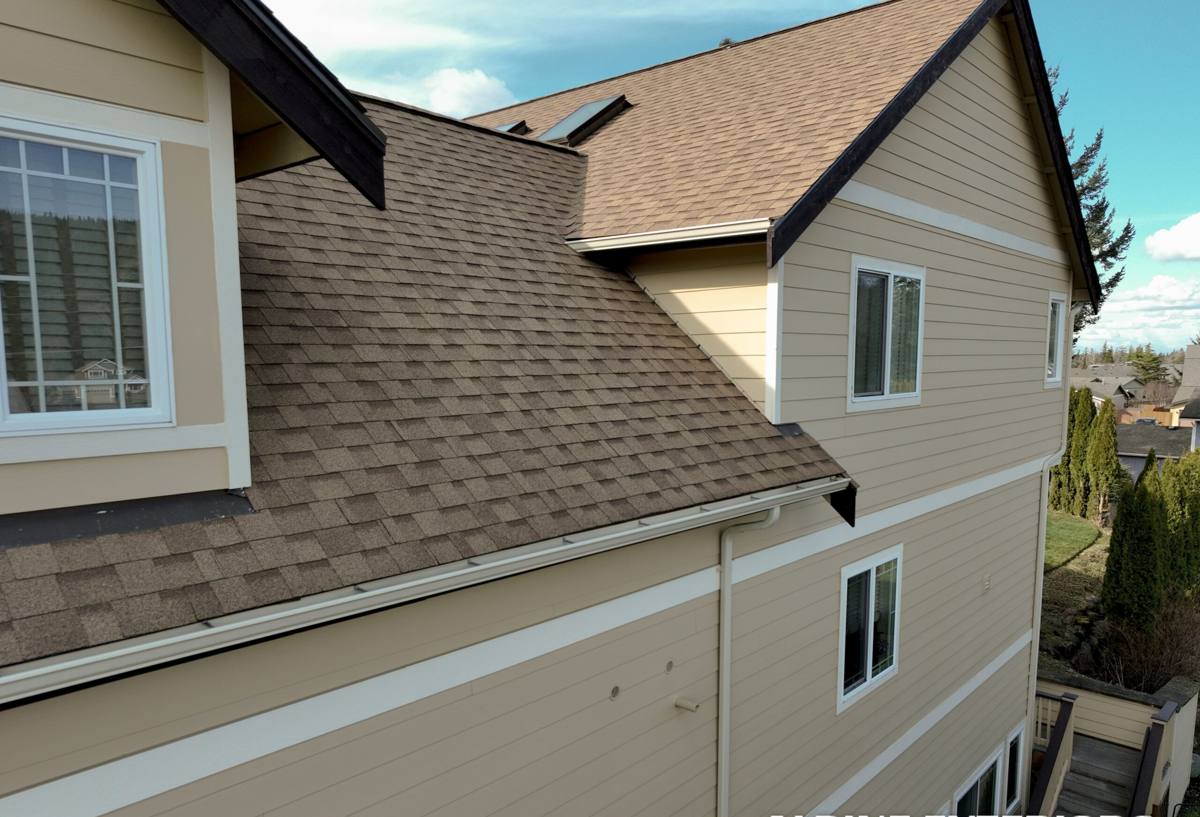
What Salt Air, Rain, and Moss Actually Do to a Deck
None of these three factors work alone — they compound each other, which is why decks near the water tend to age faster than the same structure would a few miles east.
Salt Air
Airborne salt accelerates corrosion on anything metal: nails, screws, joist hangers, post bases, and railing hardware. Once a fastener starts to rust, it weakens, stains the surrounding wood or composite, and can eventually fail structurally. Standard interior-rated hardware has no business on a coastal deck.
Driving Rain
Whatcom County's wind-driven rain doesn't just fall straight down — it gets pushed sideways into ledger connections, under railing posts, and into any gap where flashing was skipped or done wrong. Water that gets behind or under decking and can't drain or dry out is what causes rot, not rain itself.
Moss and Algae
Shaded, damp decking grows moss and algae readily, especially on north-facing decks or ones tucked under trees. Beyond looking bad, a mossy deck surface is genuinely slick and dangerous underfoot, and moss holds moisture against the decking material far longer than an open, sun-exposed surface would.
What a Correctly Built Deck Needs Here
- Stainless steel or heavy hot-dip-galvanized fasteners and connectors — not standard coated exterior screws, which corrode faster near salt air
- Proper ledger flashing where the deck attaches to the house, so water is directed out and away rather than trapped against the rim joist
- Gapped decking installation that allows airflow and drainage between boards
- A structural frame with enough slope and clearance to let the area under the deck dry out between rain events
- Post bases that keep wood posts off the ground and out of standing water
- A decking surface choice that matches how much sun, shade, and foot traffic the space actually gets
Choosing a Decking Material That Fits This Climate
There's no single "best" decking material — the right choice depends on your budget, how much upkeep you want to do, and how shaded the deck is. Here's how the common options actually perform in Marietta's conditions.
| Material | Moisture & Moss Behavior | Maintenance | Typical Lifespan |
|---|---|---|---|
| Pressure-treated wood | Absorbs moisture, prone to moss in shade unless cleaned regularly | Annual cleaning, periodic staining/sealing | 15-20 years with upkeep |
| Cedar | Naturally rot-resistant, still needs sealing to resist moisture and moss | Sealing every 1-2 years | 15-25 years with upkeep |
| Composite decking | Doesn't absorb water like wood, but moss and algae can still grow on the surface film in shaded spots | Periodic washing, no staining or sealing | 25-30+ years |
| PVC decking | Fully moisture-resistant core, least susceptible to rot; surface still benefits from occasional cleaning | Lowest — occasional washing | 25-30+ years |
Composite and PVC cost more upfront but remove the wood-rot risk entirely, which matters more here than it does in a drier climate. For a shaded, north-facing deck, we're honest with clients that any material will need periodic cleaning — no decking is maintenance-free when it's under trees and damp air for most of the year.
Framing and Substructure: The Part You Don't See
Most deck failures we get called out to fix aren't a decking problem — they're a framing problem that only shows up years later. The structure underneath does the real work of holding up against weather:
Footings and Posts
Footings need to sit below frost depth and be sized for the soil conditions on the lot, which can vary block to block in this area. Posts should be set on bases that keep the wood end grain from sitting in water.
Ledger Attachment
Where the deck ties into the house is the single most common failure point on any deck, coastal or not. It needs proper flashing, correct fastener spacing, and a clear path for water to shed away from the house — not toward it.
Joist Protection
Joist tape or an equivalent moisture barrier on top of the joists keeps standing water from sitting directly on cut lumber, which is where rot typically starts even under composite decking.
Our Deck Building Process
- On-site assessment — we look at sun exposure, drainage, existing structure (if replacing a deck), and how the space will actually be used
- Design and material selection — sizing, layout, railing style, and decking material based on your budget and how much upkeep you want to take on
- Permitting — we handle the permit application and inspection scheduling with the county or local jurisdiction as required
- Demolition (if replacing an existing deck) — including checking the ledger and framing behind it for hidden rot before we rebuild
- Framing and flashing — footings, posts, beams, joists, and ledger flashing built to hold up to coastal exposure
- Decking, railing, and finish work — installed with proper gapping, fastening, and hardware for this climate
- Final walkthrough — we go over care and maintenance specific to the material you chose
Maintenance: What Ownership Looks Like After We Leave
A well-built deck still needs some seasonal attention in this climate, and we'd rather set that expectation up front than have it be a surprise.
- Sweep debris off the deck regularly, especially in fall — trapped leaves hold moisture and feed moss growth
- Rinse or lightly scrub the surface once or twice a year to knock back algae and moss before it takes hold
- Check railing posts and stair connections annually for any looseness
- For wood decks, re-seal or re-stain on the schedule appropriate to the product — skipping this is the number one cause of early wood deck failure
- Keep gutters and downspouts near the deck clear so runoff isn't dumping extra water onto or under the structure
Permits and Local Considerations
Most new decks and many deck replacements in Whatcom County require a building permit, particularly once the deck is a certain height off grade or attached to the house. Requirements can vary depending on whether a property falls under county jurisdiction or a local municipality, and shoreline proximity can bring additional review in some cases. We handle the permit process as part of the job so you're not stuck figuring out which office to call.
Why Hire a Crew That Already Works in Marietta
A deck builder who mostly works inland can still build a technically sound deck, but they're less likely to default to coastal-grade hardware, flashing details, and material choices unless you specifically ask for them. Working regularly in Birch Bay and surrounding communities like Marietta means we spec for salt air and driving rain as a baseline, not an upgrade — and we've seen firsthand which shortcuts show up as problems three or four winters later. That local pattern recognition is worth more than it sounds like on paper.
Signs Your Current Deck Needs Attention
- Soft or spongy spots anywhere in the decking, especially near the house
- Rust streaks running down from screws, nails, or metal connectors
- Persistent moss or green film that comes back quickly after cleaning
- Any wobble in railing posts or stair stringers
- Gaps or separation where the deck meets the house siding or ledger
- Wood that's gone gray and dry-feeling with visible cracking (checking)
If you're seeing any of these, it's worth having someone look at the framing before it becomes a safety issue rather than just a cosmetic one.
If you're planning a new deck or dealing with one that's showing its age, we're happy to come take a look and give you a straightforward, no-pressure estimate — just fill out the form below.