 Birch Bay Exterior
 Storm Damage Roof Repair in Lynden: A Roof Already Working Hard, Hit Harder
Lynden sits inland in the Nooksack River valley in northern Whatcom County, and while it doesn't take a direct coastal beating the way our waterfront service areas do, it still sits inside the same marine-influenced storm systems that move through this part of Washington all fall and winter. When one of those systems comes through, the valley's terrain can actually funnel and accelerate wind gusts rather than diffuse them, and a lot of Lynden properties sit near mature trees, windbreaks, or farm-edge tree lines that shed limbs and debris under that kind of load. Add in a roof that's already been softened by a long moss season and steady wind-driven rain, and storm damage here often lands on material that was already partway toward needing attention.
Birch Bay Exterior Co handles storm damage roof repair as its own category of work, separate from a routine repair or maintenance call. The urgency is different, the assessment has to be more thorough, and there's often an insurance claim involved that needs clear documentation. This page covers what that actually involves for a Lynden home specifically, and what a correct job looks like from the first call to the final walkthrough.
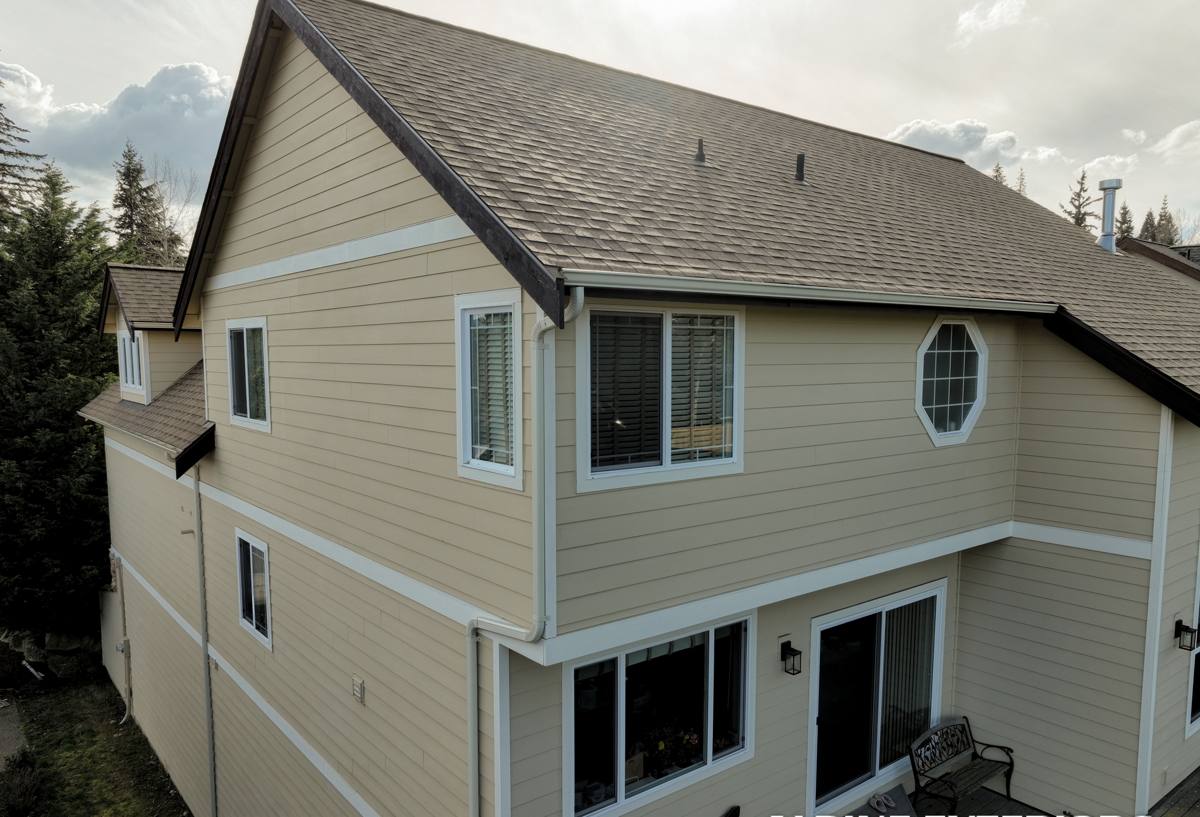
What Actually Causes Storm Damage to a Lynden Roof
Wind Gusts Funneling Through the Valley
Windstorms moving through Whatcom County don't hit every property the same way. Open farmland and the shape of the Nooksack valley can accelerate gusts across exposed roof planes, and older or improperly nailed shingles can lift, crease, or tear loose under that kind of sustained pressure even when nothing else on the property shows obvious damage.
Falling Limbs and Debris from Trees and Windbreaks
A lot of Lynden lots border mature trees, windbreak rows, or wooded edges, and those same trees that provide shade and privacy also drop limbs and debris during a windstorm. Impact damage ranges from a few cracked or punctured shingles to a full puncture through the roof deck, and the visible damage on the surface doesn't always match what's happened underneath.
Wind-Driven Rain Intrusion
Storm-force wind pushes rain sideways into places it never reaches on a normal rainy day — up under lifted shingle edges, around loosened flashing, and into gaps that a calmer storm would never find. That means a roof can take on water damage during a single storm event without losing a single shingle, which is part of why a proper post-storm inspection covers more than a visual check of the roof surface.
Hail
Damaging hail is uncommon in this part of Western Washington compared to other regions of the country, and we don't want to overstate that risk here. When it does occur, it tends to be small and localized, but it can still bruise or crack asphalt shingles in ways that aren't obvious from the ground, so it's worth a look after any storm that included hail, however brief.
What a Correct Storm Damage Repair Actually Involves
A storm damage repair that only addresses what's visible from the ground or the driveway is incomplete. The parts of the roof system that actually determine whether a repair holds are usually the ones you can't see without getting on the roof and, when warranted, into the attic.
- Emergency mitigation first if the roof is actively leaking or open to the weather — tarping or temporary covering to stop further water intrusion
- A full assessment of the roof deck, not just the shingles, since impact and wind damage can crack or compromise decking without an obvious surface sign
- Inspection of underlayment condition in the affected area, since a torn or saturated underlayment layer defeats the point of replacing shingles over it
- Flashing check at every valley, vent, and roof-to-wall transition near the damaged section, since storm wind is exactly what loosens flashing that was already marginal
- An attic-side look for water staining or active moisture, which often tells us more about the real extent of damage than the roof surface does
- Matching materials as closely as realistically possible when patching into an existing roof, and an honest conversation when an exact match isn't available
- Photo documentation of every stage, both for our own record and for your insurance claim
Skipping any of these to get a faster, cheaper patch is exactly how a storm repair turns into a repeat call after the next windstorm.
Our Storm Damage Repair Process
- You call, and we prioritize it. Storm damage jobs get scheduled ahead of routine work, especially if the roof is actively leaking.
- Temporary protection first. If the roof is open to the weather, we get it tarped or covered before anything else, so the damage doesn't get worse while a full repair is scheduled.
- Full roof and attic assessment. We look beyond the obviously damaged area, since storm damage often extends past what's visible from the ground.
- Written scope and documentation. You get a clear description of what's damaged, what needs to happen, and photo documentation you can hand directly to your insurance company.
- Repair or replacement recommendation. We tell you honestly whether the damage warrants a targeted repair or whether it's extensive enough that replacement is the more sound long-term option.
- Scheduling and materials. We source matching materials where possible and schedule the repair, with timeline expectations set up front.
- The repair itself. Deck, underlayment, flashing, and shingle work completed to the same standard we'd use on any roof, not a rushed patch.
- Final walkthrough. We show you what was done and confirm the affected area is fully sealed and weathertight before we consider the job finished.
Repair or Replace After Storm Damage?
Storm damage doesn't automatically mean a new roof, and it doesn't automatically mean a small patch either. The right call depends on the roof's age and condition going into the storm, how much of the surface is affected, and whether the deck underneath has taken on moisture damage.
| Situation | Typical Recommendation | Why |
|---|---|---|
| Isolated wind or limb damage on a roof under 10-15 years old in otherwise good condition | Targeted repair | Surrounding roofing is sound and materials are likely still available to match |
| Storm damage on a roof already showing moss buildup, granule loss, or prior repairs | Repair now, plan for replacement soon | The storm exposed a roof that was already near the end of its service life |
| Multiple damaged areas across several roof planes, or deck damage found during inspection | Full or partial replacement | Patchwork repairs across a compromised roof rarely hold as well as addressing it as a whole |
| Single-shingle or minor cosmetic damage with no underlayment or deck involvement | Simple repair | No structural or moisture concern beyond the surface material |
We'll walk the roof, explain what we find, and give you the honest version rather than the version that's easiest to sell.
Working With Your Insurance Company
Most storm damage claims come down to clear documentation and a straightforward description of what happened. Wind and falling debris are typically covered perils; gradual wear from moss, age, or deferred maintenance generally isn't, and adjusters are usually able to tell the difference on inspection. Our documentation is built to support your claim rather than to argue with it — clear photos, a plain description of the damage and its likely cause, and a scope of work that matches what the adjuster sees on site. We're glad to walk the roof with your adjuster if that's useful, but we don't handle the claim itself or make coverage promises — that's between you and your insurer.
Signs a Lynden Roof Has Storm Damage
- Shingles that are missing, torn, lifted at the edge, or creased from wind pressure
- Fresh granule buildup in gutters or downspouts after a storm, beyond normal aging
- Visible impact marks, punctures, or soft spots where a limb or debris made contact
- Dented or bent flashing, vent caps, or other roof metal
- New water staining on interior ceilings or walls following a storm
- Daylight visible through the roof deck from inside the attic
- A chimney cap, ridge cap, or vent that looks shifted, cracked, or loose
Any of these is worth a call. Storm damage that isn't addressed tends to get worse with the next system that rolls through, not better.
Why a Crew That Already Works Lynden Matters After a Storm
When a windstorm moves through Whatcom County, it usually doesn't hit one house — it hits a whole neighborhood or a whole stretch of the valley at once, which means a lot of homeowners are calling roofers in the same week. A crew that already works this area regularly has a better sense of which properties and roof orientations tend to take the worst of a given storm track, can prioritize genuinely urgent leaks over cosmetic damage, and generally has a faster real response time than a company driving in from outside the area for the first time. It also means someone who already understands the difference between storm damage layered on top of a roof already worn by moss and moisture, versus damage to a roof that was otherwise in solid shape — which matters directly to the repair-or-replace decision above.
Get a Free, No-Pressure Estimate
If a recent storm left your Lynden roof with visible damage, a leak, or you're just not sure whether what you're seeing needs attention, we're glad to come take a look. If the roof is actively open to the weather, tell us that when you reach out so we can prioritize temporary protection. Use the form below to schedule a free estimate — no pressure, no upsell script.