 Birch Bay Exterior
 Deck Replacement Built for Lynden's Weather, Not Just Any Backyard
A deck in Lynden works harder than it looks. Whatcom County sees a long wet season, heavy morning dew even in the drier months, and a marine air pattern that carries moisture and salt influence well inland from the coast. Add a shaded yard or a north-facing exterior and you get months of moss growth on top of everything else. None of that is unusual for this part of Washington, but it does mean a deck built or maintained the way it might be in a drier climate will fail faster here than the homeowner expects.
When we talk about deck replacement in Lynden, we're not just swapping old boards for new ones. We're talking about a structure that has to shed water fast, resist the freeze-thaw cycles that show up most winters, and stand up to moss and algae without turning into a slip hazard by February. Getting that right starts underneath the deck, not on top of it.
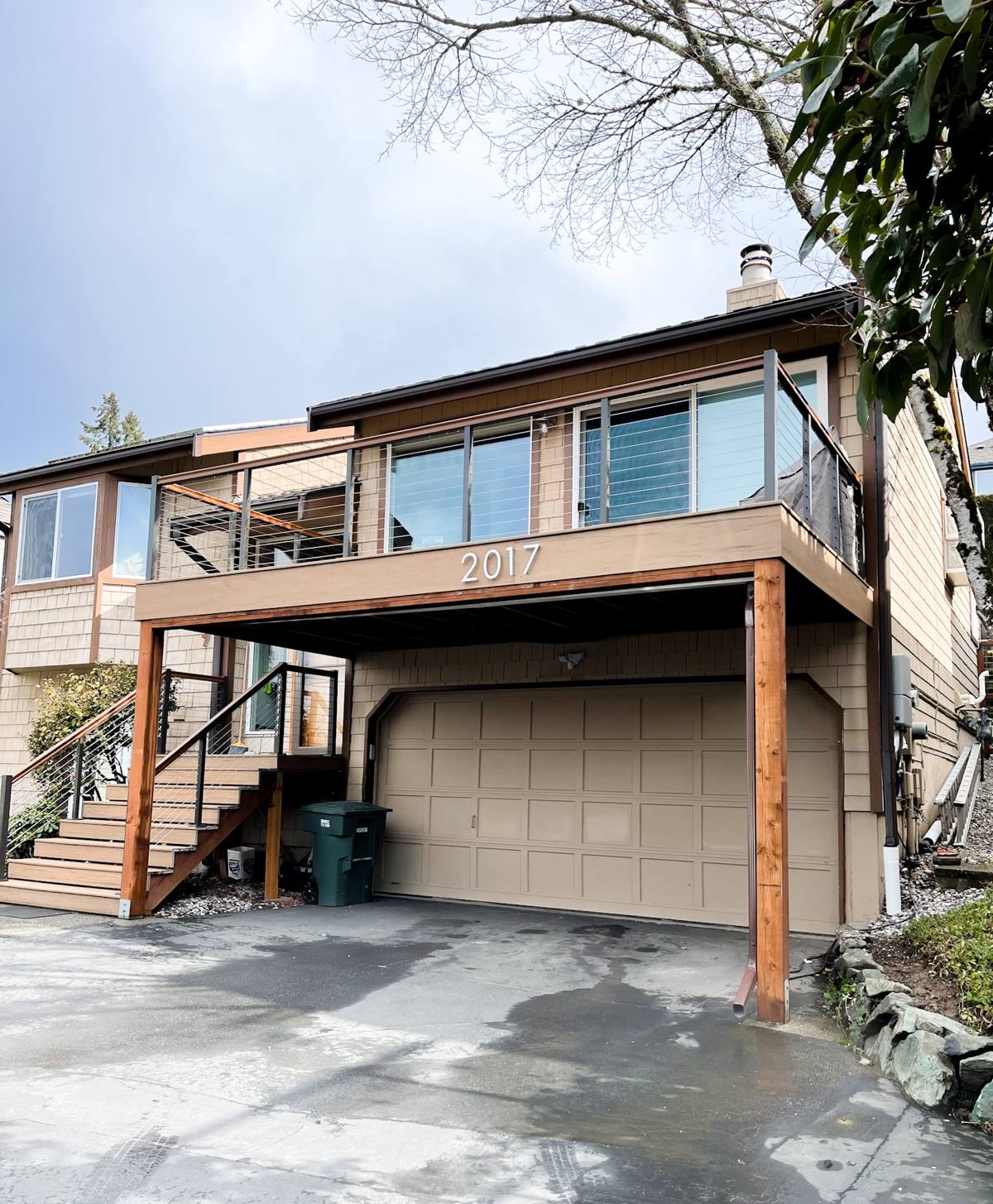
Signs a Deck Needs Replacing, Not Just Repairing
Not every tired-looking deck needs a full teardown. But there are signs that point to replacement rather than patching, and catching them early saves money and prevents a deck failure that could hurt someone.
Structural warning signs
- Soft, spongy, or springy decking when you walk across it
- Visible rot or dark staining at the ledger board where the deck meets the house
- Posts or footings that have shifted, settled, or show cracking at the base
- Railings that wobble or flex under normal pressure
- Persistent moss or black staining that returns within weeks of cleaning
- Fasteners that are rusted, popped, or corroded through
If a deck is showing two or more of these signs, patching individual boards usually just delays a bigger problem. The framing and ledger connection are what actually keep a deck safe, and those are the parts homeowners can't easily inspect themselves.
Age as a factor
Most pressure-treated wood decks built without proper flashing or drainage detailing start showing real structural fatigue somewhere in the fifteen-to-twenty-five-year range in a climate like ours. Decks that were under-maintained, sit in heavy shade, or were built before improved ledger flashing became standard practice tend to fail sooner.
What a Correct Deck Replacement Actually Involves
A deck replacement done right is mostly invisible once it's finished. The visible decking is the smallest part of the job in terms of what keeps the structure safe and dry over time.
Ledger and house connection
This is the single most important detail on any attached deck in a wet climate. The ledger board bolts to the house framing and has to be flashed so that water is directed out and away from the house sheathing, not trapped behind the board. A poorly flashed ledger is the most common cause of hidden rot damage we find when we tear out an old deck.
Footings and framing
Footings need to be sized and set to local frost depth and soil conditions, and framing lumber needs to be rated for ground contact where it's close to grade. We also space joists and use hardware connectors sized for the actual loads the deck will see, not just what the old deck happened to have.
Drainage and airflow underneath
Decks that trap moisture underneath — low clearance, no airflow, grading that pools water toward the posts — are the ones that develop rot and moss the fastest. Part of a correct replacement is fixing that drainage path, not just rebuilding on top of the same conditions that killed the last deck.
Decking surface and fasteners
Whatever surface material is chosen, it needs to be installed with the right gapping for expansion and drainage, and with fasteners rated for exterior and, where relevant, coastal-influenced exposure. Hidden fastener systems look cleaner but need to be installed to the manufacturer's spec or they loosen over time.
Choosing a Decking Material for a Wet, Mossy Climate
There's no single "best" decking material — there's a best fit for the home, the budget, and how much maintenance the homeowner actually wants to do. Here's how the common options compare for a Lynden-area yard.
| Material | Moss & moisture behavior | Maintenance | Typical cost position |
|---|---|---|---|
| Pressure-treated wood | Absorbs moisture; needs sealing to resist moss and staining | Annual cleaning and periodic re-sealing | Lowest upfront cost |
| Cedar | Naturally moisture-resistant but still needs sealing in shaded, damp spots | Regular cleaning and refinishing to hold color and resist moss | Mid-range |
| Composite decking | Doesn't rot, but can still grow surface moss/algae if not cleaned | Periodic washing; no sealing or staining required | Higher upfront, lower long-term labor |
| PVC/capped composite | Fully moisture-resistant surface, most resistant to staining | Occasional washing | Highest upfront cost |
We don't push one material on every homeowner. A cedar deck with an honest maintenance routine can look great for decades. A composite deck makes more sense for homeowners who want to spend their weekends doing something other than sealing wood every other year. What matters most is matching the material to how the yard actually drains and how much shade the deck sits in, because that's what determines how fast moss becomes a problem either way.
How We Handle a Deck Replacement, Start to Finish
1. On-site evaluation
We look at the ledger connection, the framing, the footings, and the grading underneath the existing deck before we quote anything. This tells us whether we're dealing with a straightforward rebuild or a site with drainage issues that need to be addressed first.
2. Design and material selection
We walk through decking, railing, and fastener options with the homeowner, including the honest trade-offs on maintenance and cost, before anything is ordered.
3. Permitting
Deck replacements in Whatcom County typically require a building permit, especially for attached decks or any structure over a certain height. We handle that process so the homeowner isn't stuck navigating it alone.
4. Removal and structural rebuild
Old decking, railing, and any compromised framing come out. We inspect what's underneath as we go — this is often where we find ledger rot or footing issues that weren't visible from above.
5. Build and inspection
Framing, flashing, decking, and railing go in to code, followed by any required inspection sign-off before we call the job complete.
Moss, Rain, and Salt Air: What Ongoing Maintenance Should Look Like
A new deck still needs a maintenance rhythm suited to this climate. The long wet season and moss pressure common across Whatcom County mean a deck left completely alone will show algae and moss buildup faster than the same deck in a drier region. A yearly cleaning — sooner in heavily shaded yards — keeps surfaces from getting slick and keeps organic growth from holding moisture against the decking material. For wood decks, that cleaning schedule should line up with re-sealing before the wet season sets in. For composite and PVC decking, it's mostly about keeping debris and moss from building up in the grooves between boards, where moisture likes to sit.
What to Ask Before Hiring a Deck Contractor
Deck failures are rarely about the decking boards — they're about what's underneath, done wrong. Before hiring anyone for a deck replacement, it's worth asking:
- Will you pull a permit, and is that included in the quote?
- How is the ledger board going to be flashed against the house?
- What size and spacing are you using for footings and joists?
- What hardware and fastener grade are you using, and is it rated for our climate?
- How will the deck be graded and vented underneath to avoid trapped moisture?
- Will there be a final inspection, and who schedules it?
A contractor who can answer these clearly, without hesitation, is one who builds decks with the local climate in mind rather than a generic template.
Why Local Experience in Lynden and Whatcom County Matters
Building codes, frost depth requirements, and permitting processes vary by jurisdiction, and a crew that already works in Whatcom County isn't guessing at those details on your job. Just as important, a local crew has already seen how decks in this area actually age — where moss takes hold first, which ledger details fail under years of driving rain, and which materials hold up versus which ones look good on day one and struggle by year five. That's the kind of judgment that only comes from doing this work repeatedly in this specific climate, not from a general how-to guide.
If your deck is showing its age or you're planning a replacement before it becomes a safety issue, we're happy to take a look and put together a free, no-pressure estimate. Fill out the form below and we'll get in touch to schedule a time that works for you.