 Birch Bay Exterior
 Windows Built for a Salt Air Island Climate
Lummi Island sits out in the salt water of Whatcom County, and that changes what a window has to survive compared to a house a few miles inland. Salt-laden air corrodes unprotected metal hardware, weakens weak seals faster, and works its way into any gap in the frame or trim. Add in the driving rain that comes sideways off the water during winter storms, plus a long stretch of the year where shaded walls stay damp enough to grow moss and algae, and you've got a combination that finds every weak point in a window system within a few years instead of a few decades.
A window that's fine in a dry inland climate can fail early out here — swollen sashes, fogged glass from a broken seal, hardware that seizes up, or paint and finish that breaks down well before it should. Custom windows done right for Lummi Island aren't just about matching an odd-sized opening. They're about picking materials, seals, and installation details that are actually suited to a marine environment, not just a generic "coastal Washington" spec.
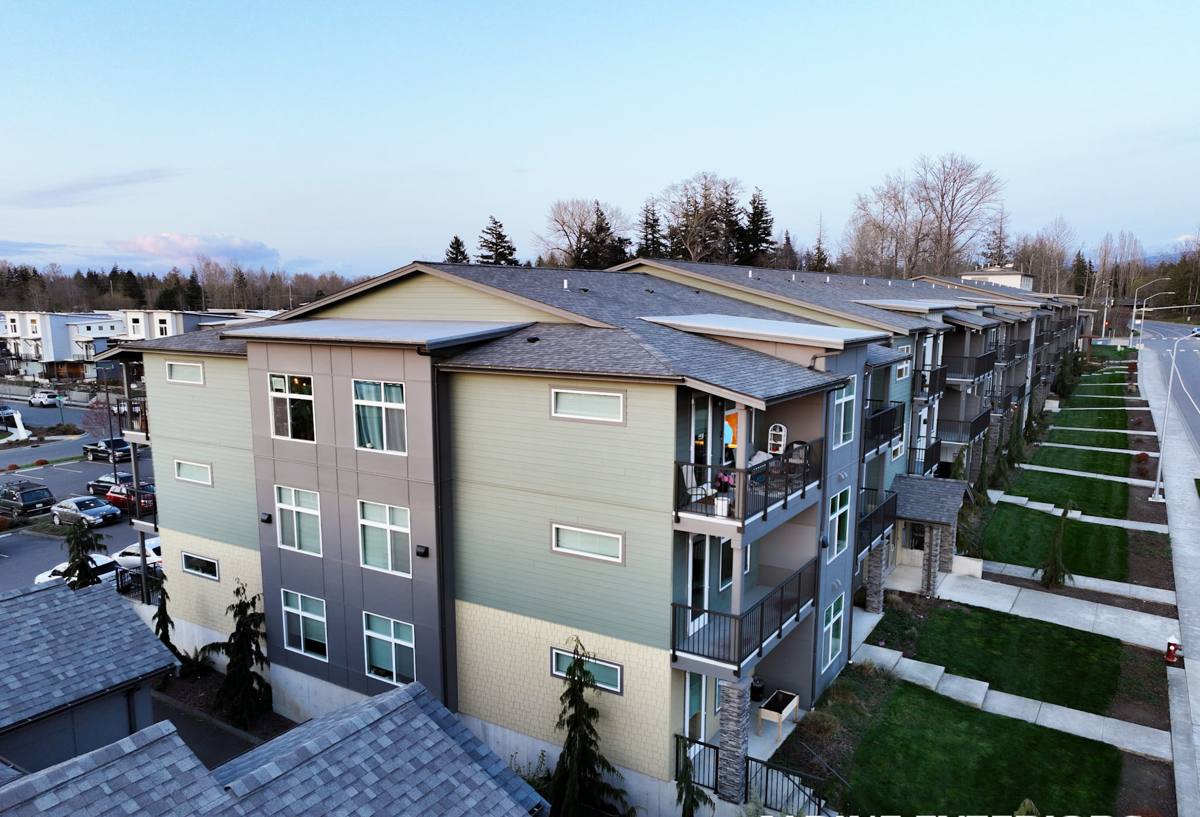
What "Custom" Actually Means for a Window Job
A lot of homeowners hear "custom windows" and assume it just means an unusual shape or size. On Lummi Island, older homes and additions built over the years mean that's often true — openings are rarely a standard factory size, especially in homes that have been added onto or had windows replaced piecemeal over decades. But custom also means matching the window to the specific wall it's going into:
- Exposure — is this wall facing the water and taking direct wind-driven rain, or is it more sheltered?
- Existing wall assembly — what's behind the siding, and how does water need to be managed around the new opening?
- Frame material suited to the level of salt exposure, not just the budget
- Glass package matched to sun exposure and the home's heating setup
- Hardware and finish that will actually hold up to salt air rather than just look good on install day
Getting any one of these wrong doesn't usually show up right away. It shows up two or three winters later as a leak, a fogged pane, or hardware that won't latch anymore.
Measuring for a True Custom Fit
Older openings are frequently out of square by the time we get to them — settling, decades of moisture cycling, or a previous repair that wasn't done quite right. We measure each opening individually rather than assuming uniform sizing across a house, and we account for the fact that "square on paper" and "square in reality" are often two different things on an older home.
Comparing Frame Materials for Salt Air Exposure
There's no single "best" window material for every home — it depends on exposure, budget, and how much upkeep you want to take on. Here's how the common options actually perform in a salt air, high-moisture setting like Lummi Island:
| Material | Salt Air Performance | Maintenance | Trade-offs |
|---|---|---|---|
| Vinyl | Good — won't corrode or rust; resists salt well | Low — occasional rinse-off | Limited color/finish options; can look less premium on higher-end homes |
| Fiberglass | Very good — stable in temperature swings, resists corrosion | Low to moderate | Higher upfront cost than vinyl |
| Aluminum | Poor without heavy protective coating — prone to corrosion and pitting near salt water | High — needs regular inspection of finish | We steer most water-facing installs away from bare or lightly coated aluminum |
| Wood / wood-clad | Fair — needs a well-maintained exterior cladding or finish to keep moisture out of the wood core | High — repainting/resealing on a schedule | Best interior look, but only makes sense if the homeowner is committed to upkeep |
We're honest about this trade-off up front: a beautiful wood window that isn't maintained on schedule in a salt air, high-moisture spot will fail faster than a plain vinyl window that gets ignored for years. We'd rather steer you toward a material that matches your actual maintenance habits than sell you something that looks best in the showroom.
Signs Your Current Windows Are Past Due
Because failure happens gradually, a lot of homeowners live with a window that's already past its useful life without realizing it. Some things worth checking on your own before calling anyone out:
- Fogging or a visible haze between panes — the seal has failed and the gas fill is gone
- Sashes that stick, drag, or won't stay open without a prop
- Visible gaps around the frame where daylight or a draft is noticeable
- Soft or discolored trim/sill wood, especially on water-facing walls
- Green or black growth building up on the frame or sill faster than it should
- Hardware (locks, cranks, hinges) that's stiff, corroded, or won't fully latch
- A noticeable jump in heating costs with no other explanation
Any one of these on its own might just need a repair. Several at once, especially on the same wall, usually means the window system itself has run its course.
How We Approach the Installation
Assessment and Planning
We start by looking at the specific wall and opening, not just the window itself — how water currently moves around that spot, what condition the framing and sheathing are in once we open things up, and whether there's existing damage that needs to be addressed before a new window goes in. Installing a good window into a wall that already has hidden rot or a bad moisture path just locks the problem in behind new trim.
Flashing and Water Management
This is the step that matters most in a driving-rain climate and the one that's easiest to shortcut. Proper flashing — sill pan, side flashing, and head flashing integrated correctly with the house wrap or building paper — is what actually keeps wind-driven rain from finding its way behind the siding. A window can be top quality and still leak within a couple of years if the flashing underneath it was done wrong or skipped.
Sealing and Insulation
We seal and insulate the gap between the frame and the rough opening properly rather than relying on caulk alone to do the job. Gaps that are packed too tight or left too loose both cause problems down the line — one restricts the frame, the other lets in drafts and moisture.
Final Fit and Finish
Once the window is set, we check operation, confirm the seal is tight all the way around, and match trim and finish work to the rest of the house so the new window doesn't look like a patch job.
Working Around Lummi Island Logistics
Being an island community reached by ferry adds a real scheduling and materials variable that a lot of contractors don't plan for well. Custom windows have lead times to begin with, and getting materials, crew, and equipment across on a ferry schedule means the job needs to be planned tighter than a typical mainland install. A crew that's used to working on Lummi Island builds that into the timeline from the start — ordering with the right buffer, batching trips, and not showing up short a tool or a part because it got left on the other side. That's less about the window itself and more about actually finishing the job on the timeline we quote, instead of stretching it out over multiple missed trips.
Cost Factors to Expect
Exact pricing depends on size, material, glass package, and how much flashing or trim repair the opening needs, but the general factors that move the number are consistent:
| Factor | Impact on Cost |
|---|---|
| Frame material (vinyl vs. fiberglass vs. wood-clad) | Moderate to significant — material is often the biggest line item |
| Custom vs. standard size | Moderate — non-standard openings cost more to manufacture and fit |
| Glass package (double vs. triple pane, low-E coatings) | Moderate — affects both cost and long-term energy performance |
| Condition of the existing opening | Can be significant if hidden rot or damage is found once we open the wall |
| Number of windows done at once | Doing multiple windows in one visit typically lowers the per-window labor cost |
We'll always tell you honestly if we find something during the job — like soft framing behind an old window — that changes the scope, rather than quietly working around it and having it show up as a problem later.
Maintaining Your Windows After Install
Even a well-installed, well-matched window benefits from basic upkeep in this climate. Rinsing salt residue off frames and glass periodically, keeping weep holes and drainage tracks clear of moss and debris, and checking seals and caulking once a year go a long way toward getting the full lifespan out of the investment. We're happy to walk you through what your specific window material needs to keep looking and performing well for the long haul.
Why Local Experience on Lummi Island Matters
A window installer who mostly works dry, sheltered, inland jobs is going to make different default choices than one who works this shoreline regularly — different flashing habits, different material recommendations, different assumptions about what "normal wear" looks like on year three versus year ten. We work in and around Birch Bay and the surrounding Whatcom County shoreline, so the salt air, the wind-driven rain, and the moss season aren't edge cases for us — they're the baseline we plan every custom window job around.
If your windows are showing their age, feeling drafty, or you're planning a renovation that involves new openings, we're glad to take a look and give you a straightforward, no-pressure estimate. There's a form below — reach out and we'll get a visit scheduled.