 Birch Bay Exterior
 Siding for Sandy Point: A Waterfront Whatcom County Climate
Sandy Point sits in the stretch of northern Whatcom County near Birch Bay, close enough to the water that homes here take on a different level of exterior wear than properties even a few miles inland. Salt-laden marine air, wind-driven rain off the water, and a long moss season on shaded walls and roof lines are constant factors, not occasional weather events. Siding on a Sandy Point home isn't just a cosmetic layer — it's the first line of defense against a climate that will find every weak seam, every under-detailed joint, and every material that can't handle sustained moisture.
We install James Hardie fiber cement siding exclusively, and we work this specific part of the coast regularly. This page focuses on what that means for one service, in one place: what a correct James Hardie installation looks like on a Sandy Point home, why the local climate makes the product choice matter more than it would somewhere drier, and how our process is built around the realities of this waterfront exposure.
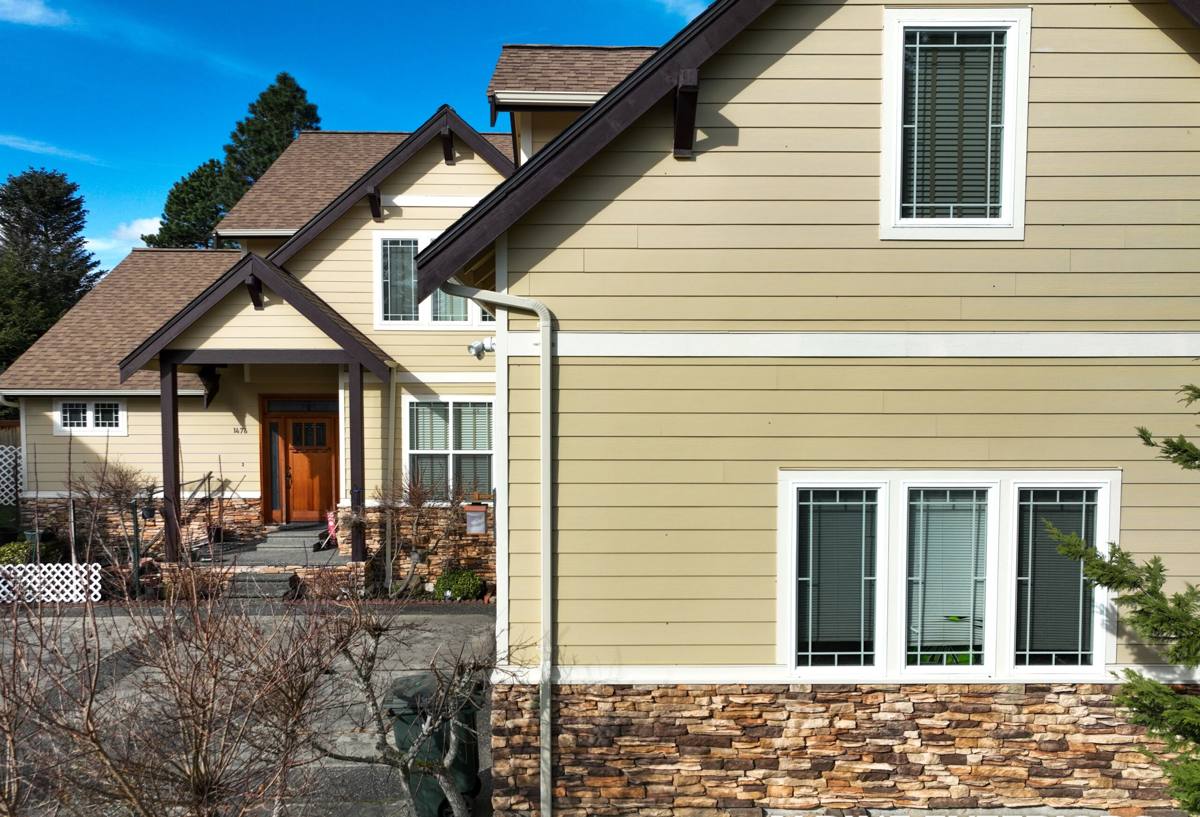
What Salt Air, Driving Rain, and Moss Actually Do Here
Salt Air and Corrosion
Proximity to the water means Sandy Point homes deal with more airborne salt than properties set back from the coast. Salt speeds up corrosion on fasteners, flashing, and any exposed metal trim, and it can degrade a lower-grade finish faster than a drier climate would. That's not a reason to panic about every piece of hardware on a house — it's a reason to be deliberate about which fastener grade, flashing metal, and siding finish actually gets specified for a home in this location.
Driving Rain and Wind-Driven Moisture
Water exposure at Sandy Point rarely comes straight down. Wind off the water pushes rain sideways into wall assemblies, window and door flashing, and the joints where siding meets trim. That matters because a lot of siding products and installation shortcuts are tested and marketed around vertical rainfall, not sideways-driven moisture working its way behind panels and around fasteners. A wall assembly that performs fine in a sheltered inland lot can fail here specifically because water is getting pushed in horizontally.
Moss and Shaded-Wall Growth
Mild temperatures and near-constant moisture through fall, winter, and much of spring add up to a long moss and mildew season across this part of Whatcom County. North-facing walls, and anything shaded by trees or a neighboring structure, tend to stay damp longer than sun-exposed walls. Any siding material that's even slightly porous, or that holds moisture against the wall behind it, becomes a growth surface over time — and once moss and mildew get established, they hold moisture against the substrate even longer, compounding the problem.
Why We Install Only James Hardie Siding in Sandy Point
We don't offer a menu of siding brands and let the climate sort out the winner later. On a coastal exposure like this one, we've made a professional decision to install one system we fully stand behind:
- Non-combustible fiber cement core: It doesn't feed a fire the way wood-based siding products can, which matters for both safety and, in many cases, insurance considerations.
- Factory-applied ColorPlus finish: Color is baked on under controlled conditions rather than applied on-site, which holds up better against the fading and chalking that salt air and UV exposure accelerate.
- Climate-engineered HZ5 formulation: Hardie's HZ5 product line is built for regions with sustained moisture and freeze-thaw cycling, which is a reasonable description of Sandy Point's winters.
- Dimensional stability: Fiber cement doesn't swell, cup, or warp the way engineered wood products can after repeated wetting through a long wet season.
- A strong transferable warranty: Hardie backs the product with a warranty that generally transfers to a future owner, which matters on the coast, where buyers increasingly ask pointed questions about siding condition and history.
We do not install LP SmartSide, vinyl siding, Cemplank, Allura, primed spruce, or cedar. Those products have a legitimate place in the market, and plenty of homeowners are satisfied with them in less demanding locations. On this stretch of coast, though, we've seen enough service calls and tear-offs to know which materials hold up and which shift long-term maintenance risk onto the homeowner. We'd rather install the one system we're confident in than offer a cheaper option we can't fully stand behind here.
What Correct Installation Looks Like on a Sandy Point Home
James Hardie siding only performs the way it's engineered to when it's installed to the manufacturer's published specifications — and in a wind-and-salt exposure like this one, cutting corners on installation shows up faster than it would in a milder climate. A correct job includes:
- Fastener type, length, and spacing that match Hardie's spec for the specific product line and exposure, not generic siding nails run at whatever spacing is fastest
- Proper clearance between the siding's bottom edge and grade, decks, patios, and roof lines to keep splash-back and standing water off the material
- Rain-screen or drainage-plane detailing behind the panels so any moisture that does get past the surface can drain and dry rather than sitting against the sheathing
- Factory-mitered corners or correctly caulked and sealed joints at every seam, since driving rain finds gaps that look minor from the ground
- Flashing integration at windows, doors, and roof-to-wall transitions that ties into the siding's drainage plane rather than just being caulked over
A Hardie product installed loosely will still develop moisture problems on a home like this one. The material is engineered for this climate, but it's only as good as the crew putting it on the wall.
Our Process for a Sandy Point Siding Project
Assessment and Estimate
We start by walking the property and looking at what's on the walls now — the existing siding, the condition of the sheathing underneath where it's visible, drainage around the foundation, and any areas showing early signs of moisture damage or moss buildup. That assessment shapes the estimate and lets us flag likely problem spots before work starts, rather than discovering them mid-project.
Prep and Removal
Old siding comes off in sections so we can inspect the sheathing and framing as we go rather than all at once. Any rot, soft sheathing, or water damage we find gets addressed before new siding goes on — installing Hardie over compromised sheathing just locks a problem behind a new wall.
Installation
Panels and trim go up to Hardie's fastening and clearance specs, with drainage detailing and flashing integration built in as we go, not added as an afterthought. On a Sandy Point home, we pay particular attention to wind exposure and which elevations take the most direct weather, since those walls often warrant extra care at seams and penetrations.
Final Walkthrough
We walk the finished job with the homeowner, cover what maintenance to expect, and make sure everything matches what was scoped at the estimate. No surprises at the end of a project that started with a clear plan.
Comparing Siding Materials for This Exposure
| Material | Moisture Behavior | Maintenance in Salt Air | Typical Longevity Here |
|---|---|---|---|
| James Hardie fiber cement | Dimensionally stable; resists swelling and warping | Low; factory finish resists fading and chalking | 30+ years with correct installation |
| Vinyl siding | Can distort with heat and settle over time | Low upfront, but seams and fasteners are exposure points | Variable; shorter in high-wind coastal spots |
| LP SmartSide / engineered wood | Wood-based core is moisture-sensitive at cut edges and joints | Moderate; edge sealing and caulk upkeep matter | Depends heavily on installation quality and upkeep |
| Cedar / primed wood | Absorbs and releases moisture readily | High; regular refinishing needed in wet, salty air | Shorter without consistent maintenance |
Signs a Sandy Point Home Needs New Siding
Coastal exposure tends to show siding problems earlier than an inland lot would. Worth checking for:
- Soft spots or visible give when you press on the siding, especially near the bottom courses
- Persistent moss or mildew staining on shaded or north-facing walls that returns quickly after cleaning
- Cracked, bubbling, or peeling paint on wood-based or engineered siding
- Visible gaps, warping, or separation at seams and corner joints
- Rising utility bills that suggest the wall assembly isn't holding conditioned air the way it used to
- Interior wall staining or a musty smell near exterior walls after a windy, wet storm
Why a Local Crew Matters at Sandy Point
A crew that already works this stretch of coast knows how salt air, wind exposure, and sustained moisture behave here in ways that don't always show up in a general installation manual. That familiarity shows up in the details that actually determine longevity: which fastener grade gets specified, how flashing gets lapped at a windward corner, and where extra drainage detailing is worth the added time. Those are the choices that decide whether a siding job holds up for one wet season or several decades on a home this close to the water.
If you're planning a re-side at Sandy Point or elsewhere around Birch Bay, we're glad to come take a look, walk you through what we see, and give you a straightforward estimate — no pressure and no upsell script. Use the form below to schedule a free consultation.