 Birch Bay Exterior
 Cottonwood Beach Is a Different Siding Job Than Inland Whatcom County
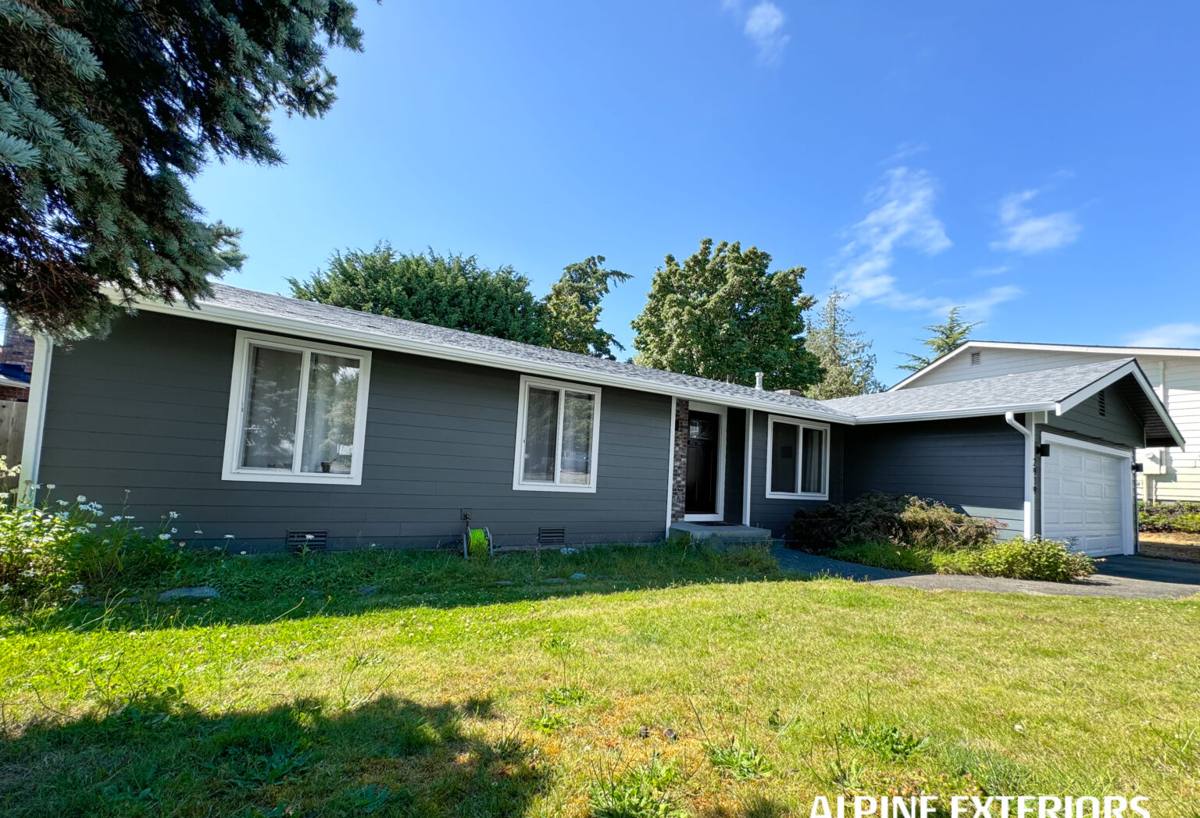
Cottonwood Beach sits close enough to Birch Bay's shoreline that homes here take a different kind of weathering than a house ten miles inland. Salt-laden air moves off the water, wind-driven rain hits walls at an angle instead of falling straight down, and shaded, moisture-holding surfaces stay damp long enough to grow moss for most of the year. None of that is unusual for this stretch of Whatcom County, but it does mean the siding on a Cottonwood Beach home is working harder than the same product would on a drier, more sheltered lot. We install James Hardie fiber cement siding exclusively, and this page walks through what that looks like specifically for homes in this neighborhood — not siding in general, but the product, the details, and the process that hold up here.
What This Climate Actually Does to Siding Over Time
Salt Air and Corrosion
Airborne salt doesn't just sit on the surface — it works into fastener heads, trim joints, and any exposed metal, accelerating rust and corrosion in ways that inland homes never experience. Siding materials and fastener systems that perform fine forty miles from the water can show pitting, staining, or premature failure at the coast within a few years if they weren't chosen with that exposure in mind.
Wind-Driven, Sideways Rain
Storms coming off the water push rain horizontally into wall assemblies rather than letting it run down and off. That means water finds its way behind poorly lapped panels, undersized flashing, and gaps around windows and trim far more aggressively than it would in a calm-rain climate. The siding itself matters less here than how it's flashed, lapped, and sealed — a mediocre installation of a great product still lets water in.
A Long Moss and Algae Season
Between the marine humidity and the tree cover common around Birch Bay, shaded north- and west-facing walls can stay damp for weeks at a stretch, especially through fall and winter. Siding materials that absorb moisture or that trap it against the substrate give moss and algae exactly the conditions they need to take hold, which speeds up surface breakdown and shows up as unsightly staining long before any structural issue appears.
Why We Standardized on James Hardie and Nothing Else
We made a deliberate decision to install only James Hardie fiber cement siding — not vinyl, not LP SmartSide, not Cemplank, Allura, primed spruce, or cedar. That's not a marketing position; it's a response to what we've seen these climate conditions do to the alternatives over time.
Vinyl can crack in cold snaps and fade or warp under sustained UV and salt exposure, and it has limited ability to manage moisture that gets behind it. Engineered wood products like LP SmartSide use wood strand cores that are vulnerable at cut edges and fastener penetrations if moisture reaches them, which is a real risk in a climate where wall assemblies see prolonged dampness. Cedar and primed spruce are natural wood products that require ongoing refinishing, caulking, and vigilance against rot — a maintenance burden that's steeper right on the water than it is inland. Other fiber cement brands may be reasonable products, but we've standardized our crews, fastening schedules, and warranty relationships around one system so we can guarantee the installation, not just sell the material.
James Hardie's fiber cement is non-combustible, doesn't support moss and algae growth the way wood-based products can, and is manufactured with climate-specific engineering. For a marine environment like Cottonwood Beach, that combination — moisture resistance, dimensional stability, and a factory finish that isn't relying on field-applied paint to hold up — is what we want standing between a home and the weather.
HZ5 vs. HZ10: Getting the Right Product for This Exact Location
James Hardie engineers its siding for specific climate zones, and choosing correctly matters more at the coast than it does further inland.
| Factor | HZ5 (Moderate Zone) | HZ10 (Wet/Humid Zone) |
|---|---|---|
| Designed for | Drier, more moderate climates | High-moisture, high-humidity, marine-influenced climates |
| Moisture resistance | Standard formulation | Enhanced moisture and freeze-thaw resistance |
| Typical fit for Whatcom County coast | Not our default choice | Standard specification for Cottonwood Beach and similar shoreline areas |
| Why it matters here | Can underperform in prolonged damp conditions | Engineered specifically for the conditions Birch Bay sees most of the year |
For most Cottonwood Beach homes, the HZ10 product line is the right call given the humidity and rainfall this area sees. We confirm the specific product and ColorPlus finish during the estimate rather than assuming — lot orientation, tree cover, and exposure to wind off the water all factor into the final recommendation.
What a Correct Installation Involves Here
The product only performs as designed if the installation respects a handful of details that matter more at the coast than elsewhere. On every Cottonwood Beach project, our crew works through the same checklist regardless of how the schedule is running:
- Correct water-resistive barrier installed and lapped properly before any siding goes up
- Rigid flashing at every window, door, and horizontal trim transition — not caulk used as a substitute
- Proper drainage plane behind the siding so any moisture that does get past the cladding can drain and dry
- Manufacturer-specified fastener type, length, and placement to resist pull-through and corrosion
- Correct minimum clearances from grade, roof lines, and decks to keep splash-back and ponding water away from panel edges
- Proper panel gapping and caulking at butt joints, sized for the region's temperature swings
- Factory-primed cut edges field-sealed per Hardie's installation instructions, since an unsealed cut edge is the most common point of moisture entry
Skipping any one of these doesn't usually cause an obvious problem on day one — it shows up two, five, or ten years later as staining, soft trim, or premature caulk failure. That's the real argument for hiring based on installation discipline, not just brand name.
Our Process for a Cottonwood Beach Project
We keep the process straightforward and communicate clearly at each stage:
- On-site assessment — we walk the exterior, check existing sheathing and moisture conditions, and note exposure factors specific to the lot (tree cover, wind direction, proximity to the water).
- Product and color selection — we confirm the right Hardie product line and ColorPlus finish for the home's exposure, and walk through samples on-site.
- Written estimate — a clear scope covering removal, any sheathing repair, weather barrier, flashing, siding, and trim, so there are no surprises once work starts.
- Removal and inspection — old siding comes off and we inspect the sheathing underneath for hidden rot or moisture damage before anything new goes up.
- Weather barrier and flashing — the part of the job that determines how the house performs for the next thirty years, done to manufacturer spec, not shortcuts.
- Installation — Hardie panels, fasteners, and trim installed to the manufacturer's published instructions for this climate zone.
- Final walkthrough — we go over the finished work together before calling the job done.
What Affects the Cost of a Hardie Siding Job in This Area
| Cost Factor | Why It Matters Here |
|---|---|
| Home size and wall complexity | More corners, dormers, and trim details mean more flashing and cutting labor |
| Condition of existing sheathing | Coastal moisture exposure sometimes means hidden repair work is needed before new siding goes on |
| Product line (HZ5 vs. HZ10) and profile | Climate-matched products and certain profiles (lap, shingle, panel) carry different material costs |
| ColorPlus finish vs. field paint | Factory-applied finish costs more up front but removes a future repainting cycle |
| Access and site conditions | Tight lots, decks, and landscaping near the walls affect labor time |
We give a firm, written number after the on-site assessment rather than a phone estimate — every home's exposure and existing condition is different enough that a real number requires a real look.
Living With Hardie Siding in a Salt Air, Moss-Prone Climate
Once it's installed correctly, James Hardie siding needs very little from a homeowner in this environment. It doesn't rot, it resists moss and algae far better than wood-based products, and the ColorPlus finish is engineered to hold color without the repainting cycle that cedar or field-painted siding demands. That said, a coastal setting like Cottonwood Beach still calls for a bit of routine attention: an annual rinse to clear salt residue and organic buildup, a look at caulking around windows and trim every year or two, and prompt attention if a gutter or downspout starts overflowing onto a wall section. None of that is siding-specific maintenance so much as basic home upkeep — the point of choosing Hardie is that it doesn't add its own maintenance burden on top of what the climate already asks for.
Why It Matters That We Already Work in Cottonwood Beach
A crew that's worked this specific stretch of Birch Bay knows what exposure a given lot actually sees before the estimate walkthrough even starts — which walls take the worst of the wind-driven rain, which sides stay shaded and damp longest, and how nearby homes have held up over time. That local knowledge doesn't replace following manufacturer specs, but it does mean fewer surprises once removal starts and a more accurate estimate from the beginning. It's also easier to stand behind a warranty and answer questions years down the road when the crew that installed the siding is still working in the same neighborhood.
If you're weighing a siding replacement or new construction siding for a home in Cottonwood Beach, we're glad to walk the exterior with you and put together a clear, no-pressure estimate — just fill out the form below to get started.