 Birch Bay Exterior
 Why Siding in Blaine Takes a Different Approach
Blaine sits about as close to Puget Sound's saltwater exposure as a Whatcom County home can get. Between the marine air rolling off the water, wind-driven rain through the fall and winter, and a moss season that can stretch from October well into spring, the siding on a Blaine home works harder than siding almost anywhere else in the state. We install James Hardie fiber cement siding exclusively, and Blaine is a good example of why: this is not a climate that forgives a mediocre siding job or a product that struggles with sustained moisture contact.
A lot of general contractors treat siding as interchangeable — vinyl here, engineered wood there, whatever's on sale. We don't. We made the decision years ago to install only James Hardie, and on a project in Blaine or the surrounding Birch Bay area, that decision shows up in details most homeowners never think to ask about until something goes wrong.
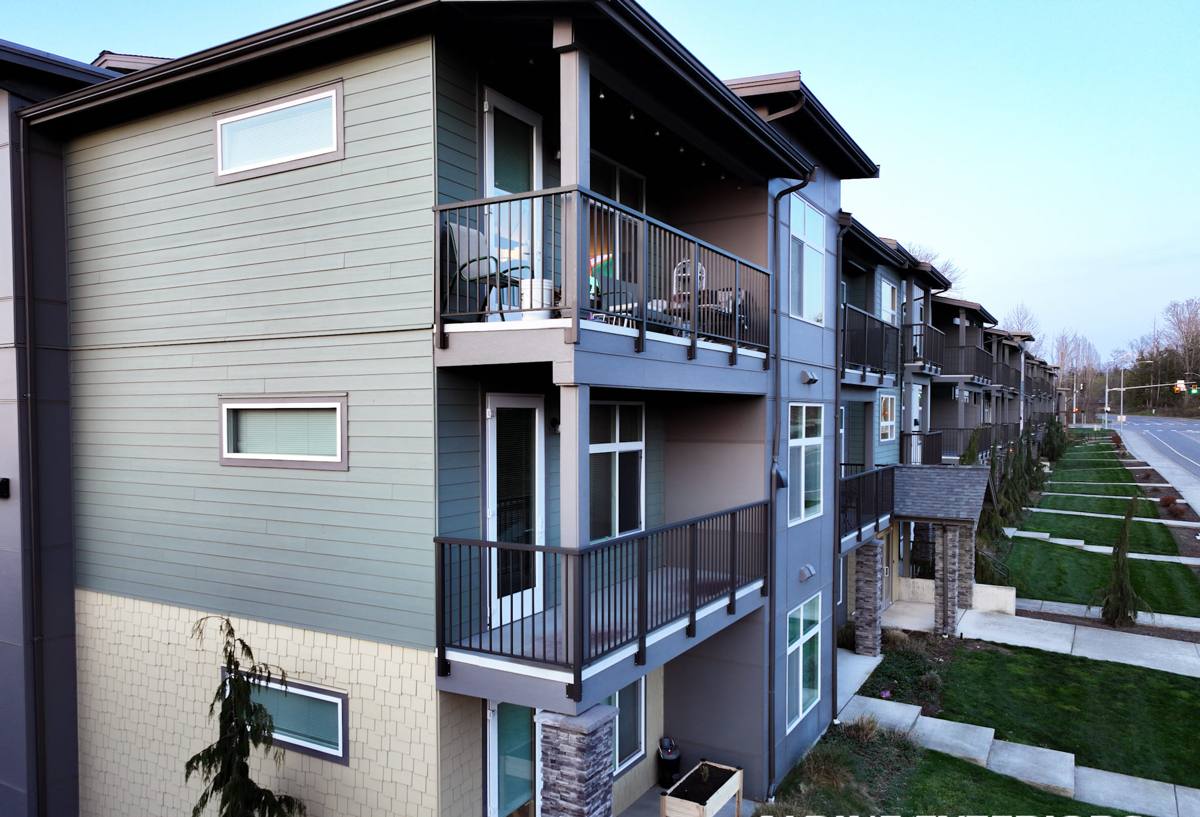
What Salt Air, Rain, and Moss Actually Do to Siding
Salt Air
Airborne salt is corrosive to metal fasteners and trim, and it accelerates the breakdown of coatings that aren't built to handle it. Paint films on wood or engineered wood siding chalk and fade faster in a salt-air environment, which means more frequent repainting to keep water out. Fiber cement doesn't corrode, and Hardie's ColorPlus factory finish is baked on to resist fading and chalking in exactly this kind of exposure.
Driving Rain
Blaine's weather doesn't just rain straight down — wind off the Strait pushes moisture sideways into wall assemblies, which is a much tougher test for a siding system than vertical rainfall. Every seam, corner, and penetration is a place water can find a way in if the product or the installation is sloppy. This is where product choice and installation quality both matter as much as each other.
Moss and Sustained Moisture
A long, damp moss season means siding stays wet longer between drying cycles. Materials that absorb moisture or swell at cut edges are at a real disadvantage here, because they never get a full chance to dry out before the next system rolls through. Moss and algae staining on north- and shade-facing walls is common in this area regardless of siding type, but how a material handles the moisture underneath that staining is what determines whether it's a cosmetic issue or a structural one.
Why We Standardized on James Hardie
James Hardie fiber cement is engineered specifically for this kind of exposure. It's non-combustible, it doesn't rot, and its HZ5 product line is formulated for the freeze-thaw and moisture patterns common in the Pacific Northwest. The factory-applied ColorPlus finish is more consistent and more durable than field-applied paint, which matters enormously in a marine climate where a compromised paint film is often the first domino to fall.
We get asked why we don't install LP SmartSide, vinyl, Cemplank, Allura, or cedar. Each of those products has legitimate uses somewhere. But for a Blaine or Birch Bay home taking direct salt air and driving rain, we've found the maintenance burden, moisture sensitivity, or long-term performance trade-offs aren't worth it. Standardizing on one product means our crews install it correctly every time, our warranty coverage is consistent, and homeowners aren't the ones absorbing the risk of an installation crew learning a new product on their wall.
What a Correct James Hardie Installation Involves in This Climate
The material is only half the equation. A large share of siding failures we're called out to inspect — regardless of brand — trace back to installation, not the product itself. In a high-moisture, high-wind coastal environment like Blaine, these details aren't optional extras; they're the difference between siding that lasts decades and siding that fails at year eight.
- Correct water-resistive barrier and flashing behind every seam, window, and door opening
- Proper fastener spacing and type — coated or stainless fasteners rated for coastal exposure
- Minimum clearance between siding and grade, decks, and roof lines to prevent wicking
- Factory-cut edges used wherever possible; field cuts sealed per Hardie's specifications
- Correct panel gapping to allow for expansion without trapping water
- Kick-out flashing at roof-to-wall intersections, a common leak point in driving rain
- Rainscreen or drainage gap detailing appropriate for the wall assembly
Skipping any one of these doesn't usually cause an immediate visible problem. It shows up two, five, or ten years later as trapped moisture, staining, or rot in the sheathing behind siding that still looks fine from the curb.
Our Process for a Blaine Siding Project
1. On-Site Assessment
We walk the exterior with you, looking at existing siding condition, moisture damage, trim and flashing details, and any areas where wind or drainage patterns are working against the wall assembly. In Blaine specifically, we pay close attention to the sides of the home taking the most direct exposure to prevailing weather.
2. Scope and Product Selection
We walk through Hardie's plank, panel, and shingle options and help you pick a profile and ColorPlus color that fits the home and holds up to this environment. We'll explain honestly where a lower-maintenance option makes more sense than a higher-style one if that's what the exposure calls for.
3. Tear-Off and Sheathing Check
Old siding comes off and we inspect the sheathing underneath. Any rot or moisture damage gets addressed before new siding goes up — covering a problem with new siding doesn't fix it, it just hides it.
4. Weather Barrier and Flashing
This is the step that determines whether the siding actually keeps water out, not just looks good. We install a proper water-resistive barrier and flashing system before a single piece of Hardie goes up.
5. Installation to Manufacturer Spec
Fastener pattern, gapping, and clearances are installed to James Hardie's published specifications, which is also what keeps the manufacturer's warranty intact.
6. Final Walkthrough
We review the finished work with you, including care and maintenance basics specific to a coastal, moss-prone property.
Comparing Siding Options for a Coastal Whatcom County Home
| Factor | James Hardie Fiber Cement | Vinyl | Engineered Wood (LP SmartSide) |
|---|---|---|---|
| Salt air resistance | High — non-corroding, factory finish | Moderate — can become brittle over time | Moderate — coating protection is critical |
| Moisture/rot resistance | High — cement composition doesn't rot | High for the material itself, but seams can trap water | Lower — wood-based core vulnerable if coating fails |
| Combustibility | Non-combustible | Combustible | Combustible |
| Finish durability | Factory-baked ColorPlus, long fade resistance | Color molded in, but can fade and chalk | Field or factory-primed, repainting needed sooner |
| Typical warranty structure | Long, transferable, product-specific | Varies widely by manufacturer | Varies, often shorter on finish |
Why Hiring a Crew That Already Works Blaine Matters
Siding installation isn't just about following a spec sheet — it's about knowing how a specific location behaves. A crew that regularly works Blaine and the broader Birch Bay area already knows which exposures need extra flashing attention, how moss tends to develop on this area's homes, and how wind patterns off the water affect where water actually ends up hitting a wall. That local pattern recognition doesn't come from a manual; it comes from having done the work here before.
It also matters for accountability. A local crew is easy to reach if a question comes up two years after the job, and has a reputation in the area worth protecting. That's a different relationship than a crew that drives in from out of the region, installs, and moves on.
Signs Your Current Siding Isn't Keeping Up
- Persistent moss or algae staining that returns quickly after cleaning
- Soft spots, bubbling, or visible warping, especially near ground level or under windows
- Paint that's chalking, peeling, or fading unevenly across different exposures
- Visible gaps or separation at seams and corners
- Musty smells or interior wall staining near exterior walls
- Fastener heads showing rust or backing out of the wall
Any one of these on its own isn't necessarily an emergency, but in a driving-rain, high-moisture climate like Blaine's, they tend to compound quickly once they start.
What This Typically Involves for Homeowners
Every home's scope is different depending on square footage, trim complexity, and current siding condition, so we don't quote broad price ranges without seeing the property. What we can tell you upfront is that a proper job includes tear-off, sheathing inspection and repair as needed, correct weather barrier and flashing work, and installation to Hardie's specifications — not just panels nailed over what's already there. Cutting any of those steps to save money on the front end tends to cost more in repairs down the road, particularly in a coastal exposure like this one.
If you're weighing a siding replacement or repair for a home in Blaine or elsewhere around Birch Bay, we're happy to take a look and walk you through what your home specifically needs. Reach out for a free, no-pressure estimate using the form below.