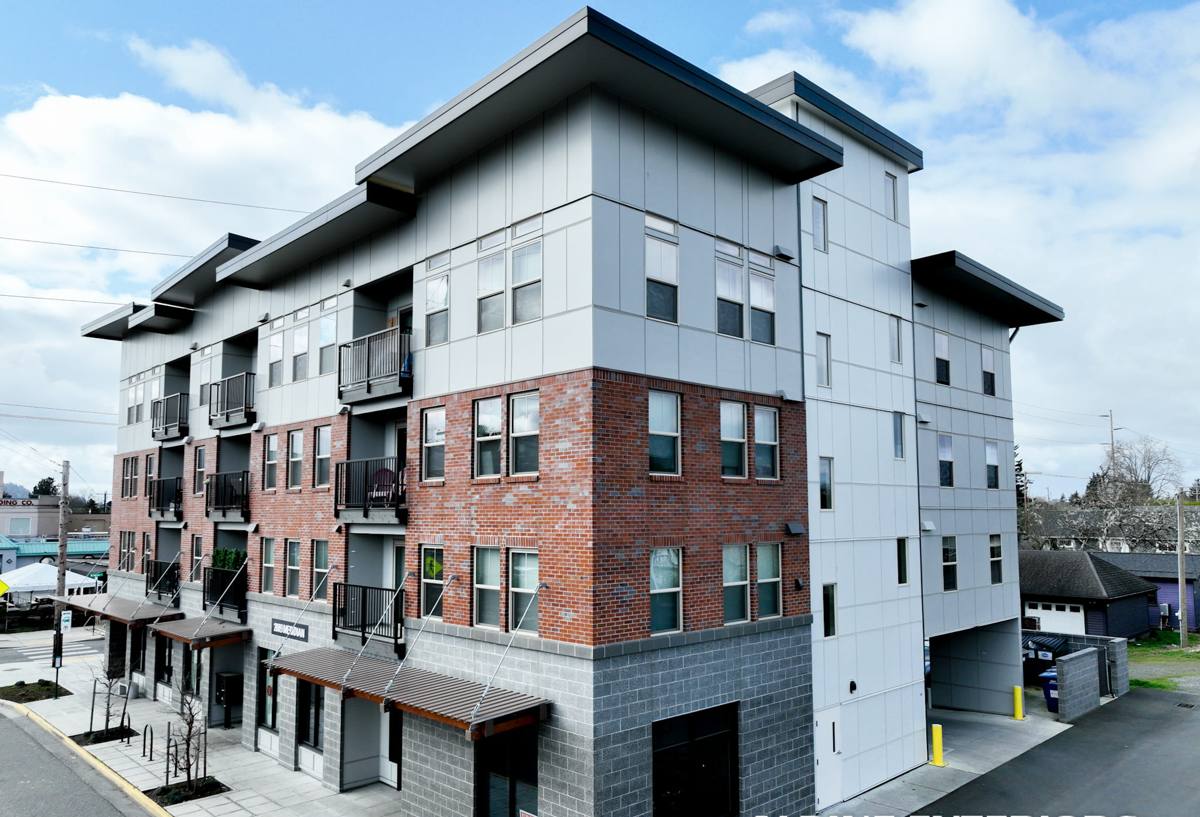
 Birch Bay Exterior
 Why Marietta Siding Wears Differently Than Siding Ten Miles Inland
Marietta sits close enough to the water that homes here deal with a different combination of stresses than a house further inland in Whatcom County. Salt-laden air moves off the bay and settles on exterior surfaces, driving rain comes in sideways during winter storms, and the shaded, damp stretches of the year give moss and algae months to establish themselves on anything that stays wet. None of these factors is dramatic on its own, but stacked together over years, they're exactly the conditions that expose the weak points in a siding job — whether that weakness is in the material itself or in how it was installed.
We've worked on homes throughout this corner of Birch Bay and Whatcom County long enough to know that siding failures here rarely show up as one big dramatic problem. They show up as soft trim boards behind a gutter that never got flashed right, as green-black streaking on a north wall that never dries out, as caulk lines that cracked open in year four and let water track behind the panel. A siding system that isn't built and installed for this specific climate will eventually show every one of those problems, usually in that order.
What Marietta Homes Actually Need From Their Siding
Given the salt air, driving rain, and long moss season, siding on a Marietta home has to handle three things well at the same time:
- Moisture resistance that doesn't rely on paint film alone. Coastal humidity and repeated wetting cycles are hard on siding that depends entirely on a surface coating to stay watertight.
- Dimensional stability in swings between soaked and dry. Siding that swells and shrinks with moisture opens gaps at seams and fasteners over time, which is exactly where wind-driven rain gets in.
- A surface and joint system that doesn't feed moss and algae. Some materials and finishes hold surface moisture longer than others, which matters a lot in a shaded, damp microclimate near the water.
This is the reason we install James Hardie fiber cement exclusively. Hardie's HZ5 product line is engineered specifically for climates like ours — Pacific Northwest exposure with real moisture load — and the fiber cement composition itself doesn't absorb and release water the way wood-based or wood-fiber siding products do. That doesn't mean any siding is maintenance-free near the water. It means the material we start with is already working with the climate instead of against it.
HardiePlank vs. HardiePanel for This Setting
Most Marietta homes we work on do well with HardiePlank lap siding, which sheds wind-driven rain effectively when the lap and flashing details are done correctly. Homes with more contemporary lines or accent areas sometimes call for HardiePanel vertical siding with battens. The right choice depends on the home's architecture and how exposed particular walls are to prevailing weather — a west or south-facing wall that catches the brunt of storms off the water sometimes gets a different lap exposure or flashing detail than a more sheltered wall on the same house.
Where Installation Quality Actually Determines the Outcome
Fiber cement siding's reputation is built on the material, but its real-world performance is decided by installation. We say this to every homeowner we talk to, because it's the single biggest variable in whether siding lasts fifteen years or forty in a climate like this one.
The details that matter most here
- Weather-resistive barrier and flashing sequencing. Water management has to work as a system — house wrap, flashing, and siding installed in the correct shingle-lap order so water is always directed outward and down, never trapped behind the cladding.
- Proper gaps and clearances. Fiber cement needs a gap at trim, roof lines, decks, and grade so water can drain and the material can dry. Tight-caulked, no-gap installs trap moisture and are one of the most common causes of early siding failure we see on inspections.
- Fastener pattern and depth. Overdriven or underdriven nails compromise the plank's hold and its water resistance. This is a detail that's invisible after paint but shows up as loosening or cracking within a few years.
- Caulk as a backup, not a primary seal. Correctly lapped and flashed siding shouldn't depend on a bead of caulk to stay watertight. Caulk fails; good flashing details don't.
- Field-cut edge sealing. Any cut edge on fiber cement siding needs to be sealed per manufacturer spec before installation, especially on a job exposed to this much rain and salt air.
A homeowner can't see most of this after the job is finished — it's covered by the finished wall. That's exactly why the contractor's process matters as much as the product on the invoice.
Our Process on a Marietta Job
- Site and exposure assessment. We walk the home and note which walls take the worst weather, where past moisture damage shows up, and where existing flashing or trim needs attention before new siding goes on.
- Tear-off and substrate check. Old siding comes off and we inspect sheathing underneath for rot or existing moisture damage — a problem hidden siding won't fix, only cover up.
- Weather-resistive barrier and flashing installation. This is the water-management layer that does the real work over the life of the siding, done before a single piece of Hardie goes up.
- James Hardie installation to manufacturer spec. Correct lap exposure, fastening, gaps, and sealed cut edges, adjusted by wall exposure where the home's orientation calls for it.
- ColorPlus finish or field-paint detailing. Trim and touch-up handled to keep the factory finish's warranty intact where ColorPlus is used.
- Final walkthrough. We go over what was done, what maintenance looks like going forward, and what to watch for.
James Hardie Compared to Other Siding Options for This Climate
We only install James Hardie, but homeowners deserve an honest look at why, not just a sales pitch. Here's how the common alternatives stack up against the specific demands of a salt-air, high-rain, moss-prone setting like Marietta.
| Material | Moisture behavior near salt air | Moss/algae resistance | Long-term trade-off |
|---|---|---|---|
| James Hardie fiber cement | Doesn't absorb and swell like wood-based products; engineered HZ5 line for this region | Dense surface and factory finish resist buildup better than porous materials | Higher upfront cost than vinyl; installation-sensitive |
| Vinyl siding | Won't rot, but expands/contracts significantly with temperature and can warp or crack over time | Seams and lap joints trap grime and moisture that feeds moss growth | Lower cost but shorter realistic lifespan in coastal exposure |
| LP SmartSide (wood-strand) | Engineered wood core is vulnerable to prolonged moisture exposure at cut edges and joints | Wood-based surface holds moisture longer, more prone to organic growth | Requires more diligent edge-sealing and maintenance in wet climates |
| Cedar / primed spruce | Natural wood movement and moisture absorption; needs consistent refinishing | High — organic material is a natural substrate for moss and algae | Attractive but the highest ongoing maintenance burden here |
Every material on that list has a legitimate place somewhere. Given what Marietta's climate does to a home over a decade or two, we made the call to stand behind one product system we can install correctly and warranty with confidence, rather than offer several and let cost be the deciding factor.
Maintenance in a Moss-Prone, Salt-Air Climate
No siding here is maintenance-free, including Hardie. The realistic expectations for a Marietta home are:
- Rinse siding annually, especially shaded and north-facing walls where moss and algae take hold first.
- Keep gutters clear so overflow doesn't run down the face of the siding and stay wet longer than it should.
- Trim back vegetation and tree cover that keeps a wall shaded and damp — moss needs both moisture and low light to spread.
- Inspect caulk joints at trim and penetrations every year or two and re-caulk as needed; caulk is a maintenance item, not a permanent seal.
- Watch for any soft trim or staining, which usually points to a flashing detail worth checking before it becomes a bigger repair.
What Affects the Cost of a Fiber Cement Siding Job Here
| Factor | Why it matters in Marietta |
|---|---|
| Existing substrate condition | Salt air and driving rain accelerate hidden sheathing damage behind old siding, especially on exposed walls |
| Wall exposure and orientation | Walls facing prevailing storms off the water may need extra flashing detail or trim work |
| Plank vs. panel and finish choice | ColorPlus factory finish, custom trim profiles, and vertical panel details all shift labor and material cost |
| Tear-off scope | Full removal and disposal of old siding versus a more limited replacement changes both cost and timeline |
| Access and site conditions | Homes close to the shoreline or with tight lot access can add setup time |
We don't quote a Marietta job off a generic price-per-square-foot number — every estimate comes from actually looking at the house.
What to Ask Before Hiring a Siding Contractor Here
- Do you install James Hardie to manufacturer spec, including lap exposure, fastening, and gap requirements?
- Will you inspect and repair the weather-resistive barrier and flashing, not just install siding over what's there?
- How do you handle exposed, water-facing walls differently than sheltered ones?
- What's your plan for sealing field-cut edges before installation?
- Have you worked on homes in this immediate area, and do you understand the exposure differences between it and other parts of the county?
Why Local Experience in Marietta Specifically Matters
Whatcom County covers a lot of ground, and exposure conditions change meaningfully within just a few miles of coastline. A crew that mostly works inland jobs won't have the same instinct for how hard a Marietta-facing wall gets hit in a winter storm, or how fast moss establishes on a shaded wall this close to the water. That instinct is what shows up in the small decisions — where extra flashing goes, which wall gets a tighter fastening schedule, how a corner detail gets handled — that a spec sheet alone doesn't cover. We've built our process around James Hardie specifically because it gives us a product system we trust enough to install the same correct way every time, on every home in this area, regardless of budget or house style.
If you're weighing a siding replacement in Marietta or elsewhere in Birch Bay, we're happy to take a look at your home, walk you through what we're seeing, and put together a straightforward, no-pressure estimate using the form below.