 Birch Bay Exterior
 Ferndale Roofs Face a Different Kind of Weather Load
Ferndale sits close enough to the water that roofs here deal with a mix most inland towns don't: salt-laden air blowing in off the strait, long stretches of driving rain, and a moss season that can run most of the year in shaded, north-facing sections of a roof. None of these things show up as dramatic damage overnight. They work slowly, and then a windstorm or a heavy atmospheric river event finds every weak point they've created and turns it into a leak.
That's the pattern we see over and over on storm calls in this area: the storm didn't cause the failure by itself, it exposed a spot that was already compromised by months or years of moisture and salt exposure. A repair that only addresses the visible storm damage and ignores that underlying condition tends to fail again at the next storm. A repair that accounts for both holds up.
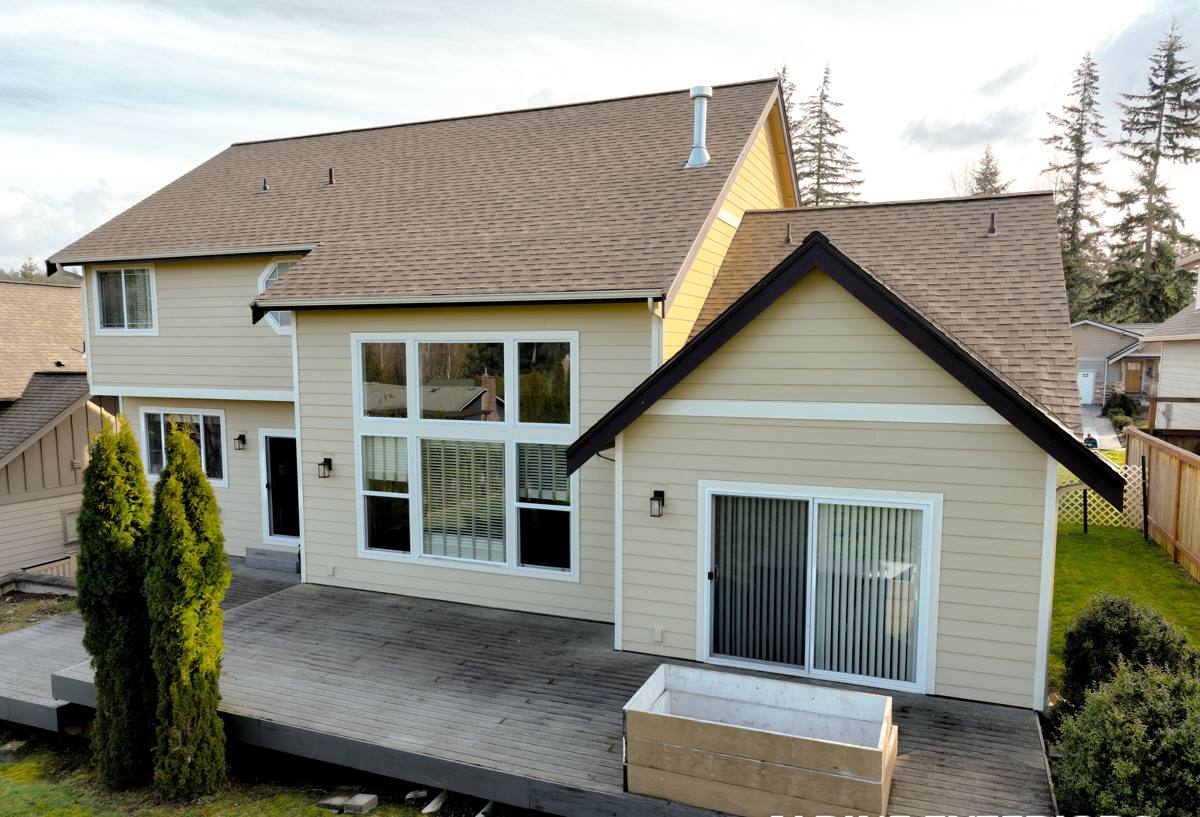
What Actually Counts as Storm Damage Here
Whatcom County storms don't usually mean hail the way they do in the Midwest. Around Ferndale, storm damage to roofs almost always comes from one of a few sources:
- Wind gusts lifting shingle edges or tearing off shingles outright, especially on roof sections that were already loosened by moss growth underneath
- Driving, wind-blown rain forced sideways under flashing, ridge caps, and shingle tabs that would stay dry in a normal vertical rain
- Falling limbs or debris from windthrow, which is common given how many mature conifers are close to rooflines in this area
- Granule loss and mat exposure from repeated wind-rain cycling, which weakens shingles without any single dramatic event
The tricky part is that the first two are obvious after a storm, but the third and fourth build up quietly and often get discovered during the storm inspection rather than being the reason we were called out.
Salt Air's Role
Proximity to the water means metal roof components — flashing, fasteners, vents, gutter hardware — corrode faster here than they do further inland. A storm that would only lift a few shingles on an inland roof can tear loose flashing on a coastal Ferndale roof if that flashing was already weakened by corrosion. We check fastener and flashing condition on every storm call for this reason, not just the shingles themselves.
Our Storm Damage Assessment Process
When we come out after a storm, we're not just looking at what's visibly missing or torn. A proper assessment covers the roof surface, the attic, and the interior ceiling lines, because storm damage doesn't always announce itself where you'd expect.
Exterior Inspection
We check every slope, not just the side facing the prevailing wind, since gusts during Whatcom County storms can shift direction. We look at shingle condition, flashing at chimneys and valleys, ridge cap integrity, and gutter attachment. We also note existing moss coverage and drainage patterns, since those directly affect how a repair should be built.
Attic and Interior Check
Wind-driven rain can get under a roof covering without leaving an obvious hole on top. We check the attic for water staining, wet insulation, and daylight gaps at flashing points, and we ask about any ceiling stains or musty smells you've noticed since the storm — those are often the first sign of a leak that hasn't shown up on the surface yet.
Documentation
We photograph and note damage in a way that holds up if you file an insurance claim, including close-up shots of the specific damaged areas and wide shots showing location on the roof. If you're planning to file a claim, having this documentation before any temporary repairs are made matters — more on that below.
What a Correct Storm Repair Actually Involves
A storm repair done right isn't just replacing what's missing. It means matching the repair to the roof's actual condition and to the weather it has to survive going forward.
Material Matching
Shingle color and profile fade and weather over time, so a patch using brand-new shingles next to older ones will often be visible. We match as closely as current product lines allow, and we're upfront when an exact match isn't possible so you can decide whether a more visible repair or a larger replacement section makes more sense.
Flashing and Underlayment
Any repair that touches a valley, chimney, or wall intersection gets new flashing and underlayment, not just reused hardware. Given how much wind-driven rain this area gets, cutting a corner on flashing is the single most common reason a "repaired" roof leaks again in the next storm.
Ventilation Check
We look at ridge and soffit ventilation while we're up there. Poor attic ventilation traps moisture, which accelerates moss growth on the roof deck side and shortens the life of any repair we make. It's a five-minute check that prevents a callback.
Repair or Replace: How We Help You Decide
Not every storm-damaged roof needs full replacement, and not every roof that "just needs a patch" is actually a good repair candidate. The decision comes down to a few honest factors.
| Factor | Points Toward Repair | Points Toward Replacement |
|---|---|---|
| Roof age | Under 12-15 years, shingles still flexible | Near or past manufacturer's expected lifespan |
| Damage extent | Isolated to one or two areas | Spread across multiple slopes |
| Moss/moisture history | Minimal prior moss, deck sounds solid | Heavy moss history, soft or spongy deck sections |
| Flashing/vent condition | Sound, just needs resealing | Corroded or failing in multiple spots |
| Insurance coverage | Claim covers targeted repair | Claim supports full slope or full roof |
We'll walk you through where your roof lands on each of these before recommending either option — there's no reason to sell a full replacement when a targeted repair will genuinely hold, and no reason to patch a roof that's going to need replacing within a year or two anyway.
Working With Your Insurance Claim
Most storm damage repairs in this area involve an insurance claim, and the process goes more smoothly when the documentation and the repair scope line up with what the adjuster sees. We provide our inspection photos and a written scope of damage that you can submit with your claim, and we're available to meet an adjuster on-site if that's useful for your insurer. We don't handle the claim itself or negotiate with your insurance company on your behalf — that's between you and them — but we make sure the roofing side of your paperwork is accurate and complete.
One practical note: if a storm has left your roof exposed to further water intrusion, don't wait on the claim to decide before getting a tarp or temporary cover in place. Most policies expect reasonable steps to prevent further damage, and we can get emergency coverage on quickly while the claim process plays out.
Why a Crew That Already Works Ferndale Matters
Storm damage repair isn't just a technical skill, it's a local-conditions skill. A crew that mostly works drier inland regions will sometimes underestimate how much wind-driven rain a Ferndale roof needs to shed, or how quickly moss reestablishes itself on a shaded north slope this close to the water. We work roofs throughout Whatcom County regularly enough to know which details matter here — flashing at valleys facing the prevailing storm direction, fastener corrosion on older coastal homes, and moss regrowth patterns specific to this climate. That local pattern recognition is what keeps a repair from becoming a repeat call next winter.
Preventing the Next Storm From Finding the Same Weak Spot
Once your storm repair is done, a few maintenance habits go a long way toward keeping the next windstorm or heavy rain event from causing a repeat problem:
- Have moss growth treated and removed before it works its way under shingle edges, not after
- Keep gutters clear so storm rain has somewhere to go instead of backing up under the roof edge
- Trim back tree limbs that overhang the roof, since falling debris is a leading cause of storm damage here
- Get a post-storm visual check after any major wind event, even if nothing looks obviously wrong from the ground
- Address small flashing or fastener issues promptly rather than waiting for them to become a leak
None of this is complicated, but it's the difference between a roof that shrugs off Whatcom County weather and one that needs storm repair every year or two.
What to Expect When You Call Us
We start with a roof inspection and straight talk about what we find — no pressure toward a bigger job than what's needed. If it's a genuine storm emergency with active water intrusion, we prioritize getting the roof covered and dry before anything else. From there, we put together a written scope, timeline, and cost range so you know what you're agreeing to before any work starts.
If you've had storm damage to your Ferndale-area roof, or you just want an honest look at how it's holding up after this season's wind and rain, we're happy to come take a look. Fill out the form below for a free, no-pressure estimate.