 Birch Bay Exterior
 Siding Replacement in Ferndale: What Local Homes Are Actually Up Against
Ferndale sits close enough to the water and to Birch Bay that homes here take on the same environmental beating as the rest of northern Whatcom County: salt-laden air drifting in off the bay, long stretches of driving rain through fall and winter, and a moss season that seems to start earlier and last longer every year. Siding in this area isn't just a cosmetic surface — it's the first line of defense against moisture intrusion, and it's working overtime compared to siding installed a hundred miles inland.
When we replace siding on a Ferndale home, we're not just swapping old panels for new ones. We're evaluating how the existing siding failed, what the moisture history of the wall looks like, and what product and installation details will actually hold up to another 20-30 years of this specific climate. That's a different job than a generic siding replacement, and it should be treated that way.
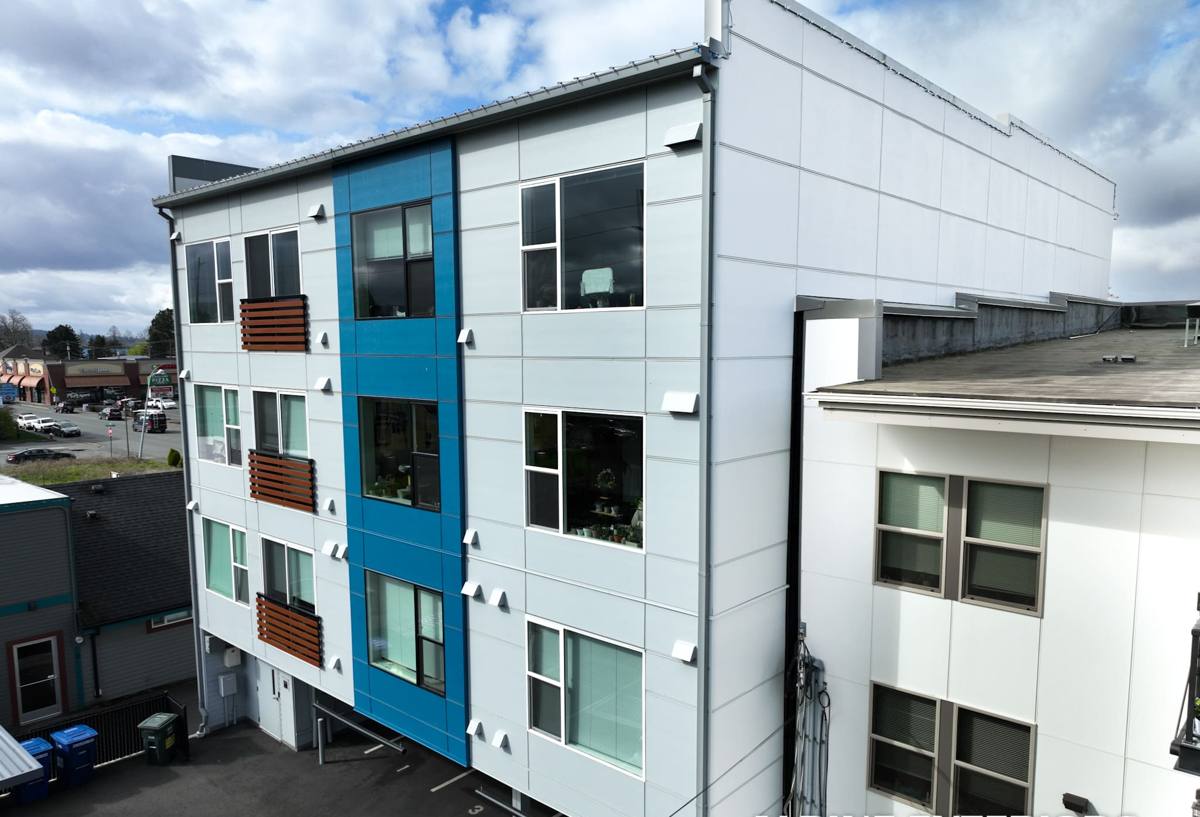
Why Salt Air and Moss Change the Calculus
Salt Air and Metal Fasteners
Airborne salt accelerates corrosion on fasteners, flashing, and any metal trim that isn't rated for coastal exposure. Over years, corroding fasteners can loosen siding, stain the face of the panels with rust streaks, and create small gaps where water works its way behind the cladding. Homes closer to the bay feel this faster than homes set back inland, but Ferndale properties are close enough that it's worth planning for from day one.
Moss, Algae, and Constant Dampness
Shaded north- and west-facing walls, combined with our long wet season, give moss and algae a real foothold on siding that holds moisture or has a porous surface. Once organic growth establishes itself on a wall, it keeps that surface damp longer after every rain, which speeds up whatever underlying decay process is already in motion. Wood-based and wood-derived siding products are the most vulnerable to this cycle because moss growth directly accelerates the rot they're already prone to.
Driving Rain and Wind-Driven Moisture
Storms coming off the water don't just drop rain — they push it sideways into wall assemblies. Lap siding with worn caulk joints, gapped corners, or degraded house wrap behind it will let that wind-driven rain find its way in over time, even if the wall looks fine from the curb. This is the failure mode we see most often on older Ferndale homes: siding that looks okay at a glance but has been quietly feeding moisture into the sheathing for years.
What a Correct Siding Replacement Actually Involves
A siding replacement done right is as much about what's underneath the siding as the siding itself. Skipping these steps is how homeowners end up redoing the job again in half the expected lifespan.
- Full removal of old siding and a visual inspection of the sheathing for soft spots, staining, or existing rot
- Repair or replacement of any compromised sheathing before new material goes up — never siding over a damaged wall
- Installation of a code-compliant weather-resistive barrier (house wrap or building paper) with correctly lapped seams
- Proper flashing at every window, door, deck ledger, and roof-to-wall intersection — this is where most moisture problems actually originate
- Correct fastener selection and spacing for the specific siding product, sized for coastal/corrosion exposure
- Manufacturer-specified clearances at grade, decks, roofs, and other trim to keep the bottom edge of the siding from wicking moisture
- Factory-finished or properly field-finished panels with all cut edges sealed per manufacturer instructions
Any one of these steps done wrong can undermine an otherwise good siding product. This is also why we don't treat siding installation as a commodity task that any crew can execute the same way — the details matter more here than the brand name on the box.
Why We Only Install James Hardie Fiber Cement
Birch Bay Exterior Co made a deliberate decision to stop installing vinyl, LP SmartSide, Cemplank, Allura, primed spruce, and cedar siding, and to install James Hardie fiber cement exclusively. That wasn't a marketing choice — it came from watching how different products actually perform in this specific climate over years, not just in a showroom.
What the Alternatives Get Right — and Where They Struggle Here
Vinyl siding is inexpensive and low-maintenance in mild climates, but it becomes brittle in cold snaps, can warp under sustained heat or reflected sunlight from nearby windows, and isn't a fire-rated material — it doesn't offer the same protection as fiber cement in wildfire-adjacent conditions. Wood-based products like LP SmartSide use engineered strand technology that resists some of the failures of solid wood, and it's a legitimate product when installed and maintained carefully, but any wood-derived siding remains more sensitive to sustained moisture and organic growth than fiber cement — a real concern given our moss season. Primed spruce and cedar are attractive, traditional choices, but they demand a maintenance schedule (repainting, sealing, moss treatment) that many homeowners underestimate, and in a marine climate that maintenance window shrinks. Other fiber cement brands like Cemplank and Allura are chemically similar to Hardie, but we've standardized on one product line so our crews master its installation details completely rather than splitting expertise across multiple systems.
Why Hardie Specifically
James Hardie fiber cement is non-combustible, doesn't feed moss and rot the way wood-based products can, and holds paint and factory finish exceptionally well in wet, salt-exposed conditions. Hardie also engineers specific product lines (HZ5, for example) for harsher climate zones, and backs the product with a strong transferable warranty — but that warranty depends entirely on correct installation, which is why we treat installation practice as seriously as product selection.
| Factor | James Hardie Fiber Cement | Vinyl / Wood-Based Alternatives |
|---|---|---|
| Fire resistance | Non-combustible | Combustible (vinyl melts/deforms; wood-based burns) |
| Moisture/moss resistance | Does not feed organic growth | Wood-based products are more vulnerable to rot and moss |
| Finish durability in salt air | Factory ColorPlus finish holds up well | Field-applied paint needs more frequent recoating |
| Maintenance | Occasional wash, minimal upkeep | Regular painting/sealing/moss treatment, especially wood-based |
| Warranty structure | Strong transferable warranty (install-dependent) | Varies widely by product and installer |
Our Process for a Ferndale Siding Replacement
1. On-Site Assessment
We walk the whole exterior, not just the obviously damaged sections, checking for soft siding, staining below windows and flashing points, moss buildup on shaded walls, and any signs of moisture already in the wall assembly.
2. Honest Scope and Estimate
We tell you what actually needs replacing versus what can be left alone, and we explain any sheathing repair before it becomes a surprise mid-project. No pressure to redo more of the house than the moisture damage justifies.
3. Removal and Wall Prep
Old siding comes off, sheathing gets inspected and repaired as needed, and a new weather-resistive barrier goes on correctly lapped, shingle-style, so water sheds down and out rather than behind the wall.
4. Flashing and Fastening
Every penetration and intersection gets flashed to shed water outward. Fasteners and spacing are selected for both the Hardie product line in use and the corrosion exposure typical of Whatcom County's coastal proximity.
5. Installation to Manufacturer Spec
Panels go up with correct clearances, joint treatment, and factory-finish integrity maintained — cut edges sealed, no shortcuts on the details that protect the warranty.
6. Final Walkthrough
We walk the finished job with you, point out anything you should keep an eye on, and make sure you know what routine maintenance (if any) is realistic going forward.
Why a Crew That Already Works Ferndale Matters
Siding contractors who split time across many different climate zones tend to apply one generic installation approach everywhere. A crew that regularly works Birch Bay, Ferndale, and the surrounding Whatcom County coastline already knows which walls take the worst wind-driven rain, where moss tends to establish first, and which flashing details actually matter in this environment versus a drier inland job. That local pattern recognition shows up in fewer callbacks and siding that's still doing its job two decades from now.
What to Ask Before Hiring Any Siding Contractor
- Will you inspect and repair sheathing before installing new siding, or just cover what's there?
- What weather-resistive barrier and flashing details do you use, specifically, at windows and roof-to-wall intersections?
- Are your fasteners rated for coastal/corrosion exposure, and what's your spacing standard?
- What siding products do you install, and why did you choose them?
- Does your installation preserve the manufacturer's warranty, and can you explain how?
- Do you have experience working specifically in this climate zone, or mostly elsewhere?
A contractor who can answer these clearly and specifically — not with vague reassurances — is one worth trusting with a job that's supposed to last decades.
Get a Straight Answer on Your Ferndale Siding
If your siding is showing moss buildup, soft spots, fading, or gaps at the corners and trim, it's worth having someone look at it before those small issues become a bigger repair. We offer a free, no-pressure estimate for Ferndale homeowners — use the form below to get a local crew out to take an honest look at what your siding actually needs.