 Birch Bay Exterior
 Siding Repair Built for the Ferndale Climate
Ferndale sits inland from Birch Bay but still shares the same weather system that wears down siding all along this stretch of Whatcom County — marine air moving in off the water, long wet winters, and short, mild summers that never quite dry things out. That combination is hard on exterior walls in ways that homeowners in drier climates never have to think about. A siding repair here isn't just a cosmetic patch job; it has to account for moisture that gets in and stays in.
We work Ferndale and Birch Bay regularly, which matters more than it sounds like it should. A crew that only shows up once and never comes back learns nothing about how a particular neighborhood's siding actually fails. We've seen the patterns repeat: which elevations take the worst weather, which original installations were done without enough attention to water management, and which repairs hold up versus which ones just cover a problem for a season or two.
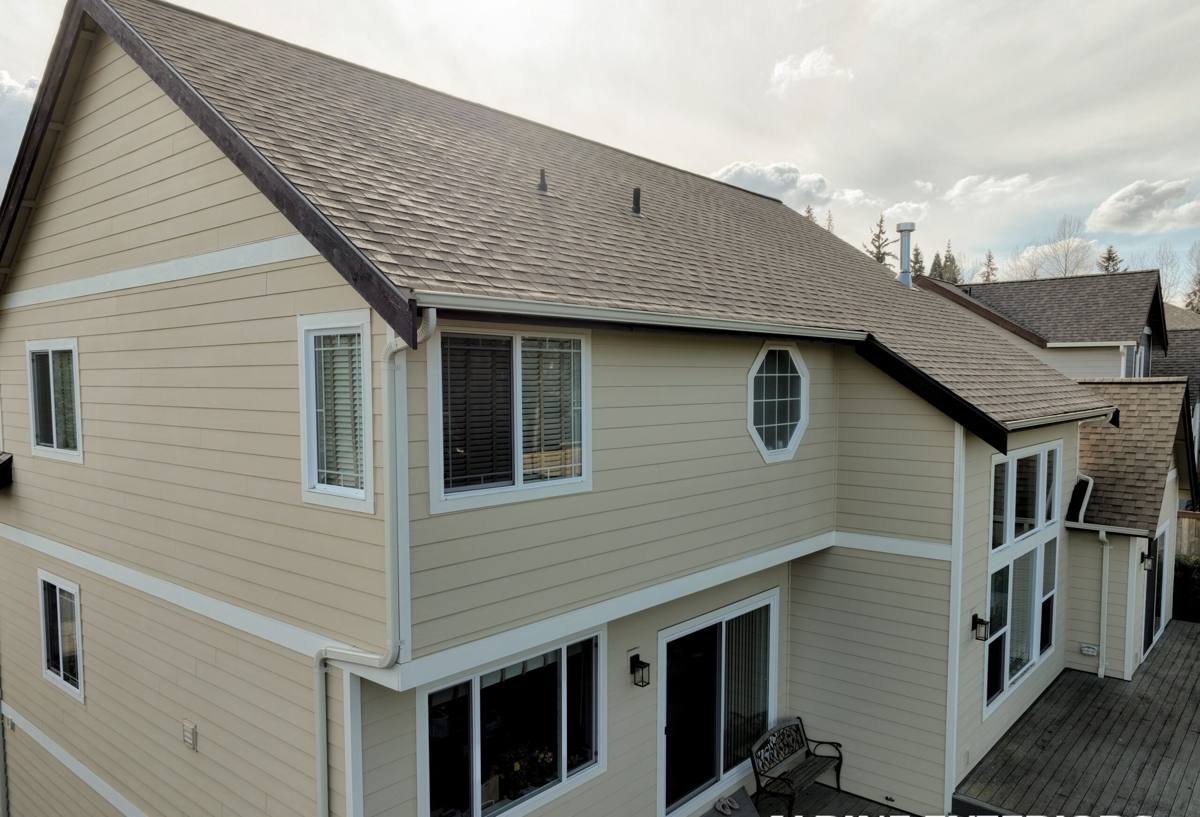
What Salt Air, Driving Rain, and Moss Season Do to Siding
Salt Air and Coastal Moisture
Even a few miles inland, homes around Ferndale pick up salt-laden moisture carried off the water on prevailing winds. Salt air accelerates corrosion on fasteners, trim, and any exposed metal flashing, and it keeps painted and caulked surfaces perpetually a little damp. Over years, that speeds up paint failure and softens the joints where siding panels meet trim, windows, and doors — exactly the spots where water eventually finds its way behind the cladding.
Driving Rain and Wind-Driven Water
This part of Washington doesn't just get rain — it gets rain pushed sideways by wind off the Strait of Georgia and the Sound. Wind-driven rain doesn't behave like a straight-down shower; it gets forced up under laps, into seams, and behind poorly sealed trim. Siding systems that were installed with the assumption of gentle, vertical rainfall tend to leak first at horizontal joints, inside corners, and anywhere flashing was skipped or done as an afterthought.
The Long Moss Season
Whatcom County's moss season runs long — shaded, north-facing walls and anything under overhanging trees can stay damp for months at a stretch. Moss and algae hold water against the siding surface far longer than open, sun-exposed walls, which softens paint film, breaks down caulking, and in wood-based products can lead to rot underneath a surface that still looks intact from the yard. Any home near mature trees or fences that block airflow is at higher risk, regardless of siding brand.
Signs a Ferndale Home Needs Siding Repair — Not Just a Repaint
Homeowners often call us for a paint touch-up and it turns out paint failure is the symptom, not the problem. Here's what we look for during a repair inspection, and what should prompt you to call before it gets worse:
- Soft or spongy spots when you press on the siding, especially near the bottom courses or below windows
- Paint that's peeling, bubbling, or flaking in localized patches rather than evenly across a wall
- Visible gaps or separation at seams, corners, or where siding meets trim
- Persistent moss, algae, or dark streaking that comes right back after cleaning
- Warping, cupping, or boards that no longer sit flat against the wall
- Rust staining running down from fasteners or metal flashing
- Musty smell, discoloration, or soft drywall on interior walls that back up to exterior siding
- Caulk that's cracked, shrunk, or pulled away from joints
Any one of these on its own might be minor. Several together, especially on the same wall, usually means water has been getting behind the siding for a while.
What a Correct Siding Repair Actually Involves
Diagnosing the Cause, Not Just the Patched Symptom
The most common mistake in siding repair is replacing the damaged board and stopping there. If water got behind that board because of a missing kick-out flashing, a bad seal at a window, or a grading issue pushing splashback onto the wall, the same failure comes back within a year or two. A repair worth paying for starts with figuring out how water actually got in, then fixes that path before anything new goes up.
Matching Materials and Finish
Repairs on James Hardie fiber cement siding need to use compatible Hardie product — matched profile, exposure, and ColorPlus finish where the home has factory-applied color — so the repaired section doesn't age differently than the surrounding wall. Mismatched material, or field-painting a patch that should have factory finish, is one of the most common reasons a repair looks obviously "repaired" for years afterward.
Sealing and Flashing Details
The visible siding is the least important part of keeping water out — the flashing, house wrap, and sealed penetrations behind it do the real work. A proper repair reopens enough of the wall to check that the water-resistive barrier is intact, flashing at windows and transitions is correctly lapped, and any penetrations (hose bibs, vents, light fixtures) are sealed the way they should have been the first time.
Repair or Replace? How We Help You Decide
Not every damaged wall needs full replacement, and not every repair is worth doing instead of replacing the section outright. We walk through this with every Ferndale homeowner honestly, based on what we actually find once the wall is opened up:
| Factor | Leans Toward Repair | Leans Toward Replacement |
|---|---|---|
| Extent of damage | Isolated to one or two walls or a small area | Spread across multiple elevations |
| Underlying sheathing | Dry, solid wood behind the siding | Soft, delaminating, or rotted sheathing |
| Age of existing siding | Under 10–15 years, still structurally sound | Original siding nearing or past its expected service life |
| Water intrusion history | Single identifiable cause, already correctable | Repeated leaks from multiple, unclear sources |
| Existing material | James Hardie fiber cement in otherwise good condition | Vinyl, LP SmartSide, or wood siding with widespread failure |
| Cosmetic match | Matching Hardie profile and color still available | Discontinued profile or faded color that won't blend |
We'd rather tell a homeowner honestly that a targeted repair will hold than talk them into a bigger job than they need. We'd also rather tell you plainly when a repair is just delaying an inevitable full replacement, so you can plan and budget for it instead of being surprised later.
Why We Repair — and Rebuild — Exclusively With James Hardie
Birch Bay Exterior Co installs James Hardie fiber cement siding, full stop. When we're called to repair a wall that already has Hardie on it, that's straightforward — we match the existing profile and finish and the repair blends in properly. When a Ferndale home has vinyl, LP SmartSide, or another product failing under our regional weather, we'll still assess and repair honestly, but our recommendation for any section needing full replacement is Hardie fiber cement, climate-engineered HZ product lines, and factory ColorPlus finish, because that's what we've found holds up to salt air, driving rain, and a long wet season without the recurring maintenance calls other products generate here. It's non-combustible, it doesn't rot the way wood-based products can when moisture gets behind them, and the factory finish resists exactly the kind of paint failure that salt air and shaded moss conditions cause fastest.
Our Process for a Ferndale Siding Repair Call
- On-site inspection of the damaged area and a check of surrounding walls for related issues, not just the spot you called about
- Opening up enough of the wall to see the sheathing, house wrap, and flashing behind the siding
- A clear explanation of what caused the damage, in plain language, before any work starts
- A written scope covering material, flashing corrections, and finish so there are no surprises
- Repair or partial replacement using matched James Hardie product and correct fastening and sealing detail
- Final walkthrough so you can see exactly what was done and why
We don't upsell a full re-side to every repair call. Plenty of jobs are exactly what they look like — a section of damaged siding that needs to come off, the cause corrected, and new material put back correctly.
Why a Crew That Already Works in Ferndale and Birch Bay Matters
Siding repair is one of those trades where local experience shows up in the details. A crew that works Whatcom County knows to check for kick-out flashing at roof-to-wall transitions before blaming the siding itself, knows which wall orientations take the worst wind-driven rain locally, and has seen enough moss-related failures to recognize the pattern immediately instead of guessing. That familiarity means fewer surprises, a more accurate first diagnosis, and repairs that account for the actual climate the wall has to survive — not a generic national playbook.
It also means we're still around after the job. Warranty support, follow-up questions, and future maintenance are a lot simpler with a contractor who's local to Ferndale and Birch Bay, not a crew that came through once from out of the area.
Get a Free, No-Pressure Estimate
If you're seeing paint failure, soft spots, moss staining, or gaps in your siding, it's worth having it looked at before the underlying damage spreads. We'll give you an honest read on whether it's a repair or a bigger job, with no pressure either way — use the form below to request a free estimate for your Ferndale-area home.